[0:00]Tracking macros, staying in a deficit, getting enough protein every single day is a huge commitment and time drain and is really difficult to stick to if you're doing it the way most people try to. But having coached hundreds of real, very busy women through very successful fat loss phases, I know a thing or two about how to take someone's nutrition from something that feels like a daily battle where they're spending hours on my fitness pal and in a cycle of just about managing to stick to their targets from Monday to Wednesday before Thursday comes around unexpected plans crop up, they forget to track a meal and things start to spiral downhill. To a place where their tracking takes less than a minute, they hardly have to put any thought into it and their eating just feels like it's an autopilot so they can easily stay in a deficit without it taking up so much head space. So in today's video, I'm going to share with you three essential methods that I teach these clients that allow them to be really consistent. That means their hunger and energy levels aren't totally unpredictable and ultimately successfully lose body fat so they can reveal a lean defined physique that they've spent so many years building. The very first thing we do is create a regular daily eating pattern. If some days you're skipping breakfast, some days lunch is at 11, sometimes it's at two. Your afternoons are full of this internal debate about whether you can fight off the need for a snack, but usually cave when someone's brought a treat into the office. It is no wonder that your hunger signals are all over the place and you get these energy slumps that only something sweet can fix. See, our bodies are so attuned to patterns because we have this internal body clock called our circadian rhythm that regulates your hormones and therefore your energy and your hunger. So, for example, in the morning, we get the rise in the hormone cortisol, which is essential for us to wake up and be alert by the way. I know it's had a lot of hate on social media over the past few months. Whereas in the evening, we have lower cortisol levels and higher melatonin levels, and that helps us get into that sleepy state. Those shift in hormone levels happen at the times where you regularly go to bed and wake up, but it's not just those sleep patterns that our body tailors those hormones around. It's also our eating patterns as well. Ghrelin and leptin are those hunger hormones with ghrelin being the one that tells you when you're hungry. I remember that one by thinking of ghrelin as a little hunger gremlin that kind of sits on your shoulder telling you to eat something. And this is higher when you've not eaten something in a while and around your normal meal times. Whereas leptin is that hormone that signals that you're full. So if you're having two meals some days, grazing throughout the afternoon other days and have just no regularity in these eating patterns. Your body has no idea what to expect, and so those hunger and fullness signals are going to be all over the place. Having this fixed daily eating pattern with regular timings doesn't just have really big benefits for managing hunger and energy. It's also just going to make your nutrition so much easier because there is far less thinking involved. Look, I always tell my clients, I want you to rely as little on willpower or motivation as possible. There's no, oh, is it a bit too early to have my lunch, or wondering if you've got enough calories to fit in an afternoon snack this day? No, for that effortless, repeatable nutrition, I decide with my clients the meal pattern that works best for them and we aim to stick to that as closely as possible. Look, of course, some days are going to have to be a bit different, things crop up, you stay out for longer than you expected. And I know some people have jobs, maybe nurses, et cetera, where they don't have as much control of where they can take those breaks. But this is a really good general principle to aim for as much as you can. So, what is the best number of meals and snacks and the timings of those to optimize muscle building and fat loss? Trick question, there isn't one. This is all about what you're going to be able to stick to regularly, what fits in best with your schedule and just like your preferences for how you like to eat. I work with some people who just love three larger meals a day, they're not fussed about snacking, and they like being able to sit down and have those heartier, higher calorie meals. I might be too busy to think about eating between. Whereas I've got other clients who like to eat four times a day, some five times a day. I know I will always have to have my pre-bed yogurt bowl, so that's a regularly planned part of my day. Now, of course, there are some things you do need to think about when it comes to how often and what times you eat throughout the day, if you care about your performance and building muscle. For example, I wouldn't recommend going hours after a workout without getting a good protein source in. And if you've had a long day at work and you're going to train afterwards, your eating pattern probably needs to include a carb-based afternoon snack to fuel that evening workout. But again, you need to decide on this based on your training time, your work schedule, and what times of the day you tend to get most hungry. Once you've decided on the number of meals and snacks, set assigned times for them, and when you do this over the next few weeks, your hormonal levels are going to become accustomed to this. And mentally, you know when you're eating and you know when you're not, it's clear cut, and you spend far less of the day in this mental battle with yourself. So that's the first thing that's going to make you so much more consistent with your nutrition. The next thing I do with my clients is establish a menu of rotating meals. So they might have two breakfast options, three lunch options, four or five dinner options, a handful of snack options. And for each part of the day, they're just picking from an item on their menu. For the ladies I work with, I've made this template where they can plan their meals out into their menu. So I'll show you this example of my client Eloise's. See that she's got a handful of options for each of her meals of the day, and we've listed out the ingredients and the macros for each of them. And then if we go to the second tab here, she's got her daily eating schedule with the timings, like we spoke about earlier. And you can see that any combination of the different options she's got from her menu, always create this nice balanced day of eating, hitting very similar calories and macros. This sheet is really handy, so if you want this template to make your own menu, I'll put a link to it in the description box so you can use it as well. There are so many benefits to having a rotating menu of meals, tracking gets so much easier because once you track the meal once, you can save it either as a meal or a recipe in your tracking app. Then you never have to enter all the individual ingredients again. As I showed, you always know that any combination of your menu options are going to have you in and around your calorie and macro targets. Your food shopping becomes so much easier because you're always buying the same stuff. You are far less reliant on willpower or how you feel in the moment because you've narrowed down your options and so you're not making food choices based on cravings, or what's going to be the most comforting option after a shit day of work. Is this the most varied and exciting way of eating? No, but you've said you want to be more consistent if your nutrition to feel easier and this is absolutely one of the best ways to do that. Then when you get a bit bored of something, you can just throw that option out and rotate a new meal into the menu. And the size of your menu will depend on how much you care about variety. If you ask me, I eat pretty much the same thing every day. Then I enjoy a few meals with my partner or a few meals out with friends a week, and that's enough variety to keep me happy. That means I'm never spending time thinking about what I'm going to eat, making my meals is super quick and fits with my busy days. But I know not everyone fancies being quite so boring and robotic, so you might just have more options on your menu. So now you've got your daily eating schedule and you've got a menu of meals you rotate between, you streamline your options, you reduce decision-making. And the final cherry on top is one that all of my most successful clients do, and that is some form of pre-logging or pre-tracking their day of eating. For some of the ladies I work with, when it comes to their check-in, I pull up their account and they have their full rest of their week of eating already tracked in advance. Other people like to do it the night before for the next day, or maybe as part of their morning routine with their morning coffee, they pull up my fitness pal and schedule what they're eating for the rest of the day. But tracking your day of eating in advance has to be the best insurance policy for making sure that you know you're going to have hit your calorie target by the end of the day. You know you will have got enough protein, you won't be playing macro Tetris in the evening when you've only got 200 calories left for dinner. And again, less decision-making when you're busy, tired, hungry, stressed, or whatever other emotion your menstrual cycle might have made you feel that day. Because that's the issue here, isn't it? We all have great intentions, you know what a healthy meal looks like. It's just the fact that when you work a full-time job, you're trying to keep up some semblance of the social life, you've got family to see. There's just not much time or energy left over for thinking of the perfect day of eating as you go every single day. But these three habits, a regular eating schedule, a rotating menu of meals, and pre-logging or pre-tracking, help put your nutrition on autopilot so you can much more easily stay in a deficit and fat loss feels pretty effortless. And this is my style of coaching. It's not just a set of calories and macros in a workout PDF, but actually teaching the ladies I work with these real life practical skills that will actually get them the results they're looking for. Rather than thinking it's an issue with their willpower or their discipline. So, if you're struggling to see the changes in your body that you've been working so hard for because it's just really hard to stay consistent, I bet I can help. I'll put the link in the description where you can find out a bit more about how I coach women from all over the world online to get super strong, lift with confidence and take control of their nutrition. So they can build that lean defined physique that we're all chasing. And if you've got any of your own little methods or tips that help put your nutrition on autopilot, do share them with us and put them in the comments below.
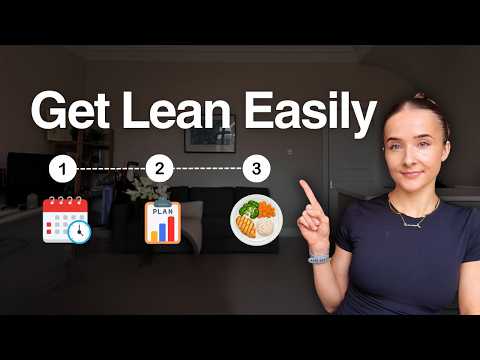
3 Habits For Effortless Fat Loss (No Tracking Burnout)
Coach Jazz
8m 16s2,056 words~11 min read
YouTube auto captions
Transcript source
YouTube auto captions
This transcript was extracted from YouTube's auto-generated caption track. The transcript below is server-rendered so it can be read, searched, cited, and shared without opening the original YouTube player.
Pull quotes
[0:00]Tracking macros, staying in a deficit, getting enough protein every single day is a huge commitment and time drain and is really difficult to stick to if you're doing it the way most people try to.
[0:00]So in today's video, I'm going to share with you three essential methods that I teach these clients that allow them to be really consistent.
[0:00]That means their hunger and energy levels aren't totally unpredictable and ultimately successfully lose body fat so they can reveal a lean defined physique that they've spent so many years building.
[0:00]If some days you're skipping breakfast, some days lunch is at 11, sometimes it's at two.
Use this transcript
Related transcript hubs
Watch on YouTube
Share
MORE TRANSCRIPTS


