[0:05]Now and for how Philip K Dick's dark novel became one of the most prolific cult films of generations on the edge of Blade Runner.
[0:26]There's a moment in Philip K Dick's 1968 novel the dream of electric ship in which the bounty hunter Rickd wonders whether empathicizing with his android pray has put him at odds with the rest of the human race. He wondered right stick if any human has ever felt this way before about an android. That feeling of being out of sync with the world is a key element both of Dick's novel and of the film which followed, a film which was both behind and ahead of its time, which looked back to the future and redefine the way in which cinema would imagine the shape of things to come. It's a film which has been called everything from a fascinating failure to a cold classic which looks more and more like dark prophecy as the years roll by and we move ever closer towards the edge of blade runner.
[1:20]I'm going to you know a needle when I'm making a movie and I'm writing here. You're either with me or you're not.
[1:29]you could have seen what I've seen with your eyes.
[1:40]The filming experience was wonderful.
[1:45]The film dealing experience was about as unpleasant as it can be.
[1:55]I'd go on to the set and I'd be in another world.
[2:11]The American people are basically anti-intellectual. They're not interested in novels of idea. And science fiction is essentially a field of ideas. Philip K is really one of the great unacknowledged writers of our time. Um, he was um a Californian and he wrote against the grain of what was currently accepted in the way of science fiction. Science fiction at that time was full of bold heroes going out into the universe. Uh, conquering planets, conquering whole, solar systems. And there was this extraordinary man, Philip K. Uh, writing about really what was happening to him and to the drug culture and
[3:10]This is the house in where Philip Dick wrote to Android's stream electric sheep one of a group of stories option during his lifetime that finally made to the screen after his death. Like so much of Dick's fiction it shot through with a serial paranoid psychosis that seemed to echo his own state of mind but with its futuristic bounty hunter theme. It also provided the base for a sci-fi screen. Also it seemed to act turn writer Hampton Fancher. Philip K Dick was a a bit of a. He was a bit of a monster, he was a bit elusive. You know, he was very appealing. I mean he was very intelligent, he was very self-centered, kind of egomanical. He would do odd things when he was talking to you. He would got the idea that he was like
[4:04]Anyway, Hampton, so he was getting a message from the gods. Phil, who had also made no bones about the fact that he had taken a lot of amputations early in his career to keep up the pace of being able to write as proli as he did. Um, and had kept doing that for over a decade, it really became my conclusion that Phil to a certain extent was suffering from classic amphetamine psychosis. It didn't seem stupid. at the time because he was so brilliant. He was really smart. He was a you know, he was a scholar. He knew a lot of things. But he was he dramatized himself. And I thought he was kind of crazy. The police once told me that I was a crusader and they had no use for crusaders. But unfortunately, they didn't tell me what I was crusading for. I I I was afraid to ask what it was I was a crusader for and they told me that if I did not get out of the county, I would be shot on the back or worse some night. Really the impetu of that novel, do Androids dream of electric sheep were some Nazi diaries that Dick had come across while doing research at the close stacks of the University of California at Berkeley in the library. and he was reading the journals of an officer, an SS officer who had worked in one of these camps and one of the entries really caught his attention and the entry was the screams of children keep me awake at night. And from that little seed began thinking this person is not human. He cannot associate what he's just written. In other words, he's being bothered by the fact that they're exterminating all these thousands of people around him because and he can't get a good night's sleep. So from that Bill uh Phil inferred that basically these people weren't human. The Nazis were a synthetic organism. They were completely dissociated from human intercourse. And I think that really is what the spur of the entire Duandru's dream of electric sheet, Blade Runner story started out as. He I said I said to him in fact I said you act like I'm some guy with sunglasses and a cigar who's come up in a convertible trying to make take advantage of you. I'm not I'm trying to get you to make this movie. And uh, and he kept kind of dismissing that idea of uh Blade Runner Android's electric ship. And the last time I saw him I was I was leaving and I and I'm usually not this forward about these things but I said you know what I'm not coming back because I don't think you like me. You really in fact I think you don't like me. He said no you're wrong Hampton Hampton you're wrong. you know, he was kind of at that moment but I didn't go back. Despite Philip Dick's paranoia about America in general and Hollywood in particular, Hampton Fancher finally succeeded in fashioning a screen play based on to Android's dream of electric sheep. This script which would be retitled dangerous days and then Blade Runner was eagerly adopted by Michael Deely, producer of such varied fair as the Italian job, the deer hunter and the man who fell to earth. I like for me the originality of it. It was brand new stuff. It was it was plausible. Um, I still think it was plausible. It contained a vision of the world which was possible. And I thought it was incredible exciting, it would be exciting on screen.
[7:38]Ridley was ideal in one respect, well many respect but one particular respect which is that he has got the best eye of anybody directing film that I know about, I mean anybody. And if you want to make a picture which looks stunning as this picture had to do, then the best person you could get is Ridley. So something personal happened in my life, my brother died and I uh, to coin a phrase freaked out, felt felt I had to go to work immediately. And so I called Michael and said, you know that film that of Hampton's I'd like to do it.
[8:19]And so uh, I went to Hollywood and what I thought would be a fast um, you know, fix emotionally, I get involved in something uh, wasn't. That had developed in the seven months of discussion every day with Hampton coming to my house in LA, going through the pages blow by blow. It wasn't until Ridley came in that it became an exterior film, a film that had a world. It was a it was in hotel rooms, it was in basements. It was a a 9 million movie that was all about interpersonal relationships. Enchained 224 to 170 The thing about Hampton's screen play was it was too enclosed within the confines of an apartment.
[9:12]The focus was for me, how do we expand this film from you know your your vision which is a internal, I want to follow out outside. When I go outside, the world we see had better support a world that can actually reproduce human beings. And um that's how it expanded. There was a moment where there's burn out with any writer. And Hampton I think said I give up, you know, I can't do this anymore. I need time out. And uh, at that moment I'd also been reading uh stuff of David people's um and uh I thought he came out with some very interesting dialogue. They put me in this fantastic sweet and moment and sent a script over to me and said they'd be over in a couple of hours. So I read the script. And uh, my heart was broken because I mean they came in and they said, you know, you'd read the script. And I said, yeah, and they said, well, what do you think? And I said, I think it's terrific. I said I can't think of anything to do to improve it, right? And that was true, but apparently it was the right thing to say anyway because they both sort of be, because I think they liked it too. But they said that Ridley had some thoughts about it or something. And so on and so forth. And so to my amazement, I was hired to do a rewrite. I think what happened is I said to Hampton, look, there's this guy around who can come and do some of the city speaking the dialogue. Um, what I want you to do is meet him. And you tell me because I felt it was so much his now this you know, he's doing all the work. I'm just sitting there. being creative. Um, and uh he said, okay, he was uh a bit angry and a bit hurt I think at the time. Ridley never came right out and said, if you don't do what I'm telling you to do, then we'll get somebody else to do it. That never was said. Ridley was shy, he's manipulative, you know, whatever he didn't tell me. Hampton's an emotional person, um, like any other artist and um, I didn't he can't have been happy at the whole idea of another right to coming in and also at the changes that would make to his concept of the picture. I was devastated, I sort of cried. I said, what do you mean? You know, I was I got fucked. you know, I quit. I'm out. I'm gone. Then fuck you guys and I call really and I said, I'm out of here, you know, and I was insane. I was so I wanted my name off the picture, you know, it's like I don't want to be involved. But I needed to move on because I I was now seven months into this and I I would felt I'd invested all my life into it as well. And this was going to be my next film with whether anyone liked it or not. And uh, so Hampton uh, met David and I think there's still they're still French. I wouldn't talk to anybody, uh, you know, in the company. And I'm sorry. No, it's I mean it was fine because that because then towards the end when they'd finished shooting the movie, they call me back in just before they finished shooting because it was a rough top scene and stuff with with gaf, you know. And and so they asked me to come I David was working, I guess or something. I don't know because they asked me to come and rewrite some stuff. And that's when I rewritten you.
[17:33]As well as the backlot, backlane also took in and transformed a number of existing locations in and around LA. Union station for example became police HQ where Captain Brian first set on the trial of the error. This Frank Lloyd right designed house in loss doubled as the first floor exterior of's apartment.
[19:01]To get a picture that looks like Blade Runner, is not a casual thing of building a set and checking a few things around and it isn't it's it is a huge labor from the director's point of view. He has to build every corner of that screen, every detail has to be as near perfect as he can get it. The so-called New York Street is sort of like a series of three different legs, which would mean six sides of the street and we were going to we were going to do all of it. And I was standing on this crossroads thinking, well, it's not very big and uh I got the production designer and Larry Paul and then Sid Med and I got photographs taken of every side of the street and laid them out around the room, blow them up around the room and uh basically Sid and Larry started to construct the sides of the city.
[19:53]It was so dense with detail and texture that you could shoot elements onto the street in various areas and go from point A to point B to point C to point D and never know where you're at.
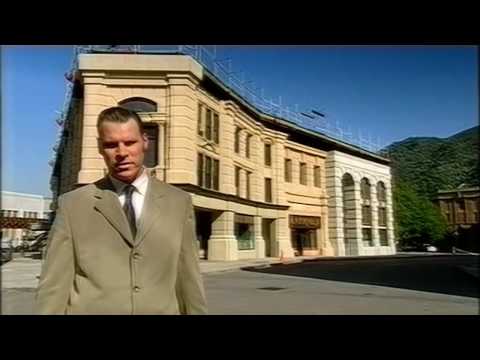
[20:19]So we're here on the old New York set at a bank. Talk us through where the blade run locations were. Over there is where we did the Zora Chase through the uh through the shop front. the our is now it was a shop from with the glass. Over here is the Leon Hotel. Just up there? Yeah. Over there is Mr. Chase shop. Oh, this is Chase Ice House. This is the Ice House. Okay. And then straight ahead of us right down there, that's the night scene what happened. That's the night scene where the midgets come through and and and the masses of people coming through at night with the uh with the Harry. And uh, as you can see over here because there's so much greery and mountainside. That was one of the main reasons why we decided to shoot at night because we could eliminate having to mat out the the green mountains and the trees and the Because if you look down the end of the street you can just see. Exactly.
[21:09]And just here on the corner was the the phone booth. There was no stairs here, there was just a phone booth in which where made the phone call before the the. So how far down was this set dressed as as as Blade Runner was it everywhere you can see? We took over everything.
[22:46]As well as the backlot, backlane also took in and transformed a number of existing locations in and around LA. Union station for example became police HQ where Captain Brian first set on the trial of the error. This Frank Lloyd right designed house in loss doubled as the first floor exterior of's apartment. To get a picture that looks like Blade Runner, is not a casual thing of building a set and checking a few things around and it isn't it's it is a huge labor from the director's point of view. He has to build every corner of that screen, every detail has to be as near perfect as he can get it. The so-called New York Street is sort of like a series of three different legs, which would mean six sides of the street and we were going to we were going to do all of it. And I was standing on this crossroads thinking, well, it's not very big and uh I got the production designer and Larry Paul and then Sid Med and I got photographs taken of every side of the street and laid them out around the room, blow them up around the room and uh basically Sid and Larry started to construct the sides of the city.
[23:53]It was so dense with detail and texture that you could shoot elements onto the street in various areas and go from point A to point B to point C to point D and never know where you're at.
[24:19]So we're here on the old New York set at a bank. Talk us through where the blade run locations were. Over there is where we did the Zora Chase through the uh through the shop front. the our is now it was a shop from with the glass. Over here is the Leon Hotel. Just up there? Yeah. Over there is Mr. Chase shop. Oh, this is Chase Ice House. This is the Ice House. Okay. And then straight ahead of us right down there, that's the night scene what happened. That's the night scene where the midgets come through and and and the masses of people coming through at night with the uh with the Harry. And uh, as you can see over here because there's so much greery and mountainside. That was one of the main reasons why we decided to shoot at night because we could eliminate having to mat out the the green mountains and the trees and the Because if you look down the end of the street you can just see. Exactly.
[25:09]And just here on the corner was the the phone booth. There was no stairs here, there was just a phone booth in which where made the phone call before the the. So how far down was this set dressed as as as Blade Runner was it everywhere you can see? We took over everything.
[25:46]As well as the backlot, backlane also took in and transformed a number of existing locations in and around LA. Union station for example became police HQ where Captain Brian first set on the trial of the error. This Frank Lloyd right designed house in loss doubled as the first floor exterior of's apartment. To get a picture that looks like Blade Runner, is not a casual thing of building a set and checking a few things around and it isn't it's it is a huge labor from the director's point of view. He has to build every corner of that screen, every detail has to be as near perfect as he can get it. The so-called New York Street is sort of like a series of three different legs, which would mean six sides of the street and we were going to we were going to do all of it. And I was standing on this crossroads thinking, well, it's not very big and uh I got the production designer and Larry Paul and then Sid Med and I got photographs taken of every side of the street and laid them out around the room, blow them up around the room and uh basically Sid and Larry started to construct the sides of the city.
[26:53]It was so dense with detail and texture that you could shoot elements onto the street in various areas and go from point A to point B to point C to point D and never know where you're at.
[27:19]So we're here on the old New York set at a bank. Talk us through where the blade run locations were. Over there is where we did the Zora Chase through the uh through the shop front. the our is now it was a shop from with the glass. Over here is the Leon Hotel. Just up there? Yeah. Over there is Mr. Chase shop. Oh, this is Chase Ice House. This is the Ice House. Okay. And then straight ahead of us right down there, that's the night scene what happened. That's the night scene where the midgets come through and and and the masses of people coming through at night with the uh with the Harry. And uh, as you can see over here because there's so much greery and mountainside. That was one of the main reasons why we decided to shoot at night because we could eliminate having to mat out the the green mountains and the trees and the Because if you look down the end of the street you can just see. Exactly.
[28:09]And just here on the corner was the the phone booth. There was no stairs here, there was just a phone booth in which where made the phone call before the the. So how far down was this set dressed as as as Blade Runner was it everywhere you can see? We took over everything.
[28:46]As well as the backlot, backlane also took in and transformed a number of existing locations in and around LA. Union station for example became police HQ where Captain Brian first set on the trial of the error. This Frank Lloyd right designed house in loss doubled as the first floor exterior of's apartment. To get a picture that looks like Blade Runner, is not a casual thing of building a set and checking a few things around and it isn't it's it is a huge labor from the director's point of view. He has to build every corner of that screen, every detail has to be as near perfect as he can get it. The so-called New York Street is sort of like a series of three different legs, which would mean six sides of the street and we were going to we were going to do all of it. And I was standing on this crossroads thinking, well, it's not very big and uh I got the production designer and Larry Paul and then Sid Med and I got photographs taken of every side of the street and laid them out around the room, blow them up around the room and uh basically Sid and Larry started to construct the sides of the city.
[29:53]It was so dense with detail and texture that you could shoot elements onto the street in various areas and go from point A to point B to point C to point D and never know where you're at.
[30:19]So we're here on the old New York set at a bank. Talk us through where the blade run locations were. Over there is where we did the Zora Chase through the uh through the shop front. the our is now it was a shop from with the glass. Over here is the Leon Hotel. Just up there? Yeah. Over there is Mr. Chase shop. Oh, this is Chase Ice House. This is the Ice House. Okay. And then straight ahead of us right down there, that's the night scene what happened. That's the night scene where the midgets come through and and and the masses of people coming through at night with the uh with the Harry. And uh, as you can see over here because there's so much greery and mountainside. That was one of the main reasons why we decided to shoot at night because we could eliminate having to mat out the the green mountains and the trees and the Because if you look down the end of the street you can just see. Exactly.
[31:09]And just here on the corner was the the phone booth. There was no stairs here, there was just a phone booth in which where made the phone call before the the. So how far down was this set dressed as as as Blade Runner was it everywhere you can see? We took over everything.
[31:46]As well as the backlot, backlane also took in and transformed a number of existing locations in and around LA. Union station for example became police HQ where Captain Brian first set on the trial of the error. This Frank Lloyd right designed house in loss doubled as the first floor exterior of's apartment. To get a picture that looks like Blade Runner, is not a casual thing of building a set and checking a few things around and it isn't it's it is a huge labor from the director's point of view. He has to build every corner of that screen, every detail has to be as near perfect as he can get it. The so-called New York Street is sort of like a series of three different legs, which would mean six sides of the street and we were going to we were going to do all of it. And I was standing on this crossroads thinking, well, it's not very big and uh I got the production designer and Larry Paul and then Sid Med and I got photographs taken of every side of the street and laid them out around the room, blow them up around the room and uh basically Sid and Larry started to construct the sides of the city.
[32:53]It was so dense with detail and texture that you could shoot elements onto the street in various areas and go from point A to point B to point C to point D and never know where you're at.
[33:19]So we're here on the old New York set at a bank. Talk us through where the blade run locations were. Over there is where we did the Zora Chase through the uh through the shop front. the our is now it was a shop from with the glass. Over here is the Leon Hotel. Just up there? Yeah. Over there is Mr. Chase shop. Oh, this is Chase Ice House. This is the Ice House. Okay. And then straight ahead of us right down there, that's the night scene what happened. That's the night scene where the midgets come through and and and the masses of people coming through at night with the uh with the Harry. And uh, as you can see over here because there's so much greery and mountainside. That was one of the main reasons why we decided to shoot at night because we could eliminate having to mat out the the green mountains and the trees and the Because if you look down the end of the street you can just see. Exactly.
[34:09]And just here on the corner was the the phone booth. There was no stairs here, there was just a phone booth in which where made the phone call before the the. So how far down was this set dressed as as as Blade Runner was it everywhere you can see? We took over everything.
[34:46]As well as the backlot, backlane also took in and transformed a number of existing locations in and around LA. Union station for example became police HQ where Captain Brian first set on the trial of the error. This Frank Lloyd right designed house in loss doubled as the first floor exterior of's apartment. To get a picture that looks like Blade Runner, is not a casual thing of building a set and checking a few things around and it isn't it's it is a huge labor from the director's point of view. He has to build every corner of that screen, every detail has to be as near perfect as he can get it. The so-called New York Street is sort of like a series of three different legs, which would mean six sides of the street and we were going to we were going to do all of it. And I was standing on this crossroads thinking, well, it's not very big and uh I got the production designer and Larry Paul and then Sid Med and I got photographs taken of every side of the street and laid them out around the room, blow them up around the room and uh basically Sid and Larry started to construct the sides of the city.
[35:53]It was so dense with detail and texture that you could shoot elements onto the street in various areas and go from point A to point B to point C to point D and never know where you're at.
[36:19]So we're here on the old New York set at a bank. Talk us through where the blade run locations were. Over there is where we did the Zora Chase through the uh through the shop front. the our is now it was a shop from with the glass. Over here is the Leon Hotel. Just up there? Yeah. Over there is Mr. Chase shop. Oh, this is Chase Ice House. This is the Ice House. Okay. And then straight ahead of us right down there, that's the night scene what happened. That's the night scene where the midgets come through and and and the masses of people coming through at night with the uh with the Harry. And uh, as you can see over here because there's so much greery and mountainside. That was one of the main reasons why we decided to shoot at night because we could eliminate having to mat out the the green mountains and the trees and the Because if you look down the end of the street you can just see. Exactly.
[37:09]And just here on the corner was the the phone booth. There was no stairs here, there was just a phone booth in which where made the phone call before the the. So how far down was this set dressed as as as Blade Runner was it everywhere you can see? We took over everything.
[37:46]As well as the backlot, backlane also took in and transformed a number of existing locations in and around LA. Union station for example became police HQ where Captain Brian first set on the trial of the error. This Frank Lloyd right designed house in loss doubled as the first floor exterior of's apartment. To get a picture that looks like Blade Runner, is not a casual thing of building a set and checking a few things around and it isn't it's it is a huge labor from the director's point of view. He has to build every corner of that screen, every detail has to be as near perfect as he can get it. The so-called New York Street is sort of like a series of three different legs, which would mean six sides of the street and we were going to we were going to do all of it. And I was standing on this crossroads thinking, well, it's not very big and uh I got the production designer and Larry Paul and then Sid Med and I got photographs taken of every side of the street and laid them out around the room, blow them up around the room and uh basically Sid and Larry started to construct the sides of the city.
[38:53]It was so dense with detail and texture that you could shoot elements onto the street in various areas and go from point A to point B to point C to point D and never know where you're at.
[39:19]So we're here on the old New York set at a bank. Talk us through where the blade run locations were. Over there is where we did the Zora Chase through the uh through the shop front. the our is now it was a shop from with the glass. Over here is the Leon Hotel. Just up there? Yeah. Over there is Mr. Chase shop. Oh, this is Chase Ice House. This is the Ice House. Okay. And then straight ahead of us right down there, that's the night scene what happened. That's the night scene where the midgets come through and and and the masses of people coming through at night with the uh with the Harry. And uh, as you can see over here because there's so much greery and mountainside. That was one of the main reasons why we decided to shoot at night because we could eliminate having to mat out the the green mountains and the trees and the Because if you look down the end of the street you can just see. Exactly.
[40:09]And just here on the corner was the the phone booth. There was no stairs here, there was just a phone booth in which where made the phone call before the the. So how far down was this set dressed as as as Blade Runner was it everywhere you can see? We took over everything.
[40:46]As well as the backlot, backlane also took in and transformed a number of existing locations in and around LA. Union station for example became police HQ where Captain Brian first set on the trial of the error. This Frank Lloyd right designed house in loss doubled as the first floor exterior of's apartment. To get a picture that looks like Blade Runner, is not a casual thing of building a set and checking a few things around and it isn't it's it is a huge labor from the director's point of view. He has to build every corner of that screen, every detail has to be as near perfect as he can get it. The so-called New York Street is sort of like a series of three different legs, which would mean six sides of the street and we were going to we were going to do all of it. And I was standing on this crossroads thinking, well, it's not very big and uh I got the production designer and Larry Paul and then Sid Med and I got photographs taken of every side of the street and laid them out around the room, blow them up around the room and uh basically Sid and Larry started to construct the sides of the city.
[41:53]It was so dense with detail and texture that you could shoot elements onto the street in various areas and go from point A to point B to point C to point D and never know where you're at.
[42:19]So we're here on the old New York set at a bank. Talk us through where the blade run locations were. Over there is where we did the Zora Chase through the uh through the shop front. the our is now it was a shop from with the glass. Over here is the Leon Hotel. Just up there? Yeah. Over there is Mr. Chase shop. Oh, this is Chase Ice House. This is the Ice House. Okay. And then straight ahead of us right down there, that's the night scene what happened. That's the night scene where the midgets come through and and and the masses of people coming through at night with the uh with the Harry. And uh, as you can see over here because there's so much greery and mountainside. That was one of the main reasons why we decided to shoot at night because we could eliminate having to mat out the the green mountains and the trees and the Because if you look down the end of the street you can just see. Exactly.
[43:09]And just here on the corner was the the phone booth. There was no stairs here, there was just a phone booth in which where made the phone call before the the. So how far down was this set dressed as as as Blade Runner was it everywhere you can see? We took over everything.
[43:46]As well as the backlot, backlane also took in and transformed a number of existing locations in and around LA. Union station for example became police HQ where Captain Brian first set on the trial of the error. This Frank Lloyd right designed house in loss doubled as the first floor exterior of's apartment. To get a picture that looks like Blade Runner, is not a casual thing of building a set and checking a few things around and it isn't it's it is a huge labor from the director's point of view. He has to build every corner of that screen, every detail has to be as near perfect as he can get it. The so-called New York Street is sort of like a series of three different legs, which would mean six sides of the street and we were going to we were going to do all of it. And I was standing on this crossroads thinking, well, it's not very big and uh I got the production designer and Larry Paul and then Sid Med and I got photographs taken of every side of the street and laid them out around the room, blow them up around the room and uh basically Sid and Larry started to construct the sides of the city.
[44:53]It was so dense with detail and texture that you could shoot elements onto the street in various areas and go from point A to point B to point C to point D and never know where you're at.
[45:19]So we're here on the old New York set at a bank. Talk us through where the blade run locations were. Over there is where we did the Zora Chase through the uh through the shop front. the our is now it was a shop from with the glass. Over here is the Leon Hotel. Just up there? Yeah. Over there is Mr. Chase shop. Oh, this is Chase Ice House. This is the Ice House. Okay. And then straight ahead of us right down there, that's the night scene what happened. That's the night scene where the midgets come through and and and the masses of people coming through at night with the uh with the Harry. And uh, as you can see over here because there's so much greery and mountainside. That was one of the main reasons why we decided to shoot at night because we could eliminate having to mat out the the green mountains and the trees and the Because if you look down the end of the street you can just see. Exactly.
[46:09]And just here on the corner was the the phone booth. There was no stairs here, there was just a phone booth in which where made the phone call before the the. So how far down was this set dressed as as as Blade Runner was it everywhere you can see? We took over everything.
[46:46]As well as the backlot, backlane also took in and transformed a number of existing locations in and around LA. Union station for example became police HQ where Captain Brian first set on the trial of the error. This Frank Lloyd right designed house in loss doubled as the first floor exterior of's apartment. To get a picture that looks like Blade Runner, is not a casual thing of building a set and checking a few things around and it isn't it's it is a huge labor from the director's point of view. He has to build every corner of that screen, every detail has to be as near perfect as he can get it. The so-called New York Street is sort of like a series of three different legs, which would mean six sides of the street and we were going to we were going to do all of it. And I was standing on this crossroads thinking, well, it's not very big and uh I got the production designer and Larry Paul and then Sid Med and I got photographs taken of every side of the street and laid them out around the room, blow them up around the room and uh basically Sid and Larry started to construct the sides of the city.
[47:53]It was so dense with detail and texture that you could shoot elements onto the street in various areas and go from point A to point B to point C to point D and never know where you're at.
[48:19]So we're here on the old New York set at a bank. Talk us through where the blade run locations were. Over there is where we did the Zora Chase through the uh through the shop front. the our is now it was a shop from with the glass. Over here is the Leon Hotel. Just up there? Yeah. Over there is Mr. Chase shop. Oh, this is Chase Ice House. This is the Ice House. Okay. And then straight ahead of us right down there, that's the night scene what happened. That's the night scene where the midgets come through and and and the masses of people coming through at night with the uh with the Harry. And uh, as you can see over here because there's so much greery and mountainside. That was one of the main reasons why we decided to shoot at night because we could eliminate having to mat out the the green mountains and the trees and the Because if you look down the end of the street you can just see. Exactly.
[49:09]And just here on the corner was the the phone booth. There was no stairs here, there was just a phone booth in which where made the phone call before the the. So how far down was this set dressed as as as Blade Runner was it everywhere you can see? We took over everything.
[49:46]As well as the backlot, backlane also took in and transformed a number of existing locations in and around LA. Union station for example became police HQ where Captain Brian first set on the trial of the error. This Frank Lloyd right designed house in loss doubled as the first floor exterior of's apartment. To get a picture that looks like Blade Runner, is not a casual thing of building a set and checking a few things around and it isn't it's it is a huge labor from the director's point of view. He has to build every corner of that screen, every detail has to be as near perfect as he can get it. The so-called New York Street is sort of like a series of three different legs, which would mean six sides of the street and we were going to we were going to do all of it. And I was standing on this crossroads thinking, well, it's not very big and uh I got the production designer and Larry Paul and then Sid Med and I got photographs taken of every side of the street and laid them out around the room, blow them up around the room and uh basically Sid and Larry started to construct the sides of the city.
[50:53]It was so dense with detail and texture that you could shoot elements onto the street in various areas and go from point A to point B to point C to point D and never know where you're at.
[51:19]So we're here on the old New York set at a bank. Talk us through where the blade run locations were. Over there is where we did the Zora Chase through the uh through the shop front. the our is now it was a shop from with the glass. Over here is the Leon Hotel. Just up there? Yeah. Over there is Mr. Chase shop. Oh, this is Chase Ice House. This is the Ice House. Okay. And then straight ahead of us right down there, that's the night scene what happened. That's the night scene where the midgets come through and and and the masses of people coming through at night with the uh with the Harry. And uh, as you can see over here because there's so much greery and mountainside. That was one of the main reasons why we decided to shoot at night because we could eliminate having to mat out the the green mountains and the trees and the Because if you look down the end of the street you can just see. Exactly.
[52:09]And just here on the corner was the the phone booth. There was no stairs here, there was just a phone booth in which where made the phone call before the the.