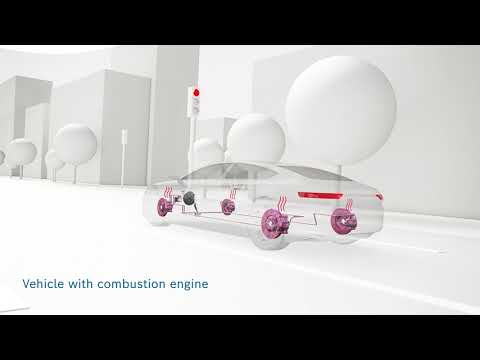
[0:05]Regenerative braking is the recovery of kinetic energy during braking. In vehicles with a combustion engine, a majority of the kinetic energy is converted during friction braking into heat and emitted unused into the environment.
[0:24]Hybrid or electric vehicles can use the electric motor to recuperate at least a portion of the kinetic energy for reuse.
[0:39]When the driver steps on the brake, the electric motor switches to generator mode. The drivetrain transfers the kinetic energy to the generator, which converts it into electrical energy. This energy is stored in the high voltage battery. The generative braking torque of the electric motor, which is the result of energy generation, decelerates the vehicle. At low speeds, for example, shortly before the vehicle comes to a stop, the electric motor can no longer supply sufficient generative braking torque and the friction brake must be activated. To maintain the required deceleration, the braking torque from the friction brake is continuously adapted to the current generative braking torque, a process called torque blending. Regenerative braking systems from Bosch play a crucial role in this process. For example, the electromechanical brake booster iBooster in combination with ESP hev for hybrid and electric vehicles, or alternatively, the integrated solution integrated power brake, detect the driver's braking request and regulate the torque blending. With all these braking system variants, a deceleration rate of up to 0.3g is possible. In the case of full braking or in unstable driving conditions, the vehicle is usually decelerated solely via the friction brake, as wheel specific interventions are required. Overall, regenerative braking makes far less use of friction braking. This leads to less wear and a significant reduction in brake dust. Regenerative braking systems from Bosch for increased ranges, lower fuel consumption and an improved CO2 balance.