[0:07]Wow, that's a big crowd. That's a lot of people. I think it's like a record. So, these are accomplishments. We have a lot of accomplishments. And as you know, this is the anniversary for an amazing period of time. Marking one year since the start of his second term, US President Donald Trump appeared at a press briefing. all page after page, after page, individual things. I could stand here and read it for a week and we wouldn't be finished. Reporters from the fact checking organization Politifact scrutinize the accuracy of his claims. all allowed in here by an open border policy of the worst president in the history of our country. A man that didn't win the election, by the way, got was a rigged election. Everybody knows that now. They verify his claims using primary sources and experts.
[1:13]Politifact is among the most prestigious fact checking sites in the US and a Pulitzer Prize winner. Venezuela, as an example, opened their prisons into the United States. That's why one of the reasons I felt so strongly against Venezuela. Um he just talks a lot. He says stuff which is stuff often that he said before. Even after fact checkers and other journalists have written uh are, you know, untrue, he still says those things anyway. One controversial remark follows another as President Trump confounds the media. Working from a neutral standpoint, reporters carry out their verification while facing a range of challenges. Yes, I've received uh threats to murder me, um threats to commit to rape me. Like I've received very violent threats, um against me. Uh, we all have. Um, and so they're really can be very scary. We have to be selective, and that means like there's a lot of claims that are wrong that go unchecked because we're just prioritizing other like what we see is the most important. With the arrival of 2026, tensions grow in the United States. This is an inside look at the front lines of fact checking, where the fight over truth unfolds.
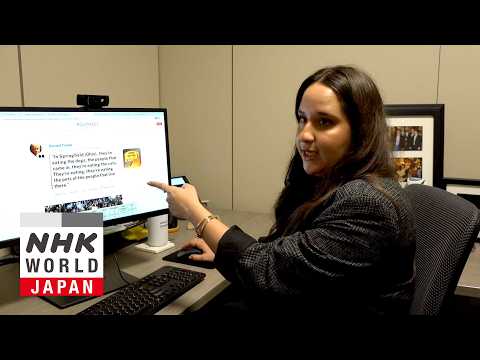
[3:03]Eight months into the second Trump administration, our cameras are allowed inside Politifact's Washington office, just behind the White House.
[3:17]Four reporters work in rotating shifts, monitoring President Trump's press briefings around the clock. At 4:00, a press conference of special interest to them is scheduled.
[3:34]Hi everyone. Hello. Morning. Hello. From the Florida headquarters, the editor-in-chief coordinates with reporters nationwide. Um and maybe Maria Ramirez, you've been listening to Trump's latest all weekend so maybe you have some suggestions for things that we should add to the doc or modify. conference with Leavit, and then a 4pm event at the White House will look where they'll talk about this um autism research. I know at the end of the day, Tylenol pressers, something that we've we've done some work on already, so we want to make sure capitalize on our existing reporting on that. The press conference is set to focus on a possible link between autism and Tylenol. Tylenol is an over-the-counter drug widely used for headaches and fever, and it's often described as safe for use during pregnancy.
[4:37]Thank you very much. A cetaminophen, is that okay? Which is basically commonly known as Tylenol. During pregnancy can be associated with a very increased risk of autism. Don't take Tylenol. There's no downside.
[5:04]Don't take it. You'll be uncomfortable Observers pointed to the influence of Health and Human Services Secretary Robert F. Kennedy Jr., a prominent critic of vaccines and drugs. Trump seems to respect his position. I mean he appointed him to be Secretary of Health and Human Services. And so I think that if if RFK Jr. or his advisors are raising a concern to the president, the president is is listening to that and in this case at least amplifying that to the the country at large. Yeah, that's why this is why this is such a big deal is like the fact that this is the go-to, the only pain reliever, pain reducer. So like if they suddenly start saying that this is also not safe that doesn't leave people with a lot of options. Don't take Tylenol. There's no downside. Madison Czopec reaches out to medical professionals. Fortunately, I have written on this a little bit before. So I had already linked in my previous story some some resources that'll be available to us. So right now, I'm emailing someone from, it's an organization called the Society for Maternal and Fetal Medicine. And I'm speaking to them, um, asking them essentially if they can provide a response to the question, um, is it accurate to say that there's no downside to avoiding Tylenol when you're pregnant, if you have a fever or pain. Um, and it's essentially asking them to sort of elaborate on that question.
[6:37]Czopec also examines the latest research on a possible link between prenatal use and autism in children.
[6:53]What Trump had said was there is no downside to avoiding Tylenol during pregnancy, when there is actually studies that suggest that, you know, avoiding using or having a very high untreated fever during pregnancy can can cause real harm. So there could potentially be a downside. More than 40 sources are consulted, including medical groups and universities worldwide.
[7:22]The reporting finds that if fever in early pregnancy is not properly managed, it can pose a risk to the lives of both mother and child.
[7:36]It also indicates that no causal link has been established between the use of the drug acetaminophen during pregnancy and autism.
[7:50]The reporting continues overnight.
[8:04]In the morning, as the article takes shape, reporters and editors assess the level of falsehood.
[8:20]uh evidence to support that it's not um, there's no downside to not taking Tylenol. Rebecca, it sort of seemed like there was both no evidence to support that there's not a downside to this and overwhelmingly the consensus we got from everyone who was able to respond to us or who did respond to us and and talk about the research were pointing to that this is actually like there are significant downsides potentially um that people need to be aware of. I was flagging that one of our headlines said false. And so when I was reading the story, I thought it was gonna be false, but I was thinking, you know, um, the the comments from medical professional saying that like this quip is actually dangerous is um is um like heightens it a bit more from false and is that what you all's rationale was? Politifact uses its truth-o-meter, rating claims on a six-point scale for quick clarity.
[9:25]Misinformation is labeled false. The most egregious claims are rated pants on fire!
[9:37]this is just me doing a last check to make sure that like all the edits or all the um art like in beds that we included look okay. So now you send it to the editor. Yeah. So she will put eyes on it probably pretty quickly and then she will go ahead. Yep.
[10:06]The statement by President Trump has been fact-checked.
[10:19]Trump is wrong: There are downsides to avoiding Tylenol, not treating fever while pregnant.
[10:28]The article lists all sources consulted. Each is linked, allowing readers to verify the information for themselves.
[10:44]there's a real like potential danger for for people if they're getting this information and, you know, you're getting conflicting medical advice coming at you from doctors and then from the president of the United States. Um so I think there was a time pressure to try to move on this as fast as possible, which is why like I was working late last night.
[11:10]Politifact was founded in 2007 by reporters at a local newspaper in Florida. The aim was to make a systematic way to fact check claims of politicians. Instead of long articles buried in the newspaper, the team created a clear rating system. For the very beginning, you know, Politifact um approach was to fact check everybody. So they they fact check both sides, both the parties. During the 2008 presidential election, Barack Obama and John McCain engaged in an increasingly negative campaign. Senator Obama is spending unprecedented unprecedented in the history of American politics, going back to the beginning, amounts of money in negative attack ads on me. And 100%, John, of your ads, 100% of them have been negative. Without favoring either political party, Politifact examined more than 750 campaign speeches. The work, now regarded as an early model of modern fact checking, offered a new lens on election reporting. Its significance was recognized by the award of a Pulitzer Prize, surpassing coverage by major media outlets.
[12:50]To maintain its independence, Politifact relies on funding from individual donors and supporting organizations.
[13:14]He talks a lot. Um, he loves to do it. He loves to talk. So, um, he says stuff. So we're never at a shortage of things to fact check. He also, uh, unlike a lot of the past presidents, um, he does shoot from the hip a lot, which means uh that he's saying things that um really is off the top of his head. And, uh, um has not been vetted by his staff for accuracy. So, uh, he is unusual. President Trump continues to issue one controversial statement after another. To explore the intent behind them, we consult with an expert in politics and the media. When I think of the phrase flood the zone as a strategy, um, we think of it as as part of the Republican Party strategy. Often it's attributed to Steve Bannon, who is a key advisor to Donald Trump. And the basic idea in flooding the zone is to overwhelm the opposition. In this case, everybody from the Democratic Party to the media, to the legal system, just to overwhelm them with a lot of different attacks at the same time. Um, and some of those actions may come in the form of executive orders, it might come in the form of statements to the press, but it's basically to create so many newsworthy items, so many different strategies at once that it's impossible to respond to them all at once. A flood of statements issued in rapid succession keeps the media scrambling. Executive orders, which bypass Congress, cover everything from environmental rollbacks to withdrawing from international agreements, even banning paper straws. In just one year in office, the number has already exceeded what recent presidents issued over an entire four-year term.
[15:22]One incident highlights President Trump's so-called "flood the zone" strategy, forcing journalists to report faster than ever before. On September 23rd, he appears at the United Nations Headquarters. It is his first address to the United Nations General Assembly since the start of his second term.
[15:55]At Politifact, Jacobson and younger colleague Maria Ramirez Uribe carry out the fact checking.
[16:05]When they determine that a statement is inaccurate, they publish corrective information immediately in real time.
[16:19]And I don't mind making this speech without a teleprompter because the teleprompter is not working. Under my leadership, energy costs are down. Gasoline prices are down. Grocery prices are down. Mortgage rates are down, and inflation has been defeated in the last short period of time. After consulting experts and reviewing data, Jacobson publishes real-time fact-checking updates.
[17:03]A year ago, it was millions and millions of people pouring in from all over the world, from prisons, from mental institutions, drug dealers. All over the world they came. They just poured into our country.
[17:42]Uribe verifies claims with academic and policy experts.
[18:02]We're going to make our country's better. Speeches are typically limited to around 15 minutes, but this one stretches to an unusual full hour. A flood of information followed.
[18:20]After issuing updates in real time, Uribe turns to writing a comprehensive report. We have 1, 2, 3, 4, about 14, it seems like. So about 14 different statements. Um and now I'm loading those onto our website.
[18:49]So that's done. Over the course of the 60-minute speech, 14 statements were judged to be false. One difficulty is definitely that he makes a lot of fact-checkable statements. And so we we want to but we cannot fact check everything. So it's difficult to make the decision about what is the most important. And as fact checkers, it's really important that the statement we're fact checking is clear, um so that we can assign a rating to it. So that's sometimes a little bit difficult is trying to figure out what exactly was he saying, what exactly did he mean? Um did he just use the wrong word or is he truly misleading the audience?