[0:04]In this video, you are going to learn what is financial reporting. Financial reporting is the process of disclosing financial information about a company's performance and financial position. It involves gathering, analyzing, and summarizing financial data to create comprehensive reports that can be used by internal and external stakeholders. Financial reports serve as a communication tool that provides stakeholders, such as investors, lenders, employees, and regulatory authorities, with an understanding of the company's financial health. They offer a snapshot of the organization's financial performance, its assets and liabilities, and its overall financial position. Objective of Financial Reporting. The objective of financial reporting is to provide relevant and reliable financial information about a company to its stakeholders. Financial reporting serves the following purposes: To facilitate decision-making: Financial reports provide stakeholders with information that helps them make informed decisions about whether to invest in or lend to a company, as well as to evaluate its financial health and performance. To Communicate financial performance: Financial reports provide a summary of a company's financial performance and position, including its revenues, expenses, assets, liabilities, and equity. This information can be used to evaluate a company's profitability, liquidity, and solvency. To Building trust with stakeholders: Financial reporting helps build trust with stakeholders by providing transparent and accurate information about a company's financial activities. This is important for maintaining a positive reputation and attracting investors and customers. Please like the video, it will be helpful for this channel. Now come to types of financial reporting. There are several types of financial reporting that companies use to communicate financial information to their stakeholders. Some of the most common types of financial reporting include: Number one. Financial Statements: Financial statements are the most common form of financial reporting. They include the balance sheet, income statement, statement of cash flows, and statement of changes in equity. These statements provide a summary of a company's financial position, performance, cash flows, and changes in equity. Two. Annual Reports: Annual reports are comprehensive reports that companies publish annually to provide shareholders and other stakeholders with an overview of the company's financial performance and operations over the past year. The report includes financial statements, a letter from the CEO or Chairman, and other relevant information. Three. Management Discussion and Analysis (MD&A): The MD&A is a section of a company's financial report that provides an analysis of the financial statements and other financial information. It includes discussions on trends, significant events, risks and uncertainties that may affect the company's financial performance. Four. Regulatory Filings: Companies are required to file financial reports with regulatory bodies such as the Securities and Exchange Commission, (S.E.C.). These filings include: Annual reports, Quarterly reports, and other filings as required. Five. Sustainability Reports: Sustainability reports provide information on a company's environmental, social, and governance performance. They include information on the company's sustainability goals, progress, and initiatives. These are some of the common types of financial reports that companies use to communicate financial information to their stakeholders. Now move on to the benefits of financial reporting. Financial reporting provides several benefits to a company and its stakeholders, including: Transparency: Financial reporting promotes transparency and accountability by providing stakeholders with timely and accurate information about a company's financial performance and position. This helps build trust and confidence in the company and its management. Informed decision-making: By providing relevant and reliable financial information, financial reporting helps stakeholders evaluate a company's financial health and performance, assess risks and opportunities, and make strategic decisions. Compliance: Financial reporting helps companies comply with legal and regulatory requirements by providing accurate and complete financial information in accordance with accounting standards and regulations. Investor confidence: Financial reporting helps attract investors by providing transparent and accurate information about a company's financial performance and position. Performance evaluation: Financial reporting helps companies evaluate their own financial performance and position, identify areas for improvement, and develop strategies to achieve their financial goals. In conclusion, financial reporting serves as a cornerstone of effective business management. By providing a comprehensive view of a company's financial health, it enables stakeholders to make informed decisions, facilitates strategic planning, and fosters transparency and accountability. If you want to read in details or download the PDF, go through the link in the description, and don't forget to subscribe to Education Leaves.
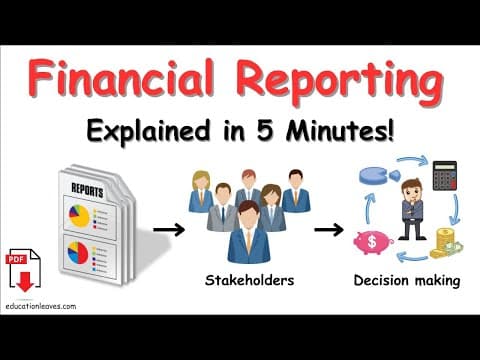
What is Financial reporting? | Definition, Types, Benefits of Financial reporting
Educationleaves
5m 51s711 words~4 min read
Auto-Generated
Watch on YouTube
Share
MORE TRANSCRIPTS