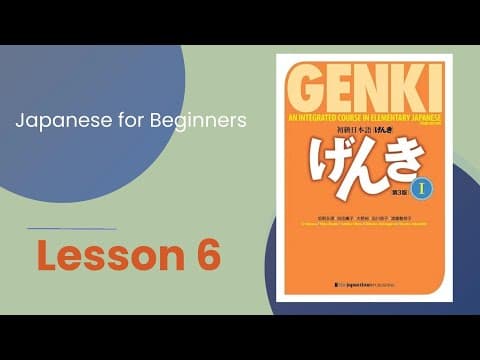
[0:03]ロバートさんの一日
[0:09]漢字 漢字 教科書 教科書 ページ ページ 次 次 お金 お金 荷物 荷物 パソコン パソコン シャワー シャワー エアコン エアコン 電気 電気 窓 窓 電車 電車 国 国 今週 今週 来週 来週 来年 来年 夜 夜 大変 大変 遊ぶ 遊ぶ 急ぐ 急ぐ 返す 返す 消す 消す 死ぬ 死ぬ 座る 座る 立つ 立つ たばこを吸う たばこを吸う 使う 使う 手伝う 手伝う 入る 入る 持つ 持つ 休む 休む 開ける 開ける 閉める 閉める 教える 教える 忘れる 忘れる 降りる 降りる 借りる 借りる シャワーを浴びる シャワーを浴びる つける つける 電話する 電話する 連れてくる 連れてくる 持ってくる 持ってくる 後で 後で すぐ すぐ ゆっくり ゆっくり 結構です 結構です 本当ですか? 本当ですか?
[2:45]In previous lesson we learned how to transform a verb from its dictionary form to the ます-form. Today we'll focus on another crucial form known as the て-form. What exactly is the て-form? Its meaning varies depending on the component that follows the て. For instance, in lesson two we learned “~てください”. When ください is placed after the て-form of a verb, it conveys the meaning of “please do something”. Apart from expressing “please do something”, you can also combine the て-form with other elements to convey different meanings. First, let's understand the process of converting a verb from its dictionary form to the て-form. When discussing the rules for the て-form, it is essential to consider the three types of verbs, as each type follows distinct rules. For る-verbs, similar to the ます-form, you simply remove the る and add て. For example, “たべる” becomes “たべて”, “ねる” becomes “ねて”, “みる” becomes “みて”. As for う-verbs, the process can be somewhat intricate. You should examine the last kana of the verb. If the final kana is う、つ or る, it transforms into a small っ before adding て. For example, “あう” becomes “あって”, “まつ” becomes “まって”, “とる” becomes “とって”. Wondering how to memorize these rules? Here are some tips. うつる, these three kana together form a word that “coincidentally” means “to reflect”. The large つ mirrors the smaller っ. Since うつる follow the same rule for て-form, they also change to a smaller っ。 If the last kana of a verb is む、ぶ or ぬ, it changes to ん before adding で. For example, “よむ” becomes “よんで”, “あそぶ” becomes “あそんで”, “しぬ” becomes “しんで”. Finding it challenging to remember むぶぬ? All Japanese verbs end with kana from the う-column, so you just need to recall the initials “MBN”.
[5:24]Still finding it hard to remember? Consider this phrase: Morning Big News. Now, whenever you encounter verbs associated with Morning Big News, remember to change them to んで. Let's continue exploring the て-form rules for other う-verbs. When the last kana of a verb is く, it changes to い before adding て. For example, “かく” becomes “かいて”. You can remember this through the word クイズ, “Quiz”. Well, there’s a special one, いく that doesn’t follow the usual pattern. Its て-form is not いいて but いって. If the last kana is ぐ, it transforms into い before adding で. Although the points on ぐ shift to て resulting in で, it’s still referred to as the て-form. For verbs ending in す, the す changes to し before adding て. For example, “はなす” becomes “はなして”. To remember this change, think of the word “すし”. These rules apply to う-verbs. What about irregular verbs? Fortunately, there are only two, する and くる. For する, the て-form is して, as seen in べんきょうする becoming べんきょうして. For くる, it changes to きて. Does this look familiar? Indeed, these follow the same rules as the ます-form for irregular verbs.
[7:21]This means that if you can form the ます-form for irregular verbs, you can confidently create the て-form as well. Now that you've learned how to form the て-form, mastering this て-form will undoubtedly elevate your Japanese proficiency to the next level. So which sentence patterns use this て-form? ~てください. For example if you want to say “please wait”, the verb “wait” is “まつ”. To form “please wait”, you can change まつ to its て-form “まって” and then add ください. まってください。 For informal situations you can omit “ください”. “Sit down, please” can be translated as “すわってください”. Here, “すわる” becomes “すわって” followed by “ください”. To say “please open the door”, you can use “あける” in its て-form. “あけてください”. “ドアをあけてください”. For “please read this book”, the verb よむ transforms to よんで in its て-form, and then add ください. “この本をよんでください”. たってください。 いそいでください。 きょうかしょをもってきてくださいね。 How do you say “please come here.” using the verb “くる”? ここにきてください。 To express “why someone does something”, you can use から, which means “because”. For example, why do I need to bring the textbook with me? Because we use it every day. 毎日つかいますから。 Unlike English, “because” is not placed at the beginning of sentence, but follows the reason in Japanese. Here’s another example. レストランにいきません。あまりお金がありませんから。 You can also structure your sentence by first stating the reason with から and then presenting the result or decision. In this sequence, the sentence will be longer and separated by a comma after から. あまりお金がありませんから、レストランにいきません。
[10:04]The particle と can be used as “and/with” when connecting two nouns. But how do you express “and” between two verbs? Actually you can use て to connect them. For example, to say “I get up and then eat”, you have two verbs: おきる and たべる. To connect them, you change the first verb “おきる” to its て-form おきて, and then add the second verb “たべる”. For formal occasions you can use the ます-form たべます. You can even specify what you eat, such as “Breakfast”. おきて朝ごはんをたべます。
[10:52]How about expressing past tense, like “yesterday I went home and ate dinner”? うちにかえって晩ごはんをたべました。 In Japanese, the past tense is reflected in the latter part of the sentence rather than preceding the て-form. Sometimes the て-form connecting two brief sentences indicates a reason and is translated as “and”. You can liken this to a cause-and-effect relationship. きょうかしょをわすれて、すみません。 What other uses does て-form have? You can append もいいです after the て-form to indicate “may do something” or “it’s okay to do something”. For example, ここにすわってもいいです。 For questions, you can add か at the end of the sentence. てもいいですか. 見てもいいですか? 見て もいいですか? 写真を撮ってもいいですか。 ええ、いいですよ。どうぞ。
[12:03]すみません。ちょっと。
[12:09]この本を読んでもいいですか。 ええ、どうぞ。 If it is not okay to do something, you can say てはいけません。 The は is a particle and is pronounced as WA. でんわしてはいけません。 写真をとってはいけません。 ここで写真をとってはいけません。 ここでおよいではいけません。 ここでたばこをすってはいけません。 パスワードをわすれてはいけません。
[13:03]We previously learned the expression ましょうか in Lesson 5, which indicates an invitation or suggestion. It can also be used to say “Shall I do something for you?” to express kindness. にもつをもちましょうか。 手伝いましょうか。 It’s hot in the room and you’re sweating. I might ask: まどをあけましょうか。 For positive response you can say: すみません。お願いします。 If you don’t think it’s necessary, you can respond with: いいえ、大丈夫です。or いいえ、結構です。 The word すぐ can be used as an adverb before a verb, meaning “soon”, “right away” or “immediately”. すぐかえします。 すぐ行きます。 すぐおります。 すぐ持ってきます。
[14:16]ロバートさん、つぎのページを読んでください。 ロバートさん、おきてください。 クラスで寝てはいけませんよ。 先生、教科書を忘れました。 教科書を持ってきてくださいね。 毎日使いますから。 はい、すみません。
[14:50]ロバートさん、今日はたいへんでしたね。 ええ、あとでソラさんのノートを借りてもいいですか。 いいですよ。 ありがとう。すぐかえします。 ロバートさん、あしたテストがありますよ。 えっ。本当ですか。 ええ。ロバートさん、金曜日に休みましたからね。 じゃあ、今日は家に帰って、勉強します。
[15:30]あのう、すみません。 このバスはさくらびょういんへ行きますか。 ええ、行きますよ。 あのう、どうぞ座ってください。 いいえ、結構です。 すぐおりますから。 そうですか。じゃあ、荷物を持ちましょうか。 あ、どうもすみません。
[16:13]テレビを消してください。
[16:24]エアコンをつけてもいいですか。
[16:35]荷物を忘れてはいけません。
[16:43]じゃあまたね。