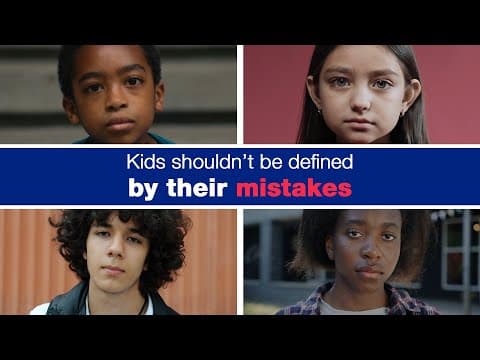
[0:07]If you have a child who's experienced many different adverse childhood experiences and then you add to that a trauma of being involved in the juvenile justice system,
[0:19]that will not produce a an adult who will be healthy, mentally, physically, socially, emotionally.
[0:28]And so getting children involved in the justice in the juvenile justice system is not helpful to them in any way, shape or form at any age, but certainly not as young as six years old.
[0:41]All of our children really need to know that we all care for them and that a mistake which many of us have made,
[0:52]um, should not be held against them and shouldn't and should not define them for the rest of their lives.
[1:08]So these children really need to be looked at in in total and given support as opposed to being punished.
[1:17]Trauma informed care takes into account all of the different things that children may have gone through in their lives and ask not the question of what is wrong with you, but ask the question of what has happened to you.
[1:29]And therefore be supportive of them and taking care of them and help them to deal with these traumas in order to become well adjusted adults.
[1:50]When I was a youth and um, I went to a a wonderful, um, opportunity in our nation's capital, um, it was an an art, uh, exhibition that I had my photography being, um, displayed.
[2:08]The keynote speaker was a young man who was involved in the juvenile justice system, and he talked about how when he was in the system, he and his fellow youth had, um, he he called it no possibility of a concept of a future.
[2:30]It really hit home to me because here I was at this competition, knew I was going on to college. I had my future sort of planned out for me, um, and yet this young man, who was just a few years older than me, was talking about himself and his fellow, um, children who were incarcerated, who didn't have a concept that they had a future ahead of them.
[3:03]And so, when you don't have a concept of having a future ahead of you, the decisions that you make are in the moment and are born of survival. And so being able to provide hope and to fight for them is what has driven me into pediatrics and has driven my life's work.
[3:29]Nobody should be able to take away hope from a child.


