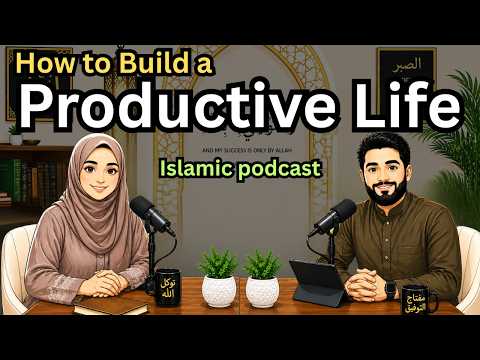
[0:01]Welcome to Fresh English, where we learn English slowly, clearly, and beautifully. Here, you improve your English while learning wisdom for life, faith, discipline, and personal growth. Today's topic is very special because many people say, I have no time. I am always busy. My day finishes, but nothing gets done. And many people feel tired, stressed, and behind in life. But Islam teaches us something powerful. Time is life. If you waste time, you waste your life. So today, we will learn how to build a productive life. Islamic Time Management Secrets Asif? Asif, why is time so important in Islam? Because Allah Himself swears by time in the Quran. Subhanallah. Allah says in Surah Al-Asr, By time. Indeed, mankind is in loss. This means most people are losing in life? Yes. Because they waste their time. Scrolling, sleeping too much, watching useless things. Living without purpose? Exactly. Every second is a gift from Allah. And one day, we will answer for it. The Prophet Muhammad SAW said, The feet of the son of Adam will not move on the Day of Judgment until he is asked about his life and how he spent it. Subhanallah. Imagine standing before Allah. And being asked, What did you do with your money? What did you do with your youth? What did you do with your free time? That question should wake every believer up. Asif, what is the biggest secret of productive people? They understand one truth. Everyone gets the same 24 hours. Rich people, poor people, successful people, struggling people. All get 24 hours. So the difference is not, time. The difference is discipline. There was once a scholar who was seen writing while walking, reading while eating, teaching while traveling. People asked him, why do you use every minute? He replied, because death comes quickly and knowledge is vast. Subhanallah. He knew life is short. What is the first Islamic secret of time management? Start your day with Fajr. Not at 10 a.m. Not at noon. But with Fajr. The Prophet sallallahu alaihi wasallam made dua. Oh Allah, bless my nation in their early mornings. That means barakah, blessing, productivity, energy. Comes in the morning. When you wake for Fajr, Fajr, you defeat laziness. You defeat shaitan. You prove discipline. You begin with Allah. And when your day begins with Allah, everything changes. My day starts with purpose. My day starts with Fajr. Successful people wake up early. Barakah comes in the morning. Asif, why do people waste time? Because they think they have more of it. But no one knows how much time remains. Exactly. Shaitan makes people believe you can change tomorrow. You can repent later. You can start next week. But tomorrow is never promised. Many people planned big dreams but died before completing them. Many people said, I will pray later. But later never came. Islam teaches structure, right? Yes. Look at the five daily prayers. They divide the entire day. Exactly. Fajr, Dhur, Asr, Maghrib, Isha. Allah already gave us a productivity system. Prayer teaches wake on time. Stop when needed. Reset your focus. Reconnect with purpose. Continue with discipline. Many people build prayer around work. But believers build work around prayer. Subhanallah. Powerful. Try this. After Fajr, deep work, study. After Dhur, main tasks. After Asr, meetings, errands. After Maghrib, family, reflection. After Isha, prepare for tomorrow. That is beautiful. A life organized by worship. Can being productive be worship? Yes, if intention is correct. Working to support family. Worship. Studying beneficial knowledge. Worship. Managing your time well. Worship. The Prophet, peace be upon him, said, Allah loves that when one of you does a job, he perfects it. Islam teaches excellence, not laziness. So today we learned. Time is life. Allah will ask about our time. Most people lose because they waste time. Fajr is the key to productive mornings. Prayer creates structure in life. And productivity can become worship. Asif, is laziness just a bad habit? No. In Islam, Laziness is a spiritual danger. Why? Because laziness stops worship, kills goals, destroys potential, and wastes life. The Prophet Muhammad sallallahu alayhi wasallam used to make this dua, Oh Allah, I seek refuge in you from anxiety and grief, from weakness and laziness.
[10:15]Say this every morning. And ask Allah to give you strength. Today we learned, laziness is dangerous. The Prophet sallallahu alayhi wasallam sought protection from it. Shaitan loves delay. Starting small defeats procrastination. Distractions steal life. Discipline matters more than feelings. And strong purpose creates strong action. Do not wait to feel ready. Do not wait for perfect motivation. Do not let shaitan steal your time. Start now. Even if small. Even if imperfect. Just begin. We will learn how to plan your day like a productive Muslim. Because productivity is not about being busy. It is about being intentional. Asif, does Islam encourage planning? Absolutely. The Prophet Muhammad sallallahu alayhi wasallam planned carefully. Even though he trusted Allah? Yes. Because tawakkul means trust Allah after taking action. Islam teaches, tie your camel, then trust Allah. Meaning, prepare first. Then rely on Allah. What is the first step? of planning. Set intention. Why? Because intention gives direction. Each morning, ask yourself, what kind of person will I be today? A productive Muslim? A patient parent? A focused student? A disciplined worker? Repeat after me. Today, I will use my time wisely. Today, I will work with excellence. Today, I will seek Allah's pleasure. Many people make huge to-do lists. And complete none of them. So, what should they do? Choose your top three priorities. Because too many goals create overwhelm. And overwhelm creates procrastination. Exactly. Today's top three. Finish important work project. Study English for 30 minutes. Spend quality time with family. Simple, clear, focused. Earlier, we said prayer structures the day. Yes. Now, let's use that practically. After Fajr, Qur'an, Dua, planning, deep work. After Dor, main work, study, business tasks. After Asr, meetings, admin, exercise, errands. After Maghrib, family, Islamic learning, reflection. After Isha, prepare tomorrow, rest early. Many people multitask. And productivity drops. Really? Yes. Yes. Multitasking often means doing many things badly. Excellence requires attention. Focus is respect for the task. When studying? Just study. When praying? Just pray. When with family? Be fully present. Should every minute be planned? No. Leave margin. Why? Because life is unpredictable. A productive life is not chaos. And not burnout. It is sustainable development. Discipline. When should you plan tomorrow? The night before. Why? Because waking up without a plan wastes energy. Before sleep, write, My top three priorities. My appointments. My worship goals. One thing I am grateful for. Tell us an inspiring story. Umar ibn al-Khattab, radiallahu anhu, was extremely disciplined. He organized his day carefully. Served the people. Led the ummah. And served He worshipped deeply. He understood responsibility. Yes. Great leaders manage time with seriousness. Many people say, I have no time. But they spend four hours scrolling. Exactly. The Prophet, sallallahu alayhi wasallam, said, Part of a person's good Islam is leaving what does not concern him. That means, stop wasting energy on useless things. Why is attention important? Because where attention goes, life goes. If your attention is always broken, your life becomes broken. Try these. Put phone in another room while working. Turn off notifications. Schedule social media time. Work in focused blocks. Keep your desk clean. Many people say, I don't feel like doing it. Discipline means doing it anyway. The nafs wants comfort. The soul wants jannah. And every day, those two are fighting. There was a young student who wanted to memorize Quran. But he kept delaying. One day, his teacher told him, If you do not control your time, your time will control you. That changed his life. He began memorizing one page every morning. One page became ten. Ten became the whole Quran. How can someone become naturally productive? By having a purpose bigger than comfort. Explain that. When your why is strong, your excuses become weak. I want Allah to be pleased with me. I want to provide for my family. I want to build beneficial knowledge. I want to leave a legacy. Can you teach us a dua for laziness? Yes. Allahumma inni a'udhu bika minal ajzi wal kasal. Meaning, O Allah, I seek refuge in you from weakness and laziness.
[16:15]Say this every morning. And ask Allah to give you strength. Today we learned, laziness is dangerous. The Prophet sallallahu alayhi wasallam sought protection from it. Shaitan loves delay. Starting small defeats procrastination. Distractions steal life. Discipline matters more than feelings. And strong purpose creates strong action. Do not wait to feel ready. Do not wait for perfect motivation. Do not let shaitan steal your time. Start now. Even if small. Even if imperfect. Just begin. We will learn how to plan your day like a productive Muslim. Because productivity is not about being busy. It is about being intentional. Asif, does Islam encourage planning? Absolutely. The Prophet Muhammad sallallahu alayhi wasallam planned carefully. Even though he trusted Allah? Yes. Because tawakkul means trust Allah after taking action. Islam teaches, tie your camel, then trust Allah. Meaning, prepare first. Then rely on Allah. What is the first step? of planning. Set intention. Why? Because intention gives direction. Each morning, ask yourself, what kind of person will I be today? A productive Muslim? A patient parent? A focused student? A disciplined worker? Repeat after me. Today, I will use my time wisely. Today, I will work with excellence. Today, I will seek Allah's pleasure. Many people make huge to-do lists. And complete none of them. So, what should they do? Choose your top three priorities. Because too many goals create overwhelm. And overwhelm creates procrastination. Exactly. Today's top three. Finish important work project. Study English for 30 minutes. Spend quality time with family. Simple, clear, focused. Earlier, we said prayer structures the day. Yes. Now, let's use that practically. After Fajr, Qur'an, Dua, planning, deep work. After Dor, main work, study, business tasks. After Asr, meetings, admin, exercise, errands. After Maghrib, family, Islamic learning, reflection. After Isha, prepare tomorrow, rest early. Many people multitask. And productivity drops. Really? Yes. Yes. Multitasking often means doing many things badly. Excellence requires attention. Focus is respect for the task. When studying? Just study. When praying? Just pray. When with family? Be fully present. Should every minute be planned? No. Leave margin. Why? Because life is unpredictable. A productive life is not chaos. And not burnout. It is sustainable development. Discipline. When should you plan tomorrow? The night before. Why? Because waking up without a plan wastes energy. Before sleep, write, My top three priorities. My appointments. My worship goals. One thing I am grateful for. Tell us an inspiring story. Umar ibn al-Khattab, radiallahu anhu, was extremely disciplined. He organized his day carefully. Served the people. Led the ummah. And served He worshipped deeply. He understood responsibility. Yes. Great leaders manage time with seriousness. Many people say, I have no time. But they spend four hours scrolling. Exactly. The Prophet, sallallahu alayhi wasallam, said, Part of a person's good Islam is leaving what does not concern him. That means, stop wasting energy on useless things. Why is attention important? Because where attention goes, life goes. If your attention is always broken, your life becomes broken. Try these. Put phone in another room while working. Turn off notifications. Schedule social media time. Work in focused blocks. Keep your desk clean. Many people say, I don't feel like doing it. Discipline means doing it anyway. The nafs wants comfort. The soul wants jannah. And every day, those two are fighting. There was a young student who wanted to memorize Quran. But he kept delaying. One day, his teacher told him, If you do not control your time, your time will control you. That changed his life. He began memorizing one page every morning. One page became ten. Ten became the whole Quran. How can someone become naturally productive? By having a purpose bigger than comfort. Explain that. When your why is strong, your excuses become weak. I want Allah to be pleased with me. I want to provide for my family. I want to build beneficial knowledge. I want to leave a legacy. Can you teach us a dua for laziness? Yes. Allahumma inni a'udhu bika minal ajzi wal kasal. Meaning, O Allah, I seek refuge in you from weakness and laziness.
[22:15]Say this every morning. And ask Allah to give you strength. Today we learned, laziness is dangerous. The Prophet sallallahu alayhi wasallam sought protection from it. Shaitan loves delay. Starting small defeats procrastination. Distractions steal life. Discipline matters more than feelings. And strong purpose creates strong action. Do not wait to feel ready. Do not wait for perfect motivation. Do not let shaitan steal your time. Start now. Even if small. Even if imperfect. Just begin. We will learn how to plan your day like a productive Muslim. Because productivity is not about being busy. It is about being intentional. Asif, does Islam encourage planning? Absolutely. The Prophet Muhammad sallallahu alayhi wasallam planned carefully. Even though he trusted Allah? Yes. Because tawakkul means trust Allah after taking action. Islam teaches, tie your camel, then trust Allah. Meaning, prepare first. Then rely on Allah. What is the first step? of planning. Set intention. Why? Because intention gives direction. Each morning, ask yourself, what kind of person will I be today? A productive Muslim? A patient parent? A focused student? A disciplined worker? Repeat after me. Today, I will use my time wisely. Today, I will work with excellence. Today, I will seek Allah's pleasure. Many people make huge to-do lists. And complete none of them. So, what should they do? Choose your top three priorities. Because too many goals create overwhelm. And overwhelm creates procrastination. Exactly. Today's top three. Finish important work project. Study English for 30 minutes. Spend quality time with family. Simple, clear, focused. Earlier, we said prayer structures the day. Yes. Now, let's use that practically. After Fajr, Qur'an, Dua, planning, deep work. After Dor, main work, study, business tasks. After Asr, meetings, admin, exercise, errands. After Maghrib, family, Islamic learning, reflection. After Isha, prepare tomorrow, rest early. Many people multitask. And productivity drops. Really? Yes. Yes. Multitasking often means doing many things badly. Excellence requires attention. Focus is respect for the task. When studying? Just study. When praying? Just pray. When with family? Be fully present. Should every minute be planned? No. Leave margin. Why? Because life is unpredictable. A productive life is not chaos. And not burnout. It is sustainable development. Discipline. When should you plan tomorrow? The night before. Why? Because waking up without a plan wastes energy. Before sleep, write, My top three priorities. My appointments. My worship goals. One thing I am grateful for. Tell us an inspiring story. Umar ibn al-Khattab, radiallahu anhu, was extremely disciplined. He organized his day carefully. Served the people. Led the ummah. And served He worshipped deeply. He understood responsibility. Yes. Great leaders manage time with seriousness. Many people say, I have no time. But they spend four hours scrolling. Exactly. The Prophet, sallallahu alayhi wasallam, said, Part of a person's good Islam is leaving what does not concern him. That means, stop wasting energy on useless things. Why is attention important? Because where attention goes, life goes. If your attention is always broken, your life becomes broken. Try these. Put phone in another room while working. Turn off notifications. Schedule social media time. Work in focused blocks. Keep your desk clean. Many people say, I don't feel like doing it. Discipline means doing it anyway. The nafs wants comfort. The soul wants jannah. And every day, those two are fighting. There was a young student who wanted to memorize Quran. But he kept delaying. One day, his teacher told him, If you do not control your time, your time will control you. That changed his life. He began memorizing one page every morning. One page became ten. Ten became the whole Quran. How can someone become naturally productive? By having a purpose bigger than comfort. Explain that. When your why is strong, your excuses become weak. I want Allah to be pleased with me. I want to provide for my family. I want to build beneficial knowledge. I want to leave a legacy. Can you teach us a dua for laziness? Yes. Allahumma inni a'udhu bika minal ajzi wal kasal. Meaning, O Allah, I seek refuge in you from weakness and laziness.
[28:15]Say this every morning. And ask Allah to give you strength. Today we learned, laziness is dangerous. The Prophet sallallahu alayhi wasallam sought protection from it. Shaitan loves delay. Starting small defeats procrastination. Distractions steal life. Discipline matters more than feelings. And strong purpose creates strong action. Do not wait to feel ready. Do not wait for perfect motivation. Do not let shaitan steal your time. Start now. Even if small. Even if imperfect. Just begin. We will learn how to plan your day like a productive Muslim. Because productivity is not about being busy. It is about being intentional. Asif, does Islam encourage planning? Absolutely. The Prophet Muhammad sallallahu alayhi wasallam planned carefully. Even though he trusted Allah? Yes. Because tawakkul means trust Allah after taking action. Islam teaches, tie your camel, then trust Allah. Meaning, prepare first. Then rely on Allah. What is the first step? of planning. Set intention. Why? Because intention gives direction. Each morning, ask yourself, what kind of person will I be today? A productive Muslim? A patient parent? A focused student? A disciplined worker? Repeat after me. Today, I will use my time wisely. Today, I will work with excellence. Today, I will seek Allah's pleasure. Many people make huge to-do lists. And complete none of them. So, what should they do? Choose your top three priorities. Because too many goals create overwhelm. And overwhelm creates procrastination. Exactly. Today's top three. Finish important work project. Study English for 30 minutes. Spend quality time with family. Simple, clear, focused. Earlier, we said prayer structures the day. Yes. Now, let's use that practically. After Fajr, Qur'an, Dua, planning, deep work. After Dor, main work, study, business tasks. After Asr, meetings, admin, exercise, errands. After Maghrib, family, Islamic learning, reflection. After Isha, prepare tomorrow, rest early. Many people multitask. And productivity drops. Really? Yes. Yes. Multitasking often means doing many things badly. Excellence requires attention. Focus is respect for the task. When studying? Just study. When praying? Just pray. When with family? Be fully present. Should every minute be planned? No. Leave margin. Why? Because life is unpredictable. A productive life is not chaos. And not burnout. It is sustainable development. Discipline. When should you plan tomorrow? The night before. Why? Because waking up without a plan wastes energy. Before sleep, write, My top three priorities. My appointments. My worship goals. One thing I am grateful for. Tell us an inspiring story. Umar ibn al-Khattab, radiallahu anhu, was extremely disciplined. He organized his day carefully. Served the people. Led the ummah. And served He worshipped deeply. He understood responsibility. Yes. Great leaders manage time with seriousness. Many people say, I have no time. But they spend four hours scrolling. Exactly. The Prophet, sallallahu alayhi wasallam, said, Part of a person's good Islam is leaving what does not concern him. That means, stop wasting energy on useless things. Why is attention important? Because where attention goes, life goes. If your attention is always broken, your life becomes broken. Try these. Put phone in another room while working. Turn off notifications. Schedule social media time. Work in focused blocks. Keep your desk clean. Many people say, I don't feel like doing it. Discipline means doing it anyway. The nafs wants comfort. The soul wants jannah. And every day, those two are fighting. There was a young student who wanted to memorize Quran. But he kept delaying. One day, his teacher told him, If you do not control your time, your time will control you. That changed his life. He began memorizing one page every morning. One page became ten. Ten became the whole Quran. How can someone become naturally productive? By having a purpose bigger than comfort. Explain that. When your why is strong, your excuses become weak. I want Allah to be pleased with me. I want to provide for my family. I want to build beneficial knowledge. I want to leave a legacy. Can you teach us a dua for laziness? Yes. Allahumma inni a'udhu bika minal ajzi wal kasal. Meaning, O Allah, I seek refuge in you from weakness and laziness.
[34:15]Say this every morning. And ask Allah to give you strength. Today we learned, laziness is dangerous. The Prophet sallallahu alayhi wasallam sought protection from it. Shaitan loves delay. Starting small defeats procrastination. Distractions steal life. Discipline matters more than feelings. And strong purpose creates strong action. Do not wait to feel ready. Do not wait for perfect motivation. Do not let shaitan steal your time. Start now. Even if small. Even if imperfect. Just begin. We will learn how to plan your day like a productive Muslim. Because productivity is not about being busy. It is about being intentional. Asif, does Islam encourage planning? Absolutely. The Prophet Muhammad sallallahu alayhi wasallam planned carefully. Even though he trusted Allah? Yes. Because tawakkul means trust Allah after taking action. Islam teaches, tie your camel, then trust Allah. Meaning, prepare first. Then rely on Allah. What is the first step? of planning. Set intention. Why? Because intention gives direction. Each morning, ask yourself, what kind of person will I be today? A productive Muslim? A patient parent? A focused student? A disciplined worker? Repeat after me. Today, I will use my time wisely. Today, I will work with excellence. Today, I will seek Allah's pleasure. Many people make huge to-do lists. And complete none of them. So, what should they do? Choose your top three priorities. Because too many goals create overwhelm. And overwhelm creates procrastination. Exactly. Today's top three. Finish important work project. Study English for 30 minutes. Spend quality time with family. Simple, clear, focused. Earlier, we said prayer structures the day. Yes. Now, let's use that practically. After Fajr, Qur'an, Dua, planning, deep work. After Dor, main work, study, business tasks. After Asr, meetings, admin, exercise, errands. After Maghrib, family, Islamic learning, reflection. After Isha, prepare tomorrow, rest early. Many people multitask. And productivity drops. Really? Yes. Yes. Multitasking often means doing many things badly. Excellence requires attention. Focus is respect for the task. When studying? Just study. When praying? Just pray. When with family? Be fully present. Should every minute be planned? No. Leave margin. Why? Because life is unpredictable. A productive life is not chaos. And not burnout. It is sustainable development. Discipline. When should you plan tomorrow? The night before. Why? Because waking up without a plan wastes energy. Before sleep, write, My top three priorities. My appointments. My worship goals. One thing I am grateful for. Tell us an inspiring story. Umar ibn al-Khattab, radiallahu anhu, was extremely disciplined. He organized his day carefully. Served the people. Led the ummah. And served He worshipped deeply. He understood responsibility. Yes. Great leaders manage time with seriousness. Many people say, I have no time. But they spend four hours scrolling. Exactly. The Prophet, sallallahu alayhi wasallam, said, Part of a person's good Islam is leaving what does not concern him. That means, stop wasting energy on useless things. Why is attention important? Because where attention goes, life goes. If your attention is always broken, your life becomes broken. Try these. Put phone in another room while working. Turn off notifications. Schedule social media time. Work in focused blocks. Keep your desk clean. Many people say, I don't feel like doing it. Discipline means doing it anyway. The nafs wants comfort. The soul wants jannah. And every day, those two are fighting. There was a young student who wanted to memorize Quran. But he kept delaying. One day, his teacher told him, If you do not control your time, your time will control you. That changed his life. He began memorizing one page every morning. One page became ten. Ten became the whole Quran. How can someone become naturally productive? By having a purpose bigger than comfort. Explain that. When your why is strong, your excuses become weak. I want Allah to be pleased with me. I want to provide for my family. I want to build beneficial knowledge. I want to leave a legacy. Can you teach us a dua for laziness? Yes. Allahumma inni a'udhu bika minal ajzi wal kasal. Meaning, O Allah, I seek refuge in you from weakness and laziness.
[40:15]Say this every morning. And ask Allah to give you strength. Today we learned, laziness is dangerous. The Prophet sallallahu alayhi wasallam sought protection from it. Shaitan loves delay. Starting small defeats procrastination. Distractions steal life. Discipline matters more than feelings. And strong purpose creates strong action. Do not wait to feel ready. Do not wait for perfect motivation. Do not let shaitan steal your time. Start now. Even if small. Even if imperfect. Just begin. We will learn how to plan your day like a productive Muslim. Because productivity is not about being busy. It is about being intentional. Asif, does Islam encourage planning? Absolutely. The Prophet Muhammad sallallahu alayhi wasallam planned carefully. Even though he trusted Allah? Yes. Because tawakkul means trust Allah after taking action. Islam teaches, tie your camel, then trust Allah. Meaning, prepare first. Then rely on Allah. What is the first step? of planning. Set intention. Why? Because intention gives direction. Each morning, ask yourself, what kind of person will I be today? A productive Muslim? A patient parent? A focused student? A disciplined worker? Repeat after me. Today, I will use my time wisely. Today, I will work with excellence. Today, I will seek Allah's pleasure. Many people make huge to-do lists. And complete none of them. So, what should they do? Choose your top three priorities. Because too many goals create overwhelm. And overwhelm creates procrastination. Exactly. Today's top three. Finish important work project. Study English for 30 minutes. Spend quality time with family. Simple, clear, focused. Earlier, we said prayer structures the day. Yes. Now, let's use that practically. After Fajr, Qur'an, Dua, planning, deep work. After Dor, main work, study, business tasks. After Asr, meetings, admin, exercise, errands. After Maghrib, family, Islamic learning, reflection. After Isha, prepare tomorrow, rest early. Many people multitask. And productivity drops. Really? Yes. Yes. Multitasking often means doing many things badly. Excellence requires attention. Focus is respect for the task. When studying? Just study. When praying? Just pray. When with family? Be fully present. Should every minute be planned? No. Leave margin. Why? Because life is unpredictable. A productive life is not chaos. And not burnout. It is sustainable development. Discipline. When should you plan tomorrow? The night before. Why? Because waking up without a plan wastes energy. Before sleep, write, My top three priorities. My appointments. My worship goals. One thing I am grateful for. Tell us an inspiring story. Umar ibn al-Khattab, radiallahu anhu, was extremely disciplined. He organized his day carefully. Served the people. Led the ummah. And served He worshipped deeply. He understood responsibility. Yes. Great leaders manage time with seriousness. Many people say, I have no time. But they spend four hours scrolling. Exactly. The Prophet, sallallahu alayhi wasallam, said, Part of a person's good Islam is leaving what does not concern him. That means, stop wasting energy on useless things. Why is attention important? Because where attention goes, life goes. If your attention is always broken, your life becomes broken. Try these. Put phone in another room while working. Turn off notifications. Schedule social media time. Work in focused blocks. Keep your desk clean. Many people say, I don't feel like doing it. Discipline means doing it anyway. The nafs wants comfort. The soul wants jannah. And every day, those two are fighting. There was a young student who wanted to memorize Quran. But he kept delaying. One day, his teacher told him, If you do not control your time, your time will control you. That changed his life. He began memorizing one page every morning. One page became ten. Ten became the whole Quran. How can someone become naturally productive? By having a purpose bigger than comfort. Explain that. When your why is strong, your excuses become weak. I want Allah to be pleased with me. I want to provide for my family. I want to build beneficial knowledge. I want to leave a legacy. Can you teach us a dua for laziness? Yes. Allahumma inni a'udhu bika minal ajzi wal kasal. Meaning, O Allah, I seek refuge in you from weakness and laziness.
[46:15]Say this every morning. And ask Allah to give you strength. Today we learned, laziness is dangerous. The Prophet sallallahu alayhi wasallam sought protection from it. Shaitan loves delay. Starting small defeats procrastination. Distractions steal life. Discipline matters more than feelings. And strong purpose creates strong action. Do not wait to feel ready. Do not wait for perfect motivation. Do not let shaitan steal your time. Start now. Even if small. Even if imperfect. Just begin. We will learn how to plan your day like a productive Muslim. Because productivity is not about being busy. It is about being intentional. Asif, does Islam encourage planning? Absolutely. The Prophet Muhammad sallallahu alayhi wasallam planned carefully. Even though he trusted Allah? Yes. Because tawakkul means trust Allah after taking action. Islam teaches, tie your camel, then trust Allah. Meaning, prepare first. Then rely on Allah. What is the first step? of planning. Set intention. Why? Because intention gives direction. Each morning, ask yourself, what kind of person will I be today? A productive Muslim? A patient parent? A focused student? A disciplined worker? Repeat after me. Today, I will use my time wisely. Today, I will work with excellence. Today, I will seek Allah's pleasure. Many people make huge to-do lists. And complete none of them. So, what should they do? Choose your top three priorities. Because too many goals create overwhelm. And overwhelm creates procrastination. Exactly. Today's top three. Finish important work project. Study English for 30 minutes. Spend quality time with family. Simple, clear, focused. Earlier, we said prayer structures the day. Yes. Now, let's use that practically. After Fajr, Qur'an, Dua, planning, deep work. After Dor, main work, study, business tasks. After Asr, meetings, admin, exercise, errands. After Maghrib, family, Islamic learning, reflection. After Isha, prepare tomorrow, rest early. Many people multitask. And productivity drops. Really? Yes. Yes. Multitasking often means doing many things badly. Excellence requires attention. Focus is respect for the task. When studying? Just study. When praying? Just pray. When with family? Be fully present. Should every minute be planned? No. Leave margin. Why? Because life is unpredictable. A productive life is not chaos. And not burnout. It is sustainable development. Discipline. When should you plan tomorrow? The night before. Why? Because waking up without a plan wastes energy. Before sleep, write, My top three priorities. My appointments. My worship goals. One thing I am grateful for. Tell us an inspiring story. Umar ibn al-Khattab, radiallahu anhu, was extremely disciplined. He organized his day carefully. Served the people. Led the ummah. And served He worshipped deeply. He understood responsibility. Yes. Great leaders manage time with seriousness. Many people say, I have no time. But they spend four hours scrolling. Exactly. The Prophet, sallallahu alayhi wasallam, said, Part of a person's good Islam is leaving what does not concern him. That means, stop wasting energy on useless things. Why is attention important? Because where attention goes, life goes. If your attention is always broken, your life becomes broken. Try these. Put phone in another room while working. Turn off notifications. Schedule social media time. Work in focused blocks. Keep your desk clean. Many people say, I don't feel like doing it. Discipline means doing it anyway. The nafs wants comfort. The soul wants jannah. And every day, those two are fighting. There was a young student who wanted to memorize Quran. But he kept delaying. One day, his teacher told him, If you do not control your time, your time will control you. That changed his life. He began memorizing one page every morning. One page became ten. Ten became the whole Quran. How can someone become naturally productive? By having a purpose bigger than comfort. Explain that. When your why is strong, your excuses become weak. I want Allah to be pleased with me. I want to provide for my family. I want to build beneficial knowledge. I want to leave a legacy. Can you teach us a dua for laziness? Yes. Allahumma inni a'udhu bika minal ajzi wal kasal. Meaning, O Allah, I seek refuge in you from weakness and laziness.
[52:15]Say this every morning. And ask Allah to give you strength. Today we learned, laziness is dangerous. The Prophet sallallahu alayhi wasallam sought protection from it. Shaitan loves delay. Starting small defeats procrastination. Distractions steal life. Discipline matters more than feelings. And strong purpose creates strong action. Do not wait to feel ready. Do not wait for perfect motivation. Do not let shaitan steal your time. Start now. Even if small. Even if imperfect. Just begin. We will learn how to plan your day like a productive Muslim. Because productivity is not about being busy. It is about being intentional. Asif, does Islam encourage planning? Absolutely. The Prophet Muhammad sallallahu alayhi wasallam planned carefully. Even though he trusted Allah? Yes. Because tawakkul means trust Allah after taking action. Islam teaches, tie your camel, then trust Allah. Meaning, prepare first. Then rely on Allah. What is the first step? of planning. Set intention. Why? Because intention gives direction. Each morning, ask yourself, what kind of person will I be today? A productive Muslim? A patient parent? A focused student? A disciplined worker? Repeat after me. Today, I will use my time wisely. Today, I will work with excellence. Today, I will seek Allah's pleasure. Many people make huge to-do lists. And complete none of them. So, what should they do? Choose your top three priorities. Because too many goals create overwhelm. And overwhelm creates procrastination. Exactly. Today's top three. Finish important work project. Study English for 30 minutes. Spend quality time with family. Simple, clear, focused. Earlier, we said prayer structures the day. Yes. Now, let's use that practically. After Fajr, Qur'an, Dua, planning, deep work. After Dor, main work, study, business tasks. After Asr, meetings, admin, exercise, errands. After Maghrib, family, Islamic learning, reflection. After Isha, prepare tomorrow, rest early. Many people multitask. And productivity drops. Really? Yes. Yes. Multitasking often means doing many things badly. Excellence requires attention. Focus is respect for the task. When studying? Just study. When praying? Just pray. When with family? Be fully present. Should every minute be planned? No. Leave margin. Why? Because life is unpredictable. A productive life is not chaos. And not burnout. It is sustainable development. Discipline. When should you plan tomorrow? The night before. Why? Because waking up without a plan wastes energy. Before sleep, write, My top three priorities. My appointments. My worship goals. One thing I am grateful for. Tell us an inspiring story. Umar ibn al-Khattab, radiallahu anhu, was extremely disciplined. He organized his day carefully. Served the people. Led the ummah. And served He worshipped deeply. He understood responsibility. Yes. Great leaders manage time with seriousness. Many people say, I have no time. But they spend four hours scrolling. Exactly. The Prophet, sallallahu alayhi wasallam, said, Part of a person's good Islam is leaving what does not concern him. That means, stop wasting energy on useless things. Why is attention important? Because where attention goes, life goes. If your attention is always broken, your life becomes broken. Try these. Put phone in another room while working. Turn off notifications. Schedule social media time. Work in focused blocks. Keep your desk clean. Many people say, I don't feel like doing it. Discipline means doing it anyway. The nafs wants comfort. The soul wants jannah. And every day, those two are fighting. There was a young student who wanted to memorize Quran. But he kept delaying. One day, his teacher told him, If you do not control your time, your time will control you. That changed his life. He began memorizing one page every morning. One page became ten. Ten became the whole Quran. How can someone become naturally productive? By having a purpose bigger than comfort. Explain that. When your why is strong, your excuses become weak. I want Allah to be pleased with me. I want to provide for my family. I want to build beneficial knowledge. I want to leave a legacy. Can you teach us a dua for laziness? Yes. Allahumma inni a'udhu bika minal ajzi wal kasal. Meaning, O Allah, I seek refuge in you from weakness and laziness.
[58:15]Say this every morning. And ask Allah to give you strength. Today we learned, laziness is dangerous. The Prophet sallallahu alayhi wasallam sought protection from it. Shaitan loves delay. Starting small defeats procrastination. Distractions steal life. Discipline matters more than feelings. And strong purpose creates strong action. Do not wait to feel ready. Do not wait for perfect motivation. Do not let shaitan steal your time. Start now. Even if small. Even if imperfect. Just begin. We will learn how to plan your day like a productive Muslim. Because productivity is not about being busy. It is about being intentional. Asif, does Islam encourage planning? Absolutely. The Prophet Muhammad sallallahu alayhi wasallam planned carefully. Even though he trusted Allah? Yes. Because tawakkul means trust Allah after taking action. Islam teaches, tie your camel, then trust Allah. Meaning, prepare first. Then rely on Allah. What is the first step? of planning. Set intention. Why? Because intention gives direction. Each morning, ask yourself, what kind of person will I be today? A productive Muslim? A patient parent? A focused student? A disciplined worker? Repeat after me. Today, I will use my time wisely. Today, I will work with excellence. Today, I will seek Allah's pleasure. Many people make huge to-do lists. And complete none of them. So, what should they do? Choose your top three priorities. Because too many goals create overwhelm. And overwhelm creates procrastination. Exactly. Today's top three. Finish important work project. Study English for 30 minutes. Spend quality time with family. Simple, clear, focused. Earlier, we said prayer structures the day. Yes. Now, let's use that practically. After Fajr, Qur'an, Dua, planning, deep work. After Dor, main work, study, business tasks. After Asr, meetings, admin, exercise, errands. After Maghrib, family, Islamic learning, reflection. After Isha, prepare tomorrow, rest early. Many people multitask. And productivity drops. Really? Yes. Yes. Multitasking often means doing many things badly. Excellence requires attention. Focus is respect for the task. When studying? Just study. When praying? Just pray. When with family? Be fully present. Should every minute be planned? No. Leave margin. Why? Because life is unpredictable. A productive life is not chaos. And not burnout. It is sustainable development. Discipline. When should you plan tomorrow? The night before. Why? Because waking up without a plan wastes energy. Before sleep, write, My top three priorities. My appointments. My worship goals. One thing I am grateful for. Tell us an inspiring story. Umar ibn al-Khattab, radiallahu anhu, was extremely disciplined. He organized his day carefully. Served the people. Led the ummah. And served He worshipped deeply. He understood responsibility. Yes. Great leaders manage time with seriousness. Many people say, I have no time. But they spend four hours scrolling. Exactly. The Prophet, sallallahu alayhi wasallam, said, Part of a person's good Islam is leaving what does not concern him. That means, stop wasting energy on useless things. Why is attention important? Because where attention goes, life goes. If your attention is always broken, your life becomes broken. Try these. Put phone in another room while working. Turn off notifications. Schedule social media time. Work in focused blocks. Keep your desk clean. Many people say, I don't feel like doing it. Discipline means doing it anyway. The nafs wants comfort. The soul wants jannah. And every day, those two are fighting. There was a young student who wanted to memorize Quran. But he kept delaying. One day, his teacher told him, If you do not control your time, your time will control you. That changed his life. He began memorizing one page every morning. One page became ten. Ten became the whole Quran. How can someone become naturally productive? By having a purpose bigger than comfort. Explain that. When your why is strong, your excuses become weak. I want Allah to be pleased with me. I want to provide for my family. I want to build beneficial knowledge. I want to leave a legacy. Can you teach us a dua for laziness? Yes. Allahumma inni a'udhu bika minal ajzi wal kasal. Meaning, O Allah, I seek refuge in you from weakness and laziness.
[1:04:15]Say this every morning. And ask Allah to give you strength. Today we learned, laziness is dangerous. The Prophet sallallahu alayhi wasallam sought protection from it. Shaitan loves delay. Starting small defeats procrastination. Distractions steal life. Discipline matters more than feelings. And strong purpose creates strong action. Do not wait to feel ready. Do not wait for perfect motivation. Do not let shaitan steal your time. Start now. Even if small. Even if imperfect. Just begin. We will learn how to plan your day like a productive Muslim. Because productivity is not about being busy. It is about being intentional. Asif, does Islam encourage planning? Absolutely. The Prophet Muhammad sallallahu alayhi wasallam planned carefully. Even though he trusted Allah? Yes. Because tawakkul means trust Allah after taking action. Islam teaches, tie your camel, then trust Allah. Meaning, prepare first. Then rely on Allah. What is the first step? of planning. Set intention. Why? Because intention gives direction. Each morning, ask yourself, what kind of person will I be today? A productive Muslim? A patient parent? A focused student? A disciplined worker? Repeat after me. Today, I will use my time wisely. Today, I will work with excellence. Today, I will seek Allah's pleasure. Many people make huge to-do lists. And complete none of them. So, what should they do? Choose your top three priorities. Because too many goals create overwhelm. And overwhelm creates procrastination. Exactly. Today's top three. Finish important work project. Study English for 30 minutes. Spend quality time with family. Simple, clear, focused. Earlier, we said prayer structures the day. Yes. Now, let's use that practically. After Fajr, Qur'an, Dua, planning, deep work. After Dor, main work, study, business tasks. After Asr, meetings, admin, exercise, errands. After Maghrib, family, Islamic learning, reflection. After Isha, prepare tomorrow, rest early. Many people multitask. And productivity drops. Really? Yes. Yes. Multitasking often means doing many things badly. Excellence requires attention. Focus is respect for the task. When studying? Just study. When praying? Just pray. When with family? Be fully present. Should every minute be planned? No. Leave margin. Why? Because life is unpredictable. A productive life is not chaos. And not burnout. It is sustainable development. Discipline. When should you plan tomorrow? The night before. Why? Because waking up without a plan wastes energy. Before sleep, write, My top three priorities. My appointments. My worship goals. One thing I am grateful for. Tell us an inspiring story. Umar ibn al-Khattab, radiallahu anhu, was extremely disciplined. He organized his day carefully. Served the people. Led the ummah. And served He worshipped deeply. He understood responsibility. Yes. Great leaders manage time with seriousness. Many people say, I have no time. But they spend four hours scrolling. Exactly. The Prophet, sallallahu alayhi wasallam, said, Part of a person's good Islam is leaving what does not concern him. That means, stop wasting energy on useless things. Why is attention important? Because where attention goes, life goes. If your attention is always broken, your life becomes broken. Try these. Put phone in another room while working. Turn off notifications. Schedule social media time. Work in focused blocks. Keep your desk clean. Many people say, I don't feel like doing it. Discipline means doing it anyway. The nafs wants comfort. The soul wants jannah. And every day, those two are fighting. There was a young student who wanted to memorize Quran. But he kept delaying. One day, his teacher told him, If you do not control your time, your time will control you. That changed his life. He began memorizing one page every morning. One page became ten. Ten became the whole Quran. How can someone become naturally productive? By having a purpose bigger than comfort. Explain that. When your why is strong, your excuses become weak. I want Allah to be pleased with me. I want to provide for my family. I want to build beneficial knowledge. I want to leave a legacy. Can you teach us a dua for laziness? Yes. Allahumma inni a'udhu bika minal ajzi wal kasal. Meaning, O Allah, I seek refuge in you from weakness and laziness.
[1:10:15]Say this every morning. And ask Allah to give you strength. Today we learned, laziness is dangerous. The Prophet sallallahu alayhi wasallam sought protection from it. Shaitan loves delay. Starting small defeats procrastination. Distractions steal life. Discipline matters more than feelings. And strong purpose creates strong action. Do not wait to feel ready. Do not wait for perfect motivation. Do not let shaitan steal your time. Start now. Even if small. Even if imperfect. Just begin. We will learn how to plan your day like a productive Muslim. Because productivity is not about being busy. It is about being intentional. Asif, does Islam encourage planning? Absolutely. The Prophet Muhammad sallallahu alayhi wasallam planned carefully. Even though he trusted Allah? Yes. Because tawakkul means trust Allah after taking action. Islam teaches, tie your camel, then trust Allah. Meaning, prepare first. Then rely on Allah. What is the first step? of planning. Set intention. Why? Because intention gives direction. Each morning, ask yourself, what kind of person will I be today? A productive Muslim? A patient parent? A focused student? A disciplined worker? Repeat after me. Today, I will use my time wisely. Today, I will work with excellence. Today, I will seek Allah's pleasure. Many people make huge to-do lists. And complete none of them. So, what should they do? Choose your top three priorities. Because too many goals create overwhelm. And overwhelm creates procrastination. Exactly. Today's top three. Finish important work project. Study English for 30 minutes. Spend quality time with family. Simple, clear, focused. Earlier, we said prayer structures the day. Yes. Now, let's use that practically. After Fajr, Qur'an, Dua, planning, deep work. After Dor, main work, study, business tasks. After Asr, meetings, admin, exercise, errands. After Maghrib, family, Islamic learning, reflection. After Isha, prepare tomorrow, rest early. Many people multitask. And productivity drops. Really? Yes. Yes. Multitasking often means doing many things badly. Excellence requires attention. Focus is respect for the task. When studying? Just study. When praying? Just pray. When with family? Be fully present. Should every minute be planned? No. Leave margin. Why? Because life is unpredictable. A productive life is not chaos. And not burnout. It is sustainable development. Discipline. When should you plan tomorrow? The night before. Why? Because waking up without a plan wastes energy. Before sleep, write, My top three priorities. My appointments. My worship goals. One thing I am grateful for. Tell us an inspiring story. Umar ibn al-Khattab, radiallahu anhu, was extremely disciplined. He organized his day carefully. Served the people. Led the ummah. And served He worshipped deeply. He understood responsibility. Yes. Great leaders manage time with seriousness. Many people say, I have no time. But they spend four hours scrolling. Exactly. The Prophet, sallallahu alayhi wasallam, said, Part of a person's good Islam is leaving what does not concern him. That means, stop wasting energy on useless things. Why is attention important? Because where attention goes, life goes. If your attention is always broken, your life becomes broken. Try these. Put phone in another room while working. Turn off notifications. Schedule social media time. Work in focused blocks. Keep your desk clean. Many people say, I don't feel like doing it. Discipline means doing it anyway. The nafs wants comfort. The soul wants jannah. And every day, those two are fighting. There was a young student who wanted to memorize Quran. But he kept delaying. One day, his teacher told him, If you do not control your time, your time will control you. That changed his life. He began memorizing one page every morning. One page became ten. Ten became the whole Quran. How can someone become naturally productive? By having a purpose bigger than comfort. Explain that. When your why is strong, your excuses become weak. I want Allah to be pleased with me. I want to provide for my family. I want to build beneficial knowledge. I want to leave a legacy. Can you teach us a dua for laziness? Yes. Allahumma inni a'udhu bika minal ajzi wal kasal. Meaning, O Allah, I seek refuge in you from weakness and laziness.
[1:16:15]Say this every morning. And ask Allah to give you strength. Today we learned, laziness is dangerous. The Prophet sallallahu alayhi wasallam sought protection from it. Shaitan loves delay. Starting small defeats procrastination. Distractions steal life. Discipline matters more than feelings. And strong purpose creates strong action. Do not wait to feel ready. Do not wait for perfect motivation. Do not let shaitan steal your time. Start now. Even if small. Even if imperfect. Just begin. We will learn how to plan your day like a productive Muslim. Because productivity is not about being busy. It is about being intentional. Asif, does Islam encourage planning? Absolutely. The Prophet Muhammad sallallahu alayhi wasallam planned carefully. Even though he trusted Allah? Yes. Because tawakkul means trust Allah after taking action. Islam teaches, tie your camel, then trust Allah. Meaning, prepare first. Then rely on Allah. What is the first step? of planning. Set intention. Why? Because intention gives direction. Each morning, ask yourself, what kind of person will I be today? A productive Muslim? A patient parent? A focused student? A disciplined worker? Repeat after me. Today, I will use my time wisely. Today, I will work with excellence. Today, I will seek Allah's pleasure. Many people make huge to-do lists. And complete none of them. So, what should they do? Choose your top three priorities. Because too many goals create overwhelm. And overwhelm creates procrastination. Exactly. Today's top three. Finish important work project. Study English for 30 minutes. Spend quality time with family. Simple, clear, focused. Earlier, we said prayer structures the day. Yes. Now, let's use that practically. After Fajr, Qur'an, Dua, planning, deep work. After Dor, main work, study, business tasks. After Asr, meetings, admin, exercise, errands. After Maghrib, family, Islamic learning, reflection. After Isha, prepare tomorrow, rest early. Many people multitask. And productivity drops. Really? Yes. Yes. Multitasking often means doing many things badly. Excellence requires attention. Focus is respect for the task. When studying? Just study. When praying? Just pray. When with family? Be fully present. Should every minute be planned? No. Leave margin. Why? Because life is unpredictable. A productive life is not chaos. And not burnout. It is sustainable development. Discipline. When should you plan tomorrow? The night before. Why? Because waking up without a plan wastes energy. Before sleep, write, My top three priorities. My appointments. My worship goals. One thing I am grateful for. Tell us an inspiring story. Umar ibn al-Khattab, radiallahu anhu, was extremely disciplined. He organized his day carefully. Served the people. Led the ummah. And served He worshipped deeply. He understood responsibility. Yes. Great leaders manage time with seriousness. Many people say, I have no time. But they spend four hours scrolling. Exactly. The Prophet, sallallahu alayhi wasallam, said, Part of a person's good Islam is leaving what does not concern him. That means, stop wasting energy on useless things. Why is attention important? Because where attention goes, life goes. If your attention is always broken, your life becomes broken. Try these. Put phone in another room while working. Turn off notifications. Schedule social media time. Work in focused blocks. Keep your desk clean. Many people say, I don't feel like doing it. Discipline means doing it anyway. The nafs wants comfort. The soul wants jannah. And every day, those two are fighting. There was a young student who wanted to memorize Quran. But he kept delaying. One day, his teacher told him, If you do not control your time, your time will control you. That changed his life. He began memorizing one page every morning. One page became ten. Ten became the whole Quran. How can someone become naturally productive? By having a purpose bigger than comfort. Explain that. When your why is strong, your excuses become weak. I want Allah to be pleased with me. I want to provide for my family. I want to build beneficial knowledge. I want to leave a legacy. Can you teach us a dua for laziness? Yes. Allahumma inni a'udhu bika minal ajzi wal kasal. Meaning, O Allah, I seek refuge in you from weakness and laziness.
[22:15]Say this every morning. And ask Allah to give you strength. Today we learned, laziness is dangerous. The Prophet sallallahu alayhi wasallam sought protection from it. Shaitan loves delay. Starting small defeats procrastination. Distractions steal life. Discipline matters more than feelings. And strong purpose creates strong action. Do not wait to feel ready. Do not wait for perfect motivation. Do not let shaitan steal your time. Start now. Even if small. Even if imperfect. Just begin. We will learn how to plan your day like a productive Muslim. Because productivity is not about being busy. It is about being intentional. Asif, does Islam encourage planning? Absolutely. The Prophet Muhammad sallallahu alayhi wasallam planned carefully. Even though he trusted Allah? Yes. Because tawakkul means trust Allah after taking action. Islam teaches, tie your camel, then trust Allah. Meaning, prepare first. Then rely on Allah. What is the first step? of planning. Set intention. Why? Because intention gives direction. Each morning, ask yourself, what kind of person will I be today? A productive Muslim? A patient parent? A focused student? A disciplined worker? Repeat after me. Today, I will use my time wisely. Today, I will work with excellence. Today, I will seek Allah's pleasure. Many people make huge to-do lists. And complete none of them. So, what should they do? Choose your top three priorities. Because too many goals create overwhelm. And overwhelm creates procrastination. Exactly. Today's top three. Finish important work project. Study English for 30 minutes. Spend quality time with family. Simple, clear, focused. Earlier, we said prayer structures the day. Yes. Now, let's use that practically. After Fajr, Qur'an, Dua, planning, deep work. After Dor, main work, study, business tasks. After Asr, meetings, admin, exercise, errands. After Maghrib, family, Islamic learning, reflection. After Isha, prepare tomorrow, rest early. Many people multitask. And productivity drops. Really? Yes. Yes. Multitasking often means doing many things badly. Excellence requires attention. Focus is respect for the task. When studying? Just study. When praying? Just pray. When with family? Be fully present. Should every minute be planned? No. Leave margin. Why? Because life is unpredictable. A productive life is not chaos. And not burnout. It is sustainable development. Discipline. When should you plan tomorrow? The night before. Why? Because waking up without a plan wastes energy. Before sleep, write, My top three priorities. My appointments. My worship goals. One thing I am grateful for. Tell us an inspiring story. Umar ibn al-Khattab, radiallahu anhu, was extremely disciplined. He organized his day carefully. Served the people. Led the ummah. And served He worshipped deeply. He understood responsibility. Yes. Great leaders manage time with seriousness. Many people say, I have no time. But they spend four hours scrolling. Exactly. The Prophet, sallallahu alayhi wasallam, said, Part of a person's good Islam is leaving what does not concern him. That means, stop wasting energy on useless things. Why is attention important? Because where attention goes, life goes. If your attention is always broken, your life becomes broken. Try these. Put phone in another room while working. Turn off notifications. Schedule social media time. Work in focused blocks. Keep your desk clean. Many people say, I don't feel like doing it. Discipline means doing it anyway. The nafs wants comfort. The soul wants jannah. And every day, those two are fighting. There was a young student who wanted to memorize Quran. But he kept delaying. One day, his teacher told him, If you do not control your time, your time will control you. That changed his life. He began memorizing one page every morning. One page became ten. Ten became the whole Quran. How can someone become naturally productive? By having a purpose bigger than comfort. Explain that. When your why is strong, your excuses become weak. I want Allah to be pleased with me. I want to provide for my family. I want to build beneficial knowledge. I want to leave a legacy. Can you teach us a dua for laziness? Yes. Allahumma inni a'udhu bika minal ajzi wal kasal. Meaning, O Allah, I seek refuge in you from weakness and laziness.
[28:15]Say this every morning. And ask Allah to give you strength. Today we learned, laziness is dangerous. The Prophet sallallahu alayhi wasallam sought protection from it. Shaitan loves delay. Starting small defeats procrastination. Distractions steal life. Discipline matters more than feelings. And strong purpose creates strong action. Do not wait to feel ready. Do not wait for perfect motivation. Do not let shaitan steal your time. Start now. Even if small. Even if imperfect. Just begin. We will learn how to plan your day like a productive Muslim. Because productivity is not about being busy. It is about being intentional. Asif, does Islam encourage planning? Absolutely. The Prophet Muhammad sallallahu alayhi wasallam planned carefully. Even though he trusted Allah? Yes. Because tawakkul means trust Allah after taking action. Islam teaches, tie your camel, then trust Allah. Meaning, prepare first. Then rely on Allah. What is the first step? of planning. Set intention. Why? Because intention gives direction. Each morning, ask yourself, what kind of person will I be today? A productive Muslim? A patient parent? A focused student? A disciplined worker? Repeat after me. Today, I will use my time wisely. Today, I will work with excellence. Today, I will seek Allah's pleasure. Many people make huge to-do lists. And complete none of them. So, what should they do? Choose your top three priorities. Because too many goals create overwhelm. And overwhelm creates procrastination. Exactly. Today's top three. Finish important work project. Study English for 30 minutes. Spend quality time with family. Simple, clear, focused. Earlier, we said prayer structures the day. Yes. Now, let's use that practically. After Fajr, Qur'an, Dua, planning, deep work. After Dor, main work, study, business tasks. After Asr, meetings, admin, exercise, errands. After Maghrib, family, Islamic learning, reflection. After Isha, prepare tomorrow, rest early. Many people multitask. And productivity drops. Really? Yes. Yes. Multitasking often means doing many things badly. Excellence requires attention. Focus is respect for the task. When studying? Just study. When praying? Just pray. When with family? Be fully present. Should every minute be planned? No. Leave margin. Why? Because life is unpredictable. A productive life is not chaos. And not burnout. It is sustainable development. Discipline. When should you plan tomorrow? The night before. Why? Because waking up without a plan wastes energy. Before sleep, write, My top three priorities. My appointments. My worship goals. One thing I am grateful for. Tell us an inspiring story. Umar ibn al-Khattab, radiallahu anhu, was extremely disciplined. He organized his day carefully. Served the people. Led the ummah. And served He worshipped deeply. He understood responsibility. Yes. Great leaders manage time with seriousness. Many people say, I have no time. But they spend four hours scrolling. Exactly. The Prophet, sallallahu alayhi wasallam, said, Part of a person's good Islam is leaving what does not concern him. That means, stop wasting energy on useless things. Why is attention important? Because where attention goes, life goes. If your attention is always broken, your life becomes broken. Try these. Put phone in another room while working. Turn off notifications. Schedule social media time. Work in focused blocks. Keep your desk clean. Many people say, I don't feel like doing it. Discipline means doing it anyway. The nafs wants comfort. The soul wants jannah. And every day, those two are fighting. There was a young student who wanted to memorize Quran. But he kept delaying. One day, his teacher told him, If you do not control your time, your time will control you. That changed his life. He began memorizing one page every morning. One page became ten. Ten became the whole Quran. How can someone become naturally productive? By having a purpose bigger than comfort. Explain that. When your why is strong, your excuses become weak. I want Allah to be pleased with me. I want to provide for my family. I want to build beneficial knowledge. I want to leave a legacy. Can you teach us a dua for laziness? Yes. Allahumma inni a'udhu bika minal ajzi wal kasal. Meaning, O Allah, I seek refuge in you from weakness and laziness.
[34:15]Say this every morning. And ask Allah to give you strength. Today we learned, laziness is dangerous. The Prophet sallallahu alayhi wasallam sought protection from it. Shaitan loves delay. Starting small defeats procrastination. Distractions steal life. Discipline matters more than feelings. And strong purpose creates strong action. Do not wait to feel ready. Do not wait for perfect motivation. Do not let shaitan steal your time. Start now. Even if small. Even if imperfect. Just begin. We will learn how to plan your day like a productive Muslim. Because productivity is not about being busy. It is about being intentional. Asif, does Islam encourage planning? Absolutely. The Prophet Muhammad sallallahu alayhi wasallam planned carefully. Even though he trusted Allah? Yes. Because tawakkul means trust Allah after taking action. Islam teaches, tie your camel, then trust Allah. Meaning, prepare first. Then rely on Allah. What is the first step? of planning. Set intention. Why? Because intention gives direction. Each morning, ask yourself, what kind of person will I be today? A productive Muslim? A patient parent? A focused student? A disciplined worker? Repeat after me. Today, I will use my time wisely. Today, I will work with excellence. Today, I will seek Allah's pleasure. Many people make huge to-do lists. And complete none of them. So, what should they do? Choose your top three priorities. Because too many goals create overwhelm. And overwhelm creates procrastination. Exactly. Today's top three. Finish important work project. Study English for 30 minutes. Spend quality time with family. Simple, clear, focused. Earlier, we said prayer structures the day. Yes. Now, let's use that practically. After Fajr, Qur'an, Dua, planning, deep work. After Dor, main work, study, business tasks. After Asr, meetings, admin, exercise, errands. After Maghrib, family, Islamic learning, reflection. After Isha, prepare tomorrow, rest early. Many people multitask. And productivity drops. Really? Yes. Yes. Multitasking often means doing many things badly. Excellence requires attention. Focus is respect for the task. When studying? Just study. When praying? Just pray. When with family? Be fully present. Should every minute be planned? No. Leave margin. Why? Because life is unpredictable. A productive life is not chaos. And not burnout. It is sustainable development. Discipline. When should you plan tomorrow? The night before. Why? Because waking up without a plan wastes energy. Before sleep, write, My top three priorities. My appointments. My worship goals. One thing I am grateful for. Tell us an inspiring story. Umar ibn al-Khattab, radiallahu anhu, was extremely disciplined. He organized his day carefully. Served the people. Led the ummah. And served He worshipped deeply. He understood responsibility. Yes. Great leaders manage time with seriousness. Many people say, I have no time. But they spend four hours scrolling. Exactly. The Prophet, sallallahu alayhi wasallam, said, Part of a person's good Islam is leaving what does not concern him. That means, stop wasting energy on useless things. Why is attention important? Because where attention goes, life goes. If your attention is always broken, your life becomes broken. Try these. Put phone in another room while working. Turn off notifications. Schedule social media time. Work in focused blocks. Keep your desk clean. Many people say, I don't feel like doing it. Discipline means doing it anyway. The nafs wants comfort. The soul wants jannah. And every day, those two are fighting. There was a young student who wanted to memorize Quran. But he kept delaying. One day, his teacher told him, If you do not control your time, your time will control you. That changed his life. He began memorizing one page every morning. One page became ten. Ten became the whole Quran. How can someone become naturally productive? By having a purpose bigger than comfort. Explain that. When your why is strong, your excuses become weak. I want Allah to be pleased with me. I want to provide for my family. I want to build beneficial knowledge. I want to leave a legacy. Can you teach us a dua for laziness? Yes. Allahumma inni a'udhu bika minal ajzi wal kasal. Meaning, O Allah, I seek refuge in you from weakness and laziness.
[40:15]Say this every morning. And ask Allah to give you strength. Today we learned, laziness is dangerous. The Prophet sallallahu alayhi wasallam sought protection from it. Shaitan loves delay. Starting small defeats procrastination. Distractions steal life. Discipline matters more than feelings. And strong purpose creates strong action. Do not wait to feel ready. Do not wait for perfect motivation. Do not let shaitan steal your time. Start now. Even if small. Even if imperfect. Just begin. We will learn how to plan your day like a productive Muslim. Because productivity is not about being busy. It is about being intentional. Asif, does Islam encourage planning? Absolutely. The Prophet Muhammad sallallahu alayhi wasallam planned carefully. Even though he trusted Allah? Yes. Because tawakkul means trust Allah after taking action. Islam teaches, tie your camel, then trust Allah. Meaning, prepare first. Then rely on Allah. What is the first step? of planning. Set intention. Why? Because intention gives direction. Each morning, ask yourself, what kind of person will I be today? A productive Muslim? A patient parent? A focused student? A disciplined worker? Repeat after me. Today, I will use my time wisely. Today, I will work with excellence. Today, I will seek Allah's pleasure. Many people make huge to-do lists. And complete none of them. So, what should they do? Choose your top three priorities. Because too many goals create overwhelm. And overwhelm creates procrastination. Exactly. Today's top three. Finish important work project. Study English for 30 minutes. Spend quality time with family. Simple, clear, focused. Earlier, we said prayer structures the day. Yes. Now, let's use that practically. After Fajr, Qur'an, Dua, planning, deep work. After Dor, main work, study, business tasks. After Asr, meetings, admin, exercise, errands. After Maghrib, family, Islamic learning, reflection. After Isha, prepare tomorrow, rest early. Many people multitask. And productivity drops. Really? Yes. Yes. Multitasking often means doing many things badly. Excellence requires attention. Focus is respect for the task. When studying? Just study. When praying? Just pray. When with family? Be fully present. Should every minute be planned? No. Leave margin. Why? Because life is unpredictable. A productive life is not chaos. And not burnout. It is sustainable development. Discipline. When should you plan tomorrow? The night before. Why? Because waking up without a plan wastes energy. Before sleep, write, My top three priorities. My appointments. My worship goals. One thing I am grateful for. Tell us an inspiring story. Umar ibn al-Khattab, radiallahu anhu, was extremely disciplined. He organized his day carefully. Served the people. Led the ummah. And served He worshipped deeply. He understood responsibility. Yes. Great leaders manage time with seriousness. Many people say, I have no time. But they spend four hours scrolling. Exactly. The Prophet, sallallahu alayhi wasallam, said, Part of a person's good Islam is leaving what does not concern him. That means, stop wasting energy on useless things. Why is attention important? Because where attention goes, life goes. If your attention is always broken, your life becomes broken. Try these. Put phone in another room while working. Turn off notifications. Schedule social media time. Work in focused blocks. Keep your desk clean. Many people say, I don't feel like doing it. Discipline means doing it anyway. The nafs wants comfort. The soul wants jannah. And every day, those two are fighting. There was a young student who wanted to memorize Quran. But he kept delaying. One day, his teacher told him, If you do not control your time, your time will control you. That changed his life. He began memorizing one page every morning. One page became ten. Ten became the whole Quran. How can someone become naturally productive? By having a purpose bigger than comfort. Explain that. When your why is strong, your excuses become weak. I want Allah to be pleased with me. I want to provide for my family. I want to build beneficial knowledge. I want to leave a legacy. Can you teach us a dua for laziness? Yes. Allahumma inni a'udhu bika minal ajzi wal kasal. Meaning, O Allah, I seek refuge in you from weakness and laziness.
[46:15]Say this every morning. And ask Allah to give you strength. Today we learned, laziness is dangerous. The Prophet sallallahu alayhi wasallam sought protection from it. Shaitan loves delay. Starting small defeats procrastination. Distractions steal life. Discipline matters more than feelings. And strong purpose creates strong action. Do not wait to feel ready. Do not wait for perfect motivation. Do not let shaitan steal your time. Start now. Even if small. Even if imperfect. Just begin. We will learn how to plan your day like a productive Muslim. Because productivity is not about being busy. It is about being intentional. Asif, does Islam encourage planning? Absolutely. The Prophet Muhammad sallallahu alayhi wasallam planned carefully. Even though he trusted Allah? Yes. Because tawakkul means trust Allah after taking action. Islam teaches, tie your camel, then trust Allah. Meaning, prepare first. Then rely on Allah. What is the first step? of planning. Set intention. Why? Because intention gives direction. Each morning, ask yourself, what kind of person will I be today? A productive Muslim? A patient parent? A focused student? A disciplined worker? Repeat after me. Today, I will use my time wisely. Today, I will work with excellence. Today, I will seek Allah's pleasure. Many people make huge to-do lists. And complete none of them. So, what should they do? Choose your top three priorities. Because too many goals create overwhelm. And overwhelm creates procrastination. Exactly. Today's top three. Finish important work project. Study English for 30 minutes. Spend quality time with family. Simple, clear, focused. Earlier, we said prayer structures the day. Yes. Now, let's use that practically. After Fajr, Qur'an, Dua, planning, deep work. After Dor, main work, study, business tasks. After Asr, meetings, admin, exercise, errands. After Maghrib, family, Islamic learning, reflection. After Isha, prepare tomorrow, rest early. Many people multitask. And productivity drops. Really? Yes. Yes. Multitasking often means doing many things badly. Excellence requires attention. Focus is respect for the task. When studying? Just study. When praying? Just pray. When with family? Be fully present. Should every minute be planned? No. Leave margin. Why? Because life is unpredictable. A productive life is not chaos. And not burnout. It is sustainable development. Discipline. When should you plan tomorrow? The night before. Why? Because waking up without a plan wastes energy. Before sleep, write, My top three priorities. My appointments. My worship goals. One thing I am grateful for. Tell us an inspiring story. Umar ibn al-Khattab, radiallahu anhu, was extremely disciplined. He organized his day carefully. Served the people. Led the ummah. And served He worshipped deeply. He understood responsibility. Yes. Great leaders manage time with seriousness. Many people say, I have no time. But they spend four hours scrolling. Exactly. The Prophet, sallallahu alayhi wasallam, said, Part of a person's good Islam is leaving what does not concern him. That means, stop wasting energy on useless things. Why is attention important? Because where attention goes, life goes. If your attention is always broken, your life becomes broken. Try these. Put phone in another room while working. Turn off notifications. Schedule social media time. Work in focused blocks. Keep your desk clean. Many people say, I don't feel like doing it. Discipline means doing it anyway. The nafs wants comfort. The soul wants jannah. And every day, those two are fighting. There was a young student who wanted to memorize Quran. But he kept delaying. One day, his teacher told him, If you do not control your time, your time will control you. That changed his life. He began memorizing one page every morning. One page became ten. Ten became the whole Quran. How can someone become naturally productive? By having a purpose bigger than comfort. Explain that. When your why is strong, your excuses become weak. I want Allah to be pleased with me. I want to provide for my family. I want to build beneficial knowledge. I want to leave a legacy. Can you teach us a dua for laziness? Yes. Allahumma inni a'udhu bika minal ajzi wal kasal. Meaning, O Allah, I seek refuge in you from weakness and laziness.
[52:15]Say this every morning. And ask Allah to give you strength. Today we learned, laziness is dangerous. The Prophet sallallahu alayhi wasallam sought protection from it. Shaitan loves delay. Starting small defeats procrastination. Distractions steal life. Discipline matters more than feelings. And strong purpose creates strong action. Do not wait to feel ready. Do not wait for perfect motivation. Do not let shaitan steal your time. Start now. Even if small. Even if imperfect. Just begin. We will learn how to plan your day like a productive Muslim. Because productivity is not about being busy. It is about being intentional. Asif, does Islam encourage planning? Absolutely. The Prophet Muhammad sallallahu alayhi wasallam planned carefully. Even though he trusted Allah? Yes. Because tawakkul means trust Allah after taking action. Islam teaches, tie your camel, then trust Allah. Meaning, prepare first. Then rely on Allah. What is the first step? of planning. Set intention. Why? Because intention gives direction. Each morning, ask yourself, what kind of person will I be today? A productive Muslim? A patient parent? A focused student? A disciplined worker? Repeat after me. Today, I will use my time wisely. Today, I will work with excellence. Today, I will seek Allah's pleasure. Many people make huge to-do lists. And complete none of them. So, what should they do? Choose your top three priorities. Because too many goals create overwhelm. And overwhelm creates procrastination. Exactly. Today's top three. Finish important work project. Study English for 30 minutes. Spend quality time with family. Simple, clear, focused. Earlier, we said prayer structures the day. Yes. Now, let's use that practically. After Fajr, Qur'an, Dua, planning, deep work. After Dor, main work, study, business tasks. After Asr, meetings, admin, exercise, errands. After Maghrib, family, Islamic learning, reflection. After Isha, prepare tomorrow, rest early. Many people multitask. And productivity drops. Really? Yes. Yes. Multitasking often means doing many things badly. Excellence requires attention. Focus is respect for the task. When studying? Just study. When praying? Just pray. When with family? Be fully present. Should every minute be planned? No. Leave margin. Why? Because life is unpredictable. A productive life is not chaos. And not burnout. It is sustainable development. Discipline. When should you plan tomorrow? The night before. Why? Because waking up without a plan wastes energy. Before sleep, write, My top three priorities. My appointments. My worship goals. One thing I am grateful for. Tell us an inspiring story. Umar ibn al-Khattab, radiallahu anhu, was extremely disciplined. He organized his day carefully. Served the people. Led the ummah. And served He worshipped deeply. He understood responsibility. Yes. Great leaders manage time with seriousness. Many people say, I have no time. But they spend four hours scrolling. Exactly. The Prophet, sallallahu alayhi wasallam, said, Part of a person's good Islam is leaving what does not concern him. That means, stop wasting energy on useless things. Why is attention important? Because where attention goes, life goes. If your attention is always broken, your life becomes broken. Try these. Put phone in another room while working. Turn off notifications. Schedule social media time. Work in focused blocks. Keep your desk clean. Many people say, I don't feel like doing it. Discipline means doing it anyway. The nafs wants comfort. The soul wants jannah. And every day, those two are fighting. There was a young student who wanted to memorize Quran. But he kept delaying. One day, his teacher told him, If you do not control your time, your time will control you. That changed his life. He began memorizing one page every morning. One page became ten. Ten became the whole Quran. How can someone become naturally productive? By having a purpose bigger than comfort. Explain that. When your why is strong, your excuses become weak. I want Allah to be pleased with me. I want to provide for my family. I want to build beneficial knowledge. I want to leave a legacy. Can you teach us a dua for laziness? Yes. Allahumma inni a'udhu bika minal ajzi wal kasal. Meaning, O Allah, I seek refuge in you from weakness and laziness.
[58:15]Say this every morning. And ask Allah to give you strength. Today we learned, laziness is dangerous. The Prophet sallallahu alayhi wasallam sought protection from it. Shaitan loves delay. Starting small defeats procrastination. Distractions steal life. Discipline matters more than feelings. And strong purpose creates strong action. Do not wait to feel ready. Do not wait for perfect motivation. Do not let shaitan steal your time. Start now. Even if small. Even if imperfect. Just begin. We will learn how to plan your day like a productive Muslim. Because productivity is not about being busy. It is about being intentional. Asif, does Islam encourage planning? Absolutely. The Prophet Muhammad sallallahu alayhi wasallam planned carefully. Even though he trusted Allah? Yes. Because tawakkul means trust Allah after taking action. Islam teaches, tie your camel, then trust Allah. Meaning, prepare first. Then rely on Allah. What is the first step? of planning. Set intention. Why? Because intention gives direction. Each morning, ask yourself, what kind of person will I be today? A productive Muslim? A patient parent? A focused student? A disciplined worker? Repeat after me. Today, I will use my time wisely. Today, I will work with excellence. Today, I will seek Allah's pleasure. Many people make huge to-do lists. And complete none of them. So, what should they do? Choose your top three priorities. Because too many goals create overwhelm. And overwhelm creates procrastination. Exactly. Today's top three. Finish important work project. Study English for 30 minutes. Spend quality time with family. Simple, clear, focused. Earlier, we said prayer structures the day. Yes. Now, let's use that practically. After Fajr, Qur'an, Dua, planning, deep work. After Dor, main work, study, business tasks. After Asr, meetings, admin, exercise, errands. After Maghrib, family, Islamic learning, reflection. After Isha, prepare tomorrow, rest early. Many people multitask. And productivity drops. Really? Yes. Yes. Multitasking often means doing many things badly. Excellence requires attention. Focus is respect for the task. When studying? Just study. When praying? Just pray. When with family? Be fully present. Should every minute be planned? No. Leave margin. Why? Because life is unpredictable. A productive life is not chaos. And not burnout. It is sustainable development. Discipline. When should you plan tomorrow? The night before. Why? Because waking up without a plan wastes energy. Before sleep, write, My top three priorities. My appointments. My worship goals. One thing I am grateful for. Tell us an inspiring story. Umar ibn al-Khattab, radiallahu anhu, was extremely disciplined. He organized his day carefully. Served the people. Led the ummah. And served He worshipped deeply. He understood responsibility. Yes. Great leaders manage time with seriousness. Many people say, I have no time. But they spend four hours scrolling. Exactly. The Prophet, sallallahu alayhi wasallam, said, Part of a person's good Islam is leaving what does not concern him. That means, stop wasting energy on useless things. Why is attention important? Because where attention goes, life goes. If your attention is always broken, your life becomes broken. Try these. Put phone in another room while working. Turn off notifications. Schedule social media time. Work in focused blocks. Keep your desk clean. Many people say, I don't feel like doing it. Discipline means doing it anyway. The nafs wants comfort. The soul wants jannah. And every day, those two are fighting. There was a young student who wanted to memorize Quran. But he kept delaying. One day, his teacher told him, If you do not control your time, your time will control you. That changed his life. He began memorizing one page every morning. One page became ten. Ten became the whole Quran. How can someone become naturally productive? By having a purpose bigger than comfort. Explain that. When your why is strong, your excuses become weak. I want Allah to be pleased with me. I want to provide for my family. I want to build beneficial knowledge. I want to leave a legacy. Can you teach us a dua for laziness? Yes. Allahumma inni a'udhu bika minal ajzi wal kasal. Meaning, O Allah, I seek refuge in you from weakness and laziness.
[1:04:15]Say this every morning. And ask Allah to give you strength. Today we learned, laziness is dangerous. The Prophet sallallahu alayhi wasallam sought protection from it. Shaitan loves delay. Starting small defeats procrastination. Distractions steal life. Discipline matters more than feelings. And strong purpose creates strong action. Do not wait to feel ready. Do not wait for perfect motivation. Do not let shaitan steal your time. Start now. Even if small. Even if imperfect. Just begin. We will learn how to plan your day like a productive Muslim. Because productivity is not about being busy. It is about being intentional. Asif, does Islam encourage planning? Absolutely. The Prophet Muhammad sallallahu alayhi wasallam planned carefully. Even though he trusted Allah? Yes. Because tawakkul means trust Allah after taking action. Islam teaches, tie your camel, then trust Allah. Meaning, prepare first. Then rely on Allah. What is the first step? of planning. Set intention. Why? Because intention gives direction. Each morning, ask yourself, what kind of person will I be today? A productive Muslim? A patient parent? A focused student? A disciplined worker? Repeat after me. Today, I will use my time wisely. Today, I will work with excellence. Today, I will seek Allah's pleasure. Many people make huge to-do lists. And complete none of them. So, what should they do? Choose your top three priorities. Because too many goals create overwhelm. And overwhelm creates procrastination. Exactly. Today's top three. Finish important work project. Study English for 30 minutes. Spend quality time with family. Simple, clear, focused. Earlier, we said prayer structures the day. Yes. Now, let's use that practically. After Fajr, Qur'an, Dua, planning, deep work. After Dor, main work, study, business tasks. After Asr, meetings, admin, exercise, errands. After Maghrib, family, Islamic learning, reflection. After Isha, prepare tomorrow, rest early. Many people multitask. And productivity drops. Really? Yes. Yes. Multitasking often means doing many things badly. Excellence requires attention. Focus is respect for the task. When studying? Just study. When praying? Just pray. When with family? Be fully present. Should every minute be planned? No. Leave margin. Why? Because life is unpredictable. A productive life is not chaos. And not burnout. It is sustainable development. Discipline. When should you plan tomorrow? The night before. Why? Because waking up without a plan wastes energy. Before sleep, write, My top three priorities. My appointments. My worship goals. One thing I am grateful for. Tell us an inspiring story. Umar ibn al-Khattab, radiallahu anhu, was extremely disciplined. He organized his day carefully. Served the people. Led the ummah. And served He worshipped deeply. He understood responsibility. Yes. Great leaders manage time with seriousness. Many people say, I have no time. But they spend four hours scrolling. Exactly. The Prophet, sallallahu alayhi wasallam, said, Part of a person's good Islam is leaving what does not concern him. That means, stop wasting energy on useless things. Why is attention important? Because where attention goes, life goes. If your attention is always broken, your life becomes broken. Try these. Put phone in another room while working. Turn off notifications. Schedule social media time. Work in focused blocks. Keep your desk clean. Many people say, I don't feel like doing it. Discipline means doing it anyway. The nafs wants comfort. The soul wants jannah. And every day, those two are fighting. There was a young student who wanted to memorize Quran. But he kept delaying. One day, his teacher told him, If you do not control your time, your time will control you. That changed his life. He began memorizing one page every morning. One page became ten. Ten became the whole Quran. How can someone become naturally productive? By having a purpose bigger than comfort. Explain that. When your why is strong, your excuses become weak. I want Allah to be pleased with me. I want to provide for my family. I want to build beneficial knowledge. I want to leave a legacy. Can you teach us a dua for laziness? Yes. Allahumma inni a'udhu bika minal ajzi wal kasal. Meaning, O Allah, I seek refuge in you from weakness and laziness.
[1:10:15]Say this every morning. And ask Allah to give you strength. Today we learned, laziness is dangerous. The Prophet sallallahu alayhi wasallam sought protection from it. Shaitan loves delay. Starting small defeats procrastination. Distractions steal life. Discipline matters more than feelings. And strong purpose creates strong action. Do not wait to feel ready. Do not wait for perfect motivation. Do not let shaitan steal your time. Start now. Even if small. Even if imperfect. Just begin. We will learn how to plan your day like a productive Muslim. Because productivity is not about being busy. It is about being intentional. Asif, does Islam encourage planning? Absolutely. The Prophet Muhammad sallallahu alayhi wasallam planned carefully. Even though he trusted Allah? Yes. Because tawakkul means trust Allah after taking action. Islam teaches, tie your camel, then trust Allah. Meaning, prepare first. Then rely on Allah. What is the first step? of planning. Set intention. Why? Because intention gives direction. Each morning, ask yourself, what kind of person will I be today? A productive Muslim? A patient parent? A focused student? A disciplined worker? Repeat after me. Today, I will use my time wisely. Today, I will work with excellence. Today, I will seek Allah's pleasure. Many people make huge to-do lists. And complete none of them. So, what should they do? Choose your top three priorities. Because too many goals create overwhelm. And overwhelm creates procrastination. Exactly. Today's top three. Finish important work project. Study English for 30 minutes. Spend quality time with family. Simple, clear, focused. Earlier, we said prayer structures the day. Yes. Now, let's use that practically. After Fajr, Qur'an, Dua, planning, deep work. After Dor, main work, study, business tasks. After Asr, meetings, admin, exercise, errands. After Maghrib, family, Islamic learning, reflection. After Isha, prepare tomorrow, rest early. Many people multitask. And productivity drops. Really? Yes. Yes. Multitasking often means doing many things badly. Excellence requires attention. Focus is respect for the task. When studying? Just study. When praying? Just pray. When with family? Be fully present. Should every minute be planned? No. Leave margin. Why? Because life is unpredictable. A productive life is not chaos. And not burnout. It is sustainable development. Discipline. When should you plan tomorrow? The night before. Why? Because waking up without a plan wastes energy. Before sleep, write, My top three priorities. My appointments. My worship goals. One thing I am grateful for. Tell us an inspiring story. Umar ibn al-Khattab, radiallahu anhu, was extremely disciplined. He organized his day carefully. Served the people. Led the ummah. And served He worshipped deeply. He understood responsibility. Yes. Great leaders manage time with seriousness. Many people say, I have no time. But they spend four hours scrolling. Exactly. The Prophet, sallallahu alayhi wasallam, said, Part of a person's good Islam is leaving what does not concern him. That means, stop wasting energy on useless things. Why is attention important? Because where attention goes, life goes. If your attention is always broken, your life becomes broken. Try these. Put phone in another room while working. Turn off notifications. Schedule social media time. Work in focused blocks. Keep your desk clean. Many people say, I don't feel like doing it. Discipline means doing it anyway. The nafs wants comfort. The soul wants jannah. And every day, those two are fighting. There was a young student who wanted to memorize Quran. But he kept delaying. One day, his teacher told him, If you do not control your time, your time will control you. That changed his life. He began memorizing one page every morning. One page became ten. Ten became the whole Quran. How can someone become naturally productive? By having a purpose bigger than comfort. Explain that. When your why is strong, your excuses become weak. I want Allah to be pleased with me. I want to provide for my family. I want to build beneficial knowledge. I want to leave a legacy. Can you teach us a dua for laziness? Yes. Allahumma inni a'udhu bika minal ajzi wal kasal. Meaning, O Allah, I seek refuge in you from weakness and laziness.
[1:16:15]Say this every morning. And ask Allah to give you strength. Today we learned, laziness is dangerous. The Prophet sallallahu alayhi wasallam sought protection from it. Shaitan loves delay. Starting small defeats procrastination. Distractions steal life. Discipline matters more than feelings. And strong purpose creates strong action. Do not wait to feel ready. Do not wait for perfect motivation. Do not let shaitan steal your time. Start now. Even if small. Even if imperfect. Just begin. We will learn how to plan your day like a productive Muslim. Because productivity is not about being busy. It is about being intentional. Asif, does Islam encourage planning? Absolutely. The Prophet Muhammad sallallahu alayhi wasallam planned carefully. Even though he trusted Allah? Yes. Because tawakkul means trust Allah after taking action. Islam teaches, tie your camel, then trust Allah. Meaning, prepare first. Then rely on Allah. What is the first step? of planning. Set intention. Why? Because intention gives direction. Each morning, ask yourself, what kind of person will I be today? A productive Muslim? A patient parent? A focused student? A disciplined worker? Repeat after me. Today, I will use my time wisely. Today, I will work with excellence. Today, I will seek Allah's pleasure. Many people make huge to-do lists. And complete none of them. So, what should they do? Choose your top three priorities. Because too many goals create overwhelm. And overwhelm creates procrastination. Exactly. Today's top three. Finish important work project. Study English for 30 minutes. Spend quality time with family. Simple, clear, focused. Earlier, we said prayer structures the day. Yes. Now, let's use that practically. After Fajr, Qur'an, Dua, planning, deep work. After Dor, main work, study, business tasks. After Asr, meetings, admin, exercise, errands. After Maghrib, family, Islamic learning, reflection. After Isha, prepare tomorrow, rest early. Many people multitask. And productivity drops. Really? Yes. Yes. Multitasking often means doing many things badly. Excellence requires attention. Focus is respect for the task. When studying? Just study. When praying? Just pray. When with family? Be fully present. Should every minute be planned? No. Leave margin. Why? Because life is unpredictable. A productive life is not chaos. And not burnout. It is sustainable development. Discipline. When should you plan tomorrow? The night before. Why? Because waking up without a plan wastes energy. Before sleep, write, My top three priorities. My appointments. My worship goals. One thing I am grateful for. Tell us an inspiring story. Umar ibn al-Khattab, radiallahu anhu, was extremely disciplined. He organized his day carefully. Served the people. Led the ummah. And served He worshipped deeply. He understood responsibility. Yes. Great leaders manage time with seriousness. Many people say, I have no time. But they spend four hours scrolling. Exactly. The Prophet, sallallahu alayhi wasallam, said, Part of a person's good Islam is leaving what does not concern him. That means, stop wasting energy on useless things. Why is attention important? Because where attention goes, life goes. If your attention is always broken, your life becomes broken. Try these. Put phone in another room while working. Turn off notifications. Schedule social media time. Work in focused blocks. Keep your desk clean. Many people say, I don't feel like doing it. Discipline means doing it anyway. The nafs wants comfort. The soul wants jannah. And every day, those two are fighting. There was a young student who wanted to memorize Quran. But he kept delaying. One day, his teacher told him, If you do not control your time, your time will control you. That changed his life. He began memorizing one page every morning. One page became ten. Ten became the whole Quran. How can someone become naturally productive? By having a purpose bigger than comfort. Explain that. When your why is strong, your excuses become weak. I want Allah to be pleased with me. I want to provide for my family. I want to build beneficial knowledge. I want to leave a legacy. Can you teach us a dua for laziness? Yes. Allahumma inni a'udhu bika minal ajzi wal kasal. Meaning, O Allah, I seek refuge in you from weakness and laziness.
[22:15]Say this every morning. And ask Allah to give you strength. Today we learned, laziness is dangerous. The Prophet sallallahu alayhi wasallam sought protection from it. Shaitan loves delay. Starting small defeats procrastination. Distractions steal life. Discipline matters more than feelings. And strong purpose creates strong action. Do not wait to feel ready. Do not wait for perfect motivation. Do not let shaitan steal your time. Start now. Even if small. Even if imperfect. Just begin. We will learn how to plan your day like a productive Muslim. Because productivity is not about being busy. It is about being intentional. Asif, does Islam encourage planning? Absolutely. The Prophet Muhammad sallallahu alayhi wasallam planned carefully. Even though he trusted Allah? Yes. Because tawakkul means trust Allah after taking action. Islam teaches, tie your camel, then trust Allah. Meaning, prepare first. Then rely on Allah. What is the first step? of planning. Set intention. Why? Because intention gives direction. Each morning, ask yourself, what kind of person will I be today? A productive Muslim? A patient parent? A focused student? A disciplined worker? Repeat after me. Today, I will use my time wisely. Today, I will work with excellence. Today, I will seek Allah's pleasure. Many people make huge to-do lists. And complete none of them. So, what should they do? Choose your top three priorities. Because too many goals create overwhelm. And overwhelm creates procrastination. Exactly. Today's top three. Finish important work project. Study English for 30 minutes. Spend quality time with family. Simple, clear, focused. Earlier, we said prayer structures the day. Yes. Now, let's use that practically. After Fajr, Qur'an, Dua, planning, deep work. After Dor, main work, study, business tasks. After Asr, meetings, admin, exercise, errands. After Maghrib, family, Islamic learning, reflection. After Isha, prepare tomorrow, rest early. Many people multitask. And productivity drops. Really? Yes. Yes. Multitasking often means doing many things badly. Excellence requires attention. Focus is respect for the task. When studying? Just study. When praying? Just pray. When with family? Be fully present. Should every minute be planned? No. Leave margin. Why? Because life is unpredictable. A productive life is not chaos. And not burnout. It is sustainable development. Discipline. When should you plan tomorrow? The night before. Why? Because waking up without a plan wastes energy. Before sleep, write, My top three priorities. My appointments. My worship goals. One thing I am grateful for. Tell us an inspiring story. Umar ibn al-Khattab, radiallahu anhu, was extremely disciplined. He organized his day carefully. Served the people. Led the ummah. And served He worshipped deeply. He understood responsibility. Yes. Great leaders manage time with seriousness. Many people say, I have no time. But they spend four hours scrolling. Exactly. The Prophet, sallallahu alayhi wasallam, said, Part of a person's good Islam is leaving what does not concern him. That means, stop wasting energy on useless things. Why is attention important? Because where attention goes, life goes. If your attention is always broken, your life becomes broken. Try these. Put phone in another room while working. Turn off notifications. Schedule social media time. Work in focused blocks. Keep your desk clean. Many people say, I don't feel like doing it. Discipline means doing it anyway. The nafs wants comfort. The soul wants jannah. And every day, those two are fighting. There was a young student who wanted to memorize Quran. But he kept delaying. One day, his teacher told him, If you do not control your time, your time will control you. That changed his life. He began memorizing one page every morning. One page became ten. Ten became the whole Quran. How can someone become naturally productive? By having a purpose bigger than comfort. Explain that. When your why is strong, your excuses become weak. I want Allah to be pleased with me. I want to provide for my family. I want to build beneficial knowledge. I want to leave a legacy. Can you teach us a dua for laziness? Yes.