[0:15]So welcome to week six. So in this week, I'm going to talk a little bit about some alternatives to the original research manuscript that you might consider writing. And then I'm going to talk a lot about the publication process. In the last three modules, I'm going to interview three long-time journal editors to get their tips and advice about navigating the publication process and how to increase your chances of getting published. But in this first module, I'm just going to start by talking about some other types of papers that you might see in the literature and you might consider writing besides the original research manuscript.
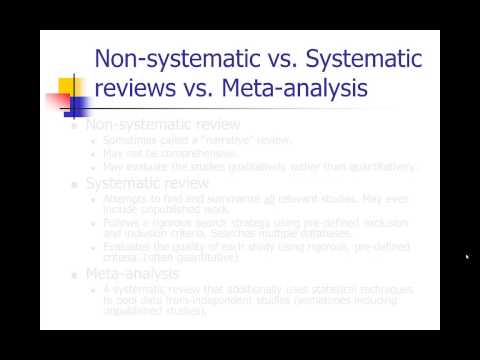
[0:54]But first, I want to start in here with an example of good writing. I want to make sure that in this course, I'm not just giving you all examples of bad writing, but also giving you some examples of good writing. So I was reading this piece by a Stanford professor who actually invented something called optogenetics. He had written a review article about optogenetics, and I I thought he did a really great job on the writing and I pulled a passage that I really liked from this. So he says, "The lesson of optogenetics is that the old, the fragile, and the rare"--notice the use of dashes here--"even cells from pond scum or from harsh Saharan salt lakes--can be crucial to comprehension of ourselves and our modern world. The story behind this technology underscores the value of protecting rare environmental niches and the importance of supporting true basic science. I like that verb underscores by the way, and the importance of supporting true basic science. We should never forget that we do not know where the long march of science is taking us or what will be needed to illuminate our path." And actually, that illuminate right there is a little a pun, a little play on words, because optogenetics is about using light to control the brain. So he got in a nice verb there with illuminate. So that's an example of good writing. Um I'm going to start by talking here about review articles. So again, other than original research manuscripts, there's a lot of other opportunities for you to get published in the literature and one of those is to write a review article. Now, a lot of review articles actually are solicited by journal editors, so a journal editor might go out and ask a known expert in the field if they want to write a review article on a specific topic. Even in those cases, however, somebody who's a little bit more junior, like a graduate student might get involved, because a review article is a lot of work. So that expert in the field might solicit some help from somebody like a graduate student who will end up being a co-author in the on the paper, so you might have an opportunity to get involved in a review like that. Also, as a junior person, especially if you're a graduate student or somebody just getting into the field, you might actually be in a really good position to write your own review article. And that's because, uh, you know, as a graduate student you're coming in and you're trying to learn this whole body of literature on a topic. And that puts you in a really good position to write a review article, like I can remember, uh, when I was starting graduate school in the mid-90s, I I worked on a topic called the female athlete triad. So the first thing I did was, you know, gathered all of the literature on that topic. There wasn't actually that much at that time, and I went through it very carefully, I put it into tables. I was really trying to get a hold of of that field, and so I I did not write a review article on the topic, but at that point I could have, I could have done all the groundwork. So, um, it's a it's a good uh way to get published, if you're more junior, if you, um, have taken the time to go through the literature. It's a good idea though, if you're going to write a review article, to consider, um, what, um, journal you might want to publish it in, and think about trying to contact the journal editor ahead of time, maybe sending them a a brief outline and asking them if they would be interested in that review article. Just so you can establish ahead of time that this is something that, you know, they're likely to be interested in, as opposed to just sending them a whole review article cold, I mean, you can do that as well, but, uh, one tip would be to contact the journal editor early in the process. So what's the goal of a review article? Basically the idea is you're trying to synthesize the recent primary literature on a topic. So there's just, you know, a huge proliferation of papers these days, nobody really can keep up with the entire primary literature. And so your job as a review article author is to kind of put together, summarize the recent primary literature so that somebody can go to your paper and get a good sense of the field. You're also summarizing the current state of knowledge on a topic, so what's the status? What do we know, what do we not know, where are we? Um, review articles often also address controversies. In fact, you could have a whole review article that was centered around a controversy, where that was the point of the article, or just possibly in passing, your review article might address some important controversies. Another, uh, thing that a review article provides, uh, is it in doing the review article, you're putting it together sort of a comprehensive, uh, list of citations on a particular topic or research question. And that can be a good resource for other authors who later, um, you know, want to get into the field and and get to up to speed on the literature, it's a nice, um, resource for other people to have a set of references like what are the top and important papers on this topic. So that's a real uh service also, of course you want to make sure that your your references are correct and and um we'll talk about that uh some more. So there's three basic types of review articles that you could do. So, uh, there's what we call non-systematic, systematic and meta-analysis. So a non-systematic review is actually probably the most common type that's done. Uh, you know, sometimes called also a "narrative" review, and what distinguishes it from the other two is really that it's a little bit of a less rigorous review. So, um, ideally, if you're going to take the time to do a review article, you might consider one doing one of the more rigorous types. Um, but sometimes, you know, a graduate student might put together some kind of non-systematic review. It's, um, it may not be completely comprehensive, that is, it may not look at all of the papers on a particular topic, and it tends to be a little bit more qualitative than say a systematic review or a meta-analysis, rather than quantitative. So you're sort of just saying, well, this was a good study because of these reasons, and you're not necessarily scoring the studies. In contrast, a systematic review as the term systematic implies, it attempts to find and summarize sort of all the relevant studies on a particular research question or particular topic. Uh, authors have even gone so far as to, uh, solicit, you know, to try to find unpublished work, so if they know of researchers who are working on a study, but haven't published the final results, they may contact them to try to get, uh, information about that work, even though it hasn't been published yet. Um, uh, when you're going to do a systematic review, it it follows a pretty specific process. So the first step is that you have to come up with a rigorous search strategy. So you define, well, what is the specific topic that I am interested in looking at? And you want to be kind of narrow in this, you don't want to make it too broad or you're just going to you're going to run into a literature that's that's too big. So you're going to have some kind of narrow pre-defined topic, research question you're trying to answer, and then you're going to you're going to define some exclusion and inclusion criteria for the studies you want to include in your review. And you're going to write these out before you even go and do the search, you're also going to target what are the databases that I'm going to be searching. So for example, maybe you want to look at all the randomized trials on a particular drug. So maybe that would be your inclusion criteria, you're looking for studies where you're searching, you get the words randomized trial and the drug name. Then you would go through those studies in more detail and use some exclusion criteria to exclude some of them. So maybe you only want placebo controlled studies, so you would exclude the ones that didn't have a placebo control. So you're going to come up with a search strategy, it's a good idea to involve, um, an information specialist, especially if you're at a university that has a library, there are people over there that, uh, their expertise is on doing searches. So go and talk to them to make sure that you're you're doing the proper search so that you can capture all the relevant studies. You're also going to ahead of time set up a set of criteria for evaluating the quality of these studies. And these these are often a quantitative measurement, so you might have a scoring system where you're going to rank the studies from a low of one to a high of four or something like that, based on the quality of the evidence in those studies. So it's often a quantitative evaluation and you've got some pre-defined criteria that you've set out ahead of time for evaluating the papers in your review. And then finally, the meta-analysis, what distinguishes it from a systematic review is that there's an additional step. You're going to use some kind of statistical techniques to actually pool the data from those different studies, even sometimes some data that's unpublished to pull that data and come up with a final summary measure that answers a particular question. So for example, if you were looking at all the studies that looked at whether or not zinc can help prevent colds, you would maybe pull all of the studies, all the randomized trials or all the studies that looked at that. And you take the outcomes of those studies, um, or sometimes even people will do meta-analysis on raw data, but that requires you go out and get the raw data from all the investigators. So more typically, you'll take the summary measures from those individual studies, like maybe, you know, the colds uh, zinc doubled the risk of colds or zinc cut the risk of cold in half, you'll take those numbers from the individual studies and you'll somehow pull them into a single summary measure that tries to answer the question, does zinc prevent cold? So, um, so that is uh a higher level of rigor and also more work because you're actually doing some very, um, defined statistics, um, trying to pull that data into some kind of final summary, um, measure. So what's the structure of a review article? In general, um, sometimes you'll have an abstract, sometimes they won't, it varies by journal. Then there'll be an introduction section, and that's going to give, it's going to be very similar to the introduction section that we used for an original a research manuscript. So it gives some general background, sort of the what's known and what's unknown, what are the gaps in the literature, and then it gives a clear statement of the aim of the review. What is the purpose of this review? Are you trying to evaluate a new experimental technique? Are you trying to evaluate or answer a particular research question? Are you trying to answer a particular controversy and give one point of view on that controversy? So, a review must have a clear purpose, and that's probably the biggest problem that I see with reviews, um, when I'm editing students, uh, reviews is that they kind of are just the sort of this litany of all these different papers and they're not synthesized in any coherent way, sort of around a central focus. So I'll go back to that student and ask them, well, what's the point? What are you what question are you trying to answer and doing this review? And so you need to define that question early on and you need to state it very clearly in the introduction section. Then you're going to have what's the body of the paper, sort of the main analysis, that's going to be the bulk of the paper. You're going to explain what you did, so explain your search strategy, what databases did you search, what were your exclusion and inclusion criteria for the studies? Then you're going to summarize the literature that you found and that you included in your review. You could organize it a number of different ways, but it's got to be well organized, you might organize it based on methodology, like, so I'm going to put I'm going to talk about all the randomized trials, and then I'm going to talk about all the observational studies. Or you might organize it based on the theme or on, you know, the experimental technique, if you're doing something in the lab, so you find some way to organize it that makes sense. And you're going to be analyzing, interpreting, critiquing, evaluating those studies, and also trying to synthesize what is it as a body of research that what, you know, takeaway messages can we conclude? What can we conclude from these different studies based on these studies, what are the recommendations you would give, or you might also be saying, you know, here are the questions that we haven't answered, so here's the gaps in the literature that remain that need to be answered. So then you'll give some kind of conclusion and future directions, this section probably be a little bit shorter. You're going to make recommendations based on what you found and identify those gaps in the literature, what future studies do we need to fully answer this question? And then you're going to give your literature cited, and again, this it provides a resource for other authors to go to to kind of know the lay of the land in terms of the literature in a particular discipline. So you really want to make sure that you've you've got that uh those references are accurate, um, and that you've you've been comprehensive. So just a couple of examples. Um, there was a nice little review article I was reading recently for a paper, uh, feature story I was writing, and so, um, I pulled the abstract and introduction from this article, because I thought they were good examples of some good writing. And so this was a uh review where he was looking at different, um, competitions that are used in biomedical computing, um, to evaluate how are people doing in the field? They get together and solve some problems as a group and, you know, it's a competition but they're also just trying to vet uh different methods. So in the abstract it says, "In principle, given the amino acid sequence of a protein, it is possible to compute the corresponding three-dimensional structure. Notice he's giving a really, he's telling a very wide audience what this is about, he's not assuming anything. Methods for modeling structure based on this premise have been under development for more than 40 years." He's giving a little history there. For the past decade, a series of community-wide experiments, these are the competitions, uh, they're called CASP, have assessed the state of the art, providing a detailed picture of what has been achieved in the field, where we are making progress, and what major problems remain. That's a really good summary of the of the purpose of CASP. The rigorous evaluation procedure of CASP have been accompanied by substantial progress in the field. Uh lessons from this area of computational biology suggest a set of principles for increasing rigor in the field as a whole. So you know what he's going to be doing in this review, he's going to be reviewing CASP, uh, this set of competitions that's been going on for a number of years now, and suggesting from that experience some principles that could be applied to the wider field of computational biology. And I think this is again, I think both of this abstract and this introduction have some nice writing in them, you can see it's very clear, it's very easy for somebody who's not in the field immediately to understand what he's saying. Again, I was writing a feature story and that was the reason I was reading his article, and I just I was so happy when I came upon his article because it was, uh, you know, it was so well written. So, and then this is the introduction section. Notice this very short, uh, and again, a little bit of history, "In the 1950s, work by Anfinsen and colleagues conclusively showed that the information determining the 3D structure of a protein molecule is contained in the amino acid sequence. Recognition of this relationship rapidly led to the development of methods for computing structure from sequence. There were many early encouraging reports of partial successes starting in the 1960s and continuing through the 1970s and 1980s. And yet, during this long period, there were very few reports of computer structures in any way competing with those obtained experimentally. That's a really nice statement of the problem there. The mismatch, that's a good word, between apparent success and the lack of useful applications suggested that the traditional peer-reviewed publication system is not sufficient to ensure rigor in this area of computational biology. So the CASP experiments, these are the competitions, were devised as a means of addressing the specific needs of methods evaluation and structure modeling. Notice that sentence is I just want to point out here is actually in the passive voice, as I've mentioned there are instances sometimes when the passive voice works. And I think it works here because it wasn't important for him to say who came up with these competitions, so he left out the subject from that sentence, and I think it works, it's still a very clear sentence. Uh CASP is one of a number of ways in which this problem may be addressed, as discussed later, the fundamental differences between computational and experimental biology dictate that new procedures be adopted in the field as a whole. So, uh, again, I just think this is really easy to understand, well-written, uh, good writing going on here. Uh, probably all of you, even if you're not coming from any kind of field related to computational biology, can understand that introduction section, so that's really well done. So a couple of tips for writing reviews. So again, you might consider if you're a junior person, contacting a journal editor early in the process, maybe sending them some kind of outline to find out if the journal is interested in your review. That's helpful because, um, if you just send the review cold, maybe it's not something that they were really interested in publishing. Make sure you're again defining a clear, narrow purpose for the review. It's not just, um, hey, I'm going to talk about all the literature on a topic, it has to have some kind of focus that you can organize your whole review around. And again, you need to develop a real clear strategy for searching the literature, so meet with somebody, an information specialist, who knows about searching, uh if you're at a university, that prob that person is probably at your library. Um, you're going to be reviews are a ton of work by the way, so you're going to be reading lots and lots of papers. It's very important to have a good organizational strategy, so you're going to be taking a lot of time, uh spending a lot of time in this pre-writing step I've been talking about, making sure that you're organizing all of the relevant papers in a way that it's going to be easy for you to write the review later. So take a lot of time getting organized up front. And then remember that a review article is really written for a very wide audience. So it's not, you know, even though your topic might be kind of narrow, it's written for anybody who wants to learn about that topic. They're going to your review because the material in the primary literature isn't yet hasn't yet appeared in a textbook, and so you're kind of filling in before there's a textbook written on this subject, here's a good summary of what's out there in the primary literature. That means people coming from all sorts of fields might pick up your review. I'm often reading review articles because I'll I'm writing about science, um, you know, a lot of different science topics, uh for magazines and things, and I'll pick up a review article to get a sense of the field, because it's often topics that I'm not inherently familiar with. I really appreciate when those reviews are well written, because again, I'm not coming right from that scientific field, and if it's not written for a wide audience, if it's not well written, it's not very useful to me. But when I pick up a well-written review, I can really get a handle on a field very quickly. So, uh, the good writing is even more important, uh for a review article. So that's review articles. Another really, uh, good, uh, type of publication to consider to keep in the back of your mind are letters to the editor. Um, people often forget that those are out there that's something that you can write, but they're pretty short, uh, they're pretty quick to do. I've done a number of letters to the editor and you know, there's something you can sit down and write in a couple of hours and they can lead to some interesting and good publications. So, um, so what's the point of a letter to the editor? In general, you're critiquing or responding to a specific article that the journal has recently published. So you're going to be sending your letter to the editor to the journal where that that first article was published. You usually have a very specific critique. Uh, occasionally letters to the editor, um, can be actually short original research manuscripts, which you might send in in response to another article, because maybe somebody's published a a set of data in that journal, and you have sort of a similar set of data that can add a little bit of information to to their research question. And you might rather than publishing it as a whole original article, just send it in as a letter of editor, uh to the editor in response. So, um, so it has a couple of purposes, but generally usually they're critiquing something. And they have to be timely. Uh, journals have, uh, windows will where they will accept letters to the editor. Usually, it's a couple of weeks, maybe a month or two at most, uh, after the original paper is published. They it has to be timely, that letter to the editor has to refer to something that's recently been in the journal. So, look at that guideline because if you're trying to write about something that was published six months ago, it's probably too late. Letters to the editor also have also have to be really concise, go to the instructions for authors and figure out, uh, exactly how many words they allow. Generally, it's something in the order of 200 to 400 words, maybe a maximum of one table or figure, a maximum of a couple of references. So make sure you look at that ahead of time, so you know how to write the article. And the structure is pretty simple. The first paragraph will give an overview where you're going to cite the recent article that you're replying to. You want to give some kind of praise to the authors in that first paragraph. Um, the fact that you're writing a letter to the editor about their paper, tells you that they must have done something really interesting. That paper caught your attention enough for you to bother to read it in great detail, and to come up with a critique about it, and to bother to write a letter to the editor. So there so there's obviously something important and interesting in that article, so make sure you praise the authors for that. You know, this study is relevant, it's well designed, it has an intriguing hypothesis. We found the article to be excellent and highly relevant. Give the authors their due that they've, you know, generated a dialogue about their paper, that's, you know, praiseworthy. Um, and then succincly state the main problem or issue that you're going to be laying out in your letter. So something like the paper is misleading due to several problems with the statistical analysis and interpretation, that's the overview, and then you'd go and state the specific problems. So there's some kind of overview in the first paragraph, and then in a couple of paragraphs, maybe one to three more paragraphs in an extremely focused manner, you're going to succincly explain the issues that you've observed. Um, or maybe it's one issue, maybe it's multiple issues. If it's one issue, it might only take one paragraph, if it's three issues, it might take three paragraphs. Uh probably not going to be much longer than that, so very focused, explain, uh what the problems, try to eliminate all unnecessary clutter from your writing, because it's going to be very short. And then you if you've got enough space, you often don't, but if you have enough space, you might have a brief conclusion or parting thought, maybe one to two sentences within the last paragraph could be some kind of thought to part on. So, um, tips on letters to the editor, go to the instructions for letters to the editor for the particular journal you're targeting and make sure you follow them. Um, they have very specific criteria about the timeliness and how long it can be, so there's no point in writing a letter unless you know those. Keep the tone as positive and polite as possible. Yes, you're critiquing the authors, um, but you can do that, you can critique somebody in a more positive tone and be polite, obviously. Um, again, be specific and focused, you're really going to have to use all your skills for removing unnecessary clutter from manuscripts. These skills will come in really handy in writing a good letter to the editor because you have to be really succinct. And, uh, one other thing is, don't just write a letter to point out some small, you know, problem. Maybe they analyze their data wrong, but it doesn't actually affect the conclusions at all. Don't write a letter to the editor if it's not something that really changes or potentially could affect the main conclusion of the original paper.
[23:41]Otherwise, your letter has no real significance, it has to be something that matters.
[23:48]Um, finally the last kind of alternate type of publication I'm going to talk about in detail are case reports. Now, obviously, you have to be coming from the medical field in order to write a case report, so this is mostly for you medical professionals out there. Um, I have an example of a case report right here, which I'm just going to show you, um, uh, one of the authors on this case report, which was published in 1970 in the New England Journal of Medicine, is George Lunberg. And he's one of the editors that I'm going to be interviewing in an upcoming module. So he mentioned in my interview with him that the very first, uh, his very first publication, which is this one, uh, was in the New England Journal of Medicine, which is a extremely high impact medical journal. So that, uh, paper got accepted right away in the New England Journal of Medicine, which is a great success story on your first paper. But it is a case report, so he said, you know, because it's a case report, it was immediately obvious why, uh, it was significant. So case reports can be really great publications because they often are identifying new diseases, new side effects. They they can be very high impact, uh, you know, for example, the first AIDS cases were identified as case reports in the literature. So, um, these can be some of the most highly cited, uh, papers. Um, usually it's easy to if it's it's clearly, um, you know, an interesting case, it's often easy to persuade an editor that it's worth publishing. So, um, these are great if you are are in the medical field to consider doing some case reports. Um, case reports, um, the structure is very similar to an original a research manuscript, uh with some differences. So you'll usually have an abstract, the introduction section, the point is to say, what's the significance of the cases that you've identified, or the case. Um, then you'll be giving a description of the cases, things like what were the presenting signs and symptoms, the medical and social history of your cases or case, what medications were they taking, what were the results of their exam and lab tests, what's the differential diagnosis, the final diagnosis, what treatments uh were given, what were the outcomes? So it's very much a medical again, this is only for medical audiences. Um, and then you'll give a discussion where you interpret the cases. What do those cases potentially suggest? What are the questions for further research? Usually case reports are bringing up a whole host of questions for further research. Um, and then you'll have references and usually case reports will have some kinds of tables and figures. So it's it's just a a good type of thing to consider, um, doing case report if you're in the medical field and an interesting case comes along. Uh, I just want to mention briefly these other types of, uh, papers that do appear in the medical literature. For the most part, these tend to be written, um, by more senior people, uh, experts in the field, but just so you're aware, um, there are commentaries which are usually, um, often solicited by a journal editor. Um, even if you're kind of junior, you might have the opportunity to do a commentary because when you're doing peer review, sometimes, um, the journals will ask you, is this a piece that's significant enough that it warrants a commentary and would you be willing to write a commentary? So you may have an opportunity to write a commentary that way. Usually commentaries are talking about the significance of another paper, maybe raising some questions, uh, methodologic questions, but usually are pretty positive. Um, there's also opinion pieces and editorial, so it's tend to be written by the editors of the journals. Uh sometimes you'll see book reviews, uh there's explanatory pieces and columns like I write a statistics column for one of the journals and of course I was asked to write that, so, uh but as you get more senior, you may have some opportunities to write things like this. I'll just point out finally the last, uh, slide here that, um, in terms of editorial, uh one of the editors I'm going to be interviewing in and in one of the upcoming modules is Dr. Gary Friedman, and he's a long-time editor of the American Journal of Epidemiology, and he did a number of editorials about good writing in the medical literature, so I'll just point out those editorials. I I really like his editorial, uh be kind to your reader. He talks a lot about the same kinds of writing tips that uh I'm talking about in this course. A couple of citations, um, and some further reading if you want to to get some more reading on, uh different types of publications. In particular, that second book there, um, also has a lot of information about doing poster presentations, job applications, and grants, things which we're not really going to focus on in this course, and that's written for any scientific discipline. It's a very thick uh book, but uh might be worth reading if you're interested in one of those, uh topics. The preceding program is copyrighted by the Board of Trustees of the Leland Stanford Junior University. Please visit us at med.stanford.edu.