[0:00]So, you've got some cash sitting in your bank account, and you know it would be smart to invest it. But if you're new to investing, it can feel confusing and overwhelming. This video is the ultimate guide to investing for beginners in Europe. Based on my 18 years of professional investing experience, I'll show you why you should invest, where to invest, how to keep your money safe, and what to do about taxes. I'll even do a live demonstration of how I invest my money. I know that these skills work because they took me from 900 in the bank to never having to worry about money again. And I think they can do the same for you. Now, there are timestamps below, feel free to skip around and let's go. The first question is, why should you invest? Well, let's say you've got 1,000 euros saved for your future, and this money is just sitting in the bank. Today, a good steak at a restaurant might cost you 40 euros. With your savings, you could buy 25 steaks. But in 10 years, that same high-quality steak might cost you 50 euros. So, your 1,000 euros will only get you 20 steaks in the future. Your money will be worth less. But if you've been investing, instead of 1,000 euros, you could have 2,000. And that would be enough for 40 steaks. With investing, we achieve two things. First, we protect our savings from rising prices, from inflation. And second, we multiply our money. But the real magic happens when you invest consistently for years. For example, let's say you have a good income, so you can put aside 1,000 euros every month. If you put this money into a bank account for 25 years, you will end up with 300,000 euros, and that's certainly respectable. But if you invest this money and get an average profit of 9% per year, you will have your first million. And if you live in a low-cost country, that could even be enough so that you never have to work again. In short, investing makes building wealth much faster. And here's the thing, when you build wealth, that really changes the quality of your life. And there are multiple steps that happen along the way. Once you get to your first 5 to 10,000 euros, that's when you stop worrying about bills that you've got to pay. And it's a huge improvement in your mental health, in your levels of stress. Once you've got 50 to 100,000, life gets a lot more comfortable. You can eat at nice restaurants and get yourself the latest iPhone without feeling irresponsible or wiping out your savings. And then, once you get into six or seven figures, you can afford to buy back your time. Hire a cleaning service, a personal assistant, a nanny for your kids. Eventually, you can work less or even retire early. Plus, you can travel a lot more. For example, I just took my family to Liseberg theme park in Sweden a few days ago. And that is my sixth international trip this year. This is one of the reasons why I save and invest to give my family the freedom to have these wonderful experiences. When people say that money doesn't buy happiness, that is based on outdated research. Wealth alone will not make you happy, but it does really help. So, this is why we invest. Now for the next question, where should you invest? If you talk to 10 different people, you will probably get 10 different recommendations. Buy real estate, day trade, do forex, invest in stocks, buy crypto. What is the best choice? Well, first you need to decide, do you want to gamble or do you want to invest? To beginners, investing often seems too slow. For example, let's say you've got 1,000 euros. Even if you earn a good profit, like 10% per year, 10% of 1,000 is just 100 euros. So, when people see this, it is natural to say, I want something faster. Now, the uncomfortable truth is this. Sometimes, financial gambling works. Some people buy the right crypto coin or make a lucky options play, and they go from 1,000 to 100,000 or more very quickly. But on average, gambling loses you money. The vast majority of people who do things like day trading or forex or options end up as losers. Spend a little time on a forum like Reddit's Wall Street Bets, and you will see hundreds of stories of people who lost their life savings this way. So the question is, do you want to risk your hard-earned cash on a gamble? By contrast, with investing, well, no, you're not going to get rich quick. You're not going to convert 1,000 euros into 100,000 in a single month. But unlike with gambling, on average, investing is very profitable. In the beginning, it usually feels slow. But as your wealth builds, your profits get bigger and bigger until one day you get to a stage where most of your income comes from investing. Now, what are the best long-term investments? Well, the three biggest investment categories in the world by size are real estate, bonds, and stocks. But if you look at profit levels, it's a tie between real estate and stocks. So, let's examine these two. When you invest in real estate, usually that means you buy a house or apartment to rent it out. I'm not talking about buying your own home. You should not look at that like an investment. If you're investing in real estate, you're renting it out. Now, people have been doing this successfully for thousands of years. It is a proven way to make money. Your profit comes from when your property goes up in value and from your rental income. Looking at stocks, when you buy shares in a company, you're buying part of this company. So, for example, when you buy some Microsoft stock, you own a part of Microsoft. You own a tiny share of all their data centers, offices, and intellectual property. So that means that you've got thousands of Microsoft employees working every day to make you money. Over time, you can make a profit either because Microsoft shares become more valuable, the price goes up, or because Microsoft itself is profitable and the company pays out dividends. Looking at centuries of data, long-term profits from real estate and stock investing have been quite similar, maybe in the ballpark of 7 to 11% per year on average. Now, of course, there's a lot of variation, depending on the time period, on the industry for stocks or the region for the real estate. But long-term, stocks and real estate have been quite competitive. But the details of these two investments are very different. Now, looking at real estate, on the plus side, it's easy to understand. It feels like you don't need special training, although in reality, real estate investors do need a lot of skills to be successful. Also, what is a major advantage is that you can buy real estate with a bank loan. So, this allows you to buy a property while investing only part of the full price. And this means that if things go well, you can earn a much higher profit. But you have to keep in mind that if things don't go well, for example, if house prices fall, you can lose your investment very quickly. This happened to a lot of people back in 2008. But to me personally, the biggest downside of real estate is this. Imagine that it's Saturday morning. You wake up in bed feeling wonderful. You're thinking about how you're going to go to the beach and enjoy a lovely weekend, and then your phone rings. It's your tenant who says, a pipe broke, the apartment is flooding, what should I do? Well, suddenly, your lovely weekend becomes a weekend of fixing problems, away from your family. Talk to anybody who invests in real estate, and you will quickly discover that it's not a passive investment. In fact, owning real estate is like owning a small business, and the more properties you have, the more work it is. So, you've got to decide if you want to do that work. Now, let's look at stocks. They also have some disadvantages. First, stocks are more technical than real estate. You need to learn a bit of jargon, some technical skills, like maybe opening a brokerage account or submitting a purchase order. Second, stock investing certainly has its risks, although in a moment, I'll explain how to guard against them. On the plus side, stocks are a passive investment. If you buy a few shares of Amazon and the roof starts leaking at an Amazon warehouse, Jeff Bezos is not going to call you up and say, hey, get over here, we've got to fix this roof. Amazon is going to take care of this problem themselves without your involvement. As a shareholder, you are just a passive investor. But the real reason I invest my family's money in the stock market is this. Look around you right now. If you're at home, maybe you see a TV, a computer, a bed, a table, a fridge. If you're outdoors, maybe you see some cars or shops or buildings. Chances are, almost everything that you see was created by a company. Almost all the money in the economy goes through a company, and most of the wealth in the economy is created by companies for their owners. So, because I want to build wealth, I invest in companies, and the easiest way to invest in companies is to buy their stocks on the stock exchange. Once you decide to invest in stocks, though, there's a key problem that you need to solve. There are thousands of different stocks in the market. How do you pick the best ones, especially if you're not a professional investor, if you cannot afford to spend 40 hours a week studying financial data? Yes, some stocks can make you rich. If you invested 10,000 in Domino's Pizza 20 years ago, today you would have over 400,000, or if you invested that same 10,000 in NVIDIA stock, today you would have over 8 million. But the vast majority of stocks are not nearly as successful. Over the past 90 years in the US market, 11% of all stocks went to zero. That is thousands of bankruptcies. Now, you might imagine that you would never make the mistake of buying such a bad stock. But many of these were once hot and popular companies. Enron, WorldCom, Lehman Brothers, Washington Mutual, Kodak, Kmart, Blockbuster Video, and many others. And going to zero is not the only risk. As many as 40% of all stocks experience catastrophic losses. So this is where investors lose 70% of their money and the stock never recovers. The situation is actually the worst in the hottest sector, technology. Yes, some technology stocks become mega-winners, like Amazon or Meta or Google. But as many as 60% of tech stocks have ended up with catastrophic losses, and 70% underperformed the overall market. Tech stocks which have really struggled include big popular names like Yahoo, AOL, Blackberry maker Research in Motion, Intel, Sun Microsystems, GoPro, Fitbit, Snapchat maker Snap Inc., Twitter, Lyft, and Nokia. Okay, so we have a contradiction. I told you that stock investing is incredibly profitable. But now I'm saying most stocks are bad investments. So, which is it? Well, both are true. The average stock is actually a loser. But there's a small handful of stocks which become such big winners. They are so successful and profitable that they create enormous wealth for stock investors. Just these 25 winning stocks on the screen created one third of all the shareholder wealth in the US stock market between 1926 and 2022. Think about that. Just 25 stocks out of 28,000 available stocks were responsible for one third of all the wealth created. That's pretty crazy, right? I mean, talk about finding a needle in a haystack. Basically, the whole stock market is extremely profitable on average because there are just a few ultra-successful stocks which pull up the average for everybody else. The only problem is that it's very, very hard to guess those ultra-successful stocks ahead of time. For an amateur investor, it's pretty much impossible. But it's difficult even for professionals. If you go to your local bank and ask them to invest your money, in most cases, they will charge you a big fee and choose the wrong stocks and get you a sub-optimal result. So, what's the solution? Well, what if I told you that there's a reliable method to buy every winning stock in the market? An efficient, low-cost approach to investing that guarantees that you will have all the best stocks in your portfolio. No, I'm not talking about some get rich quick scheme or some secret newsletter where a guru gives you the latest stock tips. This is actually a strategy recommended by Nobel Prize winners, like Eugene Fama, Paul Samuelson, and Harry Markowitz. Warren Buffett said that with this approach, a "know-nothing investor" can outperform most professional investors. Together with some partners, I personally used this strategy to build a successful investment company, which today manages over a billion euros. Of course, I'm talking about index investing. In 1976, Jack Bogle in America launched the first ever index fund. It was based on a simple insight. It is difficult to pick individual stocks successfully. So, don't do it. Instead, invest in all the stocks. Buy a little bit of every stock in the entire market, and this way you are guaranteed to have all the big winners in your portfolio. Now, yes, you will also have all the losers and all the average performers. But because the winners are so extremely successful, your overall result will still be great. Now, in the beginning, people thought index investing was crazy. Jack Bogle's competitors were experienced professional investors who charged their clients big fees for stock picking. These competitors called the first index fund "Bogle's folly." Basically, they called him a fool. But over the following decades, Bogle's index fund got its investors better results than the vast majority of those competitors. Today, there are thousands of index funds out there, and they consistently get the best results for investors. According to the Morningstar active passive barometer, when looking at the American stock market over the past 20 years, for funds that invested in large cap stocks, index funds got better results than 90% of professionally managed investment funds. And this is why today most experts recommend index funds to new investors. In my view, index investing is the no-brainer, obvious, best investment for beginners. You don't want to study finance, you don't want to spend 40 hours per week on stock picking. Well, you just buy an index fund, and your money gets invested in hundreds of companies, in different countries, in different industries, and you pay a tiny fee for the service. The best part is, it takes only three hours per year or less to manage an index fund portfolio, and you end up getting a better result than many professional investors. Honestly, it's still pretty incredible to me how easy investing has become now that index funds are available to regular investors. And in a second, I'll show you exactly how to buy one of these index funds here in Europe. But first, we need to address the elephant in the room. What about risk? How do you keep your money safe as an investor? Well, with index funds, you are automatically protected from the biggest risk of investing, which is picking the wrong stock, company failure, or bankruptcy. Even if a few companies in your portfolio go bankrupt, you will barely notice, because your money will be spread among many different companies, industries, and sectors. But what if the stock market as a whole has a crash, like when it fell by 50% during the big financial crisis, or by more than 30% in March 2020, when COVID hit? Well, on this topic, I've got good news, bad news, good news again. The good news is that major stock crashes are actually much less frequent than people think. On average, three out of four years the stock market goes up, one out of four it goes down. But small drops are actually much more common than big crashes. If you are patient and don't sell at the worst possible time, your portfolio usually recovers within a few weeks, months, or at worst, years. Now, the bad news is, sometimes the market crashes right when you need the money. Maybe you've just lost your job and don't have enough cash to support your family. Or maybe you're closing on a house purchase and you need the money right away. If this happens during a market crash, you may be forced to sell your investments at a loss. But then it's time for some good news again, because you can protect yourself from these risks in two ways. First, you should always have a financial safety cushion. This is cash which you don't invest. You keep this money in a high-yield savings account, in a bank account for emergencies. Now, the amount should be enough to cover your spending needs for at least a few months. And second, if you know that you will need your money back in the next few years, you should switch to lower-risk investments ahead of time. So, if you're investing for your retirement, 10 plus years in the future, putting 100% of your portfolio into a stock index fund can be a great choice. But if you are just a few years from retirement, or if you're planning to buy a house in the next few years, then a big part of your portfolio should probably be in lower-risk investments. Depending on the situation, these could be bond index funds, money market funds, maybe bank term deposits. And with these lower-risk investments, your portfolio will not suffer nearly as much, even if there is a major stock market crash exactly when you need your money back. But for now, let's move on to the next question, which is, what's the best way to invest in these index funds here in Europe? I will actually split this question into three parts. First, which index funds do you choose? Second, what investment app or brokerage do you use to buy these funds? And third, how do you actually make the purchase? First up, choosing your ideal index fund. In most of Europe, the type of index fund that we have available is called an ETF, an Exchange Traded Fund. This is basically an index fund that you can buy on a stock exchange, like any other stock. So, in this video, we will buy an ETF. The best place to choose ETFs for European investors is a website called JustETF.com. Now, when you get to JustETF.com, you will see a few thousand different stock ETFs to choose from. You can of course look at some of the biggest ones, like the iShares Core S&P 500 UCTC ETF, which invests in 500 of the biggest American stocks. The iShares Core MSCI World ETF, which invests in the stocks of developed markets, such as America and Europe, and Japan and Australia. You can look at maybe the iShares Core MSCI Emerging Markets ETF, which invests in smaller, faster growing economies. But the reality is, there's actually a huge amount of choice. You've got not only different regions, you've also got different technical parameters, large cap and small cap ETFs, accumulating and distributing ETFs, physical and synthetic funds. And unfortunately, there is no one ETF that is best for everybody watching this video. Your ideal choice should depend on your goals, your age, and the country where you live. Tax rules are different across Europe. A fund that is great for investors in Germany may not be optimal for investors who live in Spain. So, choosing the best ETF for your portfolio is a bit outside the scope of this beginner video. But I do have a separate training on this topic. If you're interested, just click the first link in the description. For now, I will simply choose the biggest, most popular ETF in Europe. Okay, so that's the iShares Core S&P 500 ETF, and I will show you how to buy it. And when we buy this fund, our money will get split among the 500 biggest companies in America. Now, I cannot buy this fund directly from the fund company. I need an investment app or a brokerage. Basically, brokerages are like supermarkets for investments. But there is the added complication that your brokerage also holds onto your investments after you buy them. So it is very important to choose a brokerage or investment app that you can trust with your money. Okay, these need to be licensed, big, reputable financial companies. The ideal brokerage for you will depend on the country where you live, your experience level, and how much money you want to invest. For sophisticated investors with large portfolios, I often recommend major companies like Interactive Brokers or Saxo. For beginning investors who want the simplest possible experience, I like apps like Trading 212 or Trade Republic or Lightyear. For this demonstration, let's use Trading 212. So I'm going to show you how to buy an ETF, and then let's address the other critical question, which is what to do about taxes? Now, when you log into Trading 212, you get a lot of information coming at you, like the most traded stocks, or the top winners, or the top losers. This is for active traders. Long-term investors shouldn't really care about that. I just want to find the fund that I need and buy it. So I click on search, and I'm going to put in iShares Core S&P 500, and see what comes up. I immediately see that there are different versions of the fund I can buy. I can buy an accumulating or distributing version. I can buy it in euros or pounds or dollars if I like. I'm going to buy it in euros on the German stock exchange. Okay, now there's a bit of a complication, a single share of this fund costs 589 euros. So that could be a little bit inconvenient if you don't have so much money to invest. But fortunately, many brokers like Trading 212 let you buy fractional shares. So I don't need to buy a full share, I can invest a smaller amount. So let's say I want to invest maybe 50 euros today. Okay, I can do that. Now, normally, I train people to use what is called a limit order. This is where you give the broker the maximum price that you're willing to pay. This makes sure you don't overpay for the ETF. But right now, for simplicity, let's use a market order. So I'm telling Trading 212, I want to buy 50 euros of this ETF at the latest available price. I'm going to hit review order. Okay, everything looks good, and I hit send buy order. And instantly, I get the notification that I bought 0.0476012 shares at 589 euros and 90 cents per share. So my 50 euros just got invested in 500 of the biggest American companies. So that's pretty cool, right? With just a few clicks in just a few minutes, I invested my money in a diverse portfolio of companies in different industries, different regions. Hopefully, you now see how simple investing has become these days. If you can click your way through a food delivery app, you can figure out how to invest your money with ETFs and index funds. All you need to do is choose an investment app or brokerage and then choose an ETF. Then you can set up a calendar reminder and log in every month to invest a few hundred euros into the market. I speak from experience when I say this can be enough to completely change your financial future. That said, there is still one major issue outstanding. Let's say you become a successful investor. You're making your money grow, you're earning nice profits. What taxes do you need to pay on those profits? It is absolutely essential that you figure this out, because if you don't pay your taxes, it's not just a financial problem, you can get in trouble with the law. Now, investment taxes are different depending on where in Europe you live. In some countries, like Greece or Cyprus or Georgia, you could actually invest in ETFs tax-free if you choose the right funds to buy. But in most countries, you have to pay two kinds of taxes on your ETF investment. The first is dividend taxes. When the ETF pays you a dividend, you pay part of that to the government in taxes. Now, to reduce these dividend taxes, you can use so-called accumulating ETFs. Accumulating ETFs don't pay out dividends. Instead, they keep the money inside the fund and use it to make more investments. In most European countries, accumulating ETFs shield you from dividend taxes. But there are some countries where this doesn't work, for example, Switzerland, Austria, the UK, and Denmark. Now, the other type of investment tax that you need to understand is capital gains tax. When you sell your ETF at a profit, you will usually need to pay capital gains tax on this profit. To limit this type of tax, you want to buy and hold your ETFs long-term. Don't sell until you absolutely have to. Now, some countries also have special investment accounts which let you invest with reduced taxes, such as the ISA in the UK, the PEA in France, or the ASK in Denmark. But where do you find all this information for your local country? How do you choose the best ETFs for investors in your country, or the best brokerage, or the best way to handle taxes? Well, I've actually put together a step-by-step training on this topic. To take a look, just click the first link in the description.
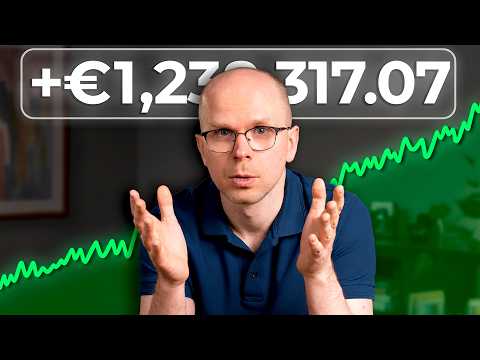
If I Started Investing in 2026, This is What I Would Do (Europe)
Tom Crosshill
24m 15s4,419 words~23 min read
YouTube auto captions
Transcript source
YouTube auto captions
This transcript was extracted from YouTube's auto-generated caption track. The transcript below is server-rendered so it can be read, searched, cited, and shared without opening the original YouTube player.
Pull quotes
[0:00]So, you've got some cash sitting in your bank account, and you know it would be smart to invest it.
[0:00]Based on my 18 years of professional investing experience, I'll show you why you should invest, where to invest, how to keep your money safe, and what to do about taxes.
[0:00]I know that these skills work because they took me from 900 in the bank to never having to worry about money again.
[0:00]Well, let's say you've got 1,000 euros saved for your future, and this money is just sitting in the bank.
Use this transcript
Related transcript hubs
Watch on YouTube
Share
MORE TRANSCRIPTS


