[0:00]She posted a photo with her fiance. She was 21, smiling, out in public, in daylight. Her family knew where she was. Within days, she was in a hospital with a broken spine. Weeks later, she was taken back to that same hospital, wrapped in a blanket. This time, she was dead. Israa Ghareeb grew up in Beit Sahour. It's a small, conservative town right next to Beit Laham in the West Bank. In places like that, reputation is rarely treated as something private. It belongs to the family. And once that happens, control follows. Israa was a beautician. She was active on Instagram. Her work, parts of her life, ordinary moments. She had an audience. She was engaged to be married. At 21, her life looked like it was moving forward. In early August 2019, she went on an outing with the man who had formally asked to marry her. It was chaperoned. Her family knew. By the standards of her community, this was not a secret relationship. It was supervised and accepted. During that outing, she posted a photo or short video to Instagram. She posted it herself. She looked happy. That post went up before the formal engagement ceremony had officially taken place. That changed everything. That was the detail that changed everything. For a lot of viewers outside the region, that may sound minor. But in conservative family structures like this one, the issue was not that she had gone out with him. Her family had already approved that. The issue was that she made the moment public herself. Too soon. Before the men in the family had formally done it. The problem was not the outing. It was that she had shown it on her own terms. A female relative saw the post and passed it through the extended family. Her brother saw it. Then Israa was taken to the emergency room. On the night of August 10th, she was admitted to a hospital in Beit Sahour. Then transferred to the surgical department at another hospital in Beit Laham. The attending physician was Dr. Mamoun Basila. He asked what happened. Israa told him she had fallen from a height. The scans showed fractures in the first and second lumbar vertebrae, the lower spine. There was a wound on her forehead, bruising across her face, her lips, her limbs. Some of the injuries appeared older than others. Her family was there. Her mother stood by the bed, crying. Dr. Mamoun Basila later said the mother quietly asked him to lower his voice, so he would not wake her. The family came across as frightened. Even caring. And in that moment, that mattered. The hospital did not contact the police. Israa had said she fell. The family was present, and the night went on. Then the recordings surfaced. Audio and video from inside the hospital. Israa's voice screaming. Not just crying out in pain, pleading, calling for help, asking for the police. There were other sounds too. Impact, restraint, movement around her. Palestinian prosecutors later confirmed the recordings were real. They also confirmed something that made them much worse. What many people thought was one clip was actually two separate recordings, made seven hours apart. Seven hours. She was begging for help at one point in the night. Seven hours later, she was still begging. The hospital did not call the police. Instead, they called a psychiatrist. The psychiatrist documented what he described as psychotic symptoms and hallucinations and prescribed Olanzapine. A powerful antipsychotic, used in acute psychiatric cases. From that point on, the family had something clinical to point to. Their daughter was not being harmed, they could say. She was mentally ill. She was hallucinating. The screaming was treated as instability, not danger. The medication quieted her. What happened in that hospital, does not look like one doctor making one bad call. It looks like an entire institution, accepting the version of events offered by the people standing beside her bed. A composed, grieving family had more credibility than the woman screaming that she needed the police. At some point during that stay, the family signed her out. Her spinal fractures had not been fully treated. They took her to a religious practitioner for Ruqyah, a form of spiritual healing that can involve recitation and in harsher cases, physical force to drive out what is believed to be a possessing spirit. The family's claim was that Israa was possessed. That a jinn had entered her. That her screaming, her distress, her behavior. All of it was spiritual in nature and required a spiritual response. What that response actually involved came out later in court. One of her brothers testified under oath that during these sessions, Israa was subjected to, his words, light beating in order to control her. He offered that as part of the family's defense. He was a dentist. He had lived in Europe. And in court, he described beating his sister, while she still had untreated spinal fractures as a form of help. On August 22nd, 2019, Israa was brought back to the emergency room. Dr. Mamoun Basila was on shift again. He looked at the body being carried in, wrapped in a blanket, and he recognized her. The same young woman he had treated less than two weeks earlier. The same woman whose mother had asked him to lower his voice. She was dead. The forensic report found the cause of death to be acute respiratory failure, caused by subcutaneous emphysema. Air trapped in the tissues of the chest cavity. It is not something that appears on its own. It develops from repeated, severe blunt force trauma that tears internal tissue over time. Her body failed because of what had been done to it. The toxicology report added one more detail. Alongside the antipsychotic medication prescribed at the hospital, her stomach also contained Dichloroxylenol, the active chemical in Dettol. A common household disinfectant. No official conclusion ever explained how it got there. Whether she was forced to ingest it, whether it was connected to her final hours, or whether she took it herself, that was never formally answered. The prosecutors noted it. The reports recorded it, and the question was left open, where it has remained ever since. The family's first public explanation was that Israa had died of a stroke. When the hospital recordings became public, the explanation changed. She had been mentally ill, they said, hallucinating. The screaming was part of her condition. When the forensic findings came back, the explanations largely stopped. Public reaction was immediate. A hashtag spread quickly in Arabic, meaning, We are all Israa Ghareeb. Demonstrations followed in Beit Laham and Ramallah. Human Rights Watch described the killing as a femicide. The pressure reached the Palestinian Prime Minister, who ordered a full investigation. On September 6th, three men were arrested. Two of Israa's brothers and her sister's husband. On September 12th, the Attorney General announced charges of aggravated assault, resulting in death. The charges were built on forensic evidence and digital material recovered from seized phones, including deleted messages that investigators were able to reconstruct. He also stated publicly that the case was not being treated as an honor killing. That became one of the most disputed parts of the case. In the West Bank, the legal framework draws from the Jordanian penal code, dating back to 1960. Under that system, aggravated assault, resulting in death, carries a lighter sentence than premeditated murder. Human rights organizations argued the charges were too weak for what the evidence described. In February 2021, a Bethlehem court released all three defendants on bail. 10,000 Jordanian dinars each. While the trial continued, no final verdict was clearly made public. Here's what the evidence did establish. Israa died from injuries consistent with prolonged, repeated physical violence. She had been beaten before her first hospital admission. She was beaten again after she left. Her own brother confirmed that in court. The recordings from inside the hospital were real. The forensic cause of death was not in dispute. What remains unclear matters too. The contents of the deleted messages recovered from her phone were never released. What happened in the hours between her discharge and her return to the hospital was never fully explained. And the question of how the disinfectant entered her system has never been answered. But the question people keep coming back to is the hospital. A young woman with a broken spine screamed for help inside a functioning medical facility. She asked for the police. She was sedated instead. She was not protected. She was released back to the people she had been screaming about. No one called law enforcement. It is easy to call that negligence, but that word feels too small. What happened there only makes sense when you understand how authority was working in that room. The crying mother, the family's story, the psychiatrist's notes, the weight carried by male relatives in a conservative social structure. All of it built a framework in which the person lying in the bed became the least believable person in the room. Israa posted a smiling photo with the man she was going to marry. To most people, it looked completely ordinary. But she posted it before the men of her family had decided the moment should be public. In a world where a woman's visibility can still be treated as something her family controls, that was enough. What followed was not one explosion of violence, it was a sequence. A reported fall, a psychiatric label, a spiritual explanation, a return home, more violence, more silence. And at each stage, the next cover story bought the people around her a little more time. The three men walked out of court on bail. The deleted messages remained sealed. The question about the disinfectant still has no official answer. And Israa Ghareeb, who screamed for help inside a hospital for seven hours, was carried out of that same hospital by the people she had been screaming about. She was 21 years old.
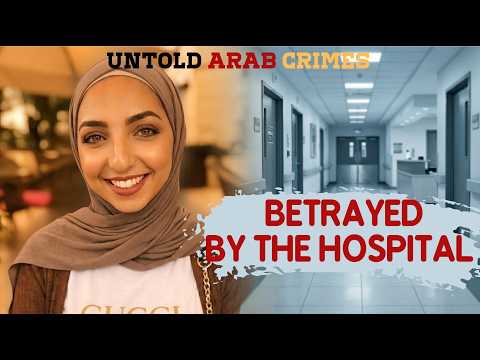
7 Hours of Screams The Case of Israa Ghareeb
Arab Crime Files
13m 6s1,680 words~9 min read
YouTube auto captions
Transcript source
YouTube auto captions
This transcript was extracted from YouTube's auto-generated caption track. The transcript below is server-rendered so it can be read, searched, cited, and shared without opening the original YouTube player.
Pull quotes
[0:00]In early August 2019, she went on an outing with the man who had formally asked to marry her.
[0:00]That post went up before the formal engagement ceremony had officially taken place.
[0:00]But in conservative family structures like this one, the issue was not that she had gone out with him.
[0:00]The scans showed fractures in the first and second lumbar vertebrae, the lower spine.
Use this transcript
Related transcript hubs
Watch on YouTube
Share
MORE TRANSCRIPTS


