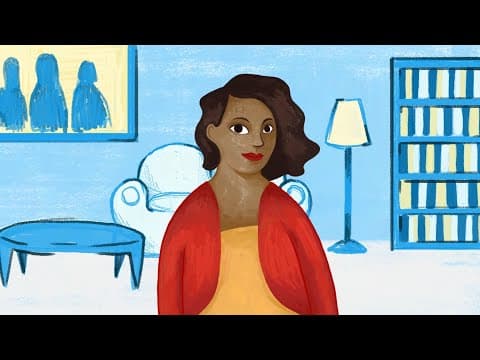
[0:00]This is Lena. And this is Lena's genome. All living creatures have genomes from fruit flies to fish, to flamingos. Our genome is our complete set of DNA. It contains the genetic information that makes each of us unique. It is like a recipe book. It spells out the instructions needed for many pieces of our health, and to build and maintain our bodies. Among humans, DNA is 99.9% similar, but each one of us has small variations, or differences, that make us unique. Lena's DNA determines her brown eyes, and brown hair, and dimples. It determines the shape of her hairline, and her blood type. Other variations in her DNA may mean she has a higher risk of developing certain diseases like diabetes, or that she may be less likely to have a heart attack than other people. Finding new patterns across our collective DNA here, here, or there, may contribute to the next research discovery. The variations in our DNA may help teach us how illnesses begin. It may also teach us why some of us get sick and some of us don't. And what types of DNA differences may cause, or may protect us against, certain conditions or diseases. When All of Us participants share samples that contain their DNA, which can come from blood or saliva, researchers can study sections of the genome. These studies may help researchers learn why some diseases may affect us differently, and how certain genes affect how we respond to medicines. Getting this genetic information may help Lena learn about herself and her body. Since these are research results, a doctor or health care provider can help Lena confirm the results with a clinical test. In the future, the information researchers discover may be used to create better medical treatments, and identify health patterns across different sub-groups of people. It may help all of us live healthier lives. There is so much information in just one genome. Now imagine that times a million. By analyzing the DNA of one million or more people, All of Us is providing the data that researchers may use to discover better treatments and prevention options or tools in the future. We are connecting researchers with the largest and most diverse health research database ever created. The goal of the All of Us Research Program is to help speed up research and greatly increase our knowledge of medicine and health. As a participant in this program, you are helping to advance health research by allowing researchers to study your DNA, and you can decide whether or not to get your personal DNA results. It's up to you how much you'd like to learn about yourself. If you choose to receive your DNA results, you may learn some new things about yourself. You could learn about your genetic ancestry, which is where your ancestors may have lived hundreds of years ago, or certain traits, such as a bitter taste perception or lactose intolerance. You might receive results about certain health risks, or how your DNA may affect your body's response to certain medicines. If you choose to get DNA information about your health, your doctor or health care provider will need to confirm these results with a clinical test before using them in your care. Together, you can then decide whether to make any changes to the medicines you take or your health care. We want to use the information inside all of us to improve the health of generations to come. When you join All of Us, you'll join a community that helps move health research forward. Visit joinallofus.org to learn more and enroll today. For you, your family, the future, for all of us.
Genomics Explainer
All of Us Research Program
4m 23s619 words~4 min read
YouTube auto captions
Transcript source
YouTube auto captions
This transcript was extracted from YouTube's auto-generated caption track. The transcript below is server-rendered so it can be read, searched, cited, and shared without opening the original YouTube player.
Pull quotes
[0:00]It spells out the instructions needed for many pieces of our health, and to build and maintain our bodies.
[0:00]Among humans, DNA is 99.9% similar, but each one of us has small variations, or differences, that make us unique.
[0:00]Other variations in her DNA may mean she has a higher risk of developing certain diseases like diabetes, or that she may be less likely to have a heart attack than other people.
[0:00]Finding new patterns across our collective DNA here, here, or there, may contribute to the next research discovery.
Use this transcript
Related transcript hubs
Watch on YouTube
Share
MORE TRANSCRIPTS


