[0:00]Two weeks ago, I told you about a buried pipeline and a former Al-Qaeda commander trying to revive it. Five days ago, Trump blockaded the straight of Hormuz. These two things are not a coincidence. Let me tell you why. February 23rd, American troops begin pulling out of the Qasrak base in Hasaka province, ending the 2014 era ground mission in Syria. Five days later, the US and Israel launch operation Epic Fury, a full bombing campaign against Iran. March 30th, Ahmad al-Sharaa, the same Al-Qaeda commander turned Syrian president, stands in Berlin, watches his energy minister sign contracts with Siemens. Two power plants, 1000 megawatts each. April 13th, Trump announces a naval blockade of the straight of Hormuz. That is six weeks, one withdrawal, one war, one pipeline deal, one blockade in sequence. Here's what that sequence looks like when you zoom out. Six months before the Berlin deal, the US removed Al-Sharaa from its global terrorist list. He had a $10 million American bounty on his head. The ink on his delisting was barely dry when he walked into the White House, the first Syrian president to do so since 1946. Then Chevron, one of the largest American oil companies on Earth, signed a deal to explore Syria's offshore oil. Then a Qatari consortium locked in the turbines from Siemens, Germany's biggest industrial company, the kind of firm that does not show up anywhere without government making phone calls first. They signed the deal in Berlin, in front of Chancellor Merz, who was standing there because this is what German state backing looks like when it isn't called state backing. Then the last American soldiers left the base they had held for a decade. Then the blockade, Trump could afford to close Hormuz because Syria was already being built as the alternative route. The thousand American soldiers who left Hasaka in February were replaced by a thousand megawatt power plant in the Dier Azzor, built with German turbines, financed by Qatar and blessed by an American president. The ground occupation became a pipeline contract. Every empire eventually discovers it is cheaper to rent the choke point than to garrison it. The United States just rented one from a man it used to hunt.
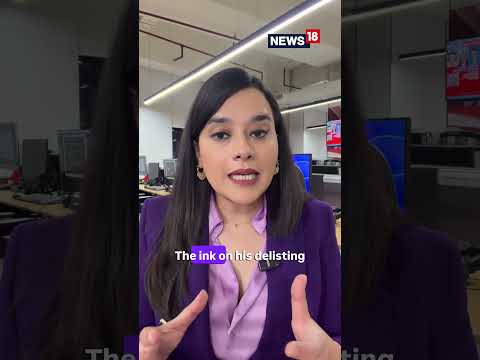
The Hormuz Blockade Was Always the Plan — Syria Proves It
Griha Atul
2m 30s375 words~2 min read
YouTube auto captions
Transcript source
YouTube auto captions
This transcript was extracted from YouTube's auto-generated caption track. The transcript below is server-rendered so it can be read, searched, cited, and shared without opening the original YouTube player.
Pull quotes
[0:00]Two weeks ago, I told you about a buried pipeline and a former Al-Qaeda commander trying to revive it.
[0:00]February 23rd, American troops begin pulling out of the Qasrak base in Hasaka province, ending the 2014 era ground mission in Syria.
[0:00]Five days later, the US and Israel launch operation Epic Fury, a full bombing campaign against Iran.
[0:00]March 30th, Ahmad al-Sharaa, the same Al-Qaeda commander turned Syrian president, stands in Berlin, watches his energy minister sign contracts with Siemens.
Use this transcript
Related transcript hubs
Watch on YouTube
Share
MORE TRANSCRIPTS


