[0:10]I'm Hannah Sevian, associate professor of chemistry at UMass Boston. And I'm Greg Banks, chemistry teacher at the Urban Science Academy, a public high school in Boston, Massachusetts. We are part of a group of researchers and classroom teachers working together to figure out how chemistry teachers can meet the vision of the new science standards by shifting toward more responsive teaching practices. That means focusing on how students think about chemistry and figuring out new ways to help students get a coherent picture of how chemistry works in the world. We know classroom teachers don't have a lot of time, so our article outlines specific strategies that teachers can take to shift from more prescriptive formative assessment to more responsive practices. Open-ended formative assessment activities can help teachers notice the disciplinary substance of students' thinking, and the interpretations teachers make of what they notice can form the basis of responsive actions to support student learning. For example, I might be working on teaching students about electrical forces between particles in an aqueous solution. And I might lead into it by exploring the conductivity of different solutions to help students connect to what they learned in previous science courses. The relevant NGSS standard here is High School PS1-3. Plan and conduct an investigation to gather evidence to compare the structure of substances at the bulk scale to infer the strength of electrical forces between particles. There are four core practices in formative assessment. The first of these is eliciting, which is revealing student thinking. In the example lesson that Greg's talking about, when he works on eliciting students' thinking, he has to make choices about what questions to ask students to consider, and this forms the basis of prescriptive versus responsive. If he was teaching a lesson about conductivity in liquids, asking students to predict which of a set of samples would conduct electricity, pure water, sugar water, salt solution, would be more prescriptive because this is about school knowledge. So it's less accessible and relevant, and it's also clear that there's only one correct answer to each one. A more responsive approach would be to use an open-ended, accessible, and relevant question that relates to student's lives, such as list five liquids that can be found in your home and predict whether you think they would conduct electricity or not. The second practice is noticing, focusing on the substance of student thinking. There are different things I could pay attention to when what the students do, write and say. I could choose to pay attention to whether students use particular vocabulary words or look for evidence of typical misconceptions. On the other hand, if I practice more responsive noticing, I might use the second approach to reveal more about student ways of thinking. For example, if a student says Windex conducts electricity because it has chemicals in it, and milk doesn't because you can safely drink it, then I may learn that this student is separating conductive versus non-conductive by whether a liquid contains chemicals, which is an intuitive way of thinking that I can then build on to help the student learn more. Interpreting is the third practice. It's about making sense of what students' ideas are. What Greg interprets depends on what he notices and also what he's looking for in students' responses. In a more prescriptive approach, he might be looking to see if students know which solutions are conductive and which are not. So he could determine what fraction of the students got the correct versus incorrect answers. Or he could look for the presence of known misconceptions in his students' responses, which is also more prescriptive. On the other hand, a more responsive approach could be for Greg to look at how students think about conductivity and what goes into their thinking. So take for example, the scenario that Greg described, of some students predicting that Windex conducts electricity because it has chemicals in it, while milk doesn't because it doesn't have chemicals in it. He might interpret this as the students dividing the liquids into two classes, chemicals and non-chemicals. The fourth practice is acting, guiding and supporting student learning. In my classroom, I would be acting prescriptively by giving students new formulas of some new solutes and asking them to predict the solution conductivity. To act responsively, I would build on what is productive in the students' thinking that only chemicals conduct, which is that there are different classes of substances, and that's how chemists make predictions. I could ask the students to separate all their example solutions into two groups, a group that has chemicals in it and a group that doesn't, and then test them to figure out if they conduct electricity. This could lead to me asking the students to make a prediction about conductivity based on a model and then plan an investigation to test whether their model has explanatory power. In our study of experienced chemistry teachers, we found that teachers noticing and interpreting practices tend to be independent of their acting practices. And based on that, we characterized four main formative assessment approaches that teachers tend to take. We hope you'll take advantage of the online resources accompanying this article to learn more about formative assessment techniques. We're very excited to share our findings with science teachers and we hope that our strategies help you in your classroom. Thank you.
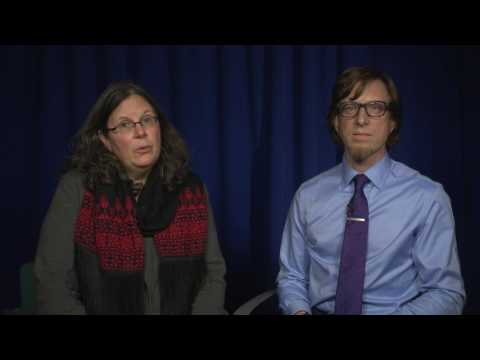
Formative Assessment Practices of Science Teachers
UMass Boston
4m 53s904 words~5 min read
YouTube auto captions
Transcript source
YouTube auto captions
This transcript was extracted from YouTube's auto-generated caption track. The transcript below is server-rendered so it can be read, searched, cited, and shared without opening the original YouTube player.
Pull quotes
[0:10]And I'm Greg Banks, chemistry teacher at the Urban Science Academy, a public high school in Boston, Massachusetts.
[0:10]We are part of a group of researchers and classroom teachers working together to figure out how chemistry teachers can meet the vision of the new science standards by shifting toward more responsive teaching practices.
[0:10]That means focusing on how students think about chemistry and figuring out new ways to help students get a coherent picture of how chemistry works in the world.
[0:10]We know classroom teachers don't have a lot of time, so our article outlines specific strategies that teachers can take to shift from more prescriptive formative assessment to more responsive practices.
Use this transcript
Related transcript hubs
Watch on YouTube
Share
MORE TRANSCRIPTS


