[0:00]Okay, honey buns, we're going over back extensions. So, some of the most common mistakes that I see is if this were up any higher, it would be covering my hip bone and limiting my range of motion. So, what happens in this situation, whether you're using a GHD machine or Roman chair, is that the spine loses stability and the low back continues to move. If I zoom in, you can see it more clear. Because the pad is too far forward, the low back just takes over with this movement. For my patient here, he had been dealing with back pain for six years and only felt a ton of discomfort in his back when doing this. He also couldn't feel his right glute working. Now, during my testing, I found if he maintained a braced neutral spine when under load, he had no back pain. But the moment his back started to round, he felt back pain, a sign called flexion intolerance. So, we started our physical therapy session with the McGill Big 3 core stability routine to stabilize his spine. And when giving back to this exercise, we started by sliding the foot plate a little bit closer. And with his pelvis now over the pad, he could maintain a more braced neutral spine, had no low back discomfort and could feel his glutes working.
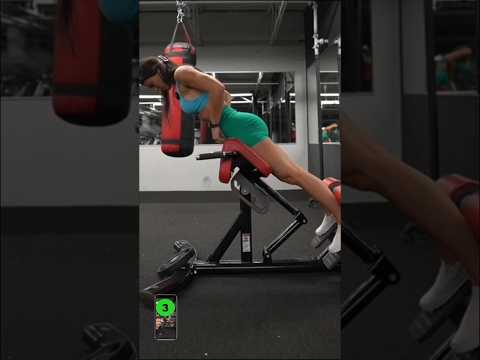
Her Back Extension Tips Are GOLD!
Squat University
1m 1s229 words~2 min read
YouTube auto captions
Transcript source
YouTube auto captions
This transcript was extracted from YouTube's auto-generated caption track. The transcript below is server-rendered so it can be read, searched, cited, and shared without opening the original YouTube player.
Pull quotes
[0:00]So, some of the most common mistakes that I see is if this were up any higher, it would be covering my hip bone and limiting my range of motion.
[0:00]So, what happens in this situation, whether you're using a GHD machine or Roman chair, is that the spine loses stability and the low back continues to move.
[0:00]Because the pad is too far forward, the low back just takes over with this movement.
[0:00]For my patient here, he had been dealing with back pain for six years and only felt a ton of discomfort in his back when doing this.
Use this transcript
Related transcript hubs
Watch on YouTube
Share
MORE TRANSCRIPTS


