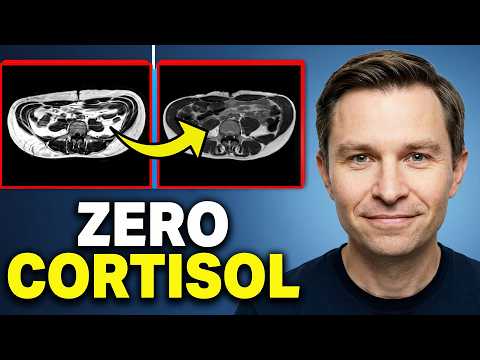
[0:00]Picture yourself waking up one morning and discovering the most dangerous fat in your body. The fat you can't grab, the fat silently wrapped around your liver, your heart, your intestines. Is finally melting away. Not because you starved yourself, not because you practically lived at the gym, But because you figured out how this hidden fat actually operates and turned its own biology against it. Most folks don't realize this, but visceral fat, that deep belly fat, has somewhere between three and four times more stress hormone receptors than any other fat in your body. That means if you've ever questioned why belly fat feels locked in place, why it resists diets or why it hangs on even when you're eating less, it's not your fault. It's the programming. Your body constructed this fat with a specific set of biological guidelines and those guidelines make it resistant by design. But here's the part that changes everything. That same programming is also the opening. Once you activate a few switches, the right exercise trigger, the right insulin rhythm, the right foods and one simple mineral, your body transforms into a visceral fat burning machine. Today, I'll walk you through a complete strategy, built from real biology, real mechanisms and real studies. A plan specifically engineered to bring visceral fat down while naturally lowering cortisol and it's built with you in mind. Practical, sustainable, and grounded in how the body actually functions at our age. So let's start with the first switch. And this one might surprise you because it's not about how many calories you torch. It's about what kind of signal you transmit. You see, visceral fat is packed with something called beta three adrenergic receptors. Think of these like docking stations for adrenaline. When adrenaline locks into these receptors, it triggers a powerful fat burning process. One that's far more active in visceral fat than in the softer jiggly fat you can pinch under your skin. So the question becomes, how do we trigger adrenaline in a safe, controlled way that tells the body to pull energy specifically from that deep belly reserve?
[2:45]The answer is something called VO two max training. Now, don't let the term intimidate you. VO two Max is just your body's ability to use oxygen during exercise. It's like the size of your engine. And research has shown a direct link between a higher VO two max and lower levels of visceral fat, even when total body weight stays the same. Why? Because improving this capacity makes your body dramatically more efficient at mobilizing and burning fat during those adrenaline surges. Here's how it works. When you push yourself into a higher intensity zone for a few minutes, adrenaline doesn't just burn fat randomly. It preferentially binds to those beta three receptors deep in your abdomen. What happens next is fascinating. The fat releases fatty acids directly into something called the portal vein, a kind of superhighway that runs straight from your gut to your liver. Once those fatty acids reach the liver, your body can immediately use them for energy. It's the most efficient path available, and your body is always hunting for efficiency. But here's the key. We're not talking about short, intense sprints that leave you gasping. We're talking about slightly longer intervals that tax your aerobic system, just enough to signal serious metabolic adaptation. The protocol's called the Norwegian 4x4. You warm up, then you do four rounds of four minutes at around 85 to 90% of your maximum effort with three minutes of easy movement in between. You can do this on a rower, a stationary bike, a treadmill or even a brisk uphill walk, if that's what feels right for your body, three times a week. That's it. You're giving your body a controlled dose of adrenaline, lighting up those receptors and teaching your system to pull from visceral fat as fuel. And because you're not overdoing it, you're not flooding yourself with stress. You're creating adaptation, not exhaustion. This is especially important as we age because our bodies need time to recover and rebuild. Stress triggers growth, but too much stress breaks us down. The Norwegian 4x4 sits right in that sweet spot. Now, even with adrenaline firing in those fat cells starting to open up, there's a second lock on visceral fat. And this one depends entirely on when you eat. Let me explain. Insulin is a storage hormone. Its job is to tell your cells, especially your fat cells, to lock the doors and store energy, and visceral fat is exceptionally sensitive to insulin. That means every time you eat, your insulin rises and fat burning switches off. It doesn't matter how clean your diet is. It doesn't matter if you're eating vegetables and lean protein. If insulin is elevated, your fat cells stay locked. But when you fast even for just a few hours longer than usual, insulin levels drop, and that drop is the single most important signal to your fat cells that it's time to release stored energy. Short-term fasting also increases something called hormone sensitive lipase, or HSL for short. Think of HSL as a crew of workers inside each fat cell. So their job is to break down large chunks of stored fat called triglycerides into smaller, more nimble fatty acids that can slip out into the bloodstream. And here's where it gets interesting. As insulin falls after you stop eating, another hormone called glucagon starts to rise. Glucagon works in partnership with adrenaline, the same adrenaline we talked about earlier. Together, they activate that HSL enzyme and the fat cell starts breaking down its reserves. Because visceral fat sits so close to the liver, those fatty acids get dumped right into that portal vein we mentioned. Quick trip, immediate use, your body taps its most conveniently located fuel reserve first. So what does this look like in practice? It's simpler than you think. Finish your last meal of the day around seven or eight inches the evening. Then don't eat again until 11 on noon the next day. That's called a 168 fasting window. 16 hours of fasting, eight hours of eating. For most people, this just means skipping breakfast. And for many seniors, it can feel surprisingly easy once your body adjusts because you're sleeping through a big chunk of that fasting period. During that fasting window, you can still hydrate. In fact, you should water, herbal tea, black coffee. If you like it all fine, you can even sip on an electrolyte drink, especially one that's free of sugar and artificial sweeteners. Electrolytes, sodium, potassium, magnesium, help keep your energy stable, curb your appetite and support the very metabolic processes we're trying to enhance. A drink with around 1000 milligrams of sodium, 200 potassium and 60 of magnesium, can make fasting feel much more comfortable. It's not required, but it's a tool that many people find genuinely helpful. Now, with insulin lowered and fat cells finally opening up, you'd think we'd be done. But there's another hormone at play, one that most people have never even heard of in this context, and it's one your fat tissue itself produces your body. Your body fat isn't just a storage depot, it's an active endocrine organ, meaning it produces hormones. And one of the most problematic is estrogen. Specifically, visceral fat houses an enzyme called aromatase. This enzyme takes androgens, hormones like testosterone that help maintain muscle, energy and metabolic health and converts them into estrogen. And here's the vicious cycle, the more visceral fat you have, the more aromatase you produce. The more aromatase you produce, the higher your estrogen levels climb. And higher estrogen levels signal your body to store even more fat in estrogen sensitive areas like your belly. You're literally fueling the fire. And if you've ever wondered why someone who drinks a lot of beer, a highly estrogenic beverage, tends to develop a classic beer belly, this is why. The biology is creating a feedback loop that's hard to escape unless you know where to intervene. So how do we shut down that engine? The answer is surprisingly simple, and it's sitting in the produce section of your grocery store. Cruciferous vegetables, broccoli, cauliflower, Brussels sprouts, cabbage, kale. These vegetables contain a compound called indole three Carbonell or I3C. When you eat them and your body digests that compound, it converts it into something called DIM, dye and little methane. And DIM does something remarkable. It helps your liver metabolize estrogen and excrete it in a healthier, less potent form. Even more interesting, DIM encourages the formation of what's called two hydroxy estrogen. The good estrogen, while reducing the formation of one six alpha hydroxy estrogen, which is the more potent problematic form, especially for men. So by eating just one cup of steamed or roasted cruciferous vegetables every other day, ideally with dinner, you're actively interrupting that aromatase cycle. You're telling your body to clear out excess estrogen and stop the signal that's telling your belly to store more fat. Now, if you want to go a step further, especially if you're a man dealing with stubborn belly fat, there's an herb called Tomcat Alley that acts as a mild aromatase inhibitor. It's been studied for its role in balancing the testosterone to estrogen ratio and even reducing cortisol, which as we'll see in a moment, is deeply connected to visceral fat. You've probably heard researchers like Andrew Huberman talk about it. It's not required, but it's another tool in the toolkit if you're looking for an extra edge. But even if you fix insulin, even if you balance estrogen, there's still one more loop running in the background. And this one might be the most powerful of all. Let me take you inside the fat cell for a moment. We've already talked about how visceral fat has more cortisol receptors than other fat, but it gets crazier. Visceral fat is loaded with an enzyme called one one beta hydroxy steroid dehydrogenase type one. I know that's a mouthful, but here's what it does. It takes inactive cortisone, six, a form of cortisol that's floating around your bloodstream doing nothing and reactivates it into potent fat storing cortisol right inside the fat cell itself. Let me say that again. Your belly fat is literally a cortisol generating factory. It's creating a localized, amplified stress signal that tells your abdomen to store more fat, even if you're not consciously stressed. This isn't just motivational fluff or YouTube hype. This is real, documented biology. Your visceral fat is working against you 24 hours a day unless you break the loop. So how do we do that? The answer is magnesium. Magnesium is a non-negotiable mineral in this process. And honestly, in a lot of processes as we age, It acts as a calcium channel blocker and an NMDA receptor antagonist. Fancy terms that basically mean it has a powerful calming effect on your entire nervous system. Specifically, it regulates something called the hypothalamic, pituitary adrenal axis, or HPA axis for short. This is your body's command center for stress. When your HPA axis is calm, your adrenal glands produce less cortisol. And when there's less cortisol floating around, that enzyme in your belly fat has less raw material to reactivate. You're starving the supply chain. I'd recommend supplementing with somewhere between 300 and 500 milligrams of a highly absorbable form of magnesium every night. Magnesium glycinate, magnesium three and eight, or magnesium malate, all excellent choices. Take it before bed because it also supports deeper, more restorative sleep. And sleep, of course, is when your body does its most important repair and fat burning work. But don't stop there. Add just five minutes of box breathing before bed. Breathe in for four seconds, hold for four, breathe out for four, hold for four, repeat. This simple practice further calms your nervous system, lowers baseline cortisol, and reinforces everything the magnesium is doing. It's not meditation, it's not mystical, it's just a tool that works with your biology. Now, all of this, the adrenaline trigger, the insulin switch, the estrogen control, the cortisol break, it all works beautifully. But there's one final variable that can override everything, and that's hunger, because let's be honest, if your appetite is out of control, If you're constantly battling cravings and feeling like you're white knuckling your way through the day, none of this is sustainable. Thermodynamics still matter. If you're eating more than your body needs, you'll store fat everywhere, including visceral fat. But here's the good news. Hunger isn't about willpower. It's about brain chemistry, and there's a simple hack that gives you control. It's called a protein preload. 20 to 30 minutes before your largest meal of the day, consume between 25 and 30 grams of fast digesting protein. It could be a whey protein shake, it could be a plate of egg whites, Greek yogurt, cottage cheese. It doesn't really matter as long as it's protein rich and relatively low in fat and carbs. Here's why this works. When you eat protein, your your gut releases hormones called incretins, specifically GLP one and peptide Y Y. You've probably heard of GLP one recently because it's the same hormone targeted by those popular weight loss medications, but your body makes it naturally in response to protein. GLP one slows down gastric emptying, which means food physically sits in your stomach longer, creating a prolonged feeling of fullness. Meanwhile, peptide Y Y travels to your hypothalamus, part of your brain that controls appetite, and essentially screams, we're full, shut down the hunger signals. There was a study published in the American Journal of Clinical Nutrition where people consumed a protein preload before a meal. The results were striking. Participants naturally ate fewer calories at the meal without even trying, and they reported feeling fuller for somewhere between three and four hours longer than those who didn't have the preload. This isn't about restriction. It's about reprogramming your satiety signals so your brain is satisfied with less food. So let me bring it all together for you. This is your complete plan. Three times a week, do VO two max training using that Norwegian forest floor protocol. You're triggering adrenaline and teaching your body to mobilize visceral fat every day, or at least most days, practice a 168 fasting window. Skip breakfast, finish dinner by eight and keep insulin low, so hormone sensitive lipids can do its job. Every other day, eat at least one cup of cruciferous vegetables with dinner. You're managing aromatase and clearing excess estrogen every night. Take 300 to 500 milligrams of magnesium and spend five minutes doing Buck's breathing. You're breaking the cortisol amplification loop, and before your biggest meal, use a 30 gram protein preload to activate your natural GLP one and peptide Y Y, keeping hunger under control.
[23:01]This is not a harsh diet. It's not punishment. It's a 30 day rewiring of how your body uses fuel. And for many people, especially those of us over 65, this approach finally makes fat loss feel possible again. Not because you're forcing anything, but because you're working with your biology instead of against it. If you found this breakdown helpful, if you want more science backed strategies that can genuinely help you reduce visceral fat, lower cortisol and feel younger from the inside out, then make sure you like this video and subscribe. Leave a comment below and tell me which part of today's plan you're going to start with, the exercise, the fasting window, the vegetables, the magnesium or the protein preload. I'd love to hear your story and your question might even inspire the next video.