[0:00]The two camps of dysphasia are motility disorders and mechanical obstruction.The difference being those with motility disorders have dysphasia to both solids and liquids at onset while mechanical obstruction.
[0:10]Those patients will have dysphasia to solids that progress to involve liquids. You often see this in things like cancer. Esophageal strictures initially present with patients having intolerance to solids and then progress to liquids.
[0:24]Long standing gird is a risk factor for esophageal stricture. Diffuse esophageal spasms can be provoked by stress, hot or cold foods and it causes intermittent dysphasia.
[0:35]Achalasia is when the esophagus won't peristolse appropriately and the lower esophageal sphincter won't relax during swallowing. So the patient will often stand after eating or raise their arms above their head to increase the esophageal pressure and aid in digestion.
[0:51]It's a motility disorder. Zenkers diverticulum is the result of increased pressure in the lower pharynx causing diverticulum or pouchings to form. Patients often regurgitate food and develop halitosis from the trapped food.
[1:03]Diagnosis uh with a barium swallow. Shatski's ring is often found in patients with impacted food boluses.
[1:10]The ring of muscular tissue in the esophagus causes the dysphasia. You diagnose Shatski's ring with an upper endoscopy and it's common for these patients to have concomitant hiatal hernias.
[1:23]This is a very high yield slide in terms of esophageal ruptures and foreign bodies that present in the esophagus. So there are two camps of esophageal rupture.
[1:32]Mallory-Weiss tear, which is a partial thickness located in the gastroesophageal junction. And then there's, this is due to forceful vomiting leading to bleeding from submucosal arteries.
[1:44]And then there's Borehave Syndrome, which is full thickness tear located in the unsupported left posterior lateral wall of the distal esophagus. Patients will have posttemetic chest pain and develop hypotension.
[1:56]Your x-ray findings will have plural effusions, widened mediastinum and pneumo mediastinum. You diagnose with an upper GI study with water soluble gastrografin.
[2:06]For esophageal foreign bodies, the most common site of esophageal foreign body is the entrapment for children, which is at the cricopharyngeus muscle at C6 and for adults it's at the lower esophageal sphincter at T10.
[2:20]Coins are the most common ingested foreign body in children. And when you're looking at an x-ray, the transverse orientation means that it's in the esophagus.
[2:30]If you see the sagittal orientation, it's the trachea. If the coin is in the esophagus and the child is symptomatic, you need to remove it. If the child is asymptomatic with a coin in the esophagus, you can observe to up to 24 hours.
[2:40]If it has not passed within that time frame, then you need to get it out at the 24-hour mark. If the coin reaches the stomach, um, the child can pass the coin in one to two weeks time.
[2:50]If it has not reached the stomach in four weeks, you need to do a an endoscopy. If there is a halo or a double rim effect, it's a button battery.
[2:59]These need to be removed from the esophagus immediately. And the same thing for sharp pointy objects. Even if their radiographic workup is negative, you need to perform an endoscopy.
[3:10]And then the ilio sequel valve is the most common site of perforation. If the patient has swallowed a magnet, one is okay to watch and wait, but multiple magnets can lead to bowel perforation while moving across the bowel wall and it can ultimately lead to death.
[3:23]And then my last little tidbit for this high yield slide is objects that are longer than 5 centimeters and wider than 2 centimeters need endoscopy removal.
[3:34]For acid and base ingestions, for alkaline ingestions, those tend to injure the esophagus over the stomach.
[3:41]Alkaline ingestions cause liquefactive necrosis, which leads to rapid progression until the stomach acid partially neutralizes or minimizes the damage. The acid on the other hand moves quickly into the stomach causing less esophageal damage.
[3:55]Acid ingestions lead to superficial coagulation necrosis that thromboses the underlying blood vessels and forms a protective eschar. Do not induce vomiting in these patients, do not use neutralizing agents as the neutralizing agents release heat and add thermal injury to the already present chemical destruction.
[4:10]The best management for these patients, acid and base ingestion is if they are symptomatic, perform endoscopy. If they remain asymptomatic, you want to observe them.
[4:21]The long-term complications include esophageal stricture and cancer. Rapid fire for GI includes ulcers and hepatitis.
[4:30]So gastric ulcers are painful right after eating, worse with food associated with weight loss. You want to get a biopsy to rule out malignancy. Duodenal ulcers often get better with eating food.
[4:40]It's more likely to bleed than gastric ulcers. The treatment for peptic ulcer disease is H2 blockers which inhibit gastric acid secretion.
[4:49]PPIs which block acid secretion by inhibiting the hydrogen potassium proton pump and then typically the IV drug of choice in patients with GI bleeds is a PPI.
[4:59]If the patient has H. pylori, you want to give antibiotics. Um, in-sed induced gastric ulcer is treated with misoprostol.
[5:07]The most common complication of peptic ulcer disease is a GI bleed. The upper GI bleeds have a BUN to creatinine ratio greater than 30 to 1.
[5:17]And the number one cause of upper GI bleed is peptic ulcer disease. The number one cause of lower GI bleed is upper GI bleed followed by diverticulosis.
[5:27]Alcoholic hepatitis has an AST to ALT ratio greater than 2. Hepatitis A and hepatitis E are transmitted through the fecal oral route. The most common co-infection with hepatitis B is hepatitis D as in dog.
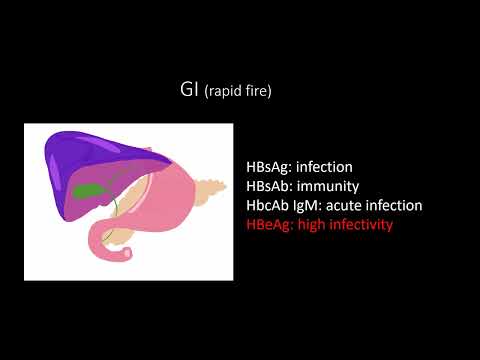
[5:41]The H uh, B indicators and markers um, are very high yield for the shelf exam. So the HBsAg or antigen indicates infection.
[5:54]The HBsAb, which represents antibody, represents immunity whether that's acquired through infection or vaccination. HBc antibody IgM means the patient is undergoing acute infection.
[6:05]And the HBeAg or antigen means they are highly infectious. Hepatitis C is acquired through blood transfusions and IV drug abuse. About 50% will go on to develop chronic infection.
[6:18]Hepatic encephalopathy presents as altered mental status, confusion, coma. All is a result of uh liver failure and liver cirrhosis. Azotemia is the most common precipitant.
[6:29]Sleep inversion, which means when the patient sleep during the day and they're awake at night is an early sign. Treatment includes lactulose and decreasing dietary protein.
[6:37]Spontaneous bacterial peritonitis or SBP makes the diagnosis when the ascites fluid has a positive culture and greater than 250 PMNs. The most common organism is E. coli.
[6:49]And the treat, the treatment for SBP is cephalosporins, ceftriaxone, and cefepime.
[6:58]Cholecystitis, you want to look at the ultrasound findings that are consistent with gallstones, the presence of sludge, pericholecystic fluid, gallbladder wall thickening greater than 3 millimeters, or common bile duct dilation greater than 6 millimeters.
[7:13]Sonographic Murphy's sign is reproducible pain when the ultrasound probe is applying pressure. Murphy's sign is inspiratory arrest while palpating the right upper quadrant.
[7:27]The highest specificity and sensitivity for cholecystitis is actually the HIDA scan. Risk factors for cholecystitis are the four F's fat, female, fertile, and forty.
[7:37]Presence of air in the gallbladder during ultrasound, uh, which is often caused by various organisms is called emphysematous cholecystitis.
[7:46]This is a surgical emergency as the risk of gallbladder gangrene and perforation is high. Acalculous cholecystitis is very similar to cholecystitis with the same ultrasound findings except there is no presence of gallstones.
[7:59]There's a high mortality rate and it's often seen in ICU patients, AIDS patients, and the elderly. Choledocholithiasis tells you exactly in the name, the stone is in the common bile duct.
[8:08]Cholangitis is when you have obstruction in the common bile duct, which allows bacteria to ascend from the lower GI tract upward.
[8:19]You will see the classic Charcot's triad of right upper quadrant pain, fever, and jaundice. If the patient has Charcot's triad plus confusion and hypotension, the mortality rate is as high as 50%.
[8:31]You want to get a surgical consult, add on IV antibiotic, and you may need to do a ERCP. Pancreatitis has multiple causes including gallstone, alcohol abuse, hypertriglyceridemia, hypercalcemia, thiazides, estrogen, silicates, propofol, sulfa drugs, mumps, Coxsackie, adenovirus, hepatitis, salmonella, pregnancy, and idiopathic.
[8:54]Lipase has a greater sensitivity than amylase. And there are you want two of the three criteria to diagnose pancreatitis.
[9:04]And again, two of the three lipase elevated three times the upper limit of limit, epigastric pain radiating to the back or finding consistent on the CT, like edema, um fat and presence in the pancreas.
[9:17]The treatment is supportive, uh fluids, fluids and more fluids, analgesia for pain and you want to keep the patient NPO. Complications of pancreatitis include pseudocyst, hyperglycemia, hypocalcemia, hypovolemia, ARDS, DIC, renal failure, and death.
[9:33]Ranson's criteria may show up on the shelf exam. It's basically a point based system that predicts the the mortality of the patient. You need laboratory data on admission and then 48 hours later.
[9:47]Ileus is abnormal peristalsis without evidence of mechanical obstruction. The causes include post-operative period, hypokalemia, opioids, and anticholinergics.
[9:59]The symptoms include abdominal pain, constipation, nausea, distension. On the shelf, the patient will have hypoactive bowel sounds.
[10:07]The x-ray will show dilated loops of bowel throughout. The treatment is bowel rest, keep the patient NPO, fluids. You want to consider an NG and surgery consult.
[10:19]A bowel obstruction on the other hand has uh air fluid levels and dilated fluid filled loops of bowel. The number one cause of small bowel obstruction is adhesions.
[10:31]The number one cause of large bowel obstruction is malignancy. Ogilvie's syndrome is an acute colon pseudo obstruction.
[10:40]It occurs when secondary to autonomic dysfunction leading to massive dilation of the colon greater than 10 centimeters. There is no mechanical obstruction.
[10:50]The treatment is colonic decompression and neostigmine. Irritable bowel syndrome is a diagnosis of exclusion with vague symptoms of abdominal pain, bloating, constipation, diarrhea.
[11:00]It's more common in women and the treatment is symptomatic control. Inflammatory bowel disease on the other hand is due to chronic inflammation that cycles with exacerbation and remission periods and patterns.
[11:13]Treatment is sulfasalazine, mesalamine, and prednisone. The two inflammatory bowel diseases are Crohn's and ulcerative colitis.
[11:21]Crohn's is affects any portion of the GI tract without rectal involvement. It has skip lesions and it's associated with perianal fissures and fistulas.
[11:32]Transmural associated with calcium oxalate crystals. Ulcerative colitis affects the rectum and colon.
[11:40]It's continuous areas of inflammation and the pathology affects the submucosa and the feared complication is toxic megacolon. You want to recall that toxic megacolon is a life-threatening complication from ulcerative colitis and C diff infections.
[11:55]It arises due to due to a decrease in tone of the bowel wall. Severe bloody diarrhea is the most common presenting symptom.
[12:04]X-ray will show colonic dilation greater than 6 centimeters. The treatment is IV fluids, steroids, antibiotics, and the patient may ultimately need a colectomy if the initial treatment fails.
[12:14]You want to avoid opioids and anticholinergics. Mesenteric ischemia presents with pain out of proportion to physical examination.
[12:23]Most patients are elderly and the risk factors include atrial fibrillation, CAD, diabetes, hypertension. The labs are very non-specific.
[12:33]However, CT angiography is the gold standard. Treatment is aggressive IV fluids, broad spectrum antibiotics, and heparin. Chronic mesenteric ischemia is associated with abdominal pain that is worse with food, unintentional weight loss, and fear of eating.
[12:51]Pain in the right lower quadrant is the most sensitive finding in appendicitis. You diagnose appendicitis in adults with the best test being the CT. Diagnosing appendicitis in pediatrics patients, the best test is still ultrasound.
[13:05]Diverticulitis is described as cramping, left lower quadrant pain. It's characterized by painless rectal bleeding. You diagnose with a CT. The treatment is broad spectrum antibiotics covering for E. coli and B. fragilis.
[13:20]The common regimen is metronidazole and ciprofloxacin. The most common complication is abscess formation. Diverticulosis on the other hand is self-limited and managed with high fiber diet and stool softeners.
[13:34]In terms of diarrhea, there are quite a few pathogens that cause it. E. coli specifically 0157 colon H7 is responsible for HUS, hemolytic uremic syndrome, about 5 to 10 days after the initial symptom onset.
[13:49]HUS consists of anemia, renal failure, and thrombocytopenia. Enterohemorrhagic E. coli is seen with undercooked hamburger meat, petting zoos, raw milk, untreated water.
[14:00]Antibiotics are not indicated as they can actually promote the toxin release and make the patient feel worse. Salmonella causes loose watery stools. The vector includes turtle eggs and food poison, and food poisoning in general.
[14:13]The treatment is IV fluids and electrolyte replacement. Antibiotics is not routine unless the patient requires hospitalization. And if that's the case, you want to add on Cipro, Bactrim, or amoxicillin.
[14:25]Campylobacter jejuni is uh very commonly seen with bloody diarrhea. It's a fecal oral transmission and it's associated with Guillain-Barré. E. histolytica is also a bloody stool which can progress to fulminant colitis with bowel necrosis.
[14:43]It's often associated with liver abscess. Your treatment is metronidazole even in asymptomatic cases. Yersinia enterocolitica causes right lower quadrant pain with a post-infectious presentation of erythema nodosum and reactive arthritis.
[14:56]Traveler's diarrhea is caused by enterotoxigenic E. coli or ETEC. And it get, and it gives these patients a for treatment, you want to give these patients a single dose of ciprofloxacin.
[15:09]Vibrio is associated with raw oysters and seafood. Cholera is often described as rice water diarrhea. Those that have cholera have large amounts of volume loss and the treatment is targeted with IV fluids.
[15:20]Giardia, um, you will see that the cysts often survive in streams, so it's often transmitted through water, especially with mammals that live in water like beavers, for example.
[15:30]It's transmitted through the fecal oral route and through anal sex. Symptoms include watery diarrhea for at least two weeks, foul smelling fatty stool, and nausea and bloating.
[15:41]The diagnosis is with stool antigen, no OVAR parasites. The diagnosis again is with stool antigen and they will try to trick you with that. So choose stool antigen. The treatment is metronidazole.
[15:53]Cryptosporidium is the most common cause of chronic diarrhea in AIDS patients. It can range from no symptoms to mild diarrhea, usually resolved in 10 to 14 days in immune competent patients.
[16:03]For HIV patients, you want to start the heart therapy as soon as possible. In terms of food poisoning in the ER.
[16:13]You want to first think of the most common cause of food poisoning which is staph aureus. It's contained in food such as potato salad, meat, poultry, eggs, cream-filled pastries.
[16:22]The symptoms come along six hours after ingestant ingestion and the treatment is symptomatic. C. perfringens is under, is due to undercooked meat and poultry.
[16:34]Often buffet foods that have been sitting left out for long periods of time. The symptoms include abdominal cramps, watery diarrhea. It often resolves within 24 hours.
[16:44]Bacillus cereus is associated with fried rice, also known as warm rice syndrome. You can have vomiting or diarrhea, it's self-limited. Botulism has a heat liable neurotoxin.
[16:54]You want to think of canned foods and honey. Symptoms often present as descending paralysis, anticholinergic toxidrome, floppy baby syndrome, and diplopia is the most common finding in adults.
[17:10]Ptosis and dysarthria. The treatment is antitoxin. Scombroid poisoning, you want to think about the food such as tuna and mahi-mahi.
[17:18]It has a histamine-like toxin with rapid onset within 30 minutes of ingestion. The patient will have facial flushing, diarrhea, abdominal cramps, palpitations. And the treatment is antihistamines and H2 blockers.
[17:31]Ciguatera is associated with barracuda and red snapper fish. It has symptoms ranging from nausea, vomiting, diarrhea, and then it'll escalate all the way to neuro symptoms such as ataxia, paresthesias, and hot cold reversal.
[17:46]It can be misdiagnosed as multiple sclerosis because these symptoms can literally last for years. And the treatment is antihistamines and avoidance of the above fish.
[17:58]In terms of lower GI bleeding, anal fissure is the most common cause of painful rectal bleeding. Internal hemorrhoids are the number one cause of painless rectal bleeding. The most common cause of anal fissure is a superficial tear.
[18:10]Treatment is warm water sits bath, analgesia, stool softeners, high fiber diet. Topical nitrates can treat the symptoms pretty well. In addition to the the above treatments.
[18:22]Hemorrhoid symptoms include bright red blood per rectum, anal pruritus, prolapse, and pain due to thrombosis. Internal hemorrhoids are above the dentate line and they have painless rectal bleeding.
[18:35]External hemorrhoids are below the dentate line and have painful thrombosis. Risk factors are constipation and pregnancy. Treatment is sits bath, analgesia, stool softeners, high fiber diet, topical steroids, and surgery.
[18:49]You want to insize thrombosed hemorrhoids by means of elliptical incision. Perianal abscesses are superficial infections that have no fluctuants or pain on rectal exam. You can do the incision and drainage in the ER.
[19:02]Ischio rectal abscesses and perirectal abscesses should be drained in the OR. And the general rule of thumb is if the abscess is above the dentate line, you should it should be drained in the OR.
[19:12]And then pilonidal cyst are painful and fluctuant. They're always midline in the pre-sacral region. They are more common in males, often times with poor hygiene.
[19:21]They are always located midline. And the most common complication is recurrence. From an ER standpoint, you want to refer to a surgeon for incision. And that's it. That concludes this high yield emergency medicine GI video.
[19:37]If you have any questions for this shelf exam or any of these topics, reach out in the comments below. And thank you for your time.