[0:00]If you want to become fluent in English this year, you need a plan. My name's Michael, I'm an English communication coach and it's my goal to help you speak English confidently, clearly, and fluently. In this video, I'm going to tell you why you need a plan when learning English and how you can create one. I'm also going to give you seven different language learning techniques, which you can use to help you improve your English more quickly and efficiently. I know when it comes to learning English, it can seem like there's a lot of information out there. Too much information. It can be really overwhelming and often you don't know where to start. But don't worry, in this video I'm going to be very specific and tell you everything you need to know to create your own custom study plan. Now, before we talk about how to do this, I want to talk about why you need a plan. Let's imagine you're driving a car. You probably know where you're going and you have a destination in mind. Maybe it's work, the beach, or another city. But wherever it is, if you want to reach this place, you need to know which roads to take. Maybe you use a GPS or maybe you use a map. But before you start driving, you figure out which path you're going to take and how you can reach your destination. Learning English is no different. In this case, your goal is fluency or a C2 level. Well, this is where we need to talk about how to create a plan. Everybody's plan when learning English will be slightly different. And the reason for this is everybody has different needs. Maybe you're learning English to get a better job, or maybe you've just moved to the US or the UK and you want to improve your fluency to fit in and sound more like a native speaker. Now, how do you figure out what your needs are? All you need to do is ask yourself the question why. Why am I learning English? Your answer to this question is the reason you're learning English. And when you create a study plan, you need to focus on this reason. So, let's look at the seven skills you need to practice if you want to reach this level. You're going to have to focus on reading, writing, speaking, listening, vocabulary, grammar, and pronunciation. Now that we've listed these seven skills, I want you to look at each and think honestly about how good you are at it. How well do you know these seven skills? I want you to rank them each from one to seven. Seven being the worst, so you don't know this very well, it's a big weakness for you. And one being the best, which means you know this skill very well and you're very good at it. Be honest with yourself because this is really important for the next part of the exercise. Let's say your reading skills aren't that great, but they're also not horrible. You give yourself a three. Now, let's say writing is actually one of your strongest skills. You're very good at it. So, you give yourself a one. But on the other end, your speaking skills are really not great. You feel nervous and you can't find the right words when you speak. So, you give yourself a seven. Maybe your listening isn't that bad, give yourself a three. You know you need to expand your vocabulary, so you give yourself a four. Your grammar and pronunciation are both pretty good, so you give yourself a two for both. Now, as I said before, it's really important that you be honest with yourself. Because knowing your strengths and weaknesses is really the only way you can actually improve. So, now you're probably thinking, Michael, I have these seven numbers. What's the point of this? What do I do now? Well, this is where the magic happens. I want you to look at this blank schedule. We have seven days of the week and seven different rows. Each of those numbers you chose represents how often you're going to practice that skill per week. So you gave yourself a three for reading. You could do this on Sunday, Wednesday, and Saturday. Since you're really good at writing, you don't need to practice it that much. You gave yourself a one, so you need to practice once a week. Let's say you have some time on Monday, so you practice it then. And you have problems speaking, so you gave yourself a seven. This means you need to practice speaking seven days a week. Once you've filled out this whole chart, it should look something like this. Obviously, yours will look a bit different depending on what skills you need to practice and how much time you have on certain days. For example, if you don't have much time on Monday, you can arrange your schedule, so you only practice one skill on Monday, but then practice four other skills on a day you have more time. This just gives you a general idea of how to structure your weekly schedule. Now, if you're wondering about how much time to spend a day, you can use this simple formula. Just take how much time you have to spend and divide it by the number of skills you have to practice that day. For example, if you have an hour on Monday and you have to practice writing, reading, speaking, and vocabulary, that means you have to spend 15 minutes on each skill. So, pause the video, go fill out that chart and you will have your weekly study schedule. So now you're probably thinking, Michael, I have my schedule and I know which skills I need to practice, but how do I actually practice them? I'm going to give you seven techniques you can use to practice these skills, but before we get to that, make sure to subscribe to the channel if you're finding this video helpful. And I love hearing from you, so make sure to leave a comment below. You can connect with me on Instagram and Tik Tok. My username on both is English at the ready. If you want to learn more about how you can improve your English this year, go to www.englishattheready.com or click the link in the description below. With that said, let's get back into the video and let's look at the seven techniques you can use to practice these skills. But for each skill, I'm going to give you one technique, which you can use to start practicing now. So, first of all, how do we practice English reading skills? We have to read. But there are actually two types of reading. If you want to improve your reading skills, you need to practice both reading quickly and detailed reading. You can read quickly where maybe you don't understand every single word, but you try to understand the general meaning of the text. And you can also do detailed reading, where you look at every single word and translate the ones you don't understand. Now, what you read depends on your level of English. If you're at A2 or B1, you need to read something a bit simpler without too many difficult words. My number one recommendation at this level is simple Wikipedia. Go to simple.wikipedia.org and there you will find thousands of Wikipedia articles in relatively simple English. Some words will still be a bit difficult, but this is definitely a great starting point. So go check it out and I'm sure you can find a topic that you're interested in reading about. Once you get to a B2 level or higher, you can really start reading authentic material, which is content written by native speakers for native speakers. You can obviously read books, which are great, but if you're looking for something a bit shorter, I recommend online newspaper articles. The language in these is difficult and it will challenge you, but that's exactly what you need if you want to improve your English quickly. I'll put a link in the description to a couple sites which I think have some very good articles. Now, when it comes to writing, how should you practice this skill? First of all, you should ask yourself, what do you actually need to write in English? For most people, that means emails, letters, or maybe academic writing at school. Once you've figured that out, what you need to do is practice writing drafts. For example, are you sending an email to your boss asking for a meeting? Or maybe you're writing an application letter for a new job. Once you figured that out, what you need to do is practice writing drafts. Imagine you're writing the real thing, but now you have a bit more time to think about what you want to say, to play around with your word choice, and to structure everything perfectly. So, when the time comes to actually write one of those emails or letters in real life, you'll know exactly what to say and you can do it really quickly because you've already practiced. Now, if you want some more information on how you can improve your writing, I'm also going to put a link in the description to a great free tool, so go check that out. And if you haven't already, make sure to subscribe to the channel because I will be talking about writing in future videos. Okay, let's talk a bit about speaking. Speaking might be the easiest thing to practice because all you need to do is to speak with people. If you feel nervous when you speak, that's completely normal, and it will eventually go away with practice. Now, what if you don't have anybody to practice speaking with? Well, you can actually speak to yourself. Don't do this in public, but when you're alone, it helps to actually say your thoughts out loud in English. I have personally used this technique when learning German and Italian, and I can tell you it works. Obviously, it's better to find somebody to practice speaking with, but if you can't find anybody, speaking to yourself is a great alternative. When it comes to listening skills, here's one thing you can do to improve. Turn on a British or American movie or TV series and listen to it for two minutes without subtitles. Then what I want you to do is listen to those two minutes again with subtitles. And I'd even recommend you write the subtitles down, so you have a little paragraph you can look at and study. Once you have the words in front of you, listen to those two minutes again and follow along with the text. Connect what you hear with what you see. And keep doing this until you understand every word in the text. This exercise will help you because it allows you to hear how native speakers talk, and at the same time, see what's actually written, so you can connect what you hear with what you see. All right, moving on to vocabulary. What can you do to expand your vocabulary in English? Now, I've mentioned that you can read books or news articles, or you can watch TV or movies. But how do you actually remember these new words? So, one great way to do this is to keep some sort of diary or notebook. Maybe it's on your phone or on paper, but the point is, you have a list of new vocabulary words. Every time you hear or see a new word, write it down and look up the definition. And you can write the word, but also the definition in your notebook. When the time comes to practice this vocabulary, you can sit down and repeat every word in the list until you've memorized it. If you can, I'd actually recommend doing this before bedtime because some studies have shown that when you sleep, you're actually improving your memory. All right, moving on to grammar. For some people, grammar is the most boring skill. For other people, it's the most interesting. But it actually doesn't matter what you think of it because grammar is so important to any language and you do have to learn it. A lot of learning grammar is just memorization. But it's not enough just to memorize the rules. Once you've learned a new grammar concept, you need to practice it in context. The best way to do this is to sit down and write 10 to 20 sentences using that grammar concept, but make sure these sentences are ones that you would actually say in real life. This way, you can connect the grammar concept with your real-life experiences, which will actually help you memorize them faster. Again, when it comes to the actual grammar concepts, there are so many free resources out there, but I'm going to link a couple in the description below, so go check them out. And lastly, let's talk about pronunciation. Remember how I said you need to create a vocabulary list to memorize? Well, you also need to create a pronunciation list. When you hear words that are new or difficult to pronounce, write these down. And eventually, you'll have a pretty long list. Now, it's not enough to only write the words down. You actually have to practice pronouncing them. And you do this by imitating or mimicking someone's pronunciation as many times as you need to until you can say the word perfectly. If you don't have a native speaker to help you, you can go to any translation website and normally they will have a button you can press so you can hear how the word sounds. Obviously, if you have somebody to correct your pronunciation, like a coach, you will see progress more quickly. But you can also try to do this on your own. Okay, I could talk about all these topics for hours, but I don't want to make this video too long today. We've seen why you need a plan, how you can create a plan, and seven different techniques you can use to practice the seven language skills. Now you have no excuse not to take action, so get to work and start improving your English today. If you found this video helpful, make sure to leave a like and subscribe to the channel for more videos and lessons about all things English. And if you want to take your English to the next level this year, go to www.englishattheready.com or click the link in the description below. And you can also connect with me on Instagram and Tik Tok. My username on both is English at the ready. I'll see you in the next video.
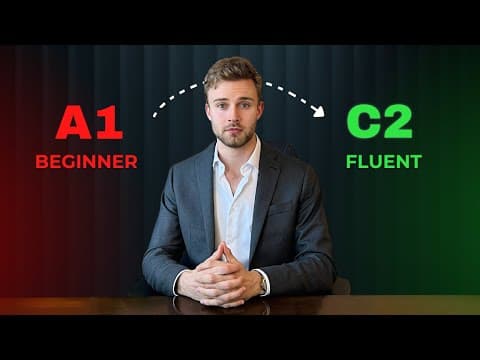
HOW TO LEARN ENGLISH: Complete Study Plan 2026
English At The Ready
16m 6s2,501 words~13 min read
YouTube auto captions
Transcript source
YouTube auto captions
This transcript was extracted from YouTube's auto-generated caption track. The transcript below is server-rendered so it can be read, searched, cited, and shared without opening the original YouTube player.
Pull quotes
[0:00]My name's Michael, I'm an English communication coach and it's my goal to help you speak English confidently, clearly, and fluently.
[0:00]In this video, I'm going to tell you why you need a plan when learning English and how you can create one.
[0:00]I'm also going to give you seven different language learning techniques, which you can use to help you improve your English more quickly and efficiently.
[0:00]I know when it comes to learning English, it can seem like there's a lot of information out there.
Use this transcript
Related transcript hubs
Watch on YouTube
Share
MORE TRANSCRIPTS


