[0:07]Good afternoon. It's wonderful to have you here at the Wildlife Conservation Centre. Our mission is to protect endangered animals and their natural habitats. Thanks to our dedicated team, every species here is in safe hands. I'm excited to share their stories with you today. Let's start with our first exhibit.
[0:37]Welcome to the Arctic exhibit. Polar bears are one of the most iconic species here, but their existence is at serious risk because of climate change. Is climate change the only factor threatening polar bears? It is the biggest threat, but not the only one. As temperatures rise, the ice melts faster and life becomes harder. For them, how does losing their habitat affect their survival? Polar bears use sea ice as platforms to hunt seals, their main food. 40 years ago there was more ice and Arctic sea ice was thicker than it is today, so hunting was easier. Now the ice melts faster and they have to swim longer. That makes them very exhausted and even leads to drowning. Without enough food, it is hard for them to survive and breed. What can we do to help to fight climate change? We can save energy, use clean energy sources like wind and solar, and follow rules to reduce carbon emissions. Small actions can bring big results. It's not too late to take action. Together, we can still help protect the wildlife. Exactly. Spread the word. When more people know, more people can help.
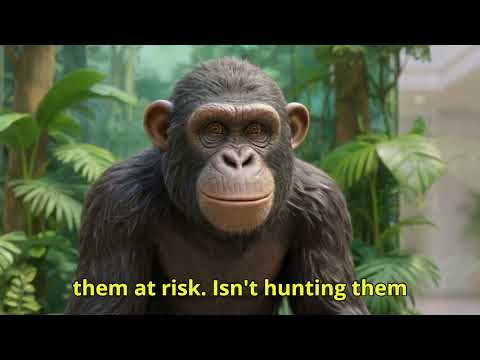
[2:09]This section shows chimpanzees, one of the most endangered big apes in the world. They live in tropical rainforests, as well as woodlands and grasslands in West and central Africa. Unfortunately, hunting, pet trade and diseases put them at risk. Isn't hunting them illegal? It is, but people still hunt them illegally. They try to sell chimpanzees as pets. That's awful. What about diseases? Some diseases can move from humans to chimpanzees and spread through activities such as hunting and the illegal pet trade and have a big impact on chimpanzee populations. That's so sad. I guess their habitats were much safer in the past. Absolutely. The rainforests were bigger and quieter. Now, because of increased human activity, diseases spread faster and chimpanzees lose their homes. How can we help? We should support laws to stop illegal hunting, donate to organisations to save chimpanzees and tell people about it. Every little bit helps.
[3:25]Welcome to the Ocean exhibit. Sea turtles are one of the oldest creatures on our planet. They live in almost all oceans except the Arctic and Antarctic, and need beaches to lay their eggs. In the past, the beaches were cleaner and the oceans were safer. Today, marine pollution and unsafe beach conditions endanger their survival. What makes the beaches unsafe? Lights from buildings confused baby turtles and stop mothers from laying eggs. Babies should follow the moonlight to the sea, but they follow the wrong lights and get lost. That's so sad. How does marine pollution affect sea turtles? Sea turtles often think plastic bags are jellyfish, their natural food source. Eating plastic can block their stomachs and they die. It's one of the biggest dangers for them.
[4:26]What can we do to prevent all of these things? We should use less plastic, avoid single use items like bags and straws, and turn off lights near beaches. Cleaning up beaches also helps a lot. That sounds easy. There was a beach cleanup with many volunteers a few months ago. That's perfect. Volunteers help a lot by removing rubbish, guiding hatchlings to the sea and teaching visitors. It really helps. Let's drawing the next cleanup. Small steps can lead to big changes. Yes, that's the spirit. Protecting sea turtles also protects the oceans and their ecosystems.
[5:14]Our last exhibit shows the Sahara and Cheetah, one of the rarest big caps in the world. There are fewer than 250 individuals left in the wild. They live in the Sahara Desert in Northwest Africa. Why are they so few? There are many reasons. The biggest one is habitat loss. As more people move into the desert to farm and build, the cheetahs lose places to hunt. Also, illegal hunting for their fur is a major threat. And lastly, their food is disappearing. It's difficult for them to survive in the very hot and dry desert climate without enough food. What was their habitat like before? The Sahara Desert was bigger, less dry, and had more plants and animals to hunt. It seems they need many things to survive like food, water and space. Definitely. Protecting their homes is as important as saving the animals. Then we should tell others and help groups that protect their habitat. Every small action helps. Telling others, giving support and using fewer resources. Their future depends on it. Thank you for all the information. The visit was very helpful and eye opening. Yes, we've learned a lot today. Thank you. Well, definitely spread the word and do our part to help. You're very welcome. It's great to see young people care. Keep learning and sharing. Don't forget, every little bit helps.


