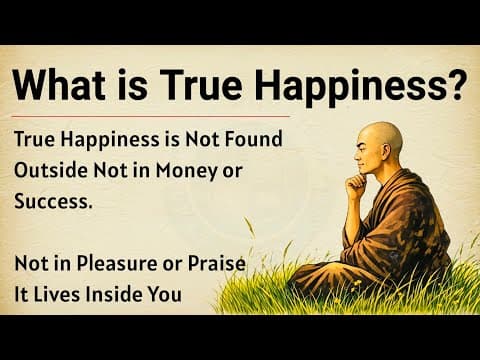
[0:00]Welcome everyone. Today, our topic is What is true happiness? Every human wants to be happy. We work hard, we dream big, and we chase many things in life because we believe they will make us happy. Some people think happiness is money. Some think happiness is success. Some think happiness is fame, relationships, or comfort. But here is a question we must ask ourselves: If happiness comes from these things, why do so many successful people still feel unhappy? This tells us one important truth. Happiness is not something we buy or achieve. True happiness is not loud. It is not shown on social media. It is not dependent on other people. True happiness is quiet. It lives inside us. Many people confuse pleasure with happiness. Pleasure is temporary. It comes and goes quickly. A new phone feels good for some time. Praise feels good for a moment. Entertainment gives short joy. But true happiness stays even when life is hard. It stays when there is no applause. It stays when no one is watching. True happiness is peace of mind. It is waking up without heavy stress. It is sleeping without fear. It is accepting life as it is, not constantly fighting it. True happiness comes when we stop comparing ourselves with others. When we stop chasing approval. When we feel grateful for what we already have. A happy person is not someone who has everything. A happy person is someone who needs very little. In this video, we will explore true happiness step by step. We will understand why money alone cannot give it, why success alone cannot give it, and how we can build real happiness in daily life. This lesson is simple. But it is powerful. Because when we understand true happiness, life becomes lighter, calmer, and more meaningful. Let's begin this journey together. Lesson 1: Pleasure is not true happiness. Most people believe they are happy, but in reality, they are only chasing pleasure. Pleasure feels good, but it does not last. True happiness is different. To understand happiness, first we must understand the difference between pleasure and happiness. What is pleasure? Pleasure is something that gives quick joy. For example: Eating tasty food. Buying new things. Watching entertainment. Getting praise from others. These things feel good for a short time. But after some time, the feeling disappears. Then we want more. This cycle never ends. Why pleasure does not last. Pleasure depends on external things. It depends on money, people, situations, and comfort. If the situation changes, pleasure disappears. A person who depends only on pleasure is always running. Running for more money. Running for more attention. Running for more comfort. This creates stress, not happiness. Mentally peaceful people understand this early. True happiness is internal. True happiness does not depend on outside things. It comes from: Inner peace. Acceptance. Contentment. Gratitude. A truly happy person can stay calm even when life is not perfect. They do not need everything to go right to feel okay. This is real strength. Pleasure makes us dependent. When we depend on pleasure: We fear losing things. We fear judgment. We fear failure. Fear kills happiness. True happiness removes fear because it is not dependent on anything. A person who finds happiness inside is never empty. Simple real-life example. Person A buys something new. He feels excited. After some days, the excitement ends. Now he wants something else. Person B lives simply. He enjoys small moments. We He feels calm daily. Person A has pleasure. Person B has happiness. Same world. Different mindset. Why chasing more never makes us happy. More money does not mean more peace. More success does not mean more calm. More attention does not mean more joy. Chasing never ends. True happiness begins when chasing stops. When we learn to be satisfied, life becomes lighter. How to move from pleasure to happiness. Mentally peaceful people practice these habits: They enjoy small things. They stop comparing. They reduce unnecessary desires. They focus on peace, not show. They understand that happiness grows when desires reduce. Less desire. More peace. Pleasure excites the body. Happiness calms the mind. Pleasure is loud. Happiness is quiet. When we stop chasing pleasure and start building peace, true happiness begins. Lesson 2: Why money and success cannot give true happiness. Many people believe one thing: If I earn more money, I will be happy. If I become successful, I will be happy. This belief is very common. But it is also very misleading. Money and success can make life comfortable, but they cannot give true happiness. Let us understand why. Money solves problems, not inner peace. Money is important. It helps us live better. It gives safety and comfort. But money only solves external problems. It can buy a house, but it cannot buy peace of mind. It can buy medicine, but it cannot remove fear. It can buy entertainment, but it cannot stop loneliness. Many people with money still feel empty inside. This shows money is not the source of happiness. Success creates pressure, not peace. Success looks beautiful from outside. But inside, it often brings pressure. More success means: More responsibility. More expectations. More fear of failure. More stress. People start worrying about losing their position. They start comparing themselves with others. This pressure slowly kills happiness. True happiness feels light, not heavy. The trap of more. When people get money or success, they feel happy for a short time. Then the mind says: I need more. More money. More fame. More power. This desire never ends. Chasing more keeps the mind restless. A restless mind cannot be happy. Mentally peaceful people stop this chase. Why comparison destroys happiness. Money and success invite comparison. We start looking at: Who earns more. Who is more famous. Who lives better. Comparison creates jealousy. Jealousy creates stress. Stress destroys happiness. True happiness comes when comparison stops. A happy person competes only with their past self. Real-life example. Person A earns a lot of money. But he is always worried. He is never satisfied. Person B earns enough. He lives simply. He sleeps peacefully. Person A has money. Person B has happiness. Same world. Different values. True happiness comes from contentment. Contentment means being satisfied with what we have while still improving ourselves. Mentally happy people say: This is enough for now. They enjoy the present moment. They do not delay happiness for the future. Happiness is not a destination. It is a way of living. When money and success become useful. Money and success are not bad. They are useful tools. But they must support life, not control life. When money serves peace, happiness grows. When success serves ego, happiness disappears. Balance is the key. How to use money without losing happiness. Mentally happy people: Live below their means. Spend wisely Value time more than money Focus on peace, not status They know: Enough is better than excess. Money can make life easier. Success can bring comfort. But true happiness comes from inside. A peaceful mind is richer than the richest bank account. When we stop chasing happiness outside, we start feeling it inside. Lesson 3: True happiness comes from peace of mind. When people talk about happiness, they often talk about excitement. But excitement is not happiness. Excitement is temporary. True happiness is peace of mind. A peaceful mind is calm, stable, and clear, even when life is not perfect. What is peace of mind? Peace of mind means: The mind is not always worried. The heart is not heavy.
[11:03]Thoughts are not constantly racing. It does not mean life has no problems. It means problems do not control us. A person with peace of mind can smile even during difficult times. This is true happiness. Why peace is more important than pleasure. Pleasure excites the senses. Peace relaxes the soul. Pleasure needs constant input. Peace needs very little. Pleasure ends quickly. Peace stays longer. A peaceful person does not need everything to be perfect to feel okay. This stability is happiness. How a noisy mind destroys happiness. Many people are unhappy not because life is bad, but because their mind is noisy. The mind keeps thinking: About the past. About the future. About mistakes. About fears. This noise steals happiness. Mentally happy people learn to quiet the mind. Acceptance brings peace. Peace of mind begins with acceptance. When we accept life as it is, the mind relaxes. Resistance creates stress. Acceptance creates calm. Happy people say: This is life. I will handle it. They do not fight reality every day. Forgiveness is a key to peace. Holding anger is heavy. Holding resentment is painful. Forgiveness does not mean forgetting. It means letting go of mental weight. When we forgive, we free our own mind. A free mind is a happy mind. Simplicity creates peace. A complicated life creates stress. A simple life creates peace. Mentally happy people: Want less. Need less. Compare less. Expect less. Less desire brings more peace. Peace is happiness. Real-life example. Person A has many things but is always thinking and worrying. Person B has fewer things but his mind is calm. Person A is busy. Person B is happy. Same life. Different minds. How to build peace of mind daily. Mentally happy people practice: Silence. Gratitude. Acceptance. Simple living. Letting go. These habits slowly create inner peace. Peace is built daily, not suddenly. True happiness is not excitement. It is peace. A peaceful mind can enjoy small things. A restless mind cannot enjoy anything. When the mind becomes calm, life becomes beautiful. Lesson 4: Gratitude and contentment — the root of true happiness. True happiness grows from two powerful habits: gratitude and contentment. Without these two, no amount of success, money, or comfort can make us happy. Many people are unhappy not because they have nothing, but because they forget what they already have. What is gratitude? Gratitude means noticing the good in life. It means appreciating simple things. Gratitude is saying: I am thankful for today. I am thankful for my health. I am thankful for what I have. Gratitude shifts the mind from lack to abundance. A grateful mind is a peaceful mind. Why gratitude creates happiness. When we practice gratitude: Complaints reduce. Stress reduces. Jealousy reduces. Peace increases. The mind stops focusing on what is missing and starts valuing what is present. This change alone creates happiness. Happy people are not lucky. They are grateful. What is contentment? Contentment means being satisfied with enough. It does not mean stopping growth. It means stopping unnecessary desire.
[14:27]Contentment says: I have enough to live peacefully. A content person still works hard, but does not tie happiness to results. This mindset brings freedom. Why wanting more never ends. The mind is never satisfied by default. When we get one thing, the mind wants another. More money. More comfort. More attention. This endless wanting creates restlessness. Restlessness kills happiness. Contentment stops this endless race.
[15:00]Comparison destroys gratitude. Gratitude disappears when comparison begins. We start looking at others: Their life. Their success. Their lifestyle. Then our blessings feel small. Mentally happy people avoid comparison. They focus on their own journey. Comparison steals peace. Gratitude restores it. Simple real-life example. Person A always wants more. He is never satisfied. He is always stressed. Person B is thankful for small things. He enjoys daily life. He sleeps peacefully. Person A has more things. Person B has more happiness. Same world. Different mindset. Gratitude does not ignore problems. Being grateful does not mean life is perfect. Problems exist. Struggles exist. But gratitude says: Even in difficulty, there is something good. This mindset gives strength. A grateful person becomes emotionally strong and mentally calm. Daily habits to build gratitude and contentment. Mentally happy people practice: Thankfulness every morning. Appreciating small wins. Reducing unnecessary desires. Living simply. Valuing peace over status. These habits slowly rewire the mind. Happiness becomes natural. Contentment brings freedom. When we are content: We stop chasing approval. We stop running endlessly. We stop feeling empty. Freedom is happiness. A free mind enjoys life more than a busy, restless mind. True happiness does not come from getting more. It comes from appreciating more. Gratitude makes life rich. Contentment makes life peaceful. When we are thankful for what we have, we realize we already have enough. Lesson 5: True happiness comes from meaning and purpose. Many people live busy lives, but they are not happy. They wake up. They work. They sleep. And the cycle repeats. They ask themselves quietly: Why do I still feel empty? The answer is simple. They are living without meaning and purpose. What is meaning in life? Meaning means feeling that our life matters. It means feeling useful. It means knowing why we wake up every day. Meaning is not about money or fame. It is about contribution. When we feel that our actions help someone, even in a small way, life feels valuable. This feeling creates deep happiness. What is purpose? Purpose is a direction. It is a reason to keep going. Purpose answers the question: Why am I doing this? A person with purpose can handle pain, because they know why they are suffering. Without purpose, even easy life feels heavy. With purpose, even hard life feels meaningful. Why a meaningless life feels empty. When life has no purpose: Work feels boring. Time feels slow. Success feels hollow. Pleasure feels temporary. People start feeling lost, even if everything looks fine from outside. This emptiness is not solved by more money. It is solved by meaning. True happiness comes from contribution. Helping others creates happiness. Teaching someone. Guiding someone. Being kind. These actions give inner joy. Mentally happy people focus less on What can I get? and more on What can I give? Giving creates fulfillment. Fulfillment is happiness. Purpose does not have to be big. Many people think purpose must be huge. This is not true. Purpose can be: Doing your work honestly. Helping your family. Learning and growing. Becoming a better person. Small purpose gives big peace. A meaningful life is built with small actions, done with intention. Real-life example. Person A works only for money. He feels tired and empty. Person B works to improve himself and help others. Person B feels fulfilled. Same work. Different purpose. Purpose gives strength during hard times. Life brings problems. Pain is unavoidable. But purpose gives strength. When we know why we are walking, we do not stop because of stones on the road. Mentally happy people remind themselves: This struggle has a reason. This belief keeps them strong. How to find meaning and purpose. We can ask simple questions: What do I enjoy doing? How can I help others? What makes me feel proud of myself? What kind of person do I want to become? Answers come slowly. Purpose is discovered, not forced. Purpose creates inner stability. A person with purpose: Does not compare too much. Does not feel lost easily. Does not give up quickly. Their happiness is stable, because it is rooted in meaning. This stability is true happiness. Happiness is not found in pleasure alone. It is found in purpose. A meaningful life feels full, even when it is simple. When we live with purpose, every day feels valuable. Lesson 6: True happiness is a daily practice. True happiness is not something we find one day and keep forever without effort. Happiness is not a destination. It is a daily practice. Mentally happy people do not wait for life to become perfect. They create happiness through small daily habits. Happiness is built in small moments. Many people think happiness comes from big events. But big events are rare. Life is made of small moments: Morning time. Daily work. Simple conversations. Quiet evenings. Mentally happy people learn to enjoy these moments. They do not postpone happiness for the future. They live it in the present. Daily habits that create true happiness. True happiness grows from simple habits: Starting the day with gratitude. Accepting things they cannot change. Focusing on effort, not outcome. Taking care of mental peace. Being kind to themselves and others. These habits look small, but they shape a happy life. Let go of unnecessary expectations. Many people suffer because of expectations: From people. From life. From themselves. Expectations create pressure. Pressure destroys happiness. Mentally happy people: Expect less. Accept more. Adapt quickly. They understand that life will not always go as planned. Acceptance brings peace. Happiness requires self-awareness. Mentally happy people know themselves. They understand: What triggers stress. What brings calm. What drains energy. They avoid unnecessary negativity. They protect their mental space. Self-awareness is self-care. Happiness is not being happy all the time. True happiness does not mean smiling every day. It means staying balanced. Sad days will come. Hard days will come. Mentally happy people allow emotions. They do not fight feelings. They trust that emotions will pass. This emotional balance is happiness. Consistency matters more than intensity. Doing small positive things daily is better than doing big things sometimes. Five minutes of reflection daily is better than one long session once a month. Consistency builds emotional stability. Stable emotions create happiness. Real-life example. Person A waits for happiness. He says, One day I will be happy. Person B practices happiness daily. He enjoys small moments. Person B feels peaceful. Person A keeps waiting. Same life. Different habits. Happiness comes from within. No one else is responsible for our happiness. Not money. Not people. Not situations. True happiness comes from inside. When we understand this, we stop blaming others and start taking responsibility. Responsibility brings freedom. Freedom brings happiness. Final message. True happiness is simple, but it requires awareness. It is found in peace of mind, gratitude, purpose, and daily practice. Life will never be perfect. But a peaceful mind can be happy in any situation. Choose happiness every day. Not loudly. Not proudly. But quietly and consistently. That is true happiness. If this video helped you understand what true happiness really means, please like this video. Subscribe to the channel for more simple, deep, and meaningful lessons about life, happiness, and inner peace. Share this video with someone who is searching for real happiness in life. Stay calm. Stay grateful. And choose happiness every day.


