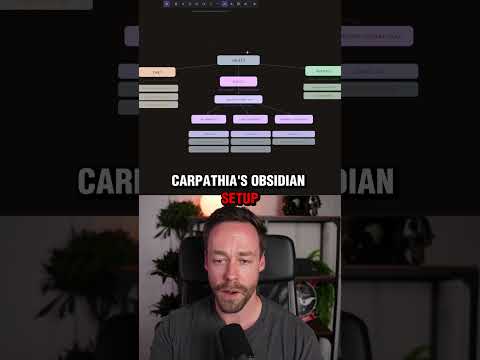
[0:00]This thing is awesome. You can create your own Claude code powered agentic OS in just three simple steps.
[0:07]Step number one is what you're looking at right here, and that is creating the architecture. We need to figure out what Claude Code needs to actually do for you.
[0:16]So the way you do that is, instead of just sitting there in the terminal telling Claude Code to do random things, we're going to break down all of your daily tasks and your business tasks into domains.
[0:26]So, for example, I have things for like research and content in my community.
[0:30]From there, we're going to take a look at each domain and say, hey, what are you doing as individual tasks within that domain?
[0:37]And for each of those, we're going to turn them into skills.
[0:40]For each skill, we're then going to see, can we turn this into an automation? And as you do that for every single task, for every single domain, create the backbone for your agentic OS infrastructure.
[0:50]From there, we're going to add memory. The easiest way to do this is with Obsidian because a true rag system is overkill for most people.
[0:57]I suggest using something like Carpathi's Obsidian setup, where we have our vault divided into three subfolders.
[1:02]One for raw, which is just kind of like a landing ground for everything we research, a wiki section for detailed reports, and then outputs for actual deliverables we want to share with people.
[1:12]Last but not least, we have the observability piece. This is where we turn all our skills into literally just buttons on a dashboard that anyone can use, even if they aren't an actual Claude Code user.
[1:22]So this is great if you have members on on your team who need to use this stuff, or even clients. And then for observability, you can add whatever you want.
[1:27]I have things related to usage, my routines, stuff going on in my vault.
[1:32]The best part is is this is this is completely customizable, and you can turn it into whatever you want.