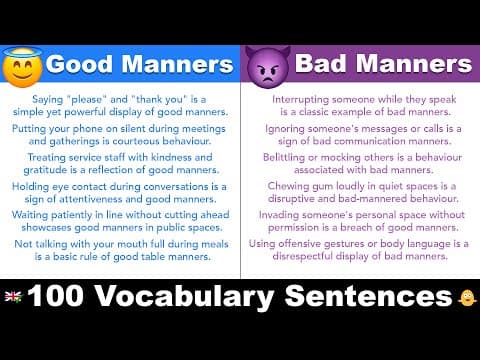
[0:06]Saying please and thank you is a simple yet powerful display of good manners. Holding the door open for others is a small gesture that goes a long way in demonstrating good manners. Being punctual shows respect for other people's time and is a key aspect of good manners. Offering a sincere compliment is a kind and polite way to interact with others. Respecting personal space is an important element of good manners in social situations. Responding promptly to messages and invitations is a sign of good communication manners. Sharing credit for success and acknowledging others' contributions is a mark of good manners. Putting your phone on silent during meetings and gatherings is courteous behavior. Avoiding interrupting others while they are speaking is a fundamental rule of good manners. Waiting your turn patiently is an essential part of practicing good manners. Offering your seat to someone in need, such as an elderly person or a pregnant woman, is a gesture of good manners. Listening attentively to others without interrupting shows consideration and good manners. Admitting when you're wrong and apologizing sincerely is a sign of good manners. Keeping your promises and following through on commitments is a display of good manners and reliability. Being mindful of your tone and language when communicating ensures that you convey your thoughts with good manners. Covering your mouth when coughing or sneezing is a hygienic and considerate display of good manners. Respecting cultural differences and traditions is an important aspect of global good manners. Treating service staff with kindness and gratitude is a reflection of good manners. Offering your assistance to someone in need showcases a compassionate and polite demeanor. Excusing yourself before leaving a conversation or a gathering is a courteous way to display good manners. Respecting others' opinions, even if different from your own, is a key element of good manners. Being mindful of your body language and facial expressions contributes to effective and polite communication, reflecting good manners. Avoiding gossip and negative talk about others is a practice of good manners. Respecting others' privacy and boundaries demonstrates a high level of consideration and good manners. Holding eye contact during conversations is a sign of attentiveness and good manners. Offering to help someone carry their belongings is a kind and courteous display of good manners. Waiting patiently in line without cutting ahead showcases good manners in public spaces. Respecting the environment by disposing of rubbish properly and not littering is a responsible practice of good manners. Avoiding offensive comments about personal appearance or characteristics is crucial in maintaining good manners. Offering a firm handshake and maintaining eye contact during introductions is a sign of good manners. Refraining from speaking negatively about others behind their backs is a practice of good manners. Expressing empathy and understanding in difficult situations is a compassionate aspect of good manners. Avoiding offensive language and slurs is a crucial part of maintaining good manners in all interactions. Sending a thank-you note or message after receiving a gift or kind gesture is a thoughtful practice of good manners. Not talking with your mouth full during meals is a basic rule of good table manners. Apologizing promptly and sincerely if you accidentally bump into someone is a polite practice of good manners. Avoiding public displays of frustration or anger demonstrates emotional intelligence and good manners. Refraining from interrupting others' work or concentration in shared spaces is a respectful display of good manners. Not interrupting or talking over others during meetings or discussions is a respectful practice of good manners. Offering to take turns or share resources in group settings is a cooperative act of good manners. Being patient and understanding when others make mistakes is a compassionate practice of good manners. Refraining from checking your phone constantly during face-to-face interactions is a display of good manners. Not talking on the phone in quiet places, such as libraries or theaters, is a courteous display of good manners. Offering a warm and genuine smile when meeting someone new is a friendly display of good manners. Covering your mouth when yawning is a small yet important detail of good manners. Keeping noise levels down in public spaces shows consideration and good manners. Acknowledging others' achievements and expressing genuine happiness for them is a mark of good manners. Waiting for your turn in a conversation rather than interrupting demonstrates good manners. Respecting others' personal belongings and not borrowing without permission is a fundamental aspect of good manners. Respecting others' dietary restrictions when hosting or attending gatherings showcases thoughtfulness and good manners.
[9:17]Interrupting someone while they speak is a classic example of bad manners. Speaking with your mouth full is considered a display of bad table manners. Ignoring someone's messages or calls is a sign of bad communication manners. Pushing ahead in a line without waiting your turn is a manifestation of bad manners. Making offensive jokes about others is a clear demonstration of bad manners. Failing to say please and thank you reflects poorly on one's manners. Talking loudly on the phone in public places is often perceived as bad manners. Belittling or mocking others is a behavior associated with bad manners. Not holding the door open for someone following behind you is considered rude. Texting or using your phone during a face-to-face conversation is a form of bad manners. Not covering your mouth when coughing or sneezing is a hygiene-related bad manner. Chewing gum loudly in quiet spaces is disruptive and bad-mannered behavior. Not apologizing when you've wronged someone is a sign of bad manners. Using offensive language or slurs is highly inappropriate and indicative of bad manners. Speaking negatively about others behind their backs demonstrates bad manners. Taking credit for someone else's work is a behavior associated with bad manners. Not acknowledging compliments or expressing gratitude is a display of bad manners. Being consistently late without a valid reason is considered a form of bad manners. Invading someone's personal space without permission is a breach of good manners. Criticising someone's appearance or choices is a judgmental display of bad manners. Ignoring social cues and oversharing personal information is bad manners. Not cleaning up after oneself in shared spaces is a disrespectful act of bad manners. Ignoring dietary restrictions when hosting events reflects poorly on one's manners. Refusing to help others in need, especially when it's within your capacity, is a form of bad manners. Constantly checking your phone during a meal is considered impolite and indicative of bad manners. Not offering your seat to someone in need, like the elderly or pregnant women, is a display of bad manners. Talking over others in a group setting is a disruptive behavior associated with bad manners. Ignoring the efforts of service staff and not expressing gratitude is a sign of bad manners. Mocking or imitating someone in a derogatory manner is a form of bad manners. Failing to listen actively during a conversation is considered disrespectful and bad-mannered. Displaying anger or frustration publicly without control is a manifestation of bad manners. Leaving a mess in public restrooms without cleaning up is a behavior associated with bad manners. Not holding the elevator for someone rushing to catch it is considered inconsiderate and bad-mannered. Refusing to apologise when you've hurt someone's feelings is a failure in displaying good manners. Speaking condescendingly to others is a behavior associated with bad manners. Using offensive gestures or body language is a disrespectful display of bad manners. Ignoring social norms and traditions in different cultures is a sign of bad manners. Failing to respond to invitations or RSVPs in a timely manner is a display of bad manners. Not respecting others' opinions, even if different from your own, reflects poorly on one's manners. Talking loudly in quiet spaces, such as libraries or theatres, is a disruptive form of bad manners. Ignoring someone's need for personal space in crowded places is a manifestation of bad manners. Ignoring someone's contributions or achievements in a group setting is a form of bad manners. Refusing to share resources or collaborate in group activities is a selfish display of bad manners. Not offering assistance to someone struggling with heavy bags or luggage is considered inconsiderate. Speaking negatively about yourself excessively may be perceived as fishing for compliments and is a form of bad manners. Displaying a lack of hygiene or unpleasant body odour in close quarters is considered bad manners. Not respecting others' time and being consistently tardy is a behaviour associated with bad manners. Ignoring others' personal boundaries and invading their privacy is a sign of bad manners. Being dismissive or rude to individuals in customer service roles is a display of bad manners. Not acknowledging or thanking someone for a thoughtful gesture is indicative of bad manners.