[0:00]What if everything you've been told about where your baby should sleep is wrong? Not dangerous, not irresponsible, just wrong. Because here's what researchers found when they started putting sensors on sleeping babies, and this is the part nobody talks about. A baby's body, when placed alone in a crib, doesn't just feel lonely, it starts to malfunction. Heart rate variability drops, breathing becomes irregular, cortisol, the stress hormone, spikes in a sleeping infant. And yet, the moment that same baby is placed next to a caregiver, everything stabilizes, like flipping a switch. So why does that happen? What is going on inside a baby's brain and body that makes your physical presence not just comforting, but biologically necessary? That's exactly what we're going to unpack today. And trust me, by the end of this video, you're going to look at your baby's sleep in a completely different way. You might even feel a little guilty for ever putting them in that crib alone. But here's the surprising part. This isn't just about sleep, it's about survival, it's about evolution, and it's about a biological system so ancient, so powerful, that it's literally running in the background of your baby right now, every single night. Let's start at the very beginning. When a baby is born, their brain is, and I mean this literally, unfinished. At birth, a human baby's brain is only about 25% developed. Compare that to a foal, which can walk within hours of being born, or a dolphin, which can swim immediately. Human babies can do almost nothing on their own. And that's not a flaw, that's actually the strategy. You see, millions of years of evolution made a calculated tradeoff. Instead of delivering a baby with a fully developed brain, which would require a skull so large it would be impossible to deliver, humans evolved to deliver babies early and finish the brain development outside the womb. Scientists actually have a name for this. And during that fourth trimester, the baby is not ready to be alone, not even close. But here's what gets really interesting. The baby's nervous system is literally designed to use you as an external regulator. Your heartbeat, your breathing rhythm, your body temperature, your smell. These aren't just comforting things, they are inputs, signals that the baby's immature brain uses to calibrate its own functions. Think of it like a newly installed operating system that needs to sync with a server. You are the server. Without that connection, the system runs into errors. And one of the most vulnerable moments for those errors to appear is during sleep. Now, most of us have been told by books, by pediatricians, by well-meaning relatives that the goal is to get the baby to sleep independently, in their own crib, in their own room, as soon as possible. But what most parents don't realize is what that transition actually looks like from the baby's perspective. In the 1990s, a researcher named Dr. Tiffany Field ran a series of studies on infant touch deprivation. What she found was striking. Babies separated from their caregivers during sleep showed elevated stress hormones within minutes, not hours. And more recently, a 2012 study published in the journal Early Human Development tracked the physiological responses of infants sleeping alone versus in close proximity to a caregiver. The results, when sleeping alone, babies spent significantly more time in a state of heightened autonomic arousal. In plain English, their bodies were on alert, even while unconscious. Here's the wild part. They weren't crying, they weren't visibly distressed. From the outside, they looked like they were sleeping just fine. But on the inside, their biology told a completely different story. And this changes everything when you start thinking about what healthy sleep is actually supposed to do for a developing brain. Because sleep isn't just rest, for a baby, sleep is construction time. During sleep, the brain consolidates new memories, it prunes unnecessary neural connections, it floods the body with growth hormone, it repairs tissue, it strengthens the immune system. All of that works better, measurably, scientifically better in a low stress state. And what creates that low stress state in an infant? You already know the answer. Let's go back, way back. Imagine our ancestors, 200,000 years ago on the African Savannah. There are no cribs, there are no baby monitors, there are predators. In that environment, what does it mean for a baby to be alone and out of contact with its mother? It means something has gone terribly wrong. It means danger. So evolution did what evolution does. It wired a panic response directly into the infant nervous system. Being alone equals threat, being separated from the caregiver equals emergency. This is called the proximity seeking system, and it's one of the most deeply embedded survival mechanisms in the human brain. Decades of attachment research, starting with John Bolby in the 1950s, have confirmed it over and over. But here's the part that blows people's minds. That system doesn't know that we're not on the Savannah anymore. It doesn't know you live in a safe apartment in 2025. It doesn't know that the crib is three feet away. It doesn't know you'll check on them in two hours. All it knows is, caregiver is gone, danger. And so the stress response activates, every time. Now, here's where it gets really interesting because there are two very different ways a baby can respond to that stress. Some babies cry immediately. They signal loudly, they make sure you come back. But some babies go quiet. And the quiet ones, those are actually the ones researchers worry about more, because a baby that stops signaling isn't a baby that's calmed down. In many cases, it's a baby that has learned its signals don't work and has shifted into a kind of shutdown mode. Biologically, the stress is still there, the cortisol is still elevated, but the protest has stopped. That's not independence, that's something else entirely. By the way, if you're finding this fascinating and you want more content like this, real science explained in a way that actually makes sense for parents, hit that subscribe button. We break down baby psychology, brain development and behavior in a way that nobody else is doing right now. You don't want to miss what's coming next. Okay, so where were we? Right, the biology of sleeping next to your baby and why it might be one of the most powerful things you can do for their developing brain. Here's a concept that sounds almost too poetic to be real, but the science backs it up completely. It's called physiological synchrony. When a baby sleeps in close proximity to a caregiver, particularly the mother, their bodies begin to sync. Breathing rhythms align, heart rate patterns start to mirror each other, even sleep cycles begin to coordinate. It's like two metronomes placed next to each other on a table. Given enough time, they start to tick together. And this isn't just a cute metaphor, it's been measured, documented, replicated in labs. A study out of Bar-Ilan University in Israel measured the physiological synchrony between mothers and infants during sleep contact versus separated sleep. Mothers and babies who were in close physical contact showed significantly higher levels of biological alignment, right down to microsecond level coordination of breathing. What does that mean for the baby? It means the caregiver's stable, regulated nervous system is actively helping organize the baby's less stable one. The mother's body is doing some of the work that the baby's immature brain can't yet do on its own. You are quite literally lending your nervous system to your child while they sleep. Now, let me ask you something. If you knew that your presence next to your sleeping baby was doing all of that, regulating their heart, organizing their breathing, reducing their stress hormones, improving their brain development, Would you feel differently about the middle of the night wake-ups? Would you feel differently about the idea of letting them cry it out? Keep that question in your mind. Because we're about to get into the most controversial part of all of this. Okay, we have to talk about co-sleeping. Because the moment this topic comes up, the room divides. Half the people say it's dangerous, half the people say it's natural and beautiful. And most people are confused about what the science actually says. So let's be precise. There's a difference, a critical difference between bed sharing, which is when the baby shares an adult sleep surface, and room sharing, which is when the baby sleeps in the same room but on a separate surface. The American Academy of Pediatrics currently recommends room sharing without bed sharing for at least the first six months. And the safety concerns around bed sharing are real, especially when there's alcohol, medication, soft bedding or extreme fatigue involved. But here's what most parents don't realize. The AAP recommendation was shaped significantly by data from western high-income households with specific sleep setups. It was not designed to condemn the practice of proximity itself. And here's the really interesting thing. Researchers like Dr. James McKenna at Notre Dame, one of the world's leading experts on mother infant sleep, have spent decades arguing that the question isn't whether babies should sleep near their parents. They should. The real question is how to do it safely. His research shows that breastfeeding mothers and babies who bed share in safe conditions show remarkable levels of physiological synchrony, reduced arousal thresholds, and mutually regulated sleep architecture. In other words, when done safely, proximity during sleep isn't a risk, it's a feature. The keyword there, of course, is safely. And this is where practical parenting insight becomes just as important as the science. So if we know that closeness helps and we want to be safe, what does that actually look like in real life? A few things to consider. First, room sharing is backed by both the science and the guidelines. Having your baby in a bassinet or co-sleeper within arm's reach gives them the proximity benefits without the risks of a shared sleep surface. Second, your smell matters more than you think. Studies have shown that babies who sleep with an unwashed T-shirt from their mother nearby show reduced cortisol levels and longer periods of quiet sleep. You don't have to be physically touching to have an effect. Third, the transition matters. If you're moving a baby from your room to their own room, the speed of that transition can affect how stressful it is for their nervous system. Gradual transitions, moving the bassinet progressively further, then to a different room, tend to produce smoother outcomes than abrupt changes. And fourth, trust your instincts, because here's the thing nobody tells you. The urge to pick up your baby, to bring them close, to let them fall asleep on your chest. That's not a bad habit you need to break. That's evolution doing exactly what it was designed to do. But let's zoom out for a second, because all of this, the biology, the evolution, the nervous system synchrony, it's pointing at something bigger. The early sleep relationship between a baby and their caregiver isn't just about sleep. It's one of the first places where attachment forms, where trust gets built, where the baby begins to learn at the most fundamental neurological level that the world is safe. Or isn't. John Bolby, whose attachment theory we mentioned earlier, believed that the quality of the early caregiver infant relationship shapes in lasting structural ways, how a person relates to others for the rest of their life. And we now know that one of the most vulnerable, most formative moments in that relationship is sleep. Because sleep is when the child is most helpless, most dependent, most in need of the signal that someone is there. And when that signal is consistently present, the research is clear. Children develop more secure attachment, more emotional resilience, more capacity for self-regulation later in life. So when you get up at 2:00 a.m., when you pull your baby close, when you lie there in the dark, listening to them breathe. You're not just getting through the night. You're building a brain. We live in a culture that has become almost obsessed with baby independence, sleep training, self-soothing, sleeping through the night as a milestone to be achieved as early as possible. And I'm not here to tell you those things are wrong. Every family is different, every situation is different. But I am here to tell you this. Your baby was not designed to sleep alone. That longing they have for your warmth, your smell, your heartbeat. It's not neediness. It's not manipulation.
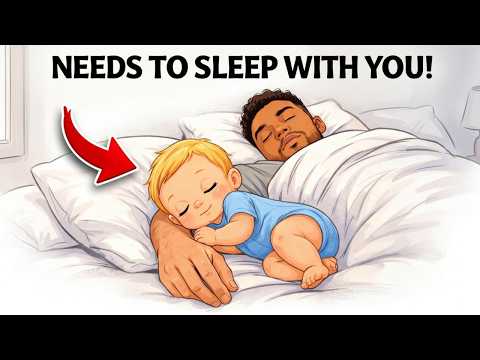
Why Babies NEED to Sleep Next to You (Science Explained)
Inside The Baby Mind
13m 24s2,136 words~11 min read
Auto-Generated
Watch on YouTube
Share
MORE TRANSCRIPTS

البحرين مركز الأخبار : فتح باب التسجيل لبعثات وقف عيسى بن سلمان التعليمي الخيري 02-07-2023
BahrainTV News Center تلفزيون البحرين مركز الأخبار

Loli Bahia, la femme des années 2020
Quotidien

【4月注目の7社】量子・フィンテック・AI・宇宙を支配する注目企業の最新動向と展望。米国防総省が認めたIonQの技術。SoFi&ロビンフッドが狙う金融インフラ。SpaceXのIPOで変わる宇宙産業。
柏原迅 | AIマーケティング戦略