[0:00]Dubai has 3.5 million people. Only 400,000 of them are actually free. Let that number sink in for a second. Every single night, while tourists are sipping champagne on rooftop bars, while influencers are filming golden hour reels from the Burj Khalifa, while luxury SUVs crawl through neon lit streets, 12 km away in a concrete block with no windows and four broken fans, 12 men are lying on thin mattresses in 44° Celsius heat. Phones face down, quietly crying, too ashamed to let the others hear. These men did not come to Dubai to fail. They came because someone in their village told them Dubai was the dream. And they believed it so deeply that their family sold land, borrowed money and watched them board a plane with hope stitched into every piece of luggage. They built every tower you photographed, they made every hotel bed you slept in, they poured every road you drove on. Today, we are going to show you the Dubai that Dubai does not want you to see. And once you see it, you cannot unsee it. Here's a fact that most travel brochures will never mention. The United Arab Emirates has a population where only 11% are actual Emirati nationals. 11%. The remaining 89% are migrants, and within that massive migrant population, there are two completely separate worlds living side by side without ever truly meeting. The first world is the one you see. White collar expats, Western professionals, finance workers, tech executives, living in glass apartments with pools and paid flights home. They have rights, they have voice, they have choices. The second world is invisible. 3 million blue collar workers from India, Pakistan, Bangladesh, Nepal, the Philippines and Ethiopia. Construction workers, cleaners, delivery drivers, domestic helpers. They are the foundation of everything Dubai calls great and the world has never once asked about their names. Over 1 million of these workers are in construction alone. 1 million human beings who raised the skyline that fills your Instagram feed. They are the reason Dubai exists and Dubai treats them like they do not. To understand why 3 million people are trapped, you need to understand one word. Kaala. It is the sponsorship system that governs every migrant worker in the Gulf. And it is the most perfectly designed cage in the modern world. Here is how it works. Your visa is not yours. It belongs to your employer. You cannot quit without their written permission. You cannot change jobs without their approval. And you absolutely cannot leave the country without their signature on a document that you have no power to demand. But it gets worse. In practice, thousands of employers confiscate workers' passports upon arrival. This is technically illegal. It is also completely normal. Workers arrive at Dubai airport full of hope, hand over their documents for processing and never see them again. An anonymous worker who arrived from Nepal described his experience. He had signed a contract back home for $400 a month as a driver. He was shown papers, given a handshake and told to board the plane. When he arrived in Dubai, a new contract appeared. $220 a month, different job, worse hours. He could not go home. He had no money. His family had already borrowed the equivalent of two years of that salary just to pay the recruitment agent who got him the job. Let that land. These workers do not arrive in debt because they are careless. They arrive in debt because the system is designed to ensure they have no option but to stay and endure. Recruitment agents in their home countries charge between $1,000 and $3,000 per placement. Families sell livestock. They mortgage homes, they borrow from neighbors, all of it riding on one person making it work in Dubai. And if that person complains, if they report unpaid wages or dangerous conditions, the employer holds one word over their head like a blade. Deportation. No case, no compensation, just a one-way ticket and a blacklisted name. So, tell me honestly, if your employer could have you deported for asking for a raise, would you ever speak up? Let us stop talking in systems for a moment. Let us talk about a Tuesday. A regular Tuesday in the life of a man the world has decided not to notice. 4:30 in the morning. An alarm goes off in a room shared with 11 other men. There is no kitchen. Breakfast is whatever was cheap the night before. By 6:00 a.m. they are packed into buses headed to construction sites. Because by 7:00, the sun has already begun its assault, and by 10:00, the temperature is climbing past 42° Celsius. That is 108° Fahrenheit on an open concrete site, with no shade, with mandatory quotas to meet. Here is the statistic that should have been front page news years ago. Thousands of South Asian workers die in the UAE every year. The official cause of death recorded on most certificates: natural causes, cardiac arrest, unexplained. Heat stress is almost never acknowledged because acknowledging it would mean acknowledging the conditions. A worker who spoke on condition of absolute anonymity described what happened to his colleague on a site in Dubai South. His friend collapsed mid-morning. The site supervisors did not call an ambulance. They drove him back to the labor camp in the back of a flatbed truck. By morning he was gone. The company told every worker in the camp a single sentence. Do not talk about this. Nobody talked about it. After the site comes the camp. 8 to 16 men per room. Shared bathroom serving hundreds, no kitchen, meals either skipped or deducted directly from wages. And the wages themselves are a cruelty dressed in mathematics, between $200 and $500 per month. While they build towers that sell for $2 to $10 million per unit. Think about this carefully. The man who laid the marble floor of a $10 million penthouse earns in an entire year what that same penthouse generates in rent in a single week. That is not a coincidence. That is a business model. By now, you are asking a very reasonable question. If this is happening at this scale, why have we not heard more about it? The answer is not complicated, it is calculated. There is no free press in the UAE. Journalists who attempt to investigate labor conditions on the ground face immediate deportation and in some cases arrest under national security provisions. Workers themselves have zero union rights. Organizing is illegal. A WhatsApp group of workers discussing wages can be flagged as an illegal assembly. Posting about your own working conditions on social media can result in prosecution under cybercrime laws that carry prison sentences before deportation. So, the workers stay quiet on their phones, face down, crying where no one can see. And then there is the machine that drowns it all out, the Dubai Tourism marketing machine. Influencers are flown in, hosted in five-star properties, handed curated experiences, and sent back home to post content that has 17 million views before the week is out. The algorithm rewards beauty. It buries everything else. Every luxury airline, every global hotel brand, every fashion house with a Dubai Mall location has a financial incentive to ensure the story stays shiny. Before a government inspection at one labor camp, workers were gathered and given a single instruction. Clean everything, wear your uniforms. If anyone asks how you are, say you are happy. Three workers who hesitated were sent back to their home countries within 48 hours. Dubai did not build just towers and hotels, it built the most controlled narrative in the modern world. And it worked almost perfectly, until the workers started whispering. Here is what people always say when they hear stories like this. Why do they not just leave? And it is an honest question from someone who has never been in a situation where leaving is not an option. Remember the recruitment debt. Some workers owe more than two full years of their Dubai salary before they have earned a single dirham. Leaving means that debt defaults. It means the family who borrowed against their home loses that home. It means returning as the person who failed, who cost everyone everything. In many of these communities, that shame is not recoverable. And even if someone decides to absorb that shame and go home, their passport is sitting in an office they cannot enter without permission. The Philippine and Indian embassies in Dubai handle hundreds of worker distressed cases every single month. Their shelters overflow. Women who worked as domestic helpers with no camp, no colleagues and no door they were allowed to lock, arrive at embassy gates sometimes having walked for hours. The UAE has announced labor reforms, multiple times. Headlines celebrate progress. International organizations release cautiously optimistic statements, and on the ground, enforcement remains nearly zero. Employers found violating wage protection laws face fines so small, they are cheaper than compliance. Nothing structurally changes. They cannot go forward, they cannot go back. They are suspended inside someone else's golden dream with no exit and no witness. This is the part nobody in travel content wants to say out loud. So, we are going to say it. When you stayed in that five-star Dubai hotel, who cleaned your room? When you photograph the Burj Khalifa glowing at sunset, who poured that concrete in 45° heat? When you walked through the Dubai Mall and took pictures in front of the fountain, who built those tiles under your feet? We are not just talking about a distant government failing its workers. We are talking about a global system that has collectively decided this is acceptable because the flights are affordable and the hotels are beautiful and the content performs well. Western governments trade freely with the UAE. FIFA held matches there. Olympic committees partner with Gulf sponsors. Luxury brands queue for Dubai Mall floor space, all of it with full knowledge of what the labor system looks like. All of it continuing because profit has a very effective way of silencing discomfort. A worker's rights advocate who has spent years documenting cases in the Gulf, said something that has stayed with everyone who heard it. They changed the window dressing. The cage remains exactly the same. Dubai is not hiding these people. We are choosing not to look. 3 million human beings built a city that the world calls a miracle. And the world repays them by not knowing their names, not asking their conditions, and not connecting the marble lobby to the man who placed each tile at 6:00 in the morning in suffocating heat. Some NGOs are fighting. Some embassies are pushing back. Some workers have found ways to document and speak. The cracks are forming slowly and at great personal risk. But the question tonight is not about them, it is about us. Next time a Dubai Travel reel appears on your screen, all golden light and impossible skyline, ask yourself one thing. Who built that? Who is sleeping 12 to a room tonight so that view exists? Does knowing this change where you spend your money? Or do we all just keep scrolling because it is easier? Tell me honestly in the comments because this conversation is one that the world has been avoiding for far too long. And if you think this is the full picture, it is not even close. The next investigation goes deeper into the domestic workers locked inside those luxury homes. The ones with no camp, no colleague, and no door they are ever allowed to lock from the inside.
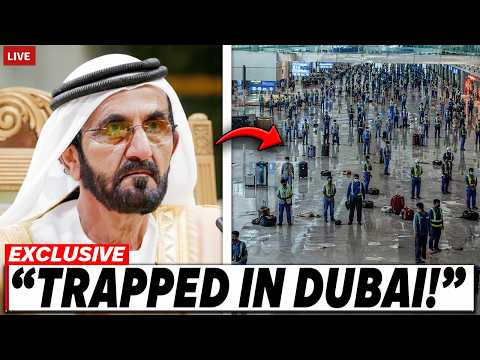
3 Million Workers Are Trapped In Dubai — Workers With Nowhere to Go Caged In Dubai
Weather Reporter
12m 42s1,955 words~10 min read
YouTube auto captions
Transcript source
YouTube auto captions
This transcript was extracted from YouTube's auto-generated caption track. The transcript below is server-rendered so it can be read, searched, cited, and shared without opening the original YouTube player.
Pull quotes
[0:00]And they believed it so deeply that their family sold land, borrowed money and watched them board a plane with hope stitched into every piece of luggage.
[0:00]They built every tower you photographed, they made every hotel bed you slept in, they poured every road you drove on.
[0:00]The United Arab Emirates has a population where only 11% are actual Emirati nationals.
[0:00]The remaining 89% are migrants, and within that massive migrant population, there are two completely separate worlds living side by side without ever truly meeting.
Use this transcript
Related transcript hubs
Watch on YouTube
Share
MORE TRANSCRIPTS


