[0:01]Dallas, Texas, November 22nd, 1963. At 11:25 a.m., President John F. Kennedy arrives on Air Force One. President Kennedy goes to Dallas to give a lunchtime speech at a Convention Center known as the Trade Mart. Between his arrival at Love Field and his speech, he's to lead a motorcade through the center of downtown Dallas. The motorcade has over 12 cars. Kennedy is riding in a three-row Lincoln Continental convertible limousine with the top down. President Kennedy and Mrs. Kennedy are in the back seat, President Kennedy on the right side, Mrs. Kennedy on the left. Ahead of them are Texas Governor John Connelly and his wife Nellie, and ahead of them are two Secret Service agents, one of them is driving. It's a very sort of warm reception for Kennedy there, something like 200,000 people lining the route, so it is no small turnout. And at one point, Mrs. Connelly in the car says, you can't say Dallas doesn't love you, can you? And President Kennedy replies, no, you certainly can't. Those are his last words. The motorcade comes down Main Street to the end of Main Street where it hits Dealey Plaza. Takes a sharp right turn on Commerce Street and then a sharp left turn in front of the Texas School Book Depository. And it's at that moment that the first gunshots are heard. Something, I repeat, has happened in the motorcade route. A gunshot rings out, and then two more, both President Kennedy and Governor Connolly are hit. Two shots hit Kennedy, the first enters his upper back and comes out through his throat, and then the second enters the back of his skull. He is rushed to Parkland Memorial Hospital, that's where he would soon be declared dead at the age of 46. As the world stops to mourn, a manhunt begins. As soon as it's clear that President Kennedy's been hit, and the motorcade rushes out Dealey Plaza, the police go interview eyewitnesses, and perhaps the most important witness of that day was a steam fitter, a Dallas man named Howard Brennan. who says that he saw a man with a rifle on the sixth floor of the Texas school book depository. Deputy Constable Seymour Weisman and Deputy Sheriff Eugene Boon rush inside the book depository. And there they find quite literally the smoking gun. They find a Manlin Carcano rifle, an Italian-made rifle, they also find three spent cartridges. Suggesting that somebody had just fired three bullets from the sixth floor. They find the books have been moved around to create sort of a sniper's perch. They also find a 38-inch brown paper bag. The shooter escapes, but building staff identify a prime suspect. An employee at the Texas School Book Depository, Buell Wesley Frazier, offers a colleague a trip into downtown Dallas on the morning of the assassination. And the colleague is carrying a long brown paper bag, in which he says he has curtain rods. A manager in the building, Roy Truly, looks around and he sees that one of his employees is actually missing. It's the same man who brought in that suspicious brown paper bag that morning. It's Lee Harvey Oswald. Police radio his description to all city units. So it's been less than an hour since President Kennedy was shot, and thanks to the quick work of the Dallas PD, they actually have a promising lead. Three shots fired, three spent shell casings, found next to a rifle that they believe was brought in by Lee Harvey Oswald. who is the only person who has fled that book depository. A little bit before 2:00 p.m., police officers find Oswald seated there. He's armed, he puts up a struggle before he's arrested. One of the arresting officers, Nick McDonald, testifies that as they reach him, Oswald raises his pistol and pulls the trigger. But McDonald grabs the gun just as the hammer falls, hitting the webbing between his thumb and index finger, probably saving his life. Oswald is brought to the police and courts building in downtown Dallas and charged for both murders. Subsequent investigation uncovers a lot more evidence that actually implicates Oswald. They find a photo of Oswald that was taken by his wife, where he's holding a rifle that matches the murder weapon. Oswald had made a fake ID in the name of Alec Hidell. The rifle that was found in the school book depository had been ordered in the name of Alec Hidell and sent to a post office box in that name. Virtually all of the ballistic evidence points to Oswald as the gunman in Dealey Plaza. His palm prints are found on the weapons and the bullets fired in Dealey Plaza almost certainly came out of the rifle that's found on the sixth floor. But none of this evidence is ever presented in court. So Oswald is held in custody downtown. He's interrogated by the FBI, the Secret Service, the Dallas Police Department, the Dallas District Attorney's office. He goes through rounds of questioning. What we know from those interrogations that he lies again and again and again. And he insists he had nothing to do with the President's murder. Then something absolutely crazy happens. Sunday morning, November 24th, police are actually ready to transfer Oswald to the county jail. They have an armored car ready in the basement of the building. And as he's being brought out in front of the TV cameras, Jack Ruby, owner of a local nightclub, steps out of the crowd with a 45 and shoots Oswald once in the stomach on national TV. Ruby is arrested and Oswald is taken to the same hospital as Kennedy, where, less than 48 hours after the President, he's declared dead as well. Oswald's death on November 24th means that there will never be a trial, never an opportunity to resolve an awful lot of the evidence that points to Oswald as the gunman in Dealey Plaza. New President, Lyndon B. Johnson, establishes a commission to investigate the assassination. It becomes known as the Warren Commission. The Warren Commission works for nearly a year, compiling evidence, gathering information. And on September 24th, 1964, they present an 888-page report to President Johnson. When the Warren Commission releases its findings in 1964, it marks the end of the official investigation into the JFK assassination. They find that Lee Harvey Oswald acted alone in killing President John F. Kennedy. But that answer doesn't satisfy the public for long. Skeptics write books, first a trickle of books and then a flood of books. Questioning the findings of the report and leading to a larger distrust both in the commission itself and in the sort of firmament of American government. After 12 years of scrutiny, the U.S. government takes action. The House Select Committee on Assassinations was created in 1976. The committee takes a closer look at the Warren Commission report. They agree with most of what the Warren Commission says, particularly regarding the evidence against Oswald. They're confident that Oswald did shoot Kennedy from the sixth floor of the book depository. But they uncover a new piece of evidence. Assassination researchers in Dallas came to the committee and said it may be that the sound of the gunshots was captured on this policeman's radio recording. So the committee has multiple acoustic experts go over this recording, and upon first listen, they think, actually, there weren't three shots, as previously thought, but four. Three shots did in fact come from the Texas School Book Depository, but that one shot came from a grassy knoll in front of the motorcade. In other words, Oswald didn't act alone. And if he didn't act alone, someone planned this killing with him. And if so, who was it? The House Committee uses a word that will become connected to the Kennedy assassination from then on. The word they use is conspiracy. After decades of pressure from the American public, Congress passes the JFK Records Act in 1992. The Act mandates the release of all files relating to the case. So even all these decades later, people still want answers and are now hopeful that maybe we'll start to get them. These documents aren't released all at once, but during the 1990s, millions and millions of pages of documents are made public. The law had a deadline. It said that everything in the government's files had to be made public in 2017. Well, guess what? That does not happen. I think all of the most credible evidence suggests that Lee Harvey Oswald fired the bullets that killed President Kennedy. That he probably is the only gunman, but whether or not other people knew, whether or not other people helped him, those are mysteries that will probably linger forever.
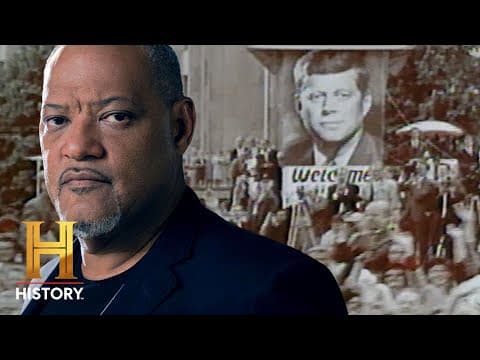
Catching JFK's Killer | History's Greatest Mysteries (Season 4)
HISTORY
9m 27s1,468 words~8 min read
Auto-Generated
Watch on YouTube
Share
MORE TRANSCRIPTS