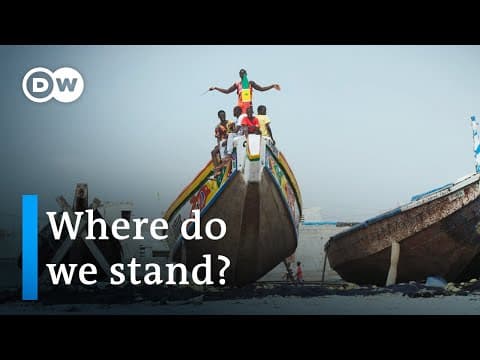
[0:08]Globalization, once held to be the key to peace by spreading prosperity worldwide. But are more people gaining access to equal opportunities in this increasingly globalized world? Global free trade profits from the unlimited movement of goods. While people and their ability to work face restrictions, and demand grows exponentially. The Spanish agriculture industry is crying out for laborers, but not just anyone is welcome. The higher the fences, the harder the fall, but people keep on jumping. People in Senegal are facing a desperate struggle to find work and secure a future. It's really tough here. If someone would take me, I'd go right away. And people are fleeing because their country has become a victim of global greed. The sea is getting emptier. Foreign ships come and take our fish. And amid the competition for work and migratory opportunities, the Chinese are firmly among the winners. Business is business. They want money. They came here for a better life. They don't need to attract China to Spain, because China is already here.
[2:03]Almeria on Spain's south coast is a common destination for irregular migration from Africa. Ordinary people risk their lives attempting to reach the Spanish mainland via the Canary Islands or more directly across the Strait of Gibraltar. The number of people losing their lives in the Mediterranean makes us look bad. The Mediterranean is gradually becoming one big coffin. It's a disgrace.
[2:45]A commercial greenhouse in 2014. The economic crisis back then created competition between migrant workers and Spanish job seekers. Although most of the latter soon quit the physically demanding work.
[3:04]The wages are rock bottom. Combined state benefits with a bit of work on the side, and you're probably better off than working in a greenhouse.
[3:28]Almeria had already been suffering an exodus of native labor to bigger cities elsewhere in Spain. Foreign migrants filled the void. For most of them, home became one of the shanty towns known as chabolas.
[4:29]The pandemic slowed the influx of migrants, but the numbers of people attempting to cross the Mediterranean have risen again. Our mother's blessings matter for the journey. We asked if we could go and they said yes. We had to swim out to our boat. He was pulling his backpack behind him, and I held his hand the whole time.
[5:08]It took eight days for us to reach Spain. We arrived at midday. It wasn't a nice journey, but God helped us. Nobody got sick, and nothing happened to anyone until we got to Tenerife. For me, that meant peace. He was just a kid then. The crossing was also at night, with a lot of people on board. Every time he had to pee, I was scared he'd fall into the sea. God knows that I've been watching over him.
[5:56]It takes three years to find a job and a residence permit. Sometimes it works out, sometimes it doesn't. We've met people who had to wait a lot longer than that. Sometimes we were so worried that we just ran out of strength.
[6:18]Spain's intensive agriculture sector is feeling the heat from transnational corporations. Local employers exploit migrants who have to work illegally while they wait three years to get their work permit. The informal economy is booming.
[6:42]The foreigners do the work that we don't want to do, but work that's important. It's work that people have to tolerate, until our laws permit them to do what they'd previously been doing, and then enjoy our recognition as equals. Almeria on Spain's south coast is a common destination for irregular migration from Africa. Ordinary people risk their lives attempting to reach the Spanish mainland via the Canary Islands or more directly across the Strait of Gibraltar. The number of people losing their lives in the Mediterranean makes us look bad. The Mediterranean is gradually becoming one big coffin. It's a disgrace.
[2:45]A commercial greenhouse in 2014. The economic crisis back then created competition between migrant workers and Spanish job seekers. Although most of the latter soon quit the physically demanding work.
[3:04]The wages are rock bottom. Combined state benefits with a bit of work on the side, and you're probably better off than working in a greenhouse.
[3:28]Almeria had already been suffering an exodus of native labor to bigger cities elsewhere in Spain. Foreign migrants filled the void. For most of them, home became one of the shanty towns known as chabolas.
[4:29]The pandemic slowed the influx of migrants, but the numbers of people attempting to cross the Mediterranean have risen again. Our mother's blessings matter for the journey. We asked if we could go and they said yes. We had to swim out to our boat. He was pulling his backpack behind him, and I held his hand the whole time.
[5:08]It took eight days for us to reach Spain. We arrived at midday. It wasn't a nice journey, but God helped us. Nobody got sick, and nothing happened to anyone until we got to Tenerife. For me, that meant peace. He was just a kid then. The crossing was also at night, with a lot of people on board. Every time he had to pee, I was scared he'd fall into the sea. God knows that I've been watching over him.
[5:56]It takes three years to find a job and a residence permit. Sometimes it works out, sometimes it doesn't. We've met people who had to wait a lot longer than that. Sometimes we were so worried that we just ran out of strength.
[6:18]Spain's intensive agriculture sector is feeling the heat from transnational corporations. Local employers exploit migrants who have to work illegally while they wait three years to get their work permit. The informal economy is booming.
[6:42]The foreigners do the work that we don't want to do, but work that's important. It's work that people have to tolerate, until our laws permit them to do what they'd previously been doing, and then enjoy our recognition as equals. Almeria on Spain's south coast is a common destination for irregular migration from Africa. Ordinary people risk their lives attempting to reach the Spanish mainland via the Canary Islands or more directly across the Strait of Gibraltar. The number of people losing their lives in the Mediterranean makes us look bad. The Mediterranean is gradually becoming one big coffin. It's a disgrace.
[2:45]A commercial greenhouse in 2014. The economic crisis back then created competition between migrant workers and Spanish job seekers. Although most of the latter soon quit the physically demanding work.
[3:04]The wages are rock bottom. Combined state benefits with a bit of work on the side, and you're probably better off than working in a greenhouse.
[3:28]Almeria had already been suffering an exodus of native labor to bigger cities elsewhere in Spain. Foreign migrants filled the void. For most of them, home became one of the shanty towns known as chabolas.
[4:29]The pandemic slowed the influx of migrants, but the numbers of people attempting to cross the Mediterranean have risen again. Our mother's blessings matter for the journey. We asked if we could go and they said yes. We had to swim out to our boat. He was pulling his backpack behind him, and I held his hand the whole time.
[5:08]It took eight days for us to reach Spain. We arrived at midday. It wasn't a nice journey, but God helped us. Nobody got sick, and nothing happened to anyone until we got to Tenerife. For me, that meant peace. He was just a kid then. The crossing was also at night, with a lot of people on board. Every time he had to pee, I was scared he'd fall into the sea. God knows that I've been watching over him.
[5:56]It takes three years to find a job and a residence permit. Sometimes it works out, sometimes it doesn't. We've met people who had to wait a lot longer than that. Sometimes we were so worried that we just ran out of strength.
[6:18]Spain's intensive agriculture sector is feeling the heat from transnational corporations. Local employers exploit migrants who have to work illegally while they wait three years to get their work permit. The informal economy is booming.
[6:42]The foreigners do the work that we don't want to do, but work that's important. It's work that people have to tolerate, until our laws permit them to do what they'd previously been doing, and then enjoy our recognition as equals.


