[0:01]Hello everyone. My name is Mashinu from Curtin University Malaysia. And I'm currently taking the course Social Media, Communities, and Networks.
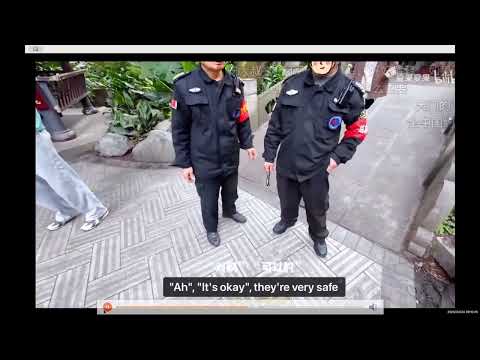
[0:13]Today I'm going to talk about how people with visual disabilities form connections and communities through social media. Social media is often seen as a tool for communication. Maybe you're already very familiar with social media platforms like YouTube and Instagram. But today, I want to share a platform that you might not be very familiar with. Which is the YouTube in China called Bilibili. In this presentation, I will explain how creators with visual disabilities like form connections in Bilibili by focusing on three key ideas: Social affordance, influential peers, and issue public. First, let's talk about social affordance. But at all, 2018 describes social affordance as how platforms design make social interactions possible. In simple words, it means what the platform allows people to do socially. On Bilibili, social affordance can be found in many aspects of interaction. Users can comment on videos, reply to each other, and participate in discussions. But more importantly, Bilibili has a unique feature called Danmu, or real-time comments, which I will talk about later. Because of these affordances, users are not just consuming content. They are afford the ability to interact with others. This interaction is the foundation for forming connections. According to China Disabled Persons' Federation, there are about 6 million visual impaired social media users in China. And Bilibili creator is one of them. On Bilibili, creators who post videos or content like are known as Up. According to him, he fell ill in 2019 and unfortunately lost his sight. Now, he is studying Chinese traditional message in a special education Academy. He went viral in 2024 for his video that tells his story of being a blind university student. In 2025, he was awarded the best creator of the year by Bilibili. Now, let's talk about influential peers. Baron at all 2025 introduced the concept of influential peers. This refers to users who actively participate and contribute to the online community. is a good example of an influential peer. Through his videos, he shares his experiences and helps others understand the life of visually impaired people. His content encourages interaction and brings people together. Most of the video shares is about his daily life as a blind person. He makes videos about his daily life from how does he uses his phone to how he walks all the way to the cafeteria to have a meal. He explained how he uses the screen reader and AI algorithm that can be integrated with Bilibili and video editing apps to make it accessible. For visually disabled users like him. In one of his video, he showed how he uses the screen reader to assist him see pictures and even cut video by himself. He turns his smartphone into visually disabled mode and when his turns when he turned his phone camera around, the AI application can identify the surroundings and tell him where he is. This inspires other visually disabled users and may helps them solve real life problems and make their life more convenient. This answers the questions raised by K 2016, which argues that people with disability should be included in social media by using technological methods. In one of his episode, he wants to enter a park with his guide dog, but was stopped by the security because they say that the dogs are not allowed. However, the people passing by him in the video help fight back. And by telling the security that guide dogs should be allowed to enter public spaces in the Chinese law. After he posted the video, many viewers expressed support for him in the comments. Some people even spoke up for him and discussed the rights of visually impaired individuals. This case showed how people fight for visually people's rights and raises awareness for people with visual disability so that they can be treated more fairly in public places. Now, let's watch the video.
[6:38]Okay. When you are watching the video, have you noticed about the words floating on the top of the screen? Now, I want to focus on one of the most unique features of Bilibili, which is Danmu or real-time comments. Danmu allows users to send comments that appear directly on the video screen at specific moments. You can type Danmu at the blank below while watching the video, and it will appear directly onto the screen. This feature changes the viewing experience greatly. Instead of watching a video alone, users feel like they're watching together with others. They can laugh at the same moment, react to the same scene, and share their thoughts instantly. Danmu creates two important effects. First, it makes interactions more immediate. People do not have to wait until the video ends to comment. And people with visual disabilities may rely more on audio. Comments and community engagement rather than visual content. They can use the screen reader to help them see the video by converting the Danmu into voices. Another effect can also be explained by the concept of issue public, mentioned in Byron at all. Where people come together to discuss a specific issue. For example, when the video about the guide dog incident was posted, many of both visually impaired and normally users gathered to send Danmu to encourage or share experience. Like keep going or I also got stop when I go with my guide dog to the park. More importantly, they can find communities where people share similar experiences and this creates a sense of inclusion and belonging. To conclude, people with visual disabilities form connections and communities through Bilibili in several key ways. First, social affordance provide the features and opportunities for interaction. Second, influential peers start discussions and creates issue public that bring people together. Lastly, features like Danmu create shared real-time experience that strengthen emotional connections. Overall, the sample of shows that social media does not just connect individuals. Social media like Bilibili creates communities through interaction, share experiences and participation. Thank you.


