[0:01]This is Katana. She's got my back. She cut all you in half with one sword stroke. Just like Mulan. Or you're more used to me alive. Don't make me change my mind. You're wasting your time talking to her. However, you would not be wasting your time, if you were dancing with her. The most common stereotypes that Asian women encounter in Hollywood have been um, Lotus Blossoms, Dragon Ladies, prostitute. So I think that lens of Asian women as exotic, as exotica, and Orientalism comes from west, right? So there has been a history of conquest and so the European idea of the East as exotic, as as a country to plunder, to exploit. I think women were part of that exotica. This mythology of the Asian woman as um, available, the body available to the white man. That story is so familiar to Western society. Puccini's Madam Butterfly is important because in terms of an opera, it's seen as one of the classics. But also the story of the kind of geisha, the the submissive woman that the white man conquers and and sort of marries, but then rejects at the end and then she kills herself. The Madam Butterfly trope is so important in US culture because I think it really marks the idea of the Asian woman exists for the white man's pleasure.
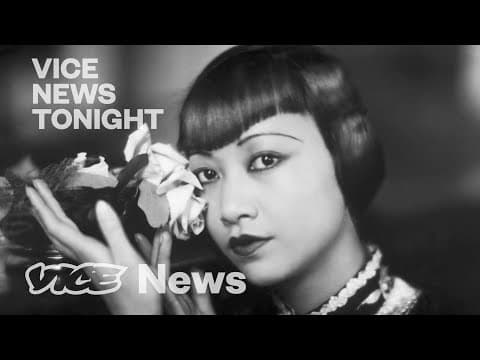
[1:39]Anna May Wong, she is the first Chinese American star. She joked that on her tombstone that the epitaph should read she died a thousand deaths, right? Because that's all she did at the end of her films was die. She was limited by the imagination of Hollywood, which still put her in a lot of these kind of lotus blossom and prostitute roles. But she also inhabited these villainous roles. She played the the daughter of Fu Manchu in Daughter of the Dragon. My flower daughter. My honored father. And they would draw her eyes very much the cat eyes and blunt bangs. Nancy Kwan, this was um in the sixties, one of the biggest international roles, was The World of Suzie Wong and she starred as a prostitute. Don't go away, stay with me. Why you care? Nothing to you. You go to the eighties and full metal jacket and you have Asian women seen as prostitutes again. Me so horny. You keep lying. Me love you long time. I think every Asian woman I know has been propositioned or made fun or cat called with those lines. And we know exactly what it is. Even if we haven't seen the movie, we know that it comes from, you know, US culture, this idea of Asian women as prostitutes. She'd be like, oh, me so horny, me love you long time. Unfortunately, even when we move forward, like Rush Hour, there's a scene where they walk into a room and then these Oriental screens open. You pick any girl for you and your friend. It's like this vicious cycle, right? Of like, this is what Asian women are and then you watch the the images and you're like, okay, this is what Asian women are and then you produce them again. And then of course, that affects how you interact and conceptualize and also in extreme cases of, you know, mass murders. And so the the power of the image to reinforce and to, you know, actually plant ideas in people's minds is is immeasurable.
[3:42]Some shows and movies I think that are positive uh representations of Asian women include To All the Boys I've Loved Before. There's three movies now. A young Korean-American character girl who's played by Lana Condor, who's Vietnamese-American and um and she has two sisters, too. And so there's all three of them and it's her story. It's a rom-com, coming of age story. I can be sure. I mean, what is God think? Also, uh, The Half of It shows a young Asian American girl who is kind of nerdy, who has glasses, but who is still seen as the lead of her own very interesting alternative love story. We need to ask for and demand the the superhero film to to demand the Meryl Street level of representation for Asian American women. There's that saying, you can't be what you can't see and so, you know, our our our opportunities and our dreams are limited. And so that's why representation matters, right? So if we can see ourselves, like where's the Asian woman president, you know, that maybe someday we'll have an Asian American woman as president. We have Kamala Harris right now, right? That's so exciting. Actually, she is existing before we see anything like that in Hollywood, right? There she is, you know, the first um Black Asian uh vice president. We need more images like that so that um so that representation can inspire and and help um move our society to a more just society.


