[0:03]We the people. We the people. We the people. We the people. We the people.
[0:17]Hi. I'm Kelly Jean Kelly. Imagine the year is 1803. About five-and-a-half million people live in the United States. Most of them between the Atlantic Ocean and the Mississippi River. Then, the U.S. government buys a huge area of land west of the Mississippi. But no American really knows what's in that land. What are the animals? What are the plants? What are the Native American people who live there like? Most importantly, is there a way to get from one side of the continent, and the Atlantic Ocean, to the other side of the continent, and the Pacific Ocean, just by water?
[1:03]President Thomas Jefferson was curious. He also wanted to help American traders and farmers. So, he sent a team of explorers west. They were called the Corps of Discovery. Their leaders were Meriwether Lewis and William Clark.
[1:33]The Corps of Discovery officially departed from St. Louis, Missouri, on May 14, 1804. They sailed up the Missouri River. At the time, rivers were the fastest way to travel, especially if you had a lot to carry. But the Missouri River was dangerous. The water moved quickly. Fallen trees grabbed the bottom of the boats. And when the men left the river, the land was dangerous, too. Barely a week into the expedition, Lewis is on shore, surveying the land. That's what Jefferson tells him to do. He's walking along the land. There's a 200-foot high cliff. The ground gives way beneath his feet. He saves himself by grabbing the knife out of his belt and jamming it into the hillside. He halts his fall 50 feet above the water.
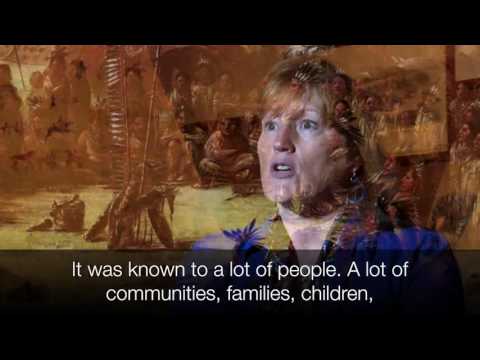
[2:34]The Corps of Discovery traveled through the Great Plains, passing through today's states of Missouri, Nebraska, and South Dakota. They spent the first winter at Ft. Mandan, North Dakota. Then they moved west, into Montana. They had no maps for this area. They did not know what to expect. For the men of the Corps of Discovery, this area, for a lot of them, must have been a literal representation of the Garden of Eden. You had these great open plains. Herds of buffalo stretched from horizon to horizon, rivers teeming with beaver and other valuable fur-bearing animals. Mountains that were like the things they'd been reading about you could see in the Swiss Alps. This was an incredible place. So, this was a land of tremendous beauty, of tremendous potential, and tremendous danger if you weren't careful. The Corps of Discovery came through here in the summer of 1805. Clark was walking by land with several men, and Lewis was on the water, on the boats. You have to remember, the men had come over 3,000 kilometers by now from St. Louis, mostly pushing against the current. Lewis was very impressed with this place. It was evening time, and it was raining. He described it as dark and gloomy. But he also described the sheer limestone cliffs, and how there was nearly no place along the side where a man could put his foot. He called it the "Gates of the Rocky Mountains." One of the things that's interesting about this specific area is so many different ecosystems. You have the high cliffs, so you got the birds of prey and the birds that can live in the cliffs. And you got the water, so you have the waterfall, and then you got the savannah so you get, you know, larks and Sandhill cranes. Throughout the expedition, the Corps of Discovery saw many creatures they had never seen before. Bighorn sheep. The prairie dog. Magpies. And, of course, the grizzly bear. They find this track, the first time they see a grizzly footprint. And they see that it's three times the size of a man's hand and bigger than any black bear print they're familiar with from back East. The next animal they find, you've got four men, they take their shots, the bear rears up, charges them. They're saying, okay -- they start reloading. They literally get chased into the river. The bear takes 12 shots, and he's still trying to kill them when the last one takes him down. And within a few days, Lewis starts saying, our curiosity about this animal is pretty well exhausted. I confess I do not like the gentlemen, and would rather go up against two Indians than one bear. Even though Lewis says he'd rather go up against two Indians than one bear, almost all of the expedition's relations with the Native Americans were friendly. This painting is in the Montana State Capitol in the city of Helena. It shows Lewis and Clark meeting members of the Salish Nation. Lewis wrote in his journal, "These people received us as friendly, they threw white robes over our shoulders and smoked in the pipes of peace." Many Americans were interested in what the Native Americans in the West were like. But this painting shows the point of view of the Native Americans. After all, Lewis and Clark were traveling through their land. So it wasn't an empty, vast area that they traveled through, and it wasn't unknown. It was known to a lot of people. A lot of communities, families, children, grandmas, grandpas, moms, dads. All of these people lived here and knew all about this area. So Lewis and Clark basically did not discover this area, they did explore the area.
[6:40]Lewis and Clark were not even the first foreigners to come to the North American West. A lot of French and Canadian fur trappers also lived and worked here. And the trappers already had relationships with many Native American tribes, including the Salish, the Kootenai, the Pend d'Oreille, and the Sioux. They're still here. I mean, in today's contemporary world, we still have Native American tribes here. Native Americans are well and doing wonderful, a big, big part of Montana history. And we want to take care of that heritage. The problem was when Lewis and Clark left and went back to Jefferson and reported all of their findings, it began to open up the West. And it opened it up to homesteading and allotments and free land for Euro-Americans and for white people. And so the influx of people coming in again dispersed and kind of displaced a lot of the tribes. And, they started, your know their homeland, which was originally this big, started shrinking and shrinking and shrinking and shrinking, and they were all put onto reservations.
[8:04]We're here at the headwaters of the Missouri River. When Lewis and Clark finally arrived here in July of 1805, they fulfilled one of the principal goals of their journey: to figure out where the Missouri River started. This place was also important to one of the people in their group, a young Native American woman named Sacagawea, or Sah-kah-gar-wea. She recognized this place as near the home of her people, the Shoshone. Lewis and Clark were eager to find the Shoshone because they needed their help and their horses to get across the mountains to the Pacific Ocean. For almost a month, a Shoshone guide led the expedition over the mountains. The group traveled on horseback and on foot. Even though it was only September, the ground was covered with snow. Fallen trees blocked their path. Some horses fell and rolled down the mountainside. Another horse, which carried all of Lewis's winter clothes, got lost. The group was wet and cold. They had almost nothing to eat. A few times, they killed and ate one of their young horses.
[9:25]The journey across the mountains showed them that there was no easy way to get from the Atlantic Ocean to the Pacific Ocean — at least not on the route they took. Finally, the Corps of Discovery reached the lower Columbia River. Meriwether Lewis had been traveling for about two and a half years by that point. It was early November, and most days were gray and rainy. Then one afternoon the fog lifted. William Clark looked off in the distance, and for the first time, he saw salt water. And he heard the waves crashing on the rocks. He wrote in his journal: "Ocian in view! O! the joy."
[10:20]Tell me what it was like here for them? I'm not sure you'd like to know what it was like. It was miserable. This was not planned. They'd come down from the Rocky Mountains. The weather was getting worse and worse. It's December by the time they arrive here. They had not killed game since the Rocky Mountains, which meant they're not making clothes. They're in the same clothes that they'd made in the Rockies. So, literally, the captains are writing about their clothes being rotted off their body. It's December. We get a lot of rain here. Now picture this: I have buffalo moccasins, elk hide pants, deer skin shirt, so slimy but mostly rotted off your body. The expedition spent three and a half wet, cold months at Ft. Clatsop. They killed some elk and deer, and they made salt from ocean water. For the rest of their food, they traded with the natives to survive. The Corps of Discovery offered beads and fish hooks. The Clatsops gave them roots, berries and fish. The expedition also ate dog meat-- but they did not eat Meriwether Lewis's dog! What did this place smell like? You know, I'm not sure either of us want to know that. I mean, you can imagine: processing 140 elk. Twenty-some deer. Dogs. Rotten fish. Smoke-filled. They complained about the fleas. The men are out in the field-wet, nasty, gutting animals. With no showers. You really, really have to smell that to understand.
[12:06]But the thing is, there's no choice, there's no alternative. And to complain about that does you no good. It does you no good. And that's the type of person that came on this expedition. It's like, here's our situation. This is what we have to do. We've got to get going, or not going to make it. The expedition left Ft. Clatsop in March 1806. They returned to St. Louis in May. This time they knew the land, they knew the Native Americans along the way, and they did not stop to collect very many plant and animal specimens. When they arrived at St. Louis, a large group gathered to greet the expedition. No one had expected them to be gone so long. Even Thomas Jefferson, at the president's house in Washington, D.C., did not know if the expedition had survived, let alone succeeded. Really, technically, you could say the expedition failed. There is no Northwest Passage, at least not this far south. So if the Lewis and Clark expedition technically failed, why do we remember it so fondly? Because Lewis, Clark and their people are the first Americans to come through this place. They're the first ones to write down what they saw here. The Corps of Discovery also brought back fascinating information. They described around 300 plants and animals that people on the East Coast had never heard of before. They told about the Native American tribes that they met, and they drew a map that connected the two sides of the continent. They also described their experiences in vivid detail in journals.
[13:57]By 1814, most of the journals the expedition kept were published. American trappers and traders especially used the information. They hunted beaver, otter, mink and other animals, then used shipping ports on the Pacific Ocean to sell the animal skins in Asia and Europe. That was Jefferson's dream, that was his goal. To encourage this commerce. Get this connection between the Missouri coast to coast, and and connect the trade, and to claim a greater claim to the Northwest. Even though they did not find an all-water route across the continent, Lewis and Clark did make it here to the Pacific Ocean. Lewis and Clark still live in the imagination of many Americans. If you come to the American West, you'll see their names everywhere, on bridges, on roads, on rivers, on restaurants, on gift shops. Lewis and Clark are associated with adventure, with bravery, and with opening the West to American settlers -- for better or worse. I'm Kelly Jean Kelly. This is the Making of a Nation, with VOA Learning English.