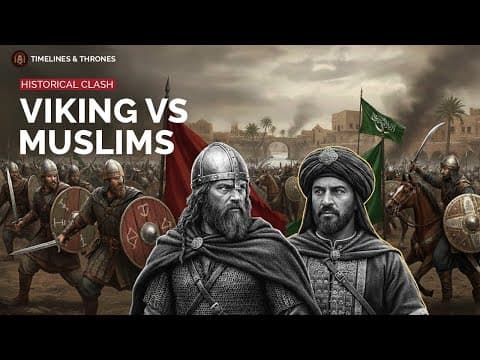
[0:00]The dragon ships appeared on the horizon like ghosts made real. Dozens of longboats carved through the waters of the Mediterranean. Their crews singing songs of conquest that had terrorized kingdoms from England to Francia. These were the majors, the fire worshippers, and they had won more battles than they had lost. For months they had raided their way down the Atlantic coast, collecting gold and slaves. Towns fell, defenders scattered, the pattern repeated. But on this day, in 844 AD, something different was about to happen. The Vikings didn't know it yet, but they were sailing into waters controlled by a kingdom unlike any they'd faced before. They thought they were attacking just another target. They were wrong. The Emirate of Cordova was watching. And the Amir, Abda Rahman II, was about to respond in a way that would change Viking strategy in the Mediterranean forever. This is the story of what happened when the Vikings attacked Muslim Spain? Let's set the scene. To understand what happened, you need to know what the Vikings were facing. Abda Rahman II ruled one of the most organized kingdoms in modern day Spain. His grandfather had fought his way across North Africa and claimed the throne of Al Andalus. By 844, Abda Rahman controlled a prosperous state. Cordoba was a major city with grand mosques, markets and learning centers. The Emirate had wealth, infrastructure, and a government that actually functioned. But wealth attracts Raiders. The Vikings had been testing the Mediterranean's defenses. They'd attacked the French coast. They'd raided Galicia in Northern Spain just weeks before, though that hadn't gone as smoothly as they'd hoped. Some raids succeeded brilliantly, others met resistance, but overall, the Viking reputation for swift devastating attacks was well earned. By August 844, they'd set their sights on Seville. The city sat inland on the Guadalquivir River, wealthy from trade. The Vikings beached their longboats and attacked and initially, it worked. Seville's outer defenses couldn't stop warriors who struck fast and fought hard. The Vikings pushed into the city. They looted, they took prisoners. They controlled most of Seville within days. But they couldn't take the Citadel, the fortified heart of the city where defenders held out. And that gave Abda Rahman time. The Vikings settled in, planning to extract ransom and plunder the city thoroughly. They'd done this before. Take a city, hold it for weeks, squeeze out every coin, then leave. That's when they made their miscalculation. They assumed the Emirate would respond like other kingdoms they'd raided, slowly, cautiously, willing to negotiate. News reached Cordoba. Seville had fallen, mostly. The majors held the city. Abda Rahman did something that surprised the Vikings. He moved fast, really fast. Here's what made this different. While many medieval European kingdoms took weeks or months to gather armies, Abda Rahman mobilized quickly. He had something most European rulers lacked, a functioning government that could actually coordinate a military response. He sent out calls for troops. He organized supplies. He used the old Roman roads that still connected Andalusion cities. The Muslim army marched, thousands of soldiers, cavalry, infantry, volunteers defending their homeland. They moved with purpose, reaching Seville within a month of the initial attack. The Vikings were still in the city when the Cordoban forces arrived.
[4:10]The clash happened on the plains outside Seville and in the surrounding areas. The Vikings formed their shield wall, the formation that had won them battles across Europe. This was their strength: tight formation, disciplined fighters, brutal effectiveness. The Muslim forces attacked with cavalry and archers. Mounted warriors using tactics developed through generations of warfare struck at the Viking formations. The Norsemen had faced cavalry before, but these were skilled horsemen who could maneuver quickly and strike from multiple angles. The battle was fierce. Vikings fought hard, but the Muslim army kept pressing. They had numbers, they had coordination, they had defenders who knew the territory. Then Abda Rahman's forces targeted the Viking ships. The longboats pulled up on the riverbank were vulnerable. Muslim forces attacked them, setting many ablaze. Chronicles mention the use of incendiary materials, possibly something like Greek fire, though historians debate this detail. What's certain is that Viking ships burned. The Vikings in Seville suddenly faced a serious problem. Their escape route was compromised. The army that was supposed to be weeks away had arrived in days. The easy raid had become a death trap. Imagine being a Viking warrior at that moment. You've raided successfully before. You've won battles, you've taken cities. This was supposed to be another profitable expedition. But now your ships are burning. A large army surrounds you, and these enemies aren't panicking. They're executing a coordinated military operation. The Vikings tried to break out. They launched attacks on the Muslim forces. For warriors who had built their reputation on ferocity, retreat wasn't an instinct. Some fought their way toward their remaining ships. Others tried to hold positions in Seville. The fighting continued for days. The sources tell us hundreds of Vikings died. Some say close to a thousand. Around 30 ships were destroyed, more than half their fleet. The survivors who managed to reach their remaining longboats fled down the Guadalquivir River, harassed by Muslim forces the entire way. By the time the Vikings escaped to the Atlantic, they had suffered one of their worst defeats in the Mediterranean. Seville was back under Muslim control. The Raiders limped home with far less than they'd hoped for, and far fewer warriors than they'd arrived with. But here's where the story gets really interesting. Abda Rahman didn't just celebrate the victory and move on. He understood something important. Defeating Raiders once wasn't enough. They might come back, unless you made it too costly to try. So the Amir launched a building program. He established an arsenal and shipyard in Seville. He created a permanent naval force, something Al Andalus hadn't really maintained before. He fortified river mouths. He set up early warning systems along the coast. He basically created a medieval coastal defense network. This wasn't done in weeks, it took time. But Abda Rahman committed to it. He turned Al Andalus from an easy target into a defended fortress. And it worked. The Vikings did try again. In 859, another Viking expedition raided Andalusian coasts. But they faced an organized defense that had been preparing for 15 years. The attacks failed. The Vikings found easier targets elsewhere. Think about that. The same warriors who would eventually conquer parts of England, who carved out kingdoms from Ireland to Russia, largely avoided Muslim Spain after 844. Not because they became peaceful, but because the cost became too high. Abda Rahman II understood something crucial. Raiders stay away when attacking costs more than it's worth. Make yourself a hard target and predators find easier prey. The Vikings eventually evolved. They converted to Christianity, they built kingdoms instead of just raiding them. But they remembered Seville. In their stories, they recalled the warriors who sailed south and paid a heavy price.


