[0:00]Stretching across the remote boreal wilderness of northeastern Alberta and Southern Northwest Territories, Wood Buffalo National Park is a land of staggering scale, ecological importance, and raw natural beauty. As Canada's largest national park and one of the largest protected areas in the world, it spans over 44,000 square kilometers and shelters some of the rarest wildlife, landscapes, and ecosystems on Earth. Recognized as a UNESCO World Heritage site since 1983, Wood Buffalo is not only a sanctuary for nature, but a living symbol of conservation at a global scale. Established in 1922, the park was originally created to protect the last remaining herds of free-roaming Wood bison, North America's largest land mammals. These majestic animals had been pushed to the brink of extinction by hunting and habitat loss. Today, the park supports the world's largest free-roaming population of Wood bison, roaming across its forests, grasslands, and wetlands in impressive numbers. Their survival within the park marks one of Canada's great conservation successes. But the park's ecological treasures go far beyond bison. It contains the vast Peace Athabasca Delta, one of the world's largest inland freshwater deltas, fed by the Peace Athabasca and Slave Rivers. This complex wetland system supports hundreds of bird species, including the endangered Whooping crane, which nests exclusively in the park, the only known natural nesting habitat for the species in the world. The Delta is also a critical stopover for millions of migratory birds, making it one of North America's most important avian habitats. Wood Buffalo's terrain is a mix of boreal forest, salt plains, rivers, grasslands, and karst formations, creating an unusually diverse landscape teeming with biodiversity. It is home to moose, black bears, lynx, wolves, beavers, and foxes. Rare species such as the Peregrine Falcon and the Northern Leopard frog also find refuge within its protected boundaries. In addition to its natural importance, Wood Buffalo National Park has deep cultural significance. It lies within the traditional territories of several indigenous groups, including the Cree and Danae peoples. These communities maintain cultural ties to the land, continuing to hunt, trap, and live in ways that reflect centuries of knowledge and stewardship. Collaborative management practices between Parks Canada and indigenous partners are increasingly central to the park's governance, ensuring that conservation respects both ecological and cultural values. Despite its remote location, Wood Buffalo faces modern challenges. Hydroelectric development upstream and climate change have altered the water flow into the Peace Athabasca Delta, threatening the health of this delicate ecosystem. Conservation groups and international watchdogs have raised concerns about these threats, urging greater environmental protections and sustainable water management. Visitors to the park experience a wilderness largely untouched by modern infrastructure. With few roads, limited amenities, and endless wilderness, Wood Buffalo offers a rare opportunity to experience solitude, silence, and the rhythms of unspoiled nature. Hiking, canoeing, wildlife watching, and stargazing under dark skies are just a few of the ways travelers can connect with this raw and powerful landscape. Wood Buffalo National Park stands as a testament to what protected areas can achieve, a haven for wildlife, a guardian of indigenous heritage, and a refuge for the rhythms of nature that have defined the land for millennia. It is one of Earth's last great wild places, where the thunder of bison hooves still echoes, cranes dance across the sky, and nature reigns untamed.
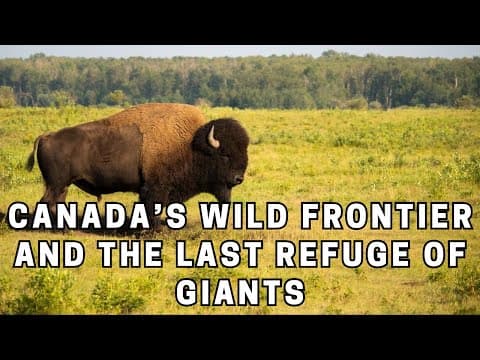
Wood Buffalo National Park Canada’s Wild Frontier and the Last Refuge of Giants
Factoids
3m 59s558 words~3 min read
Auto-Generated
Watch on YouTube
Share
MORE TRANSCRIPTS