[0:00]Let us now praise famous men. Three tenant families is a book by James Agee, first published in 1941. It is a unique blend of literary genres, combining social documentary, autobiographical narrative, and poetic reflection. The book is the result of a collaboration between Agee, a writer, and Walker Evans, a photographer, who set out to document the lives of sharecroppers in the American South during the Great Depression. The book is divided into three parts, each focusing on a different family living in rural Alabama. Agee and Evans spent several weeks living with each family, observing their daily routines, listening to their stories, and taking photographs. The families they depict are struggling to make a living from the land, which is owned by wealthy landlords who exploit their labor and offer little in return. If you'd like to listen to this book on Audible for free, you can click the link in the description below. If you'd rather read this book, I've added a link to Amazon. Please feel free to leave a comment suggesting another book you'd like me to summarize. Now back to the summary. Agee's prose is lyrical and introspective, often dwelling on the sensory details of his surroundings and the emotions they evoke. He writes with empathy and sensitivity, seeking to understand the complex lives and perspectives of his subjects. Evans's photographs, meanwhile, are stark and unvarnished, capturing the harsh realities of poverty and deprivation. The first part of the book focuses on the Gudger family, who live in a dilapidated cabin without running water or electricity. Agee describes the family's daily routines, their interactions with each other and with their neighbors, and their struggles to make ends meet. He also delves into their inner lives, exploring their dreams, fears, and aspirations. Through Agee's writing, the reader gains a deep understanding of the Gudger's humanity, despite their poverty and lack of social status. The second part of the book centers on the Woods family, who live on a larger farm owned by a wealthy landlord. The Woods are sharecroppers, meaning they work the land in exchange for a share of the crops. However, the landlord's demands are harsh, and the Woods struggle to meet them. Agee documents their daily work, which involves backbreaking labor and long hours in the fields. He also examines their relationships with each other and with the landlord, who is both a source of support and a symbol of oppression. The third and final part of the book focuses on the Ricketts family, who live in an even more remote and isolated area than the Gudger or the Woods. The Ricketts are particularly vulnerable to the forces of nature, as their land is prone to flooding and their crops are often destroyed. Agee's writing in this section takes on a more contemplative and introspective tone, as he reflects on the fragility of human existence and the power of the natural world. Throughout the book, Agee grapples with the challenge of representing the lives of his subjects in an ethical and meaningful way. He is acutely aware of his own privilege as a white, educated writer, and he worries that his attempts to document the lives of sharecroppers might be exploitative or voyeuristic. He is also conscious of the limitations of language and photography in conveying the full complexity of human experience. Let us now praise famous men. Three tenant families is a landmark work of American literature and social documentary. It offers a powerful and moving portrait of a segment of society that is often overlooked or marginalized. Agee and Evans's collaboration is a testament to the power of art to create empathy and understanding across boundaries of class, race, and culture. The book remains as relevant today as it was when it was first published, reminding us of the enduring challenges of poverty and inequality in the United States. Please click the subscribe button and head down to the description below to listen to this book for free on Audible. See you in the next summary.
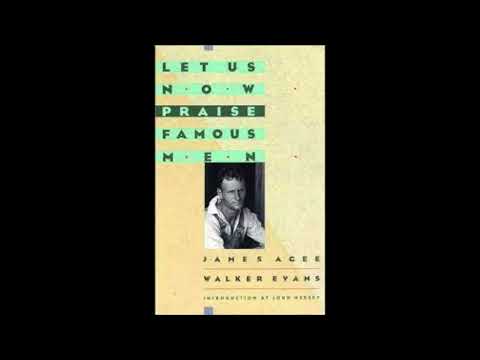
Let Us Now Praise Famous Men: Three Tenant Families by James Agee
Famous Book Summaries
4m 1s676 words~4 min read
Auto-Generated
Watch on YouTube
Share
MORE TRANSCRIPTS