[0:03]A country where people have no army, pay zero taxes, and have been ranked the happiest nation on Earth, but almost nobody talks about it.
[0:19]A place where children are born with blonde hair despite having dark skin, where people go to bars to fall asleep instead of dance. Where a tribe once walked the Hollywood Red Carpet in grass skirts and bare feet, and then went straight back to their jungle huts the next morning. This country exists. It is called Vanuatu.
[0:50]Vanuatu is a nation made up of 83 volcanic islands, scattered across the South Pacific Ocean. Only about 65 of those islands are permanently inhabited. The rest are either too volcanic, too unstable, or simply too wild to sustain permanent life. Now, here is the first thing that will stop you cold. The nearest neighboring country is the Solomon Islands, and that is already 540 km away. Fiji is even further, about 800 km to the east. And yet despite this isolation, despite having a total population of just over 350,000 people, smaller than many single cities, Vanuatu contains 113 indigenous languages. One hundred and thirteen. That means on average, one completely unique language exists for every 3,000 people. To put that in perspective, the entire European Union, with over 440 million people, officially recognizes 24 languages. Vanuatu with 350,000 people has 113. To communicate across islands, the people use a creole language called Bislama, a fascinating blend of English, French, and local languages, that became the glue holding this entire fragmented nation together. And despite its stunning natural beauty, only about 100,000 tourists visit Vanuatu each year. The Maldives, another island nation, attracts around 1.5 million visitors annually. That comparison alone tells you everything about how hidden this place truly is. This is already not a normal country, and we are just getting started. Before continuing, comment where you're watching so I can say hello.
[2:59]When visitors arrive in Vanuatu for the first time, there is one thing that stops almost everyone in their tracks before they have even left the airport. The people of Vanuatu are Melanesian. They have dark skin, broad features, and curly hair, all the typical characteristics of Pacific Islander heritage. But many of the children, especially on certain islands, have naturally light blonde hair. Scientists have traced this trait to a single genetic mutation, a variant in the TYRP1 gene, that evolved independently in the Pacific, completely separate from the blond hair gene found in northern Europeans. Now imagine you walk into a bar in Vanuatu on a Friday night. You expect music, you expect dancing, you expect the kind of noise and energy that bars everywhere else in the world produce. Instead, you find people sitting quietly in near darkness, speaking in low voices, staring at nothing in particular, moving very slowly, as if the entire room is operating at half speed. No one is dancing, no one is shouting. Some people look like they are about to fall asleep with their eyes still open. This is a Kava bar, and this is completely normal. Kava is a drink made from the ground roots of a native plant called Piper methysticum. It does not make you energetic or euphoric. It numbs your mouth slightly, slows your body down, relaxes your muscles and produces a deep, heavy calm that sits somewhere between meditation and sedation. The more you drink, the more your body simply refuses to cooperate. If you're curious to try Kava and experience a night at a bar in Vanuatu, drop a number two in the comments below. In Vanuatu, people raise their eyebrows quickly to say yes. That is it. If you ask someone a question and they simply raise their eyebrows at you in silence, do not repeat yourself. They heard you, they answered you, the answer is yes. Oh, and there are no McDonald's, no KFC, and no Burger King anywhere in the entire country. But the surprises about Vanuatu aren't over yet.
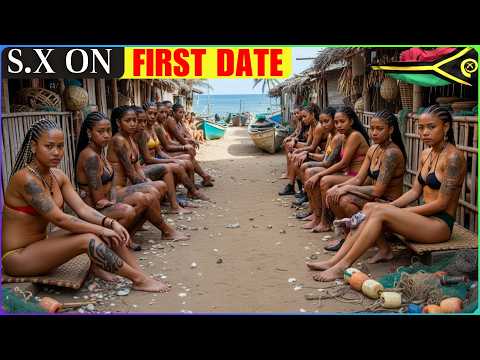
[6:03]They extend into what it has invented. If you want to send a postcard from the bottom of the ocean, Vanuatu is the only place on Earth where you can do that. Off the coast of Hideaway Island, there is a fully functioning underwater post office, the only one in the world. Divers descend to the mailbox at the bottom, drop in a waterproof postcard, and have it stamped and delivered to any address on the planet. For centuries, boar tusks were used as currency in Vanuatu, not just for exchanging goods, but as symbols of power, respect, and social authority. The more perfectly curved the tusk, ideally forming a complete circle, the greater the prestige of the man who owned it. These tusks were used in trade, in marriage negotiations, in political alliances, and in ceremonies that determined the entire social hierarchy of villages. Even today, boar tusks appear on the national flag of Vanuatu, a permanent reminder of their cultural weight. But tusks are not the only animal symbol embedded into the identity of this nation. On the more isolated islands, some women undergo a rite of passage that involves being tattooed with patterns modeled after shark teeth. They are sacred markings that represent strength, protection, and a deep ancestral connection to the sea. The process is painful and deliberate. Each design carries specific meaning related to the woman's lineage, her courage, and her future role within the community. These women wear these marks for the rest of their lives, not as fashion, but as identity. And when it comes to marriage, Vanuatu women are deeply practical and always rooted in tradition. If you wish to marry a woman here, you must understand the concept of bride price. The groom's family offers gifts to the bride's family, typically wild pigs with long tusks, intricately woven mats, and food. This is an acknowledgement that the bride's family has invested years of care and labor into raising her. The gifts are an expression of gratitude. Marriage here is a collective agreement between families and communities, not simply the union of two individuals. If the wild and radiant women of Vanuatu have caught your attention, drop a number three in the comments below. Let's see how many people were captivated at first glance.
[8:38]While Christianity is now the dominant religion in Vanuatu, practiced by over 80% of the population, polygamy is still practiced in the more remote traditional villages, particularly on islands like Tanna and Santo. And to understand why, you have to understand how life actually works in these communities. In rural Vanuatu, survival is genuinely communal. Agricultural work, fishing, building and caring for children are not individual responsibilities. They are shared across the entire household and extended family network. In this context, having multiple wives does not carry the same meaning it might in a Western framework. It means more hands cultivating the land. It means a larger network of family ties. It means stronger collective support when disaster strikes. And in Vanuatu, disaster strikes regularly. Polygamy here also carries a meaning of social prestige. In many villages, a man who can support more than one wife is seen as a respected leader, a symbol of strength, prosperity, and wisdom. This recognition is not based solely on economics. It is based on the honor and the role that man plays within the entire community. Marriage in Vanuatu is understood as a collective agreement. Every personal decision has a direct impact on the group. No one lives just for themselves. That principle runs through every aspect of life on these islands, from how food is shared to how land is used, to how children are raised to how the dead are mourned. And now this is where Vanuatu stops being surprising and starts being genuinely extraordinary.
[10:30]On Malakula Island, there are two tribes whose names are literally based on the size of the covering men wear over their lower bodies, the Big Nambas and the Small Nambas. The word Nambas in the local language refers to the traditional protective pouch worn by men. The Big Nambas wrap a large, thick bundle of purple Pandanus leaves around their waist. The Small Nambas use only a single small leaf or a simple piece of bark tied together. But if you think the Pandanus Leaf attire is strange enough, wait until you meet the Yakel tribe on Tanna Island. The Yakel have made a collective decision to reject the modern world entirely. No electricity, no phones, no money, no modern clothing. The men wear Nambas, the women wear grass skirts woven from dry bark fibers. They live entirely by hunting and gathering, following rhythms that have not changed in centuries. And then in one of the most surreal moments in recent cultural history, the Yakel tribe became movie stars. A film called Tanna was made using the tribe's own people in the leading roles. It told a story rooted in their own traditions, performed by people who had never seen a cinema in their lives. The film received an Oscar nomination in 2017. The barefoot actors walked the Hollywood Red Carpet in their traditional grass skirts. The world's media stood there completely stunned, not knowing how to process what they were seeing. However, as soon as the award ceremony ended, they immediately left behind the luxurious suits they were given to return to their thatched huts. Now move to Southern Malakula Island, where Western explorers once described encountering people they thought looked like aliens. This was the Longhead tribe. Members of this group believed that a skull elongated toward the back was a sign of superior intelligence, noble beauty and spiritual power. To achieve this, mothers would wrap a tight piece of bark around their newborn's head when the child was just one month old, gradually forcing the still soft skull to grow vertically as it developed. The process continued for several months until the shape was permanently altered. This practice has been discontinued today due to concerns about children's health. But the last elders of this tribe still carry those elongated skulls, living monuments to a beauty standard that existed for thousands of years and looked like nothing else on Earth. And finally we arrive at Ambrym Island, known across the Pacific as the magic center of the South Pacific. The men of Ambrym are famous for the Rom dance. They cover themselves from head to toe in enormous costumes made entirely from dry banana leaves, concealing every inch of their bodies. On top of this, they wear intricately carved wooden masks, each one unique, each one carrying its own spiritual meaning. And that's four tribes, each with its own distinct way of life. After everything you have just seen, you might be wondering what people actually eat in a place like this.
[13:56]The cuisine of Vanuatu reflects the rhythm of the islands themselves. There is no rush, there is no industrialization, no factory farming, no fast food chains, no processed ingredients shipped from overseas. Food comes directly from the land and the sea, prepared in traditional ways, using recipes that have been passed down through generations, without being written down once. Coconut is the foundation of almost everything. It flavors meats, vegetables and desserts, is used as cooking liquid, as seasoning, and as a base for sauces. Freshly caught fish is served grilled, wrapped in banana leaves, or slow cooked in coconut milk, creating dishes with an intensity and purity of flavor that is almost impossible to replicate in a commercial kitchen. The national dish is called Laplap. It is made by grating roots, typically yam or cassava, mixing them with coconut milk, wrapping the mixture in banana leaves, and cooking it slowly over hot stones buried in the ground. Laplap is served at feasts and rituals that bring entire villages together. It symbolizes unity and abundance. Another beloved dish is Tuluk, a type of bun filled with seasoned pork, also cooked inside banana leaves. On the island of Espiritu Santo, cattle farming has produced something remarkable, Santo Beef, a quality of meat so consistently excellent that it is exported to Australia and New Zealand. In a country with no industrial agriculture, that is not a small achievement. And then there is Kava. We already talked about what Kava does to your body. But in the context of food and drink culture, Kava deserves to be understood as something beyond a beverage. It is served in coconut shells. It is present at every social gathering, every traditional ceremony, every moment of collective reflection.
[15:55]Vanuatu is a living laboratory of nature. The coral reefs surrounding the islands are among the most colorful and biologically healthy on the planet. Diving here is like entering a natural aquarium where thousands of tropical fish move through water so crystal clear, it looks like liquid glass. But the biggest star of Vanuatu's biodiversity is an extremely rare and almost legendary bird, the Vanuatu Megapode, also known as the Incubator Bird, does not sit on its eggs. It does not build a nest in the conventional sense. Instead, it buries its eggs in mounds of hot volcanic sand, using the natural geothermal heat of the Earth itself to incubate them. The mother monitors the temperature of the mound and adjusts it by adding or removing material, essentially functioning as an engineer rather than a parent. The result is extraordinary. The chicks hatch fully feathered, fully developed and completely independent. They emerge from the ground ready to run through the jungle without ever having seen or needed their parents. And it's not alone. The forests and mangroves of Vanuatu are also home to the Vanuatu Petrel, an extremely rare endemic species, as well as the Rainbow Lorikeet, a bird with colors so vivid it looks hand painted. And moving through the undergrowth, the Pacific Island Monitor hunts with quiet efficiency. This agile predator can reach nearly 2 meters in length, about six and a/2 feet, making it one of the largest lizards in the Pacific. Everything you have watched so far has been remarkable, but now we need to talk about the ground itself. Vanuatu sits on the western edge of the Pacific Plate, where this massive tectonic plate is continuously being pushed beneath the Australian Plate at the New Hebrides trench. The result is one of the most geologically violent environments on the surface of the Earth. The country has 22 volcanoes in total. 13 are dormant, nine are either simmering or actively erupting, seven on land and two beneath the sea. On average, Vanuatu records about 200 earthquakes of magnitude four or higher every single year. That is roughly one significant earthquake every two days. On Ambrym Island, the same island we visited with the Ram dancers, two highly active volcanoes named Benbow and Marum have earned the island its nickname, the Island of Fire. From a distance grey smoke and red flames rise continuously from the craters, illuminating the sky at night. As you approach the scene becomes overwhelming. Bubbling lava, swirling toxic gases, patches of black ash scattered across otherwise pristine green forest. On Tanna Island, Mount Yasur has been erupting almost every single day for over 250 years. Yet visitors can walk right up to the rim of the crater and watch the eruptions happen from the edge. Ash and lava are ejected into the air just meters away. The ground shakes beneath your feet. The heat hits your face like opening an oven door. In 1999, an earthquake accompanied by a tsunami resulted in 10 fatalities and hundreds of injuries. Yet the people of Vanuatu do not live despite the volcanoes and earthquakes, they live alongside them.
[19:29]Port Vila is the capital city of Vanuatu, and it operates by rules that exist nowhere else on Earth. The main mode of public transport here is 15-seat vans, identifiable by a bright red letter B on their license plates. Oddly enough, instead of passengers waiting at a bus stop, the vans cruise through the city hunting for passengers. When you wave one down and climb in, the driver turns to you and asks a simple question. Where do you want to go? From that moment, the van transforms into a shared taxi, weaving through alleys and side streets, dropping each passenger at their specific doorstep or office, in whatever order makes the most geographic sense. Sometimes, you end up on a spontaneous tour of neighborhoods you never intended to visit, simply because another passenger needed to go in the opposite direction first. In exchange for this unpredictability, you get door-to-door service at a price that is almost impossibly cheap. And if you plan to find a specific address in Port Vila to send a package, to visit a friend, to locate a business, be prepared for a different kind of challenge entirely. The city barely uses house numbers or street names in daily life. The streets have names on official maps, but if you ask a local for directions, they will give you directions based on recognizable landmarks.
[20:54]Travelling to Vanuatu feels like slipping into another world. One where each island hides its own quiet mystery, and every landscape makes you wonder why you ever chose to be anywhere else. On a Espiritu Santo, the Blue Hole is almost unreal. Surrounded by dense jungle, its water glows with a deep, luminous blue that seems to rise from within the Earth itself. Stepping into it is less like swimming and more like surrendering to something vast and silent. A hidden sanctuary, where only water and birds break the stillness. Yet Vanuatu's waters hold stories beyond beauty. At Million Dollar Point, the remnants of World War 2 lie beneath the sea. Tanks, trucks, and machinery deliberately sunk when returning them home proved too costly. Over time, coral has claimed them. Fish weave through rusted frames, and history dissolves into a living reef, forming an underwater museum both haunting and alive. On land, time seems to pause. Champagne Beach stretches out in pristine simplicity, powder soft sand, crystal clear water, and an almost complete absence of noise. No crowds, no distractions, just a rare sense of untouched calm. For those drawn to intensity, Mount Yasur offers something raw and unforgettable. Standing at its rim, watching fire erupt into the night sky while the ground trembles beneath you, is less of an attraction than a direct encounter with the planet's power. But beyond its landscapes, Vanuatu's true depth lies in its people. Visitors are welcomed not as tourists, but as guests, invited into rituals, stories, and shared moments that feel genuine and unguarded. Vanuatu is not simply a destination. It lingers with you, quietly reshaping how you see the world.
[22:53]In May 2024, Vanuatu was named the happiest country in the world by the Happy Planet Index, for the second time since 2006, ranking above more than 150 nations, many with far greater wealth, infrastructure, and access to modern conveniences. By conventional standards, this result feels almost impossible to explain. Life in Vanuatu is not easy. Internet connections are slow and unreliable. Natural disasters frequently damage infrastructure. The economy remains fragile, heavily reliant on external aid. The islands sit atop active volcanoes and endure regular cyclones. Yet despite these challenges, people consistently report a deeper sense of satisfaction and well-being than those in far more developed countries. The answer lies in how happiness is understood. In Vanuatu, it is not a goal to chase through wealth, status, or accumulation. It is a way of living rooted in harmony with nature, strong family bonds, and a sense of worth that does not depend on money. Trade often happens without money, using goods like pigs, yams, or pepper. Life's essentials, food, shelter, community, are not privileges to earn, but inheritances of being born there. Education is free for young children, though higher education is less common, as practical knowledge for daily life holds greater value. Technology exists, but modestly. What matters more is the connection between people, land, and tradition.
[24:36]Talking about the economy of Vanuatu, subsistence agriculture forms its core. Yam, cassava, coconut, and Kava sustain both daily life and local exchange. Families largely grow what they consume, and share or trade what they have. Surplus exists but modestly, measured in relationships rather than volume. Tourism provides the main source of formal income, centered on islands like Efate, Espiritu Santo, and Tanna. Yet even here the rhythm is different, smaller, more personal, shaped by genuine human connection rather than pure transaction. There are exports, Santo Beef to Australia and New Zealand, Kava to Diaspora and global wellness markets, Copra as a long-standing commodity. Still, these remain limited in scale. What defines Vanuatu's economy as much as its structure is its fragility. Geography places it in one of the world's most disaster prone regions. Cyclones, earthquakes, and volcanic activity can erase years of progress overnight. Cyclone Pam in 2015 alone caused damage equal to nearly two thirds of the nation's GDP.
[26:00]Lifelines that sustain many rural families. And yet this simplicity is not widely experienced as deprivation. For many, it is a coherent way of life, one that values balance over growth, connection over accumulation.
[26:19]What follows may be the most remarkable story here, and it needs context. During World War 2, Vanuatu and nearby Melanesian islands became military hubs for Allied forces. For indigenous communities long isolated from the modern world, the arrival was astonishing. Massive ships, descending aircraft, and an overwhelming flow of goods, food, tools, medicine seemingly appearing from nowhere. They watched soldiers perform unfamiliar rituals, signals, commands, radio use, and then more supplies would arrive as if by magic. When the war ended, the goods vanished. Without knowledge of global supply systems, many concluded these were gifts from ancestral spirits, with soldiers as intermediaries. From this belief, grew what outsiders later called cargo cults. Communities built symbolic runways, carved wooden planes and radios, and reenacted military rituals, hoping to summon the cargo again. On Tanna Island, this evolved into the figure of John From, a promised bringer of abundance, still honored today. Even more striking, a nearby village came to believe Prince Philip was a divine figure from local legend. He acknowledged them, exchanged gifts, and became a sacred presence. When he died in 2021, they mourned deeply, believing his spirit would return. In the face of upheaval, they created meaning, much like all religions have done.
[27:58]Vanuatu has been inhabited for around 3,000 years, first settled by Austronesian navigators who crossed the Pacific using stars and currents with remarkable precision. They built enduring communities, farming, fishing, and developing rich traditions reflected in rock art and intricate sand drawings. For millennia, the islands remained largely isolated. In 1606, Portuguese explorer Pedro Fernandes de Queiros became the first European to record landing there, mistakenly believing he had found a vast Southern Continent. He named one island Espiritu Santo, a name that endures today. Yet his visit led to no settlement, and the islands faded from European attention for over a century. Exploration resumed in the 18th century with French mapping and Captain James Cook's 1774 survey, which named the archipelago the New Hebrides. In 1906, Britain and France agreed to jointly govern it under the New Hebrides condominium. An unusual system with dual governments, laws, courts, and even currencies. Locals called it Pandemonium for its confusion. On July 30th, 1980, Vanuatu gained independence after a brief rebellion. Since then, it has remained sovereign, preserving its languages, culture, and traditional way of life. That resilience is no accident. It is a conscious, ongoing choice.
[29:31]Despite its beauty and cultural richness, Vanuatu faces existential threats that could erase this unique civilization within decades. Much of the country's territory lies just one to 2 meters above sea level, making it extremely vulnerable to rising ocean waters caused by climate change. If current trends continue, entire villages and possibly whole islands could disappear beneath the waves in the coming decades, forcing mass relocations and destroying cultural sites that have existed for thousands of years. The country's location on the Pacific Ring of Fire compounds these challenges, as earthquakes, tsunamis, and volcanic eruptions represent constant threats to infrastructure and human life. In the last 20 years alone, Vanuatu has endured dozens of major natural disasters that would devastate most other nations. Tropical cyclones add another layer of danger, with violent storms regularly battering the islands and destroying crops, homes, and essential infrastructure. Cyclone Pam in 2015 was particularly devastating, leaving almost 70% of the population homeless or without access to food and clean water. This combination of natural threats leads the United Nations to repeatedly rank Vanuatu as one of the countries with the highest risk of natural disasters worldwide. More than 60% of the population lives in areas vulnerable to cyclones, earthquakes, or tsunamis, making everyday life a constant balance between enjoying paradise and preparing for the next catastrophe. Vanuatu has no army, no fast food chains, no income tax, no reliable internet, no street addresses, and no guarantee that the ground beneath it will still be above water in 50 years. Its people speak 113 different languages, worship a British Prince as a living god, go to bars to fall asleep, and send their children to school for free. And they are the happiest people on the planet. If this video made you see the world differently, even slightly, leave a comment below and tell me which fact hit you the hardest. I read every single one. And don't forget to hit subscribe, turn on notifications bell, so we can see you again in our next video. Thanks so much for hanging out with us today. I hope you enjoyed it. Your support truly means the world. Wishing you the best of luck.