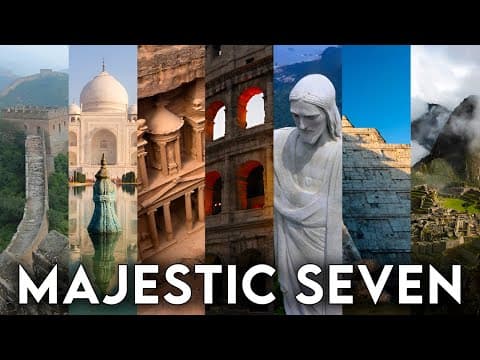
[0:14]Imagine a world where history and wonder intertwine, where ancient civilizations and modern marvels coexist. A world of breathtaking landscapes, architectural marvels, and cultural treasures. For centuries, humanity has marveled at the architectural and engineering feats of our ancestors. From the ancient pyramids to the towering cathedrals, these wonders have inspired awe and wonder in generations. The new Seven Wonders of the World list, announced in 2007, is a modern take on the original Seven Wonders of the World, which were lost to antiquity. The Great Pyramid of Giza was not included in this list because it was already considered one of the Seven Wonders of the Ancient World. While it is still an impressive and awe-inspiring monument, it was decided that the list should focus on new and modern wonders. Get ready to be amazed, inspired, and transported to another world. Let's embark on this incredible adventure together. Let's dive in.
[1:27]Number seven, The Great Wall of China. The Great Wall of China, a marvel of human ingenuity and a testament to the resilience of the Chinese people, stands as one of the most iconic and recognizable structures in the world.
[1:43]Stretching across thousands of miles, this monumental wall has captivated the imaginations of people for centuries. The construction of the Great Wall began in the 7th century BC, during the Warring States period. Over the centuries, various dynasties added to and fortified the wall to protect their borders from invading nomadic tribes. The most significant expansion occurred during the Qin Dynasty, 221 to 206 BC, when the first emperor, Qin Shi Huang, unified China and ordered the construction of a continuous wall. The Great Wall is not a single continuous structure, but rather a series of fortifications, watchtowers, and ramparts that wind their way through mountains, valleys, and deserts. It is a testament to the immense labor and engineering skills of the Chinese people, who built the wall using stone, brick, tamped earth, and wood. Beyond its defensive purpose, the Great Wall has become a symbol of Chinese culture and identity. It is played a significant role in shaping the history and development of China, serving as a barrier against invaders and a unifying force for the Chinese people. The Great Wall is also a treasure trove of historical and cultural artifacts. Along its length, there are numerous watchtowers, fortresses, and garrison towns that offer glimpses into the lives of the soldiers and civilians who once inhabited the wall. These sites provide valuable insights into the military strategies, daily life, and cultural practices of ancient China. Today, the Great Wall is one of the most popular tourist destinations in the world. Millions of visitor flock to China each year to marvel at this magnificent structure and experience its rich history and breathtaking landscapes. The Great Wall has also become a symbol of China's rise as a global power. It represents the country's ancient heritage, its resilience, and its determination to protect its sovereignty. The Great Wall of China is more than just a physical structure. It is a living testament to the ingenuity, perseverance, and cultural heritage of the Chinese people. It continues to inspire awe and wonder in people from all over the world, and its legacy will endure for generations to come.
[4:22]Number six, Chichen Itza, Mexico. Chichen Itza, nestled in the heart of the Yucatan Peninsula in Mexico, stands as a testament to the advanced civilization of the ancient Maya. This awe-inspiring archaeological site, recognized as one of the new Seven Wonders of the World, continues to captivate visitors with its intricate architecture, astronomical knowledge, and rich cultural heritage. The name, Chichen Itza, translates to, At the mouth of the well of the Itza, referring to a sacred cenote, or natural sinkhole, located within the site. The city flourished between the 8th and 12th centuries AD, serving as a major political, economic, and religious center. One of the most iconic structures at Chichen Itza is the Temple of Kukulcan, also known as El Castillo. This imposing pyramid, with its four sides adorned with intricate stone carvings of feathered serpents, is a masterpiece of Mayan engineering and artistry. During the spring and autumn equinoxes, a breathtaking optical illusion occurs. The shadow of the pyramid's staircase creates the appearance of a serpent descending the steps, symbolizing the rebirth of the feathered serpent god, Kukulcan. Another remarkable structure is the Great Ball Court, one of the largest in the Maya world.
[5:53]This vast open-air court was the site of intense ball games, which held significant religious and social importance. The towering stone rings at each end of the court were used to score points, and the outcome of these games could have far-reaching consequences for the players and their communities. Chichen Itza offers a fascinating glimpse into the complex society and advanced knowledge of the ancient Maya. Its well-preserved ruins, including temples, pyramids, and palaces, continue to inspire wonder and intrigue. As a UNESCO World Heritage site, Chichen Itza is a valuable cultural and historical treasure that attracts millions of visitors each year.
[6:48]Number five, Petra, Jordan. Petra, often dubbed the Rose Red City, is an ancient city nestled amidst the sandstone cliffs of Southern Jordan. A testament to human ingenuity and the power of nature, it stands as one of the world's most awe-inspiring archaeological sites and a rightful contender for one of the Seven Wonders of the World. Founded by the Nabataeans, a nomadic Arab people, around the 4th century BC, Petra flourished as a major trading hub on the Incense Route. Its strategic location and advanced water management system allowed it to thrive for centuries, reaching its peak during the Hellenistic and Roman periods. Petra's most striking feature is its architecture, seamlessly integrated into the surrounding rock formations. The city's iconic structures, such as the Treasury, Al-Khazneh, the Monastery, Ad Deir, and the Street of Facades, are carved directly into the sandstone cliffs, creating a breathtaking spectacle of human achievement. The journey to Petra begins with a narrow winding gorge, known as the Siq. As visitors traverse this dramatic passage, the towering cliffs close in, creating a sense of anticipation and wonder. Emerging from the Siq, the Treasury bursts into view, its ornate facade illuminated by the sunlight. Though Petra's glory days faded with the decline of the Roman Empire, its legacy endures. Today, it stands as a symbol of human creativity and a testament to the enduring power of history. As one of the world's most popular tourist destinations, Petra continues to captivate visitors with its timeless beauty and rich cultural heritage. Why Petra deserves wonder status. Architectural marvel. The intricate carvings and engineering feats of Petra are unparalleled. Historical significance. As a major trading hub and cultural center, Petra played a vital role in the ancient world. Natural beauty. The stunning sandstone cliffs and dramatic landscapes provide a breathtaking backdrop for the city's ruins. Enduring mystery. Many aspects of Petra's history and construction remain shrouded in mystery, fueling fascination and wonder. Petra is more than just a collection of ancient ruins. It is a living testament to the ingenuity, artistry, and resilience of the human spirit. Its enduring allure and undeniable beauty make it a worthy candidate for the title of one of the Seven Wonders of the World.
[9:45]Number four, Machu Picchu, Peru. Machu Picchu, often referred to as the Lost City of the Incas, is a captivating archaeological site nestled high in the Andes Mountains of Peru. This ancient city, constructed by the Inca civilization in the 15th century, remains one of the most iconic and enigmatic wonders of the world. Machu Picchu is renowned for its stunning architecture and intricate engineering. The city is composed of a series of terraces, temples, and palaces, all carved into the mountainside. The dry-stone walls, constructed without mortar, are a testament to the Inca's advanced building techniques. The precise alignment of the buildings with celestial bodies suggests a deep understanding of astronomy and its significance in Inca culture. Machu Picchu offers a unique window into the advanced civilization of the Inca Empire. The city was likely a royal estate or a sacred religious site, serving as a retreat for the Inca elite. The presence of temples, agricultural terraces, and residential quarters provides insights into the diverse aspects of Inca life, including spirituality, agriculture, and urban planning. Recognizing its outstanding universal value, UNESCO declared Machu Picchu a World Heritage site in 1983. The site's breathtaking natural setting, combined with its rich cultural heritage, has captivated visitors from around the globe. However, the delicate balance between preserving this ancient wonder and accommodating the influx of tourists remains a significant challenge. Visiting Machu Picchu is a journey through time, offering a glimpse into the grandeur of the Inca civilization. The breathtaking views, the mysterious ruins, and the serene atmosphere create an unforgettable experience. As one of the new Seven Wonders of the World, Machu Picchu continues to inspire awe and wonder in all who behold it.
[12:02]Number three, Christ the Redeemer, Brazil. Christ the Redeemer, a towering monument to faith and hope, stands as a testament to Brazil's cultural and religious identity. Perched atop the majestic Corcovado Mountain in Rio de Janeiro, this iconic statue has become a symbol of both the city and the country. Constructed between 1922 and 1931, Christ the Redeemer is a marvel of engineering and artistry. Its Art Deco design, with outstretched arms embracing the city below, has captured the hearts of millions. The statue's imposing size, standing at 98 feet tall, makes it a truly awe-inspiring sight. As a prominent symbol of Christianity, Christ the Redeemer holds deep spiritual significance for many. Pilgrims from around the world visit the statue to pay homage and seek blessings. Its serene expression and outstretched arms convey a message of peace, love, and forgiveness. Beyond its religious connotations, Christ the Redeemer has become an integral part of Brazilian culture. It is featured in countless films, songs, and works of art. The statue's image is instantly recognizable, serving as a powerful emblem of Brazil's vibrant spirit. In 2007, Christ the Redeemer was honored with the prestigious title of one of the new Seven Wonders of the World. This recognition cemented its status as a global icon and a must-see destination for travelers. Christ the Redeemer stands as a beacon of hope, inspiring people to overcome challenges and embrace a brighter future. Its enduring message of faith, love, and peace continues to resonate with people from all walks of life. Christ the Redeemer is more than just a statue. It is a symbol of Brazil's rich cultural heritage and a testament to the power of human creativity and faith. Its enduring legacy will continue to inspire and amaze for generations to come.
[14:21]Number two, The Colosseum, Italy. The Colosseum, also known as the Flavian Amphitheatre, stands as an enduring testament to the grandeur and engineering prowess of ancient Rome. This iconic structure has captivated the world for centuries, earning its place as one of the Seven Wonders of the World. Constructed between 70 and 80 AD, under the Flavian emperors Vespasian and Titus, the Colosseum is an elliptical amphitheater that could accommodate up to 80,000 spectators. Its massive stone facade, rising to a height of nearly 50 m, is a marvel of Roman architecture. The Colosseum's innovative design incorporated a complex system of arches, vaults, and columns, allowing for efficient crowd management and ventilation. The Colosseum served as the stage for a variety of public spectacles, including gladiatorial contests, animal hunts, and mock naval battles. These events were designed to entertain the masses and reinforce the power and authority of the Roman Empire. The arena floor, known as the hypogeum, was a complex network of chambers and tunnels that allowed for the rapid deployment of gladiators, animals, and scenery. Despite centuries of neglect, earthquakes, and vandalism, the Colosseum remains a powerful symbol of Rome's enduring legacy. Its ruins continue to inspire awe and wonder in visitors from around the world. In recent years, extensive restoration efforts have helped to preserve this magnificent monument for future generations. The Colosseum's timeless appeal lies in its ability to evoke a sense of wonder and excitement. It is a reminder of the ingenuity and creativity of ancient Roman civilization and a testament to the enduring power of human ingenuity. As one of the most recognizable landmarks in the world, the Colosseum continues to captivate and inspire, reminding us of the grandeur and complexity of the past.
[16:43]Number one, The Taj Mahal, India. The Taj Mahal, a breathtaking testament to love and architectural brilliance, stands as one of the world's most iconic wonders. Commissioned by the Mughal Emperor Shah Jahan in the 17th century, this ivory-white marble mausoleum in Agra, India, was built to immortalize his beloved wife, Mumtaz Mahal. The Taj Mahal's beauty is unparalleled. Its symmetrical design, intricate details, and harmonious blend of Islamic, Persian, and Indian architectural styles leave visitors in awe. The main structure, adorned with precious stones and calligraphy, houses the tombs of Shah Jahan and Mumtaz Mahal. The surrounding gardens, with their carefully manicured lawns and reflecting pools, create a serene and picturesque setting. Beyond its aesthetic appeal, the Taj Mahal holds immense cultural and historical significance. It represents the pinnacle of Mughal architecture and symbolizes the rich cultural heritage of India. The monument's construction involved meticulous planning and the labor of thousands of skilled artisans, showcasing the ingenuity and craftsmanship of the era. The Taj Mahal has captivated the hearts of millions and continues to inspire awe and wonder. Its timeless beauty and enduring legacy make it a worthy addition to the list of the Seven Wonders of the World.
[18:21]And there you have it, a whirlwind tour of the new Seven Wonders of the World. Each one, a testament to human ingenuity, cultural heritage, and the enduring power of the human spirit. Whether you're a seasoned traveler or just starting to explore the world, these wonders offer unforgettable experiences. So, pack your bags, book your flights, and embark on your own adventure. Don't forget to like, comment, and subscribe to Wonders Channel for more amazing travel content. Until next time, keep wandering, keep exploring, and remember, the world is your oyster.


