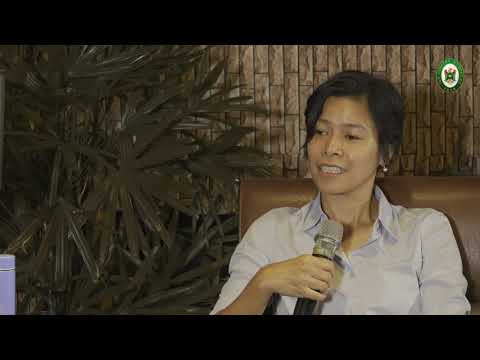
[0:21]Good day and welcome to today's session of the Public Intellectual Lecture Series of Far Eastern University. I am Leo for the Interdisciplinary Studies Department and today's topic involves the environment and social justice. We have to uh we have for today's guest Miss Lea Guerrero, Country Director for the Philippines Greenpeace for Southeast Asia. Thank you very much, Lea for accommodating us for today's session. Thank you for having me here. I'm very happy to be at this lecture series. Thank you, because um, the objective of this of this series is to be able to help students engage in important social issues. And for them as well, to be exposed not just to scholarly and research-based opinions, but also to help them formulate as well their own perspectives and hopefully act towards these particular initiatives and perspectives. So, as I mentioned, today's um, session involves environment and social justice. Perhaps you could give us a broad overview of the global situation in terms of the environment. What are the issues that the world and the entire human civilization is grappling with, um, especially in terms of uh the environment and perhaps, how does this impact their everyday lives? Mhm, um, big question. Um, yeah. Um, in terms of um the global environmental situation, I think we could say that, ano, um, humankind um is in a is in a turning point right now. Um, we are in the middle of one of the biggest uh changes um that are happening in the natural world and it is um the global climate emergency. Okay. Uh, so um if you remember in October 2018, um the United Nations Intergovernmental Panel on Climate Change, um, this is a group of uh hundreds of scientists from around the world, all climate experts. Um, they released a report where they said that um, the world only has 12 years left to avert uh the worst impacts of climate change. Uh, to stay within the 1.5 degree uh threshold to keep um climate stabilized uh for uh lesser impacts um on the whole of mankind, humankind. Um, so that's where we are now. Um, the world is in a climate emergency. Um, and I think that uh uh based on that report, um actually what the experts said was, um although they are, uh, they are asking for drastic um really unprecedented action on curbing um emissions that are causing climate change. Uh because if we don't uh stop it um by 12 years, um it will be runaway climate change and we may experience the worst um that the world has seen, um in in recorded history.
[3:57]Yeah. Um, and we also see it in um the and slow changes, um we call it uh creeping climate change impacts. Um, so it's um days are getting warmer and warmer, colder nights are getting shorter, et cetera. Um, in Europe, you see heat waves, um they're currently in the middle of a big heat wave right now. Um, and the world, um every year, I think since 2008, is the hottest year on record. So it's consistent. Um, so that's that's where we are right now. Um, and uh it's it's actually uh impacting um the climate crisis that uh we're facing right now. Um, is also interacting with a lot of um localized environmental problems that we're facing, for example, um local water shortages, um pollution problem, um deforestation. All this is uh is um worsening um the current crisis, um and making it harder for people to cope with the impacts of the climate crisis. So we're talking about the climate emergency, and you're talking about the climate crisis, no? And then, but there's one thing that I think should be highlighted because you also mentioned that the victims of this particular of this almost extinction level event, in in terms of human history, no, are those who are in the impoverished nations and those who are impoverished in their own respective communities, no. So, give that it's a climate, this is an emergency situation and it has the tendency, are you saying that the most who have to lose, or the people who have most to lose, are in fact, the people who have who actually have less already in life? Yeah, exactly. I mean, yeah, you've actually um hit it right on the head, the nail right on the head. Um, that is the situation that's happening now. That's why uh, for example, um Greenpeace and other organizations are uh fighting uh to gain climate justice, uh for all these groups. Um, so climate justice is actually, it's a framework of looking at the climate emergency from a rights-based lens. Uh, so you're looking at um how the climate crisis, which is historically um uh caused by fossil fuel companies, um and by richer nations, um that have been industrialized, uh well before the other nations have. Um, so uh looking at these impacts um from the point of view of how uh poorer societies, um, are uh, how the rights of poorer societies are being infringed. Uh so, um if you look at the climate problem, um it's infringing on our um right to life, right to food, right to livelihood because it's gonna cause more droughts. Um, it's uh it's going to make coral reefs extinct um once we hit the two-degree warming. Um so all this is uh destroying um nature, which is uh the basis of our existence, right? Um, so it's really a rights issue uh for many people. Um, and uh the the justice aspect there is that um those who are the most responsible, as you said, um, these are developed nations, for example, the US, um, and then fossil fuel companies, um which have dug up coal, dug up oil, and released all this carbon in the air. Um, they are they have profited so much um from burning uh fossil fuels that caused the climate emergency. Um, but those who are suffering, um like people in the Philippines, people in Africa, et cetera, um will experience the worst. Um, so uh in just recently, around a month ago, uh, a UN um rights expert, um said that uh, the climate crisis, uh, in the climate crisis, um, the rich will be the ones who will survive. Um, so we see that both at the level of nations and also at the level of, you know, um grassroots communities and so on. But perhaps you can clarify, um, elaborate, why is it that rich slash industrialized nations tend to be the ones who not not pollute, but cause the crisis. And why is it that, you know, the impoverished nations, they're the ones who are mostly victimized, no? Because you're you're saying that there is a contradiction between interests. No, we have the richer nations, they they're the ones who tend to consume and produce energy. And at the same time, it's the poorer nations who actually cannot meet up or cope up with the impact of these emissions, no. Perhaps you can elaborate further. Why such a disconnect between richer nations, poorer nations exist, in in terms of climate change? Mhm, uh, uh, let me see if I understood your question correctly. Um, so, uh, I'll start with the story of the Paris Agreement, yeah. Um, so uh the Paris Agreement uh was the agreement, international, I won't they call it a treaty also, um on climate change, uh that happened, um, in 2015, um right? And under the Paris Agreement, all countries are supposed to uh do uh efforts to minimize um their carbon emissions. Um, but the problem with that agreement is that it is voluntary. Um, now, what does that have to do with your question? Yeah. Um, if if the if your commitment uh for reducing emissions is voluntary, um then you will not um a lot of nations uh would not do actions that will slow down their economic growth, right? Um, and unfortunately, in the world today, uh even before um the climate crisis became such a big issue, um publicly, um a lot of nations are already um at the parang, many nations got a head start on industrialization. 19th century, industrializing already since then. Yeah, exactly. So they got a really, really big head start from countries like the Philippines. Um, and the countries that are left behind are, you know, trying to um imitate um the way that they have progressed, um their model of development. Uh, so that's the situation. Um, and currently, um, the the in in a situation where a treaty um is voluntary, uh for example, the Paris Agreement, you will see a very big disparity um in terms of what needs to be done, um in terms of mitigating climate emissions. Um, and what is actually being delivered on the table to help uh poorer countries cope with the impacts of climate change. Uh, your question had another aspect. Yes, because I was thinking of when you were saying that the richer nations, it's their logical trajectory. As if they will continue to consume fuel and they will continue to emit um you continue to uh have emissions and at the end of the day, the people who will be paying the price are those in the impoverished nations. Yes. The question there is, why why can't that cycle be broken? No, why can't why does that keep on continuing when in fact, Richard those who are already in the uh have already been advanced or already industrialized, their movement should be towards reducing, no, and addressing the issues, especially since most of their since most of the consumers of their own products come from these impoverished nations. They're profiting from these nations, no? Yeah, yeah. Uh, uh, the world today, when you look at the global economy, it's a very entrenched system, di ba?
[12:37]Um, you can't, uh, it's very hard to change, um that the economic model we have is based on unlimited growth, uh which these countries have, uh, pursued, right? So, if you look at, um there's some articles about it, about how, um a person in the US, for example, needs five planets to survive, while people in, um poor countries, uh, only consume very less, uh, consume a lot less, right? Um, in terms of, for example, plastic pollution, um, uh, they people in industrialized countries like Western Europe and the US, they consume five times more plastic, um than people in the Philippines, right? Um, but we're burdened with their, um, plastic imports, right? So, it's the same case of uh richer nations having that uh early advantage, um over poorer nations. And, um, it's it's a very hard cycle to break, um like you said, because, um, it is uh entrenched in our economic systems, in our financial systems, in our political systems. Um, that uh that uh fossil fuel-based development, um is is the way to go, uh for countries to develop, yeah. But shouldn't technology have moved forward in such a way that, you know, for example, if we are aware that current this current set of current technological, um, equipment, or current equipment that we have is producing emissions, producing pollution, given that this has been a problem since what, the 17th century or 18th century. Shouldn't it have moved towards more renewable sources? Are there efforts both on a global scale and on a local scale to really introduce and move forward with renewable sources of energy, as well as, you know, make um addressing issues of waste management? Yeah, um good point. Um, yes, there has been um there have been a lot of technical, technological developments, but again, um the system has entrenched um big fossil fuel companies. They're the biggest companies in the world. They lobby um politics, et cetera. Um, they are they're within the system. Um, they control governments, I would say. Um, so it's very hard for them to give up um that fossil fuel, their fossil fuel businesses and shift to renewable energy, as soon as possible, because we only have a decade uh to um avert, or avoid the worst impacts of climate change.
[15:26]So, what should be happening now is that they should be um, one acknowledging their responsibility for creating this uh big emergency that we're in. Um, they should be uh mitigating, they should be stopping um their fossil fuel businesses, um and immediately um go into a transition to renewable energy, which is just equitable, et cetera. And, um, government policy should be supporting that um transition. You mentioned about the efforts of Greenpeace towards pushing forward this agenda, you know, of, uh, of climate justice. In terms of the Philippine setting, how how does Greenpeace view, no, or how does it, uh, how does it perceive the efforts of both the government and also by government, other government institutions, other um, social movements in terms of addressing this particular crisis, given that we only have just a decade, no, in terms of addressing it, no? Yeah, um, so in the Philippines, um, we have initiated a petition with the Commission on Human Rights. Um, the petition is uh asking um that the Commission on Human Rights hold um 40 fossil fuel companies accountable for the abuses to human rights that Filipinos are experiencing due to the impacts of climate change. Um, so it's been um we submitted that petition to the Commission on Human Rights in 2015, um and back in 2018, uh, late 2017 to 2018, we had a series of hearings, um where a lot of experts uh went out and um really built the case, um that these companies are really responsible. Um, that our our petition was based on a report um by uh Rickeard, um who uh found in his study, um that only 90 companies are responsible for a big amount of the climate emissions that uh historical climate emissions that is driving the climate emergency that um we're experiencing now. Um, in that petition, um that we submitted to um the Commission on Human Rights, uh, we have uh, we are joined by a lot of um communities, um like fisherfolk communities, um indigenous people communities, uh, and climate impacted communities, like the victims of Yolanda, um in submitting that in testifying, um that climate change is a human rights issue and should be it should be acknowledged that these companies have caused their pain, have caused their suffering, and they should be held accountable. Um, what what we find really, um beyond um the cases a legal case, um it's also, uh, it's also proving to be a venue, um where we can, um, really, um take a stand against fossil fuel companies, um, and, uh, broadcast that they should be held accountable, uh, for, um, for communities.
[18:47]Yeah, we also see it in smaller scales, for example, not in, um, for example, not not in the climate lens, but in um, localized environmental problems, um in in, for example, the Philippines.
[19:10]Um, so, uh, earlier we were talking about climate justice, which is about which is very broad in the sense that um, it's it's impact is global.
[19:42]Uh, when you put on a right's lens, um for local environmental issues, um so, uh, it's also looking at um the justice um that communities uh should be uh standing up for um with the uh pollution, um drought, et cetera that they're experiencing in their localities.


