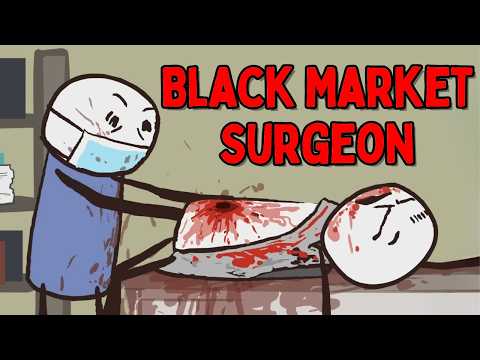
[0:00]You tie the final knot on the bandage. The Golden Retriever wags his tail and you can't help but smile. You hand Mrs. Higgins the leash. She thanks you for staying late, hands you a check, and leads the dog out into the rainy night. You lock the front door and you flip the sign to closed. It's been a long shift. 12 hours on your feet. A fist slams against the glass. You look up. A man stands at your door. He's soaked, shivering, wild-eyed. He isn't holding a leash. He's holding a friend. The friend is slumped over his shoulder, one arm dangling limp, the other pressing a red towel against his stomach. The towel is soaked through. You can see it dripping onto the sidewalk, mixing with the rain. You wave them away, and you point to the hospital down the street. It's only four blocks away. They have real doctors there. You're just a veterinarian. They have real equipment and real medicine. The man shakes his head. He pulls a pistol from his jacket, and he taps it against the glass. You unlock the door. They stumble inside, and suddenly your quiet clinic is in chaos. Mud on the tile, water pulling by the door, and blood. Blood on your clean floor, leaving a trail from the entrance to the exam table. The gunman kicks the door shut while you help hoist the injured man onto the table. It's a bullet wound. You tell him you fix broken paws. You give rabies shots. You remove ticks and trim tails and tell old ladies their cats need to lose weight. You don't do this. You've never done this. The gunman doesn't care. Fix him. That's all he says. But you understand everything those words mean. Fix him or join him. You look at the wound, then you look at your cabinets. You don't have human medicine. You don't have the right tools. You don't have training for this, but you have to try. You grab a tranquilizer meant for horses. It's strong enough to drop a thousand-pound animal in 30 seconds. You do the math in your head, calculating the dose for a man.
[2:31]You pray you don't stop his heart. You pray you got the numbers right. You inject the line. The man groans. His eyes roll back. His body goes slack against the table. He's under. You have maybe 20 minutes before he starts to wake up. You work fast. You clean the wound, you find the damage, and you stitch him up with heavy blue nylon, the same you use on Great Danes and German Shepherds. It will leave a jagged scar, but he is alive. The gunman watches the whole time. He doesn't speak, he doesn't move, he just watches. When you tie the final knot, he steps forward. He reaches into his jacket and pulls out a thick envelope, then tosses it onto the patient's chest. Keep your mouth shut, he says. Buy yourself something nice. He carries the man out the back door. You don't help them. You just stand there, hand shaking, watching them disappear into the alley behind your clinic.
[3:38]The door swings shut. You're alone. You pick up the envelope. You open it. You count the bills inside. 5,000 cash. You don't know what to do. Part of you wants to call the police, tell them everything. Show them the blood on your floor and the money in your hands and let them handle it from here. But the clinic hasn't been doing well lately. The bills are piling up. The rent is late. You're trying to save for your daughter's college fund, and every month you fall a little further behind. And these guys don't look like they forget a face. You saw the gunman's eyes, cold and calculating. The kind of eyes that remember everything. Reporting them could lead to problems, the kind of problems that don't get solved by calling 911. You mop the blood off the floor. You throw away the rags. You hide the money in the back of your filing cabinet, behind the tax returns nobody ever looks at. You tell yourself, it's a one-time thing. Three nights later, your phone rings. It's 2:00 in the morning. You're half asleep on the couch, the TV playing some old movie you've seen a hundred times. It's a number you don't recognize. You answer it. The vet who works late. I heard you do good work. You don't say anything. You barely breathe. A friend of mine needs help. Same situation as before. Double the pay. You should hang up. You should call the cops right now. Tell them about the phone call, tell them about the money hidden in your cabinet. But you think about your daughter again. You think about the tuition bill sitting on your kitchen counter, the one with the red, past due stamp in the corner. You give them the address. The second patient is a woman. She's hurt badly. You clean the wound, you stitch her up. 47 stitches in a neat, careful line. When you're done, her partner hands you an envelope. You don't count it until they leave. 10,000. You start keeping the back door unlocked on Tuesdays and Thursdays. Word spreads. You don't know how, and you don't ask, but it does. A man with a shattered kneecap shows up on a Tuesday. You set the bone with a splint meant for Bernie's mountain dogs, wrapping it tight, telling him to stay off it for six weeks. A woman with burns on her palms comes on a Thursday. She says she grabs something hot. You don't ask what, you just wrap her hands in gauze and give her antibiotics meant for chickens. They all pay cash. They all leave through the back door. They all know better than to ask your name, and you know better than to ask theirs. But here's the thing. Here's the thing that lets you sleep at night. Most of them aren't criminals. Yes, every now and then you're dealing with someone dangerous. Someone whose eyes are too cooled, whose hands are too steady, whose wounds tell stories you don't want to hear. But mostly, mostly you're helping people who just can't afford a hospital. A construction worker who fell off a ladder and doesn't have insurance. A mother who burned herself cooking dinner and can't miss work for a doctor's visit. Regular people with regular problems and no way to pay for regular solutions. You're doing good work. At least, that's what you tell yourself. You buy new equipment for the clinic, sharper tools, stronger lights. You tell your ex-wife the clinic is finally turning a corner. She doesn't ask questions. She just nods and says she's happy for you. You put a deposit down on your daughter's first semester. Three months pass. You've made more money than the last two years combined. The filing cabinet is stuffed with envelopes now. You had to start a second hiding spot behind the water heater. You start to feel good at this. Not proud exactly, but capable, needed. Like you finally found the thing you were meant to do. That's the first mistake. It's a Thursday. You finish with a patient around 2:00 a.m. Dislocated shoulder. Easy job, pop it back in, wrap it tight, hand them the painkillers and collect the cash. You walk them to the back door. You watch them disappear into the night, and you lock up behind them. You grab your keys. You head out to the back lot where your car is parked. You notice the black van too late. It's parked in the corner of the lot. The side door slides open. Two men step out. Big, silent, moving with the kind of purpose that tells you they've done this before. One of them puts a bag over your head. Everything goes dark. They shove you into the van. After a short drive, they pull you out. You hear a door open. It smells like a real hospital. They walk you down a hallway. They push you forward and you stumble into a chair. Someone cuts the zip ties. Your hands are free, but you don't move. The bag comes off. You're in a room with glass walls. Beyond the glass, you see medical equipment that looks more expensive than your entire clinic. An operating table in the center with a body on it. A man in a suit stands in front of you. You're the vet, he says. He turns and points. That man needs help. You look at the person on the table. You recognize him. Everyone in this city would. He's the man who owns the ports. He's the man who owns the police. The man who owns everything that moves through this city after dark. The Crime Lord. He seems very sick. You shake your head. You tell them you can't do this. You explain that you fix dogs, cats, the occasional wound from someone who can't go to a hospital. But this, this is different. This is beyond you. The man in the suit doesn't blink. You've kept people alive in the last three months, he says. You did that with horse pills and fishing wire, in a clinic meant for poodles. He steps closer. This is just one more mammal. You tell him it's different. You tell him this man needs a real hospital, a real surgeon. Someone who went to medical school and did a residency and knows what they're doing. Hospitals ask questions, he says. They file reports, they call authorities. We don't like questions. A guard steps forward. You didn't even notice him before. He was just a part of the background. But now he's front and center, and his hand rests on the gun at his hip. Mammals are mammals. Now begin. You scrub your hands. A woman in scrubs appears beside you. You step into the glass room. The Crime Lord lies on the table. You check his vitals on the monitor. You've seen this before, in dogs who got hit by cars and cats who fell from windows, internal bleeding. You look through the glass at the suit. You tell him you need to operate now. No more waiting. He nods. The woman hands you the tools. Your hand hovers over the Crime Lord's stomach, and you hesitate. This man has ruined lives. You've heard the stories. Everyone has. The businesses he's burned, the families he's destroyed, the people who crossed him and simply vanished like they never existed at all. You could let him die right here. Just hesitate a little too long. Call it a complication. Nobody could prove otherwise. But then you think about your daughter. Her smile, her laugh, the way she hugs you when you pick her up on weekends. Squeezing tight like she never wants to let go. You begin. The next two hours disappear. You work fast, faster than you've ever worked before. The woman assists you. She's good. She anticipates your moves before you make them, handing you tools before you ask, adjusting the lights when you need to see better. You wonder how many times she's done this. You wonder if she chose this life or if it chose her. Another hour passes. Your back aches, your legs are numb. Sweat drips down your face, stinging your eyes. But your hands are steady now, steadier than they've ever been. You start to stitch him up. You tie the final knot. The Crime Lord is alive. You stand there for a long moment. You don't feel proud. You don't feel relieved. You don't feel much of anything at all. Just empty, hollow, like you left something of yourself on that operating table. The suit enters the room. Better than I expected. You pull off your gloves, you drop them in the bin. You tell him you're finished. You ask for a ride home. You want to see your daughter. You want to sleep in your own bed. You want to forget this night ever happened. The suit doesn't move. Soon, he says.
[14:02]He presses a button on the wall. The glass walls turn white. You can't see out anymore. You spin around. The door is sealed. You push against it. Nothing. You pound your fists against the glass. Nothing. You turn around slowly. Your heart pounding in your chest. The Crime Lord's eyes are open. He looks at you the way a cat looks at a mouse. He smiles. You save my life, he whispers. His voice is weak. You nod. You tell him you did what they asked. Now you need to leave. You have a family, a daughter who needs her father at her graduation, at her wedding, at all the moments that matter. He shakes his head. A gift like yours, he says. Wasted on house pets? He points to the corner of the room. You look. There's a bed, neatly made. A small desk with a lamp, a stack of medical textbooks, thick and heavy. I've been looking for someone like you, he says. Calm under pressure, asks no questions, works with what they have. You tell him no, your voice cracks. You tell him you have a life out there, a practice, a daughter who needs her father at her graduation, at her wedding, at all the moments that matter. She'll be taken care of, he says. Best schools, nice home. She'll have everything she needs. She won't even notice you're gone. You move toward the door. You press your hands against the glass. It's cold against your palms. Nobody comes. The suit's voice fills the room. Get some rest. You start early tomorrow. You look at the bed in the corner. You look at the locked door. You look at the man you just saved on the table. You think about that first night, the gunman at your window, the pistol tapping against the glass, the cash on the table. You thought you were making a choice. You thought you were in control. You were wrong. You spent your whole life saving animals. Now, you've become one.


