[0:00]Imagine an empty desert transforming in record time into the global capital of excess. From a humble fishing village to a megalopolis that spits gold out of ATMs. Artificial islands that defy the ocean, and a metro system that looks like it's straight out of a science fiction movie. Dubai is pure ambition. Yes, but is it real? Or are we looking at a giant with feet of clay? Supercars rotting under the sun and ghost mega projects suggest that the collapse might be closer than they're telling us. Get ready, because today we're going to uncover the hidden face of luxury. Welcome to the 20 most alarming phenomena marking an end of an era in Dubai. Close your eyes and think of a Ferrari. Now open them. What you'll see in the desert parking lots isn't a dealership, it's a graveyard of metal and dust. Lamborghinis, Bentleys, and Ferraris abandoned to their fate at airport terminals. Many still have the keys in the ignition, others, a suicide note of sorts, a simple apology on the dashboard. Why would anyone leave a fortune on wheels behind? The answer is terrifying. The strict debt laws of the Emirates. Here, failing to pay a loan or declaring bankruptcy isn't a civil matter. It's a one-way ticket to prison. Facing imminent financial collapse, moguls choose exile and flee with only the clothes on their backs, leaving their mechanical jewels as silent witnesses to a ruthless economic system. The irony? Dubai is already monetizing this disaster, turning these luxury junkyards into a tourist niche for curious visitors who come to photograph the decay. A business born from the ruin of others, but the excess isn't just on the asphalt. In the heart of one of the world's most hostile deserts, someone decided to plant 50 million flowers. Welcome to the Miracle Garden. 72,000 square meters of color, a life-sized Airbus A380 covered in petals, and giant Disney sculptures that have shattered Guinness World Records. Visually, it's insane, but ethically, it's an environmental nightmare. Have you ever wondered how much water it takes to keep a flower from dying at 50 degrees Celsius in the shade? Millions of desalinated water every single day. Desalination is an industry that devours energy and shoots carbon emissions into the sky, making this garden one of the most environmentally damaging tourist sites on the planet. To top it off, every year it's raised and redesigned, importing tons of soil and flowers from thousands of miles away. It is the perfect monument to Dubai's philosophy: build grandiose attractions without a single thought for tomorrow. An artificial oasis consuming vital resources in a region that is, quite simply, ecologically fragile. And who is actually propping up all this infrastructure? This is where reality hits hardest. The city's demographic structure is a ticking time bomb. Only 15% of residents are Emirati citizens, the other 85% is a tide of temporary expat workers holding the city up on their shoulders. Indians, Pakistanis and Egyptians arriving in search of economic opportunity, only to hit an invisible wall. No citizenship, no permanent residency, time equals quote 0.8 seconds quote slash greater than only a stay conditioned on employment. We are talking about an unequal social model where your rights depend on your passport. While a few enjoy infinite state benefits, the massive workforce building and maintaining the city has no real stake in its future. Once they've earned enough, they leave. If they commit the smallest infraction, they're deported. Can a society survive long-term when the vast majority of its inhabitants are treated as disposable parts? It's a fragile, unequal and, above all, unsustainable balance. Do you think Dubai will manage to reinvent itself or are we seeing the final sparks of a firework about to go out? Let me know in the comments because what's coming next is even more shocking. This growth model isn't just unequal, it's dangerously fragile. Dubai has become a hostage to the global economy. If the world sneezes, the city ends up in intensive care. Imagine a recession that triggers a mass exodus of foreign workers. Overnight, services would collapse, and infrastructures would turn into glass skeletons with no one to look after them. Culturally, the city is a puzzle with missing pieces, a population so transient that it fails to create its own identity, just a constant flow of people passing through. If Dubai stops being the place to be or its charm withers, it faces sudden depopulation and a stagnation that would expose all the governance issues currently swept under the rug. Even its oldest traditions have been hacked to survive international scrutiny. Camel racing, a sport with over 1,000 years of history, is today a surreal spectacle. You won't see human jockeys anymore. Instead, you'll see robots. Small metal structures with remote controlled whips galloping away while their owners chase them in SUVs at full speed from the side of the track. Why such a drastic change? Because for decades, this sport hid a dark reality, the use of children from poor countries who faced mortal risks on the camels. Dubai chose technological fix, the robotic patch, instead of deep social reform. And while the robots have cleaned up the face of the sport, systemic labor problems remain hidden in construction scaffolding or domestic service, waiting for a solution that never arrives. That same pattern of bigger and more expensive is visible in places that seem harmless like the Dubai Mall. It's not a shopping center, it's an indoor city of 1 million square meters. Want to ice skate in the desert? You can. Want to see an aquarium with 10 million liters of water and 33,000 marine creatures? You've got it. But hold that gaze for a second. Keeping thousands of marine animals alive under the relentless Arabian sun demands a fortune in energy and climate control. Millions of dollars in operating costs that never stop. We saw it during the pandemic. The doors closed, the revenue vanished, but the systems kept roaring and the animals still needed care. It's a business model that only works if the flow of tourists is infinite. But what happens when the tap is turned off? Vulnerability is exposed, and the dream starts looking a lot like a financial nightmare. Is this journey through Dubai's shadows blowing your mind? If so, don't be left out. Smash that bell icon, share the video and subscribe right now. Your support is the engine that allows me to bring you these stories that no one else dares to tell. Let's keep going, because what's coming next will leave you speechless. Can you imagine living in a city of the future where, until just a few years ago, the postman didn't know where you lived? It sounds like a joke, but until 2015, Dubai didn't have a conventional address system. Forget street names or house numbers. If you wanted a package, you had to give directions like the house near the White Mosque or the building next to the crooked palm tree. This logistical chaos is the perfect symptom of a larger disease, the absurd speed at which the city grew. Skyscrapers went up faster than maps could be drawn, leaving emergency services and mail in an absolute limbo. To stop this disaster, they launched the Makani system, a digital coordinate code for every building. It's effective, yes, but it confirms Dubai's philosophy. Build first, fix the mess later. A model that works while the money is flowing, but becomes a death trap when the accumulated problems start calling for payment. And if we're talking about building without looking back, we have to talk about its famous artificial islands. Palm Jumeirah or the World Archipelago are, on paper, engineering feats that required over 100 million cubic meters of sand and rock. But behind that spectacular satellite image lies an irreversible ecological tragedy. To create these luxury paradises, coral reefs were crushed and sea currents were permanently altered, causing stagnant water that is killing local marine life. Financially, the plan is just as risky. These islands depend on ultra billionaires willing to pay between 7 million and 2 billion dollars for a patch of sand. We saw it in the 2008 crisis. Hundreds of islands were abandoned, slowly sinking while investors vanished. The maintenance cost to keep the sea from swallowing them is astronomical. Dubai has sacrificed its marine ecosystem for a quick profit that, if demand drops, will turn into a massive unsustainable infrastructure rotting under the sun. But there is an even quieter and more lethal threat that almost no one dares to speak about out loud, the end of the oil era. The world is changing. Electric vehicles and renewable energies are no longer the future. They are the present. The source of wealth that raised every pain of glass in this city is under unbearable pressure. Big oil companies are moving their money toward green energy, and that means less investment in the desert. It's estimated that the Emirates have already lost the capacity to produce a million barrels a day due to lack of investment in the sector. Dubai is in a race against time to stop depending on crude oil, but will they get there before the engine of their economy shuts off forever? Are we witnessing the rise or the final fall of the crystal Empire? Don't turn away, because the next fact will show you that luxury has a price that Dubai might not be able to pay. This drop in investment isn't an isolated stat. It's the first domino in a chain reaction threatening to topple the whole board. When oil money stops flowing, sovereign wealth funds and massive fortunes, the engines keeping Dubai's machinery alive, turn off the tap. The ultra luxury real estate market starts to slow. Seven-star hotels see their suites stay empty, and funding for those mega projects that look like they're from Mars becomes nearly impossible to find. Dubai is living in a flight forward. It needs a constant influx of fresh capital just to pay interest on its staggering debt. If the world stops looking at oil, Dubai loses the air it breathes. And when reality says no, they respond with even bigger. Did you know that when Disney refused to build a theme park in the city, Dubai's response was to try and humiliate them? That's how the Dubai Land project was born. A madness designed to be twice the size of the world's largest Disney with a budget exceeding $64 billion. An area larger than many small countries dedicated exclusively to leisure. But today, 20 years after the first stone was laid, the project is a desert of broken promises. It has become the symbol of a Dubai that announces wonders with trumpets and drums, but when crisis hits, leaves concrete skeletons behind to jump to the next new toy. They wanted to be Orlando, but they ended up with a graveyard of unfinished attractions, generating almost no revenue. Do you think this unbridled ambition helps the city or is it destroying its global reputation? Tell us what you think in the comments, because we want to read you. Even the brightest icon on its skyline, the Burj Khalifa, hides a scar of humility. It's 828 meters are a peerless architectural feat. It weighs as much as 100,000 elephants and has a surface area equivalent to 17 football fields. But many people forget that it wasn't originally going to be called that. It was called Burj Dubai, until the 2008 crisis left it paralyzed and penniless. Dubai had to be rescued by its rich neighbor Abu Dhabi, and as a condition for the bailout check, they had to change the name in honor of the President of the Emirates. It's proof that under the glass and steel, Dubai depends entirely on external money. And maintaining this giant isn't cheap. Just cleaning it takes three months of work and millions of dollars, not to mention the brutal energy cost to cool it in a 50-degree hell. That duality between pride and fragility is what the Dubai Frame tries to summarize. A 150 meter high frame designed to connect the city's humble past with its galactic future. On one side, you see the traditional neighborhoods, on the other, the futuristic skyline. It's poetic, yes, but it's also a haunting metaphor. Because while Dubai is busy framing its success, the structure holding that picture together is starting to show cracks that can no longer be covered with gold. But behind the golden glow of the Dubai Frame, lies a story of legal shadows that few dare to tell. The original architect, Fernando Donis, won the international competition to design it. But he claims the city simply took his intellectual property and built it without giving him the credit or the contract he was owed. Others finished the job, leaving an uncomfortable question about ethics and copyright in the Emirates. It's not an isolated case. It's a pattern of appropriating international ideas that, while generating spectacular monuments in the short term, is staining Dubai's creative reputation before the entire world. The frame is, at its core, the triumph of symbol over utility. $150 million were spent on an empty monument, while real needs for transport, housing and ecology continue to wait in line. Inside, the museum sells you a story of perfect success and an infinite future, erasing with a single stroke the social problems and the sacrifices of the workers who raised every beam. When you walk on its glass platform, 150 meters up, you don't just see the city. You see a metaphor for how decisions are made here, from the top down, vertically, and completely excluding that 85% of residents who have no voice or vote in the future of their own home. And if the lack of rights weren't enough to scare off investment, Dubai's great magnet just lost its pull. For decades, the slogan was irresistible: zero taxes. A tax haven that attracted millions of expats and companies hungry for clean profits. But the dream ended in June 2023. Under pressure from the international community to curb money laundering and tax evasion, the Emirates had to cave and impose a 9% corporate tax. It might seem low compared to other countries, but for Dubai, it's a seismic era shift. It's the recognition that the old rules are no longer enough to sustain its pharaonic projects. By aligning with global norms, Dubai has sacrificed its biggest competitive advantage. Many companies are already glancing at the exit, looking for the next jurisdiction that will let them keep every cent. The magnet that pulled in world talent and capital is starting to lose its strength, and in an economy that depends on constant speed, any breaking can be fatal. Will this be the first step toward a boring normalization or the start of a massive capital flight? Stay with me, because what we're about to see regarding the justice system and social control will leave you chilled. Even when Dubai tries to be modern and efficient, the cracks of classism appear in the most unexpected places. Look at its metro system. Opened in 2009, it's a technological jewel, 90 kilometers of fully automated driverless tracks crossing the city like a glass serpent. It's the longest driverless train in the world, with 49 stations connecting extreme luxury with mass tourism. But here's the catch: this metro wasn't designed for the people who make the city work. While tourists and wealthy residents jump from one shopping mall to a seven-star hotel, the army of expat workers who clean, build, and maintain this mirage remains totally marginalized. They live in peripheral areas where the metro is just a distant light on the horizon. For them, reality is overcrowded buses and shared transport under a sun that knows no mercy. Dubai has created a two-tier transport system, a divide made evident even inside the carriages with premium sections that cost double. It's spectacle over inclusion. A sci-fi infrastructure that turns its back on its essential workforce. Do you think Dubai should redesign its map to truly serve those who raise its skyscrapers? What change do you think would make the biggest difference? I'll read you in the comments. That disconnect between reality and economic ambition even touched the sacred calendar. In January 2022, Dubai made a decision that shook its roots. They moved the official weekend from Thursday and Friday to Saturday and Sunday. For an Islamic country, Friday is the sacred day, the heart of the week. But global capitalism doesn't pray, and Dubai needed to align with Western financial market hours. The result is a strange hybrid: half a day's work on Fridays to try and save religious appearances while surrendering to the external economic system. It's a halfway solution that satisfies no one and exposes a deep identity crisis. Is Dubai an Islamic nation with traditional values or is it simply the most expensive mirage in history? Once again, the decision was made from the highest offices without consulting that 85% of expats who simply had to bow their heads and adapt. It's reactive decision making, driven by money, where long term social planning is nowhere to be found. But if there is something that defines the soul of this economy, beyond the buildings and the calendars, it's the metal that shines in every corner. Dubai's relationship with gold reveals an aspect of its economy that will leave your jaw on the floor. This golden glow enveloping the city isn't just decoration, it's the glue holding a system on the brink of the abyss together. Dubai has sold us the dream that the sky is the limit, but looking closely, we see a city running a frantic race against its own nature. Skyscrapers without sewers, islands that sink, laws that imprison for debt, and a social model where 85% of the population is invisible. Is Dubai the future of humanity or simply the most expensive mirage in history? The reality is that no city can survive forever based only on spectacle and infinite growth. The oil is running out, the climate doesn't forgive, and capital is a coward. It flees at the first sign of weakness. What shines today with the strength of a thousand suns under the Arabian sky, may tomorrow be remembered as a lesson in humility, carved in glass and sand. We have walked through the 20 phenomena cracking this empire, and the question now is for you. Do you think Dubai will manage a soft landing or are we about to see the biggest bubble of the 21st century burst? If you like this journey into the depths of luxury, don't forget to subscribe and hit the bell so you don't miss our next analysis. Thanks for joining me until the end.
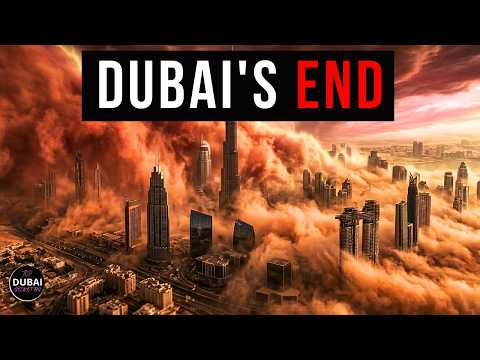
The FALL of Dubai - IS THE END HERE? The Horrifying Truth Behind Sin City
Dubai Secrets
19m 53s3,156 words~16 min read
YouTube auto captions
Transcript source
YouTube auto captions
This transcript was extracted from YouTube's auto-generated caption track. The transcript below is server-rendered so it can be read, searched, cited, and shared without opening the original YouTube player.
Pull quotes
[0:00]Imagine an empty desert transforming in record time into the global capital of excess.
[0:00]Artificial islands that defy the ocean, and a metro system that looks like it's straight out of a science fiction movie.
[0:00]Supercars rotting under the sun and ghost mega projects suggest that the collapse might be closer than they're telling us.
[0:00]What you'll see in the desert parking lots isn't a dealership, it's a graveyard of metal and dust.
Use this transcript
Related transcript hubs
Watch on YouTube
Share
MORE TRANSCRIPTS


