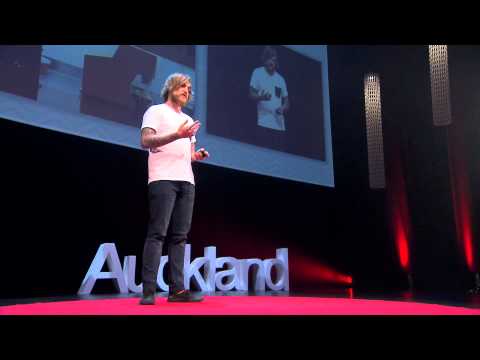
[0:08]I'm a cook. I've been a cook for about 12 years. I was lucky enough to start cooking in the beautiful Margaret River region in Western Australia. My first serious cooking job was at the highly acclaimed Estate winery. It was there that I sort of my passion for cooking started. That restaurant, winery really gave me the the passion and the confidence to move up to the city, uh and get a job in the best restaurant that I possibly could, Star Nice. So, I got my job at the best restaurant in town, and I was working 15 hours a day and it really pushed me to my limits, both mentally and physically. But overwhelmingly, it made me want to become the best cook that I possibly could become. Uh, when I was 21, I went to Spain, spent some time, fell in love with Spanish cuisine and culture. I went back to Perth, back with the owner of the restaurant Star and East that I worked in and we opened a restaurant together called Patanegra, a Spanish Tapas restaurant, which is still very popular today. Unfortunately, business wasn't my strong point and I was bought out rather quickly from a successful restaurant. I was at a loss as to what to do next. I was 21, I felt defeated. I didn't know if I wanted to keep cooking or if I wanted to do something else and I thought, you know, there's nothing else that I can really do. Uh, and I was approached by a Dutch artist named Jo Bakka, who, um, come to me with this concept of building a restaurant from 100% recycled or recyclable materials in the middle of a CBD. Covered in plants. And I thought he was crazy. I was like, mate, you're dreaming. There's absolutely no way we could do that. Uh, so I said no. He continued with the project. Um, I thought about it for a couple of weeks and thought, you know what, I've got nothing to lose at all. So, I caught up Yost and said, I'm in. I flew to Melbourne, met with him, uh, did a flower run with him through Melbourne in in restaurants and fell in love with his work. Uh, and then we opened the greenhouse in Perth, this restaurant you see here. This restaurant is absolutely amazing. I still look at it and just I'm in love. It's covered completely in plants. It has a rooftop garden. Buildings like this create habitat in urban environments. This creates habitat for birds, insects, and of course plants. As well as being completely recyclable. We can pick this place up, recycle the whole thing, leave no trace whatever there. Nothing's penetrated the Earth, it's the garden on the top that anchors the building down. We got a lot of success very quickly in this restaurant. Uh, we won best restaurant in in Western Australia from the Good Food Guide in our first year and I won best young chef in the country. This led for the opportunity to us for us to do another pop-up version of our restaurant in Sydney. It's the most idyllic spot you could ever want to put a restaurant. From my path, I could see the bridge and the opera house, it was absolutely amazing. We built this restaurant in about four weeks. We operated for three months and in five days we took it down and left no trace whatever there. One of the most exciting things we did in this restaurant was we put sparkling water and mineral water into kegs instead of bottle. Might seem small, but it minimized our waste hugely, so we got rid of all of those bottles. This then inspired a lot of other restaurants to do the same thing and now Mitch from Hepburn Springs, the guy that supplies our water, now sells more water in keg than he does in bottle. So he's saving massive amounts of of glass. So what this what this thought, this really planted the seed for for Yo and I to say, is a completely waste-free hospitality venue possible? Um, and we, we said yes. So we then went back to Melbourne, where we're both from and we made this little place called Silo. Silo is a business that operates 100% waste-free. No rubbish in the whole restaurant. It was a huge achievement for us. Um, so many people said we couldn't do it. And when you think about it, it is a quite a daunting task. You know, everything in hospitality comes in plastic and wrappers and, you know, the guy that roasts your coffee is always going to say it needs to be in a sealed bag. You know, you just need to change these ideas and inspire the same thoughts. So we did a few, a few really interesting things. Uh, you see the the milk on top. So basically from our dairy farmer, Simon Schultz, he's a biodynamic dairy farmer, we get 20 L vats that come directly from the dairy. They get dropped off at the restaurant and vats go back so they go back and forth. Simon tells us that we'll save 45,000 plastic bottles per year by using this milk system.
[4:25]Um, and you'll see the beautiful flour mill. Um, not only does it look great in the restaurant, but it actually serves a fantastic purpose. We mill all of our grain, uh, fresh. So we treat the flour as a fresh product, so we make all of our breads, cakes and pastries. In the commercial production of wheat, the grain is, uh, the husk is extracted from the grain. It's then bleached, um, to basically sterilize it. So it's not bad for you, but it's not near as good for you, um, by any means. At the end of the day as a chef, it tastes better. So why wouldn't we do it? You know, every restaurant grinds coffee, why don't we grind flour fresh? Seems logical to me. Above the flour mill, you see the black crates. Those black crates, uh, go back and forth from our farms. We, we work directly with two farms. Yost has a farm and and a couple of others are sort of within about an hour from Melbourne. So we've also then inspired our farmers to be conscious of their waste. You know, they're not using boxes and all the these things are recyclable, but there's still a process and energy that needs to be used to to do these things. So by minimizing that, we've minimized waste, um, straight away. So we've created a place where we're not taking in any waste. So we're not taking plastics, we're not taking boxes, we're not taking any of their things. The next problem in which we faced was what to do with leftovers. You know, uh, as much as we try to use everything possible, no one wants to eat an onion skin. Sometimes people won't need the whole meal, which, you know, I'm not that happy about, but it happens. So, we then started to to think of how we can do this. And the traditional method of composting is fantastic, but, you know, in the city in a laneway in Melbourne, impossible. So we got this this machine, a closed loop composting machine. This machine has a live microbe in it. It heats and oscillates the compost. So it's basically moving around and very gently cooking it. In a 24-hour process, it can take the organic waste to 1/10 of its weight and volume and turn it into nutrient rich growing medium. So essentially, all we're doing is turning our waste back into a commodity. So you can see in the photograph the the the the compost, it's really rich. Uh, it's really, you know, you can't grow directly in it because there's too many vitamins and nutrients, so it needs to be diluted. So it's great for fixing bad soils, um. And by doing this, like in Australia, we use natural gas to create fertilizer, which is ridiculous when one third of our landfill in Australia is compostable organic waste. So it really seems like an absolute no-brainer that we should be composting in one form or another. Um, and, you know, this machine's not cheap, but it can become a community thing where other restaurants, we have because we're in a laneway, we have a big big machine, the the surrounding cafes put their waste into our machine. So it can become a really sense, it brings real sense of community and and a real good feeling to, you know, throwing things away. So then this inspired our next thought, how can we do things better again? We thought, let's use other restaurant's waste to create food. So then we opened a restaurant called Brothel. So this restaurant, um, we take beef bones from Rock Pool, a very, uh, successful restaurant group in in Australia. We take fish frames, mariined crab shells from a restaurant Attica, which is the highest rated restaurant in Australia on the Pellegrino list. We take chicken frames from the European. Uh, and vegetable bits and pieces from a few other restaurants around town. We then turn it into nutrient rich broth. Historically, if you look into any indigenous tribe in the world, they would use bone broth as medicine when people were sick. So in about a 48-hour process of cooking the bones, it extracts the natural gelatin, which helps helps the goodness stick to our insides. So our bodies can retain all of the vitamins and nutrients from this food. Um, it's it's really about just being conscious of of what's going on and, you know, there's a lot of things that need to change in the hospitality industry, but it's definitely things are on the right path. People are, you know, making big changes. Uh, some of the best restaurants in the world have adapted these systems after visiting us in Melbourne. Rene Zepy from Noma in Denmark, world's best restaurant, has just got a closed loop composter. Alex Atala, top 10 best restaurants in the world in Sal Polo, has got a composting machine now. Sad Baines from the UK, restaurant Sad Baines, the same. Ben Chury from Attica. So after these guys have come and visited us, like, I look up to these guys as chefs, you know, they inspire me to cook. But now they're kind of coming to us to, you know, get some inspiration on how to do things better and it's really working. So, you know, there's a lot of focus on the providence of our food today, which is absolutely amazing. It's really important. But I think everyone just needs to be a little bit more conscious of what we're throwing away and what's happening to it afterwards. Cheers.


