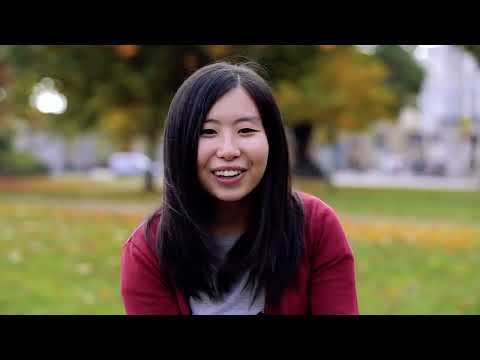
[0:12]Hi, I'm Christie. I'm from New York and I did an exchange here in the UK. My name is Vao. I'm from Bulgaria and I studied in Denver, Colorado. I'm Stephanie from Hong Kong and I study in Newcastle University. Hi, I'm Aria. I'm from Australia and I studied in Fairfax, Virginia. My name is Emmanuel. I'm from Nigeria and I study in London. It was really exciting to see the architecture, the culture and the people. When I went there, everybody was really good with me and helped me with everything. I guess we were so used to watching like uh English movies when we were back in Nigeria. So actually being here and seeing it for, you know, in real, we were very excited. As you go though, it starts to it starts to become a little bit more daunting. I started to miss things that I was used to having around me all the time. I missed my friends and my family. I was so used to seeing them all the time that, you know, now that we were so far away, it was it was quite hard. I felt homesick and then I felt sad and really want to go back to home. I'd never been away from my parents for longer than a couple of weeks at a time and that was really hard. Some people warned me about this face, the culture shock. Culture shock. Culture shock. The infamous culture shock.
[1:32]I think one of the biggest differences was just the phrases they used. The accents were very difficult to to kind of understand. Mate. Hit the town. And everything was always brilliant. Seriously? No, it's not. Naked. It's swings and roundabouts. Seriously, what does that mean? I was really overwhelmed. I felt overwhelmed with everything really. I guess just the way of life, you know, it was very it was very busy and new people, new university, new surroundings.
[2:03]It was quite hard to get around at first. You had cabs, you had trains, you had buses and you have to just work out, you know, which one to take, which one not to take. And believe it or not, the food is different. I tend to really crave like, you know, Nigerian food. I really miss Chinese food. I really missed my mom's cooking and my grandma's as well. Because my cooking to be honest, it's it's terrible. So that's when I realized I needed to learn uh how to cook. So I ended up cooking a lot at home, but I think the best part of that was I started to bond with my flatmates a lot more. So um, yeah, I'm learning.
[2:40]When I was feeling a bit homesick, someone suggested that maybe I speak to the welfare advisors. And they reassured me that I wasn't the only one who felt overwhelmed. And one of the things they suggested was, you know, try and decorate my room to make it feel a little a little bit more homely. After a while, I started to get more comfortable here. I joined badminton societies and I really met a lot of English people there and I felt like my English got improved. I started talking to people a lot and felt more confident in myself and my language. Everything started to feel a little bit more normal. I made more friends, I started going out more, socializing a little bit. That was a big transition for me. It made me feel, you know, a lot more at home. I managed to adjust to the new culture and I adjust to the weather, the food and the language. So now you ended up making so many friends, you know, both international and both, you know, people from here. To be honest, it was the best decision I've ever made even though there were some challenges. I learned a lot inside the classroom and about myself. It's really transformed my life completely and I literally feel like this is home for me now.


