[0:01]This video was made on Ngunnawal country, and we acknowledge elders past, present and upcoming. Aboriginal and Torres Strait Islander viewers are warned this video contains images and voices of deceased persons.
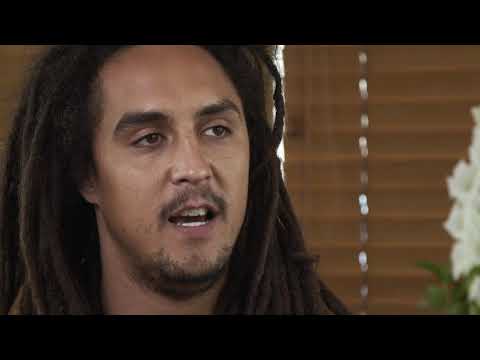
[0:20]All right, my name is Greg Chatfield. Um, my family originates from Kamilaroi country, around Coonabarabran area, which the Castlereagh river travels through. Moved to Yass in 1965, and that's where we grew up. In Yass, being on Ngunnawal country. But obviously, Kamilaroi and Wailwan will always be what you say, I suppose home. You know, um, even things from the stolen generation still, still has a big impact on our people. And, um, you know, even growing up in in a little country town where I live in Yass, you know, um, didn't think that we were allowed to play in the tennis club or play bowls or things like that, because it was all about white society, I suppose. We didn't have any mobile phones or internet back then. But Mum just had this sense, that this welfare man was coming around and we used to get hunted down the river, because we were living near the river. But I remember being at home one day and he came in with a white glove, and he'd wipe his hand along the window sills and around the windows and things like that, to pick up any dust. And that gave the government reason enough to say that Mum was an unfit mother to remove the kids. So we didn't get to really see Dad. I didn't grow up with a father figure. And I suppose at school, I went through authority, which I didn't like. Um, I broke a window one day and I went to court, my first offense, and I got sent to the boys homes, and horrific things happened in there, you know, that I've only just started to open up about. But, um, after I did leave school, I went out and done a lot of work on farms.
[2:27]Like, sheep work, working in shearing sheds as a rouseabout. I traveled over to Canberra, and there was a couple of us that actually put together Gugan Gulwan, which means little brother, little sister in Ngunnawal language. And from there, Gugan Gulwan Aboriginal Youth Corporation was established. Like I was working flat out. I was getting people jobs on construction sites, getting up at three, four o'clock in the morning, getting them, pick them up, taking them to work and then going to work myself. But not really looking after myself, as in, diet, doing the right thing, exercise. I think I was getting enough exercise walking up and down the stairs in the courthouse and in and out of courthouses all day. Yeah, and that's when I found out about getting this MND. When I went back to Yass, I started seeing a doctor, and they only stayed for six months. And then you'd see another one, and then you have to tell the same old symptoms. And it gets back to that stereotype, that you're doctor shopping for painkillers and pills. Um, it wasn't until I got to meet Doctor Williams. Doctor Jonathan Williams in Yass, who showed an interest in MND.
[4:00]And Wintunga actually referred me to him. There was no pain. There was loss of strength in my left arm, and that's where it sort of started. It was actually that I found it at work one day and went out to the hospital. But prior to that, I had a bleeding in the brain, an aneurysm. And I had a certain doctor that looked after me. Once he found that I was in the hospital, he'd come down to check me, and he spotted a big divot in my hand. And from there, he asked me to come and see him on a Saturday and done some neurology tests, I'm not sure what they called it. And then at that time, he gave me 70% surety that I had MND, which I asked, "what the hell is that"? And then when he explained that it's a motor neuron disease that eats away at your nerves and your muscles, and that you only get three years to live. You know, I I don't know how to explain it. It was just it was just one big shock. I went home and I still didn't get it around me head. I didn't know how to tell my kids about it. Or I didn't know nothing about it. When you're talking about Chatty, I mean, you have to talk about how I initially met him, because we have a MND clinic, which is a multidisciplinary clinic, at the University of Canberra Hospital. And I first met Chatty at that clinic. And that was about two months before he was admitted here, two to three months before. The funny thing is, initially, the first two times that he was supposed to come to the clinic, he didn't arrive. And when I found out what was going on, what we found out was that, he was not worried about his condition. He was basically looking after his mob. Yeah, so it was a big shock when we all kind of found out about it. Because it's slowly on set at the start there, you know, took a while to really kind of kick in and see what this disease was doing to my father and all that. It was hard to see it happen to such a, you know, active, you know, happy kind of bloke. Um, but just seeing it kind of eat away at him over the last couple of years is, yeah, definitely been hard. And, um, yeah, it's just a very tricky in such a small house without the right equipment for lifting and, um, you know, showering and all that kind of stuff. It was getting a bit difficult at home there. And then we got talking about palliative care, but I thought I was going to be in a ward with ten other people just with the curtain going around us. But when I came over and had a first initial interview with Ros and Michelle, and and we went for a tour, And I was seeing the different rooms, it was only a nineteen bedroom hospital. But the way that I had seen the nurses get around and and care for the patients, it opened up my eyes as a totally different place, totally different place then being like, say in Canberra Hospital or Calvary or somewhere like that. A lot of the time we like to look after our own mob, and that's a big thing for Aboriginal Torres Islander people. We think we can look after them, that's okay, we don't need anyone. But really, having all those supports in place will help us to support them. Once we got into that more stable ground, he could see the benefits of asking for help from palliative care or receiving support from palliative care. And that improved his life a hundredfold.
[7:50]But also, if he hadn't have had that pain relief, he would have stayed in bed. And absolutely, his life would have been shorter. There is no doubt about that. Um, I was just expecting a hospital ward, you know, with nurses coming in and out to check on you and whatnot. Um, but yeah, since kind of being here and meeting the staff and seeing what goes on around here, um, I can definitely, yeah, um, definitely see what what Clare Holland House can do for its patients. We had to actually advocate for him most of the time. What we did first was, we not only actually managed his physical symptoms, we actually looked after him as a whole person. Because we never he we never let him feel that this was anything other than a second home. Well, palliative care to me is where where the symptoms for me were getting worse. Where it was hard to get up, out of bed. The constant pain that I put up for two years. You know, the tossing and turning in bed, the one hour sleep, two hour sleep at night,
[9:02]um, trying different tablets. But palliative care, when I came in, we had doctors that came in every morning, seeing you, that took symptoms, started you on different pills. And I was starting to feel alive again. And it's not a place, about coming to die. It's a place about to come and get the proper medicine so that you can live longer. Um, regardless whether it's MND, cancer, um, you know, all those other terrible, terrible diseases that we're trying to get on top of. It's taken a bit more strain off, um, off myself and my brother and, um, you know, the other family members. So we can kind of start putting a bit more stuff in place in terms of getting the equipment and things done at home so he can come home for his day visits and things. Yeah, and part of it was getting away from your family, you know, your kinship, the ones that love you. But knowing that, the more that you was in pain or the more that you couldn't, you know, shake this, pick up the carton of milk out of the fridge. Or make your own breakfast. And ask them for help in that sense, you know, I think that sort of made me come to palliative care in a sense to have a look, to see what it was like. Totally different to being in hospital. And it was about getting on top of my pain so that I can go home. I'm not stuck here. So I want to spend that time getting back on my feet so I can go home and watch my son play football, go home and have a weekend with my nephews and nieces. Have a barbecue with the mob. You know, this is this is where you need to be. Um, to to give you that opportunity, to spend the rest of your life, or whatever time you have got left, knowing that it is a, um, an unstoppable disease, that they haven't found a cure for, yet. But in the meantime, if you want to live that bit extra longer, I think this would be an ideal place to come. And I was thinking, why is a dying man giving me these flowers? I should be giving him flowers. And he said, "Thank you for making me feel safe." I think for Chatty was that he trusted me with cultural care as well.
[11:47]And I didn't pretend to know what I should or shouldn't do, but I listened to him and he taught me. And then I was able to support him out of that, I think. From my experience with motor neurone disease with the time that I got left, I only wished that I would have come here earlier, instead of sitting at home, suffering in pain for the last two years, knowing that it wouldn't have stopped the progress of my disease, but at least having that dignity and quality of life, without the pain and suffering. So I really encourage my mob, within the Ngunnawal country, to just to give it a go and see how you like it. There were times as he was getting closer to death, where he was really frightened. And sadly, motor neurone disease, does have times where you can't breathe, and it's frightening. And I would sit with him by his bed and hold his hand as he was gasping for air, and just be calm and be constant and not panic. And he was grateful for that, yeah.
[13:22]We will all remember him very fondly, because he gave more to us than what we gave him. And I will never forget him.
[13:49]For further information on palliative care, please discuss with your chosen health professional or check out these websites.