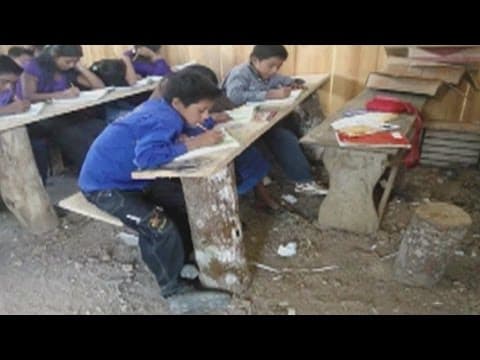
[0:11]Child labor. Children from poor families had to go to work to help pay the bills and buy food. Oh boy! Many children had 10 or more siblings. They would often live together with grandparents and other relatives crammed into one room. You betcha. Children did not go to school. They went to work sometimes as young as four and five years old despite the dangerous and dirty working conditions. Oh boy. Children could work up to 18-hour days. No, no, no, no, no, no, no! They worked down the coal mines, in factories as chimney sweeps, street sweepers, clothing and hat makers, farm workers, servants, and in textile mills. Come on! Children were cheap to employ, and although they worked long hours, they did not get paid much. Oh, man! The work was often dangerous. Because they were so small, children were sent to do work that adults could not. They climbed into and up chimneys to clean them, coming out covered in soot, cuts and bruises. No! In 1875, a 12-year-old boy died sweeping a chimney. So a new law was made to protect chimney sweeps. They had to become registered with and supervised by the police for their safety. Oh, wise guy, eh? Laws made to stop tragedies like this from happening, like the chimney sweepers regulation Act of 1840, were now even more strictly enforced. Silly boy! What's all the hubbub? Children worked in factories and mills, crawling under machinery to fix or clean equipment. This was dangerous. Children could get caught in the machinery and could get injured or even die. The 1833 Factory Act made it illegal for children under the age of nine to work in factories. Hooray! Children aged 9 to 13 were limited to working a 48-hour week. This is eight hours longer than the standard adult working week today. Sometimes, if a family was very poor, they had to go and live in a workhouse where they would work to earn their keep. Nah. Get out! Families would be split up. They had to wear a workhouse uniform. Really? Children were taught how to read and write and could be sold to work in factories and mines. In 1891, Thomas Agnew set up the Society for the Prevention of Cruelty to Children.
Victorian child labour: all work and no play
Inspire Education
3m 5s382 words~2 min read
Auto-Generated
Watch on YouTube
Share
MORE TRANSCRIPTS