[0:05]Hello everybody. Welcome to another video. Today's topic is International Organizations and Conventions. And before starting, to those of you who don't know, I'm making a series of videos on Air Regulations covering all the topics which is in reference to the DGCA examinations for commercial pilot license. So those of you who are interested, do subscribe to my channel and follow my videos. When it comes to civil aviation, whether it is international flight or the domestic flight, there are various rules and regulations that have been formulated. Uh these rules have been made by the regulating authority that is ICAO, as well as the authorities that are for for some particular state. So the state authorities are also responsible for making certain rules that has to be followed by the state. But mostly uh the all the rules are mostly uniform for the contracting states of the ICAO. So uh these have been formulated under various conventions and there are various numerous articles and conventions regarding this, which we will be reading about in this chapter. So in order to make it easy for you to read, I have tabulated all the conventions in this table and the years when they were held, the description, so the basic description as in why these were held and what what happened there.
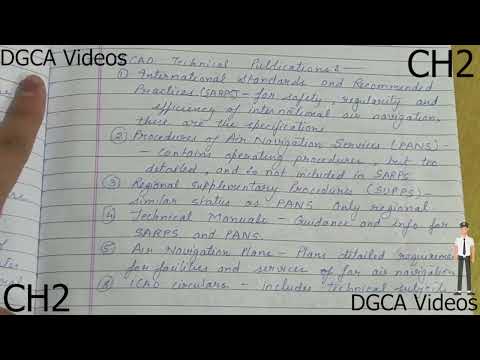
[1:53]So the Paris Convention is the very basic one, it was the very, the earliest one and it is the basic, it made rules on sovereignty, airworthiness, competency of air crew and definitions, etc. Chicago convention is one of the most important one. Under this ICAO was formed and again it is it had made the rules and principles for safe and sound international air transport. Next came the Tokyo Convention, which was in 1963. So it had made rules for the offenses which were created on, which was committed on board aircraft. Next is the Hague Convention, which was held in 1970. This was for the unlawful seizure of the aircraft, that is hijacking. The next one is Montreal Convention. Uh these were held in 1971 also, 88 also and in 91 also. So this was actually an extension of the Hague Convention and uh this were also for the offenses that was committed but that extended up to the aerodromes for the International Civil Aviation also. We'll be reading about it in detail. Next comes the Warsaw Convention, that is for carriage by the air. The Rome Convention, this one is not ratified by India. So that is regarding the damage of person and goods. So who is responsible for that? Next is the Geneva Convention, 1948. So it protects the rights of the sellers and aircraft, of the aircraft. And last one is the Cape Town Convention, which was formulated recently, 2001, aims to encourage investment in aircraft objects. So let's come to the Chicago Convention. It has 96 articles. Remember that. Sovereignty. Then territorial areas, so the aircraft is free to move around, to maneuver, to fly on over its land and the territorial water. State aircraft and civil aircraft. So, uh this is applicable for civil aircraft only, not the state aircraft. The state aircraft includes military, police, etc. So it's not applicable for them. Also, there are various rights that is given to the non-scheduled and the scheduled aircrafts and flights. So coming to the non-scheduled ones first, so it is absolutely free for them to fly on any other contracting states territory or land to its territory as well without for non-traffic purposes. Whereas for the scheduled flight it has to take permission from the other contracting state for flying as well as for making any stoppages. However, the other contracting state, they have all the right to, uh, you know, our require to ask the the non-scheduled flights to take the permission for landing or for maneuvering even in their air space. Again the cabotage means no aircraft without the permission can you know, take off or take on the passengers, mail and cargo without the permission of the other contracting state. in which it is it is staying, right? And then the pilotless aircraft. So no aircraft can be flown without a pilot. First of all it cannot be flown, second of all if at all if it is flowing, then permission is required. Next is the prohibited areas. So we we don't have to enter in the prohibited areas, uh in in either in our state as well as uh state of some other contracting state as well. We cannot go into the prohibited area, it is prohibited. Next is rules of the air. So there are various rules of the air that has to be followed. First of all, we have already read in the previous video about the nationality marks. So nationality mark has to be there in the aircraft. And also, the the rules of the air are kept uniform for all the contracting states of the ICAO. Okay? So that the functioning of the air transport is pretty smooth. Okay. So if the aircraft is flying or maneuvering over some state, then it has to follow the rules of that state, if at all it differs in some or the other way. Or if it is flying in the high seas, then it has to follow the rules of the convention as per the convention. So, uh again, then we have the search and distress conditions. In that cases, there is no reason for the other contracting state to do any delay for searching the aircraft. It if the aircraft has been crashed or any such urgency situation has been created in their state, and the aircraft is of other state. It has no right to delay it, it has to resume its search and rescue operations as soon as possible. Okay. So, uh next comes the registration. So registration has to be done in the state with proper rules and regulations. And dual registration cannot be done. Although it can be well transferred from one states to the other. Um the next comes custom duty. So, uh any aircraft is temporarily free of duty and exempted of all the custom duty in any other contracting state. Um then investigation. So, if there is any accident occurred in some other contracting state, then that contracting state has the right to do the investigation. And the state of registry can appoint an observer so as to keep an eye on whatever is happening there, and these are to be done within the rules of ICAO obviously. Next comes the documents and whatever has to be carried in the aircraft. Okay. So these are the documents. These are the seven main documents that has to be carried. Registration, airworthiness, licenses for all the members, journey log book, radio equipment licenses, passengers log list and their details as in embarkation and disembarkation details, and then the cargo details. Also, if some of the certificates or licenses have not been issued, then they can be endorsed as per the rules. But the condition is that it cannot fly internationally. Again for flying internationally, certain permission has to be required by the state of registry, as well as the state in which it wishes to go, right? Then there are international standards and recommended practices. So for all the contracting states, there are equal and the standard rules that has to be followed. If any contracting state cannot follow, then they have to immediately notify in ICAO, International Civil Aviation organization that they cannot follow it, and they have to tell the difference. As in what standards or what rules they are following for for that period. And if at all that amendment is again, is also they're bringing some changes or they're bringing some amendments and their procedures, then within the 60 days they have to notice the council or tell the council. ICAO International Civil Aviation Organization, it is a UN specialized agency. So it develops principles, rules and techniques, it governs the air navigation for safety purposes and for smooth and efficient flying transport by the air. It takes care of all of these. Its headquarters is in Montreal, Canada. It has seven regional offices, as given in this list. So in Asia it is in Bangkok, Thailand. It has this following structure. So the assembly it consists of 193 UN members including non-members of UNO, the Cook Islands. It they all meet once in three years. Then they all do the election and elect 36 member states which form a council. Within the council there is one president also that they among themselves they elect. And these 36 members form the commissions and committees and the secretariat. ICAO Technical Publications. Again, this is a very important topic with respect to the exams. So International Standards and Recommended Practices (SARPs). So these are very precise and mainly it gives the rules on safety, regularity and for all these air navigation stuff. Next is the Procedures of Air Navigation Services, also known as PANS. So these are actually very much detailed, so they are not included in the SARPs. Right. Next is the Regional Supplementary Procedures (SUPPs). These are similar to PANS, have the same status but they are only specific to some region, only regional specific, right? Next is Technical Manuals. The Technical Manuals are guidance and information as on how the SAPs, SAPs and the PANS are to be used. Next is the Air Navigation Plans. These are actually detailed requirements for facilities and services of for air navigation. Last one, but not the least one is the ICAO Circulars, which includes the technical subjects. ICAO Standards. Please make note that Annexes 2, 5, 7, and 8 are International Standards, but not Recommended Practices. So we'll be going through all the 19 annexes and there is a certain way that I have remembered, if it's helpful for you, I have written it that 3 to 5 is meteorology related, like somewhat related. And then we'll be going forward. So the first one is Personal Licensing. Second is Rules of Air. Meteorology Services, Aeronautical Charts, Units of Measurement. Then sixth one is Operation of the aircraft. Seventh one is Aircraft Nationality and Registration Mark. Eighth one, Airworthiness. Ninth one, Facilitation. Tenth is Aeronautical Telecommunication. Eleventh is Air Traffic Service. Twelve, thirteen, they relate they are related to emergency situations, Search, Rescue, and Accident Investigation. Fourteenth, Aerodromes. Fifteenth, Aeronautical Information Service. Sixteenth is, okay, sixteen to nineteen is safety related. So sixteenth is environmental environmental safety. Seventeenth is for unlawful interference. Eighteenth is for carrying out dangerous goods and nineteenth is safety management. The Recommended Practices Documents are a lot and you cannot mark those up. So just go through these basic ones. 4444 is PANS-ATM. 7030 is SUPPs. 8400 ICAO abbreviation and codes. 8168 for aircraft operation. 7910 location indicators. I don't think they ask that what document is for this. So you cannot, I mean, you can just read it for your knowledge, it's not really important to remember it. Okay. The next topic is International Air Service Transit Agreement. Again this is a very important one because it it has ratified by India and there are five freedom of air within it. So the first two are called the technical freedom and the next three ones, the next three are the commercial freedoms. So India has ratified only for the technical freedom, not for the commercial freedom. So the first freedom of air says that the, well, we can fly without landing. And second freedom of air gives the freedom to land for not non-traffic purposes. So coming up to the next convention, the Tokyo Convention. It was held to deal with the unlawful acts associated with aviation, and it is again ratified by India. So any act that jeopardizes the safety of aircraft and on the person on board. The rules of these this convention applies to them. It's for the flights which is on airborne as well as on the ground or in the high seas. Then jurisdiction. So the state of registry of the aircraft is competent to exercise any jurisdiction over the offenses committed. The other contracting state, it is not permitted to do it unless and until there's a person of that contracting state who over whom this this offense has been done, has been committed. Or the aircraft it belongs to that or contracting state. Then only that contracting state has right to interfere in this. Then there are certain powers of the aircraft commander. If he has reasonable reasons that to believe that the person has committed or about to commit on board an aircraft an offense or act that will impose danger to the person or the aircraft on flights. So he can even restrain some, restrainment measures can be taken by the aircraft commander on board. But he or she is only designated to have to you know, command or keep keep command or make any decisions related to it unless and until it has landed to some other contracting state or its own contracting state and the offender has been handed over to the judiciary or any other authority that cares takes care of all this. Okay, coming to the next convention, the Hague Convention. It is for the unlawful seizure of the aircraft, that is hijacking. India has ratified to this convention. Next is the Montreal Convention. It was held first in 1971. It complements the Hague Convention and it also gives a little bit more, it provides like it extends some more rules to this. So for the violence that has been committed on aircraft, on the people and property for that jeopardizes the safety of the aircraft, destroys the aircraft or any other part of the aircraft that makes it unsuitable for flying, right? All those things it is included it was included in this convention. Then again in 1988 it was extended for the aerodromes that is serving international civil aviation. And then again in 1991, it was for the investigation of plastic explosives for the purpose of detection and that was all about the Montreal Convention. Next coming up is the Ministry of Civil Aviation. As you might know it is responsible for formulation of national policies and programs for the development and regulation of Civil Aviation. So under this the Aircraft Act of 1934 was formed and the Aircraft Rules 1937 was formed. Then again an important regulatory body is a DGCA, which is an Indian regulatory body, which is dealing with again the safety of Civil Aviation and it is responsible for a lot of many factors, for licensing, registration of the aircraft, issuing certificate of airworthiness and certificate to the aerodromes, ATC certificate, etcetera, etcetera. Then comes the Airport Authority of India which was formed on 1st April 1995. So, uh this was actually by formed by merging the International Airport Authority of India and the National Airport Authority. So this was formed to accelerate the integral development and expansion and modernization of operational, terminal and cargo facilities of airports. So it is mostly for control and management of the Indian air space and maintenance, design work of the airport and also provision of ATS services to the air airport for provision of communication and navigational aids and the provision of some other things like you know, the informations like NOTAMs, IRACs. We'll be studying about that in later videos. So it is responsible for all these things. I'm sorry, I'm doing this one. Okay, so this was about the AAI. Next we'll be coming to the Warsaw Convention, 1929. This convention is with regards to the International carriage by air, that is the passenger, cargo and baggage. So it provide under this, there are certain rules based on which the passenger ticket, the baggage ticket, the cargo details, etcetera, all those things have been formulated. Also, the liability of carrier. So currently, the limit for the death of a passenger is SDR 100,000. But, uh, according to the Montreal Convention with, uh, in 1999, again, there were some extensions and some formulation of some other, uh, rules that for the death or injury, there are no limits. And for the damage up to 113,100 SDR, carrier cannot contest for compensation on any claims that has been put upon him. There's again a Carriage by Air Act 1972. So whole of the India follows it. The last but one convention, Geneva Convention protects the right of the seller for aircraft brought on hire, purchase, lease or mortgage. Then there is the Cape Town Convention, which encourages the investment on the aircraft objects. Then there is again certain things like AOC, that is the airport, sorry, Air operator certificate. Or the permit. So this is a certificate you need to have to conduct public transport by flight. Okay. Then there is something called dry lease and wet lease. So dry lease is operated under the AOC of lessee, the company that is taking the lease. And wet lease is operated under the AOC of the lesser, the one who is giving the lease. Okay. Uh also there was the Rome, uh convention that Rome convention is actually not ratified by India and it was again about the responsibility of operator and the pilot regarding damage of persons or goods on the ground. India has not ratified. So that was the end of this video. I have covered almost all the important topics topics of this chapter and I hope you liked the video. If you liked it, please give it a thumbs up and subscribe to my channel if you want to see much any more videos on this topic. I'll be uploading one video daily and if you have any suggestions or any questions or any doubts or anything you want to share, please drop a comment below. Thank you so much for watching. We'll see you in the next one.