[0:00]Depression. Depression is a mental disorder that drains the color out of life. It affects how your brain produces and uses chemicals like serotonin and dopamine, the messengers that help you feel pleasure, motivation, and connection. When these systems malfunction, everything becomes harder. You wake up exhausted even after sleeping for 10 hours. Food tastes like nothing. Hobbies that once excited you now feel pointless. Your brain tells you that nothing will ever get better, and you believe it because depression doesn't feel like sadness, it feels like emptiness. Sadness has a reason, a story, a cough. depression just exists heavy and constant even when your life looks fine from the outside. People say just think positive or go for a walk, but depression isn't a bad mood you can shake off. It's your brain physically struggling to generate the chemicals that make hearing possible. Thoughts slow down, decisions become overwhelming, and getting out of bed can feel like climbing a mountain. You might sleep all day or lie awake all night. You withdraw from friends not because you want to, but because pretending to be okay takes energy you don't have. Over time, untreated depression re-shaps how you see yourself and the world. It convinces you that this numbness is who you really are, that joy was always temporary, that hope is just a lie people tell themselves. The disorder doesn't announce itself loudly. It whispers quietly until you forget what feeling alive used to be like. Generalized anxiety disorder. Generalized anxiety disorder turns normal worry into a constant alarm system that never shuts off. Your brain treats everyday situations like emergencies, flooding your body with stress hormones, even when there's no real danger. Everyone worries sometimes about tests or money or relationships. But anxiety disorder makes you worry about everything all the time. Even things that haven't happened yet and probably never will. You lie awake imagining disasters. You replay conversations, convinced you said something wrong. Your mind jumps from one fear to the next, filling worst case scenarios out of nothing. Physically, your body stays tense. Your shoulders ache, your stomach hurts and your heart races for no clear reason. You feel exhausted because your nervous system thinks it's protecting you from threats that don't exist. Simple decisions become overwhelming because every choice feels like it could lead to catastrophe. Should you send that text? What if they misunderstand? What if they get angry? The disorder steals your ability to relax because your brain has forgotten how to tell the difference between actual danger and imagined problems. People tell you to calm down, to stop overthinking, but that's like telling someone with a broken leg to just walk normally. Over time, the constant tension wears you down. You start avoiding situations that trigger worry, which only makes the world feel smaller and more threatening. Attention deficit, hyperactivity disorder. Attention deficit hyperactivity disorder is a condition where your brain struggles to regulate focus, impulses, and energy. The part of your brain called the prefrontal cortex, which controls planning and self-control, develops more slowly or works differently. This means you want to pay attention, you want to sit still, you want to finish tasks, but your brain won't cooperate. People think ADHD means you can't focus on anything, but that's wrong. You can hyperfocus on things that interest you for hours, losing track of time completely. The problem is you can't choose what gets your attention. Boring tasks feel physically painful to start. Your mind wanders during conversations even when you care about the person talking. You forget appointments, lose your keys, and leave projects half finished, not because you're lazy, but because your brain doesn't produce enough dopamine to make follow-through feel rewarding. Impulsivity makes you interrupt people, buy things without thinking, or say things you instantly regret. You might fidget constantly, tap your foot, or feel restless in your own skin. Time feels slippery. You underestimate how long things take, then panic when deadlines appear suddenly. At school or work, you're called careless, unmotivated, or ditsy, but inside you're trying harder than anyone realizes. The exhausting part is knowing what you need to do while watching yourself fail to do it anyway. ADHD creates a gap between intention and action that willpower alone can't bridge. Obsessive compulsive disorder. Obsessive compulsive disorder traps your mind in a loop of intrusive thoughts and desperate rituals. Your brain gets stuck on a fear, an image, or a terrible what if scenario, and it won't let go. These are called obsessions, unwanted thoughts that invade your mind even when you try to push them away. Maybe you're terrified of germs spreading disease, or convinced you left the stove on and your house will burn down, or haunted by violent images that horrify you. The thoughts feel so real, so urgent that your brain demands you do something to make them stop. That's where compulsions come in. You wash your hands until they crack and bleed. You check the door locks 15 times before leaving. You count, tap, arrange objects in perfect order, or repeat phrases silently. These rituals feel like the only way to prevent disaster, but the relief lasts seconds before the anxiety returns and demands you do it again. OCD convinces you that your thoughts have power, that thinking something bad makes it more likely to happen unless you perform the right action. People joke about being so OCD when they like things organized, but real OCD is torture. You know the rituals are irrational. You know checking the stove 10 times makes no logical sense, but the fear is so overwhelming that you can't stop yourself. Hours disappear into compulsions, your hands hurt, your mind exhausts itself, and the disorder tightens its grip. OCD doesn't make you careful or neat. It makes you a prisoner to thoughts you never wanted in the first place. Post traumatic stress disorder. Post traumatic stress disorder happens when your brain gets stuck in survival mode after experiencing something terrifying. A car crash, violence, abuse, war, or any event where you felt your life was in danger can rewire how your brain processes fear and safety. Normally, after something scary ends, your nervous system calms down and files the memory away. With PTSD, that system breaks. Your brain keeps replaying the trauma as if it's still happening right now. Flashbacks aren't like normal memories where you picture the past. They're vivid physical re-experiences. A smell, a sound or a random sight can transport you back instantly. Your heart pounds, your breathing quickens. And for those seconds or minutes, you genuinely believe you're in danger again. Nightmares invade your sleep, jolting you awake in terror. You become hyper vigilant, constantly scanning for threats, unable to relax even in safe places. Loud noises make you jump, crowds feel suffocating. You avoid anything that reminds you of the trauma, which sometimes means avoiding entire parts of your life. Emotions become unpredictable. Anger erupts over small things. You feel numb and disconnected, even from people you love. Concentration disappears because your brain is too busy watching for danger to focus on anything else. PTSD makes you feel broken, like the trauma stole who you used to be. Your brain is trying to protect you, but the alarm system won't turn off. You're living in the aftermath while your mind keeps dragging you back to the worst moment. Bipolar disorder. Bipolar disorder sends your brain swinging between extreme emotional states that you can't control. There are two poles, mania, and depression. And you cycle between them in patterns that can last days, weeks, or months. During a manic episode, your brain floods with energy and confidence that feels almost superhuman. You sleep two hours and wake up buzzing with ideas. You talk fast, jump between thoughts, and feel like you can accomplish anything. Risky decisions suddenly seem brilliant. You might spend money you don't have, start five projects at once, or believe you've discovered something world changing. Colors seem brighter, connections feel profound, and sitting still becomes impossible, but mania burns too hot. Your thoughts race faster than you can follow them. Irritability spikes when people can't keep up with you. Sometimes the energy tips into paranoia or delusions where reality blurs. Then the crash comes. The manic high collapses into depressive lows where all that energy drains away completely. You can barely get out of bed. Everything that felt possible now feels pointless. The contrast makes the depression even heavier because you remember what having energy felt like. Bipolar disorder exhausts you with its unpredictability. You never know which version of yourself will show up tomorrow. Relationships suffer because people can't keep up with the shifts. Plans fall apart during depressive episodes. Consequences from manic decisions haunt you later. This isn't having mood swings or changing your mind. Your brain chemistry swings between extremes without asking permission, and you're just trying to hold on through the ride. Panic disorder. Panic disorder makes your body sound a false alarm that feels like dying. Your brain's fear center, the amygdala, misfires and triggers a full survival response, even though there's no actual danger. A panic attack hits suddenly, often without warning. Your heart starts pounding so hard you're convinced it will explode. Your chest tightens, making it feel impossible to breathe. Sweat pours down your back. Your hands go numb. And dizziness makes the room spin. You're certain something catastrophic is happening. Heart attack, stroke, loss of control, death. Every physical sensation feeds the terror, creating a feedback loop where fear makes symptoms worse, and symptoms make fear stronger. The attack peaks within 10 minutes, then slowly fades, leaving you drained and shaken. But the real trap isn't the attack itself. After your first one, you develop a new fear, the fear of having another panic attack. You start avoiding places where you panicked before, grocery stores, highways, crowded rooms. You worry constantly about when the next attack will strike, which ironically makes attacks more likely because anxiety primes your body for panic. Your world shrinks as you eliminate situations where escape feels difficult. Some people stop leaving their house entirely. Panic disorder convinces you that your body is dangerous and unreliable. You're not afraid of the world anymore. You're afraid of yourself, of what your own nervous system might do without permission. The disorder doesn't just steal moments. It steals your sense of safety in your own skin. Social anxiety disorder. Social anxiety disorder transforms everyday interactions into performances where you're convinced you'll fail. Your brain treats social situations like threats, flooding your body with fear responses meant for actual danger. Walking into a room full of people feels like stepping onto a stage where everyone is watching, judging, waiting for you to mess up. Before you even speak, your mind floods with worst-case scenarios. What if you say something stupid? What if they think you're boring? What if your voice shakes or your face turns red? The fear becomes so intense that your body reacts physically. Your heart races, your hands tremble, sweat soaks through your shirt, and your voice comes out wrong, too quiet or too shaky. You're so focused on monitoring yourself that you can't think clearly, which makes you stumble over words, forget what you were saying, or go completely blank. After the interaction ends, your brain replays every moment, magnifying tiny mistakes into disasters. You convince yourself that everyone noticed, that they're talking about how awkward you were, that you've ruined their opinion of you forever. This isn't shyness or introversion. Shy people might feel nervous, but can put through. Social anxiety hijacks your entire system, making escape feel like the only option. You start avoiding parties, presentations, phone calls, even necessary conversations. Opportunities disappear because the fear of judgment outweighs everything else. The disorder isolates you while convincing you that isolation is safer than risking humiliation. You're not anti-social, you're terrified of being seen. Eating disorders. Eating disorders hijack your relationship with food and twisted into a method of control. Anorexia restricts eating to dangerous levels, driven by an intense fear of gaining weight and a distorted view of your own body. You look in the mirror and see someone overweight even when you're dangerously thin. Every calorie becomes an enemy. Eating feels like failure, and hunger feels like success. Your brain convinces you that controlling food is the one thing you can manage when everything else feels chaotic. Bulimia creates a different cycle. You eat large amounts in secret, feeling out of control, then purge through vomiting or excessive exercise to undo it. The shame is overwhelming, but the pattern repeats because the disorder promises relief that never actually comes. Both conditions destroy your body slowly. Your heart weakens, your bones become brittle, your hair falls out, and your organs struggle to function. But the physical damage hides behind the mental trap. Eating disorders aren't really about food or weight. They're about control, perfectionism, and trying to shrink yourself when the world feels too big. The disorder speaks in your own voice, disguising itself as logic and willpower. It tells you that eating is weakness, that thinness equals worth, that you're never small enough. Friends and family beg you to eat, but you can't just start because the disorder has convinced you that letting go means losing yourself. Recovery feels like giving up the only thing protecting you, even though that protection is killing you. Borderline personality disorder. Borderline personality disorder makes your emotions feel like a storm you can't escape. Your brain struggles to regulate feelings, so emotions that others experience as waves hit you like tsunamis. Something small, a canceled plan or an un-answered text can send you spiraling into despair or rage within seconds. You feel everything at maximum intensity with almost no middle ground. Relationships become battlegrounds because you're terrified of abandonment. You cling desperately to people, then push them away when the fear of losing them becomes unbearable. One moment, someone is perfect, the next they're terrible, and you can't hold both truths at once. This black and white thinking extends to yourself too. You're either worthless or special, never just human. Your sense of identity shifts constantly. You mirror whoever you're with because you're not sure who you actually are underneath. Impulsivity strikes without warning. You might quit jobs suddenly, spend recklessly, drive dangerously, or lash out verbally just to release the pressure building inside. Self-harm sometimes becomes a way to feel something concrete when emotions become too abstract and overwhelming. People call you dramatic, manipulative, or unstable, but inside you're drowning. Every interaction feels life or death because your emotional system lacks the buffer that helps others stay balanced. You're not trying to cause chaos. Your brain genuinely experiences normal situations as crises. The exhaustion comes from living in constant emotional emergency mode, while everyone around you wonders why you can't just calm down. You want stability desperately, but your own mind keeps holding the ground out from under you. Schizophrenia. Schizophrenia fractures how your brain processes reality. Neurotransmitters like dopamine, misfire, causing your mind to create experiences that aren't actually happening while struggling to organize thoughts that are real. The disorder has two categories of symptoms. Positive symptoms add things that shouldn't be there. Hallucinations make you hear voices commenting on your actions, criticizing you, or giving commands. You might see people who don't exist, or feel sensations on your skin that have no source. Delusions convince you of false beliefs that feel absolutely true. You might think the government is tracking you, that strangers are plotting against you, or that you have special powers. These aren't choices or imagination. Your brain genuinely perceives them as real. Negative symptoms subtract things that should be there. Emotions flatten until you can't feel joy or express feelings naturally. Motivation disappears, making basic tasks like showering or eating feel impossible. Speech becomes disorganized, jumping between unrelated topics, or you might stop talking altogether because forming coherent sentences requires energy you don't have. Movies show schizophrenia as violent and dangerous, but most people with this disorder are more likely to be victims than threats. The real danger is internal, the confusion and terror of not knowing what's real. You can't trust your own perceptions. Voices might tell you terrible things about yourself. Paranoia makes everyone feel like an enemy. Treatment helps many people manage symptoms. But schizophrenia remains one of the most misunderstood and stigmatized conditions, turning a medical disorder into a cultural nightmare. Dissociative identity disorder. Dissociative identity disorder fragments a person's identity into separate parts as a survival response to severe childhood trauma. When a child experiences abuse so overwhelming that their mind can't process it, the brain protects itself by compartmentalizing. Different identity states, often called alters, developed to hold specific memories, emotions, or roles that the main consciousness couldn't handle. These aren't imaginary friends or acting. They're distinct parts of one person's psyche that can have different ages, genders, memories, and ways of seeing the world. Switching between alters can happen without warning. You might lose time, finding yourself in places with no memory of how you got there. Friends mention conversations you don't remember having. Your handwriting changes, your preferences shift, and suddenly, you're holding opinions or skills you didn't know you had. Some alters protect by holding anger. Others comfort by staying childlike, and some contain the traumatic memories so the main identity can function day-to-day. Movies portray this disorder as dangerous or supernatural, but the reality is far more painful. You're not multiple people. You're one person whose mind shattered under pressure too great for a child to bear. The disorder creates internal chaos where different parts might conflict, cooperate, or remain unaware of each other. Rebuilding a coherent sense of self requires years of therapy. The fragmentation that once protected you now makes daily life feel like navigating without a map. Never fully sure who's in control or what memories are hiding just beneath the surface.
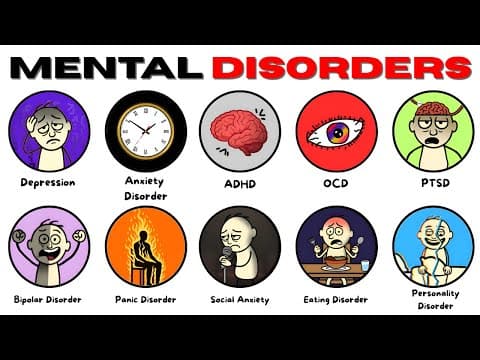
Every Mental Disorder & Their Effects Explained
EverythingProfessor
17m 39s3,017 words~16 min read
Auto-Generated
Watch on YouTube
Share
MORE TRANSCRIPTS