[0:04]If you like this video, share it on social media. This is a new channel and it helps us a lot. So you have woken up in the morning and whether it be by a freaky Friday or half of Ryan Reynolds movies, you have become Wes Anderson. Firstly, congratulations, can I please have a job? And secondly, you have to make his next movie. Or your next movie. Now, don't freak out. We here at the film guy channel have got you covered with some tips and tricks to help you more confidently make your Wes Anderson movie. Firstly, you need to educate yourself in a large array of TV and cinema, as Wes has taken influence from many different places, such as the cinema of the French New Wave, films like Piero Le Fou or Lola, and especially films by Francois Truffaut, like the 400 Blows and Small Change. Then look at Indian British filmmaker Waris Hussein. We suggest looking at his film Melody, as that one especially has a lot of influence on his earlier works. But it's not limited to Europe. Check out American cinema. In Wes's work, you can see references to The Graduate, The French Connection, Citizen Kane, Star Wars, and even Peanuts. It's important to remember that he isn't limited to one style of cinema. It's the combination of many styles that forms his own. So this is important. Almost every Wes Anderson movie is about father and son relationships and or dealing with the death of a parent. Fathers trying to connect with their sons, sons trying to connect with their fathers, a boy that is in need of a father, fathers and sons trying to find each other, and a boy latching on to a father figure. So as long as you base your film's plot around some form of these concepts and fill it with quirky dialogue, you'll be on the right track. Also, speaking of the plot of the film, don't forget to add a romantic sub-plot. It's something he always adds to his films as it allows him to give the audience a breath in between the main story beats. And it also makes the movie feel like it's still moving forward when the characters aren't really doing anything important. Now, let's look at your main character archetype. With few exceptions, they should be male and be a very flawed character, whom is also extremely charismatic. I'm afraid that's me, darling. It's their charisma and confidence that allows them to overcome their flaws, which in turn attracts a group of people to follow and support them in their antics, even though they are on a spectrum between a slight and total idiot. And Bob, remember, shield me from the bullets. They won't shoot civilians. You may be thinking, hey, what about the women? Wes seems to have trouble writing interesting roles for female characters. Ladies can be in the movie, but with few exceptions, they're mostly there to save the men from themselves or to be a prize or a motivation for the male characters. By the way, have you attended a film school? If so, you would remember when they talked about the importance of composing your shots to be as dynamic as possible and to have depth. Okay, now forget all that. As Wes Anderson, you should compose your shots flat and symmetrical whenever possible. You will often want to give the impression that your film is like a storybook. And shooting this way to some makes the characters feel more drawn than captured, while also allowing the shot to shot play out of scenes to be more easily followed. Most directors want their audience to forget they're watching a movie, but that's not what you want. From how you stage your actors, to how you stage your shots, to how you move your camera. It's all designed for the audience to realize they're watching a film. It's how you're able to make almost all your films black comedies, dealing with serious scenarios, but presenting them for laughs. Whether it be doing the unthinkable and killing a dog or even worse, Jeff Goldblum. It's never taken too seriously because the style creates a safety barrier or dissonance between the audience and the emotions of the narrative. Okay, so let's talk about color. You have to be very particular with your color palette of choice. Each shot should consist of about four to five main colors in your design, your set, and costumes. This goes back to making the movie feel like a children's storybook but also makes everything look and feel very twee. Especially when you give a group of your characters uniforms. Think of a 60's fashion magazine cover without necessarily that era style. Here are a few Wes Andersonisms you should include for added detail. Tracking shots, shots from above, zooms, wide angles, physically having the movie's title in the movie, characters mapping out a plan, smoking, someone dying or have had died, lots of onscreen writing, and a bit of sweet ending. This is all a lot to take in and if I was in your situation, I'd likely be stressing out. But it's okay. You're not alone. As Wes Anderson, you will constantly work with a combination of your friends like Bill Murray, Jason Schwartzman, Edward Norton, Tilda Swinton, William Defoe, and the Wilson brothers to name a few. They love working with you because you are one of the few directors today who's still making great mid-budget original movies. You know exactly the film you want to make and are excellent at translating that to the screen. And as a lot of your friends have said, you make filmmaking fun. So relax. Thanks to these tips, you're on your way to making your Wes Anderson film. Probably. Anyway, guys, this has been Drew reading on behalf of the film guy. Please check out his Patreon campaign. Also, if you're new to the channel, then hit that subscribe button and alert button. If you like this video, you may like our breakdown of David Fincher or this other one on Zach Snyder. You can follow him on Twitter and Instagram at The Real Film Guy. Or if you like my voice, you can also follow me on Twitter at T.E.S.Drew. That's it for now. We'll see you again soon.
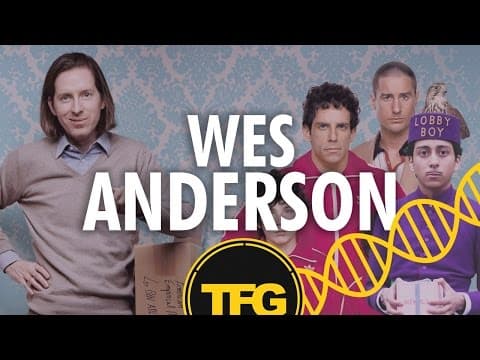
How to Direct Like Wes Anderson - Style and Trope Breakdown
The Film Guy
5m 34s1,067 words~6 min read
YouTube auto captions
Transcript source
YouTube auto captions
This transcript was extracted from YouTube's auto-generated caption track. The transcript below is server-rendered so it can be read, searched, cited, and shared without opening the original YouTube player.
Pull quotes
[0:04]So you have woken up in the morning and whether it be by a freaky Friday or half of Ryan Reynolds movies, you have become Wes Anderson.
[0:04]We here at the film guy channel have got you covered with some tips and tricks to help you more confidently make your Wes Anderson movie.
[0:04]We suggest looking at his film Melody, as that one especially has a lot of influence on his earlier works.
[0:04]In Wes's work, you can see references to The Graduate, The French Connection, Citizen Kane, Star Wars, and even Peanuts.
Use this transcript
Related transcript hubs
Watch on YouTube
Share
MORE TRANSCRIPTS


