[0:00]Today I want to look at how the global economy will collapse, specifically how the US economy will collapse because of this war. Now, the argument I want to make to you today is that financial collapse do not happen accidentally or naturally. It has to be engineered. And this is a very hard concept for us to understand, okay? So in economics, there's something called the boom bust cycle. Which basically states that in capitalism, you have the economy booming, then suddenly for whatever reason, it collapses, okay? It's called the boom bust cycle. And the idea is that if you study economics, they teach you that this is just a natural part of capitalism, because in good times people spend too much money. They become overconfident, and so then they waste a lot of money and then it collapses the economy turns bad, and so you have to focus on being more lean and efficient and resilient. So think of, you know, gaining weight, okay? You're gaining too much weight and then you feel bad, so then you lose weight, and that's the idea of the boom bust cycle. The problem though is that no one can explain properly how and why suddenly the bubble pops, okay? What is the mechanism or trigger for the collapse? Let's just say you're a bank, alright? You're a bank, and your job is to take those money, save it, and then use it properly in order to promote the economy. So let's just say, we put $1 million into the bank, and what does the bank do with it? The bank then lends it out to entrepreneurs, right? So maybe I want to start a restaurant, and so I borrow a million dollars from the bank, okay? Question, how much money is the bank now? It's zero, right? Okay. That's that's math, guys. Look, if I take in a million dollars and I lend it out a million dollars, I should have zero, because that's just basic math. But that's not the answer. The actual answer is $2 million. What you need to understand is that each bank has the ability to print its own money. And the bank is a mechanism for liquidity in the economy, okay? And this is a great illusion. The this is a delusion, okay, behind the economy where money is just a it's just an idea, it's a concept. It's a collective hallucination. But the problem is, there are thousands, tens of thousands of banks everywhere, so how do they know how to coordinate together, okay? And there's something else you need to understand about the system. There's actually something called a signaling mechanism. So all these banks are separate, but they are linked together into something called a central bank, okay? central bank. Now, what does the central bank do? The central bank signals whether or not to lend money or not to lend money. And it's in this mechanism that is called the interest rate. Now, again, if you show economics, what they will teach you is that depending on the interest rate, if it's low, maybe 1% or 5% or high 5%, then that will determine how consumers behave. If the interest rate is 1%, what this means is I can go to the bank, get money and buy a house, high 5%, then I don't want to go to the bank to buy a house. And this is what you're taught in economics class. But there's actually another explanation, which is the interest rate is not to signal consumers or homeowners to buy, but rather for banks to lend or not. It doesn't make sense, because the banks, what they can do is, depending on the interest rate, they know that okay, my job is to release more liquidity into the system, release more money into the system, and therefore I will make it easier to take out a loan, okay? So for the longest time, the Chinese currency was trading above eight US dollar. Remember, the US dollar is the main mechanism is the main mechanism, um, of global trade, and then, hey, during around this time, 2008, guys, it's hard to increase in value, okay? And so now the world knows, oh, I should trade with China, and China's like, well, okay, my exchange rate is higher than before. Therefore I should buy more things from the world, okay? But not only that, but now that I have access to commodities from the world, that I should that then I should know I need to promote my economy to use these resources. So I should spend more money on infrastructure, I should build more high-speed railways, I should build airports, okay? And that's what China did. You see how in 2008, just as the American and European economies were suffering, the global economy was suffering, the Chinese economy, China started to have a high exchange rate, okay? And it kept on going higher, higher and higher. And then what what what is China start to buy stuff from around the world with it, okay? Again, this is a signaling mechanism where the Bank of National Settlements is saying to the world, you can now sell to China. We will guarantee China, alright? And and that's because the Bank of National Settlements needed China to buy more things from the world. And this happened in starting around 2008, right? This massive surge in imports. And because all the commodities were coming into China, China China to spend these commodities, so started to build infrastructure, right? And and how did it finance the building of this infrastructure? Bank loans, guys. Bank loans, alright? So this is China. This is this is China, right? Look at this, look look at this. This is China. 2008. 2008 basically China, US, Japan, Europe. The economies were about the same. The bank systems were about the same. But starting about 2008, wow, look at this. This is all being orchestrated by the Bank of National Settlements. By a few people working behind the scenes. Look at this. Look look how crazy this is. Alright? So what what does this mean? It means that today, China has the largest banks in the world. This is JP Morgan, the largest bank in America. This is Chinese, this is Chinese, this is Chinese, this is Chinese, this is Japanese, okay? The top four banks in the world are Chinese. Why? Because in the in the bank system, debts are liability. Sorry, debts liabilities are also assets. Do you understand? All this money that the Chinese the Chinese banks have are just liabilities, okay? So this is how the system works. It's all just an illusion. Um, the thing about the Chinese system that prevents it from imploding is the fact that all debt in China is localized, instead of nationalized, all right? So even though these Chinese banks are heavily in debt, it's they're in debt in local areas, not national areas, okay? And all this means is that the Bank of China does not have that much debt relative to say the Bank of Japan. So debt in Japan is nationalized, debt in China is localized. So another major consequence of China, the Chinese the growth of the Chinese, um, banking system is that China started to export its goods around the world more, okay? So as you can see, in the year 2000, America really dominated the world in manufacture export, okay? But by the year 2024, look, it's basically the entire world is buying Chinese exports, all right? And so this is a deliberate strategy of China's national capital to move the center of gravity from the United States to China. And but the problem with China, the reason why China has not become the hegemon, is that China's not interested in being the hegemon. In other words, military power. Also, as China is expanding its manufacturing capacity to the world, who's upset now? The United States, right? And so what the United States does is it imposes tariffs. It doesn't make sense, right? So in other words, okay, even though in theory, okay, the theory is is that the goal of the bankers is to maintain the game, okay? That's all they care about. So they want to switch from America to China, but it didn't really work because China doesn't really want to take responsibility of being the global reserve currency, as well as having military bases overseas. Alright? So China, China doesn't want to do this, and America won't let China do this. So your only option now is Israel. And that's why I believe that this war in Iran, what it will do is shift the center of gravity from America to Israel, because Israel wants to be the center of the world, not China, okay? That doesn't make sense, guys, all right? The other thing you have you have to understand is that for this to happen, though, transnational capital needs to first collapse the American economy. And there are different ways they can do that, right? They can collapse a private credit bubble, they can collapse the AI bubble, they can collapse both at the same time. And why would they want to do that? Because as a banker, as a transnational capitalist, you make your money through activity, right? When people go and do stuff, whether it's entrepreneurship or starting wars, but they have to go do stuff, and right now America has a lot of problems, okay? So so let's let's look at America's problems. First is aging, where the elite are now older and older. They therefore they are less active, they are less energetic, they are less entrepreneur, okay? Then you have something called quan of easing, which is just too much money in the system. If too much money in the system, then people do stupid things like gamble, okay? Alright? And the last problem with America is you can't win wars, like this Iran situation is showing that America the the American military is not as strong as you think it is. So if you're transnational capital, you see these three things, okay? The population is getting too old, too much money around, so people do stupid things like gambling, and America the American military is not that great. Then you're going to shift your capital from America overseas, okay? But but before you do that, what you want to do is engineer a financial crisis so that you can make as much money as possible. just like the 2008 financial crisis, okay? So we don't know when it will happen. We're going to be sure that it will happen, it will be suddenly, okay? Okay. Hey, it doesn't make sense, guys. Now, you're like, wait a minute here. Why why would Trump and Americans allow this to happen? They they must know this is coming. And the answer is, because it is in a long-term best interest of America for the economy to collapse and for transnational capital to go elsewhere. And this is something we'll discuss next class, okay? What the long-term American strategy is is transnational capital is leaving America. So and Americans are like, oh my God, Bank of England, City of London. These parasites are leaving. Thank you. Get out of here, man. Okay? And what will happen is once they leave, America will probably have a much brighter future. And something we'll discuss next class. But if the interest interest rate is high, then I know, okay, I must not release too much liquidity into the system. Therefore, I will make the loan application hard, okay? So, in other words, the interest rate is not it is not set in order to guide consumer behavior. It is set in order to coordinate liquidity in the marketplace. The the big question is, why did the financial market collapse? So this is the CDO issuance, okay? And as you can see, it's generating a lot of money for these private banks, and then suddenly in 2008, there's this massive default, it collapses. Question is, why did this happen? And again, you're taught in an economics class, this is just a law of gravity, okay? If you go too high, you're going to fall. But what people don't tell you is this, there are actually people who made a lot of money because of the collapse. John Paulson. How much money did he make in this collapse? $20 billion, guys. That's a lot of money. $20 billion. How did he make his money? He made his money by betting that the house market would collapse. You understand what happened, okay? So so think about this, okay? I lend a million dollars to Amber, okay? And everyone you have to pay me back $10,000. But then suddenly you can't pay me back, right? But if I tell you, Amber, you can't pay me back, you have to give me your home, okay? Then I lose my investment in you, right? So I don't do that. I I keep on letting you live in the house, pretend that you can pay me back, even though you can't pay me back. But then Vincent says to me, hey, Mr. Yap, I bet you that Amber will not default on her loan. Because she hasn't defaulted in the past 10 years. I say to Vincent, how much you want to bet me? And he's like, half a million dollars, okay? He's so confident that you will not default, right? So I say, sure, Vincent, I'll take this bet with you, right? Now what do I do? Now I make you default, because now I can make a million dollars from Vincent. And that's how it worked, guys. You think it's a very complicated thing. It's not. It's all a giant scam. Because only a few people control the entire system. This is how you make $20 billion in this game, okay? There's stupid people buying from you, right? But then you have even more stupid people who bet that you will not default on these mortgages, and you so you take your money from the stupidest people. And that's why the system collapsed, because you're going to make more money from collapsing the system than just letting it go on, okay? This is John this is John Paulson. This is Jimmy Diamond. And he also profited from the bank collapse. Why? Because when these banks collapse, you can start to consolidate the bank industry, okay? So JP Morgan started to buy these other banks that were losing money, and then JP Morgan now now is the largest bank in America. Alright? Also, guys, look at this. Before 2000 and and, uh, eight, most homes were actually owned by individuals, okay? This is 2008, okay? So so the gray are just individuals. They might have one home, they might have 10 homes, but they're basically individuals. The blue are those who own more than a thousand houses, and then the dark blue are those big banks that own like 100,000 of homes, okay? So before 2008, you can see like most people were in the gray, okay? These are just individuals. But then, after the collapse, you see the blue and the dark blue rock go way up. Why? Because these homeowners lost their homes, and so these banks, and these companies can come in and buy them on the cheap. Doesn't make sense, right? So it's not so the great financial crisis of 2008 destroyed millions of lives, but it made it it made it profitable for a few powerful individuals and institutions, okay? Right. A major consequence so so then you're like, okay, no, no, no, no, Mr. Jian, you don't get it. It's gravity. Eventually, a bubble has to collapse. Well, okay. Well, today we have two bubbles. We have something called the private equity bubble, private credit bubble, okay? Where private banks lend money to private companies, and people say it's $200. And it hasn't collapsed yet. Why? Because the private banks allow the private companies who are losing money to keep on going. You understand? The private banks don't come and say, hey, you guys are losing money. I you should declare bankruptcy, and I'll take whatever you have, because you lose a lot of money that way. Do you understand this idea? These folks can keep on going forever. They don't have to collapse. Another big bubble today is something called the AI bubble, right? These companies in Video, Open AI, when they their AI products don't actually make any money. Like chat GPT does not make any money. In fact, it loses money every every time you use it, okay? Because it's more expensive to run chat GPT than it generates in revenue. But it's it's a huge bubble. But why doesn't it collapse? Because these are just a few companies lending money to each other, okay? That's all it is. It's a giant Ponzi scheme. It's an inside game. So bubbles don't have to collapse. They collapse when it's profitable for a few individuals to make it collapse, all right?
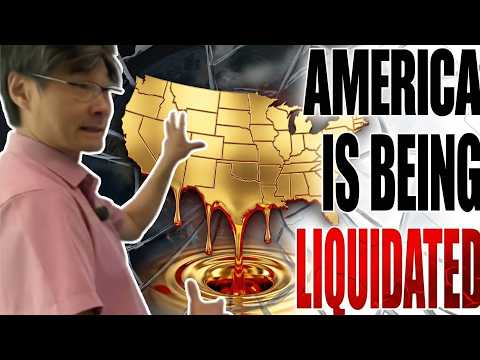
America Is Being Liquidated. Here's Why No One Can Stop It – Prof. Jiang Xueqin
Prof Jiang Media
16m 0s2,883 words~15 min read
YouTube auto captions
Transcript source
YouTube auto captions
This transcript was extracted from YouTube's auto-generated caption track. The transcript below is server-rendered so it can be read, searched, cited, and shared without opening the original YouTube player.
Pull quotes
[0:00]Today I want to look at how the global economy will collapse, specifically how the US economy will collapse because of this war.
[0:00]Now, the argument I want to make to you today is that financial collapse do not happen accidentally or naturally.
[0:00]Which basically states that in capitalism, you have the economy booming, then suddenly for whatever reason, it collapses, okay?
[0:00]And the idea is that if you study economics, they teach you that this is just a natural part of capitalism, because in good times people spend too much money.
Use this transcript
Related transcript hubs
Watch on YouTube
Share
MORE TRANSCRIPTS


