[0:06]How little we really know what goes on inside a man. Yes. It's the only published novel by this 19th-century Irish writer and poet. Oh, very kind.I look forward to collecting the royalties. Welcome to watchmojo.com, and in this installment of Mojo Notes, we'll be exploring 10 things you should know about Oscar Wilde's The Picture of Dorian Gray. Number 10, About the Author. Born in Dublin, Ireland in 1854, Oscar Wilde was exposed to the worlds of medicine and culture by his successful parents. While studying the classics and reading the greats during college, he joined artistic and literary movements. He became known for his writing, especially his poems, plays, and soul novel during the late 19th century. They loved it, they absolutely loved it. After being imprisoned for his lifestyle choices, Wilde succumbed to illness in 1900. Where have you been?I've had no one to talk to, no one to look after me. Don't be so pathetic. Number nine, Influences and Inspirations. As his writing style developed, Wilde's aesthetic ideas also grew. I think that the realization of oneself is the prime aim of life, and that to me youth, the mere fact of youth is so wonderful. that I would sooner talk to a young man for half an hour, then, well, then be cross-examined in court. This was evident in his first and only novel, The Picture of Dorian Gray, in which he contrasted art's beauty with the beauty of real life. More I look, more I see. The novel contains elements of Gothic fiction with a strong tone, as demonstrated by the temptations that Dorian Gray yields to that eventually corrupt his soul.
[2:01]Number eight, Settings and Era. First published in 1890, The Picture of Dorian Gray is also set in the late 1800s, when the decadent movement was in full swing. Are you sure you want to take a cigarette?I get them directly from Cairo. However, as part of this movement, Dorian Gray's indulgence in life's pleasures above all else was contrary to the ideals of Victorian society. By living his life in both London's West and East ends, we're shown the two parts of Gray's personality. The outgoing notorious socialite aspect, versus his dark and CD side.
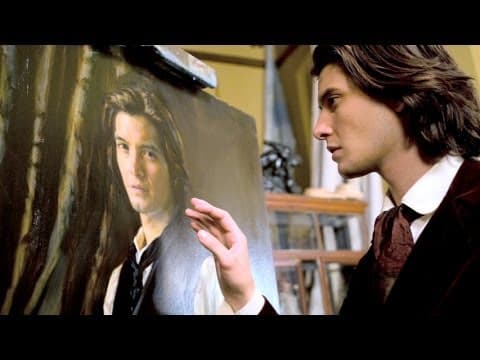
[2:44]Number seven, Plot. He was to have eternal youth while the portrait bore the burden of his shame. Told from the third-person point of view of an anonymous narrator, the book follows Dorian Gray's downward spiral from a beautiful young man to a selfish, pleasure-seeking criminal. He had always the look of one who had kept himself unspotted from the world, then suddenly some night he would go down to dreadful places near blue gate fields and stay there day after day. After Basil Hallward paints Gray's portrait, Lord Henry Wooton persuades him that beauty is the only thing in life worth pursuing. There's such a little time that your youth will last, and you'll never get it back. He breaks the heart of a young actress and spends the next two decades doing whatever he pleases. Henceforth I shall live only for pleasure, everything else is meaningless. But with every sin he commits, Hallward's portrait becomes more and more hideous, revealing Gray's true nature and driving him mad. You told me you had destroyed my painting. I was wrong, it is destroyed me. Number six, Dorian Gray. Dorian Gray had never heard the praise of folly so eloquently expressed, the creed of pleasure sown into a philosophy of life, while Dorian stood as if he were under a spell. Even in his youth, Dorian Gray is good-looking and vain. But once he's introduced to Lord Henry Wooton's immoral opinions, he becomes focused only on pleasure. Filled with curiosity about places and people remote from his own experience, he wanted to the half world of London. The words of Lord Henry vibrating in his mind, live. Let nothing be lost upon you, be afraid of nothing. As the years pass and his immorality increases, Gray discovers he's ageless and hasn't had to pay for his crimes. Instead, it's Hallward's painting that grows older and more horrifying. It was as if the painting had sweated a dew of blood. Though he tries to destroy the painting, Gray ends up destroying himself. But when the knife pierced the heart of the portrait, an extraordinary thing happened.
[5:11]Number five, Basil Hallward. Basil Hallward is an artist who makes his friend Dorian Gray the subject of his artistic masterpiece. Sublime.Sublime. Unlike Gray, Hallward has a strong moral conscience and expresses concern for his friend. Something has changed you completely, Dorian. You look exactly the same. You talk as if you had no heart, no pity in you. Unfortunately, this concern leads to his demise when Gray kills him in anger.
[5:53]Number four, Lord Henry Wootton. Also known as Harry, Lord Henry Wooton is Basil Hallward's friend. It's your best work, Basil, the best thing you've ever done. Of course I can't believe that anyone is really as handsome as that portrait. After meeting Dorian Gray, he doesn't hesitate to push his opinions on the young man and manages to convince him to adopt a life of pleasure over pain. There's no such thing as a good influence, Mr. Gray. All influences immoral. As a member of the decadent movement, he is in stark contrast to Victorian ideals and can be seen as the catalyst that triggers Gray's downfall. Every impulse that we suppress broods in the mind and poisons us. There's only one way to get rid of a temptation and that's to yield to it. Resist it, and the soul grows sick with longing for the things that it is forbidden to itself. Number three, Values and Themes. One of the novel's main themes revolves around aestheticism and Dorian Gray's double life. In the West End, he's a celebrity reveling in wealth and life's pleasures. While in the East End, he associates with lowlifes. Since Gray has essentially sacrificed his soul for eternal youth and beauty, there's a Faustian element to the tale, which leads to tragic results. Because if your painting this will never age, never a scar. Other themes also explored include good versus evil, mortality, and the corruption of innocence. Number two, Modern Popularity. Though it was initially criticized for its lack of ethics, the story's literary merits eventually won out. Wilde did have to make some modifications, but even so, The Picture of Dorian Gray is now considered a classic of urban Gothic fiction and has a strong message that resonates with many.
[7:56]Number one, Adaptations.
[8:02]Many of the novel's themes, especially Dorian Gray's pursuit of the Fountain of Youth, have been a human preoccupation for centuries. So, it comes as no surprise that the novel has inspired ballets, operas, music, books, and screen adaptations. The most well-known and well-received film version is perhaps the Oscar-winning 1945 flick. It was as if some moral lepros were eating the thing away. What are your favorite pieces of Dorian Gray trivia? For more informative top 10s published every day, be sure to subscribe to watchmojo.com. Oh, boy.
[8:44]Who can bear to look at you now?