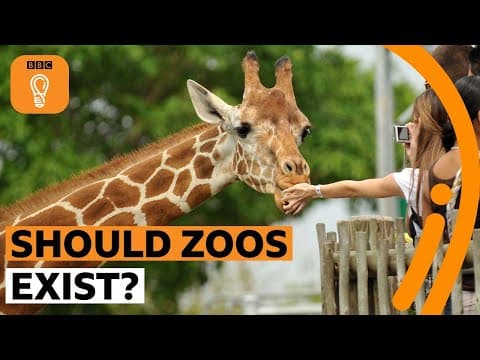
[0:00]Zoos have changed out of all recognition. There are quite a lot of different species around the planet, which we wouldn't have today if it wasn't for zoos. What do you think an ideal zoo would look like? Closed.
[0:17]All through history, we've seen royal families, the powerful people, emperors have collections of animals. The king who is a good hunter was probably a good warrior, probably protected his people. Killing a lion or a bear was a big deal, but bringing back a live one showed even more power. Virtually all the history of zoos is about human control of nature. And it was a way of showing off. Queen Charlotte, her gift to everybody that she liked was to give them a kangaroo. And eventually, we get the first modern zoo opening in London in 1828. to be able to suddenly see a giraffe for the first time, probably was absolutely bonkers. Animal welfare was not a big priority in the early days of zoos. wasn't really an appreciation of animals needing certain things to have a good life. So you would see them in barren boxes effectively, just as you would see a specimen in a natural history museum. The story was here's an object divorced from habitat, divorced from evolution. His name is by the way, knucklehead. knucklehead. Well, there's a rule, tapers are rather stupid and unintelligent. Animals were thought of as basically automatons, just responding in a reflexive manner with no feelings of pain or any kind of emotional depth. But that's really shifted. Now, there's much more of an understanding that we really need to look at their own type of intelligence and how they live in their world.
[1:47]Many zoos now put a big emphasis on education and conservation. The school children that come here to the wildlife park, all of them go away, learning the messages that we know for sure are going to make a true difference to the animals back out into the wild. The biggest threat to wildlife comes from people, and most people live in cities, so zoos are very important because they provide an educational opportunity for people to learn about what the impacts of their daily activities are in far away places. The zoo by becoming a public attraction, if it's done properly, it seems to me like a pretty good idea. The animals have a good life, people enjoy it, they learn something, hopefully they get involved in conservation. pretty much all good zoos throughout the world are are participators or they help to support and fund a whole host of insti conservation programs. And if it wasn't for those programs, the world would be looking very different right now. Captive breeding programs in zoos have reintroduced several species to the wild, saving them from extinction. California Condor, Arabian Oryx, Black-footed ferret. Zoo populations of animals are insurance populations. Certain species due to what's going on on the planet at the moment, the only way that we can stop them from going extinct will be to bring them into captivity, as we learn to adapt to things like climate change. We are going to see an increasing role for zoos. But not all zoos have animal welfare at their hearts. You can visit zoos all over the world that are just awful. You know, they're as bad as they were in the 1920s. In the US, they don't have very strict animal welfare laws. People can have animals in their back garden and call it a zoo. There are more pet tigers in the US than there are tigers in the wild. The legislation doesn't permit that kind of thing here in the UK, but you can get bad zoos anywhere. Captive animals sometimes display abnormal repetitive behaviors like pacing, swaying and hair-plucking. Those are all signs that they're missing out on some important aspect of how they live in the wild. The complexity of providing a good life for some of these animals, that's actually really, really difficult. And critics say the positives of even good zoos can be overstated. There is some evidence that people will know more facts about a particular animal, for example, but follow-up studies to see if they've actually changed their behavior to benefit conservation. There's not much evidence to suggest that is happening. The official statistics show that 4% of revenue goes back into conservation. I mean, that's minimal, that's very small. And what do you find in zoos, big cats and elephants and zebra and things that don't get released back into the wild? So if you want to save the condor, then you can have an in situ conservation program that's based in the country where they come from. So what could replace the zoo experience? Most five-year-olds are experts in dinosaurs. They've never met one or seen one. The fascination's there and I think the same can be harnessed with animals. There's many other technologies that are being developed these days, like awesome CGI, awesome robotics. I think the future holds something really cool in the sense of learning about animals without the detriment of keeping them in captivity. Virtual reality with wildlife encounters is really coming on. Taking a virtual walk through a herd of elephants in the Serengeti, I think it's going to be possible pretty soon.
[5:25]Do you think zoos should exist? It's kind of strange that we transport all of these animals from far from home and keep them locked up, where you should see what nature has to offer on your doorstep. Wildlife documentary, virtual reality, none of these things have the same positive emotional impact that a zoo has. 10% of the global population visit zoos every year. People from all walks of life and all social classes. So I think without zoos, we'd lose a massive opportunity to keep people being interested in the wild environment. How can we create a world where we don't need zoos? What I'm hoping is that we can design super sustainable cities so that you don't need to go to a place to see animals. They're all around you.
[6:17]Thanks for watching. If you enjoyed that, be sure to check out these videos next, and if you haven't already, hit the subscribe button and click the bell to get a notification each time we upload a new video.


