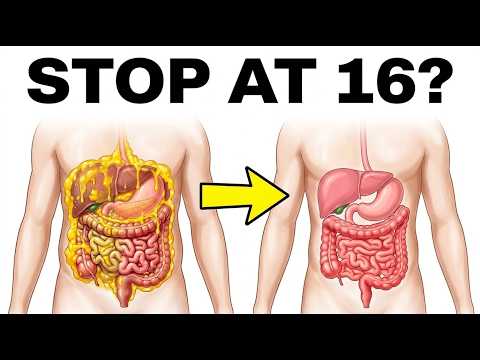
[0:00]Most people doing intermittent fasting are stopping four hours too early. Not because they lack discipline, because they were given the wrong target, and the biology of what actually happens between our 16 and our 18, makes that gap the most expensive mistake you can make inside the fasting window. Here is what is happening in your body right now. If you are following the 16-8 protocol that every fitness account on the internet recommends, you are fasting long enough to feel virtuous, and eating in a window wide enough to cancel most of the cellular repair and fat burning chemistry that fasting was supposed to trigger in the first place. The 16-hour mark is not the finish line, it is the starting gun. I'm going to walk you through every meaningful stage of a fast hour by hour and show you exactly what your body switches on and switches off at each one. At the end, I will give you the burn protocol, three specific adjustments, each with exact numbers that separate a fasting window that actually burns fat from one that mostly makes you skip breakfast and feel superior about it. I read the studies. I am going to show you what they actually say, not what the fitness industry simplified them down to. The invisible villain in this video is insulin, and before you roll your eyes because you have heard about insulin before, let me tell you what most explanations get wrong about it. Because it is not a sugar handling hormone in the way the wellness world describes it, it is the physical lock on your fat cells. As long as insulin is elevated above a certain threshold in your blood, the enzyme inside your fat tissue that releases stored fat, an enzyme called hormone-sensitive lipase, is actively blocked, shut off. Insulin is not discouraging fat release, it is preventing it at the molecular level, and the uncomfortable fact that almost no one mentions in fasting content is this. Even a small insulin elevation, the kind that does not even register as a spike on a glucose monitor, is enough to keep that lock engaged. This is why what you eat before your fast begins matters far more than most fasting guides will tell you. We will return to this several times, but first, let me start the clock, hour zero. You finish your last meal, it does not matter whether it was dinner or lunch, the timeline begins from the last bite. The moment you stop eating, your gut is still processing what you just consumed.
[2:37]Your small intestine is absorbing nutrients, your pancreas is releasing insulin in response to the glucose entering your bloodstream, for the next two to three hours. You are in what researchers call the postprandial state, a clinical way of saying your body is actively using the food you just ate. Stored fat is not being released because your body does not need it. The fuel source is sitting right there in your gut and your blood. Think of this stage as the body receiving a delivery. The warehouse doors are open, product is coming in and nothing is being pulled off the existing shelves, hour three to hour four.
[3:17]The delivery slows, gut absorption is mostly complete. Insulin begins to fall, but here's something the standard fasting guide does not address. Insulin has a half-life in the bloodstream of roughly four to six minutes, which sounds fast. But the metabolic effects it produces last much longer. Your fat cells do not immediately receive the signal to open up just because circulating insulin is declining. The system has lag time built in. Your body is conservative, it does not want to mobilize stored energy when there might be more food arriving in two minutes. So even though insulin is dropping, you are still not in a meaningful fat-burning state. The warehouse doors have closed, but the reserve inventory is still being counted before anyone decides to pull from storage, hour six. This is where most people find themselves when they wake up in the morning if they stopped eating around midnight. The post-absorptive state has officially begun. Your blood glucose is now being maintained not by incoming food, but by your liver, which is releasing glucose from its glycogen stores, a form of stored sugar kept specifically for between meal periods. Your liver holds roughly 100 grams of glycogen at maximum capacity. Your skeletal muscles hold between 400 and 500 grams. These combined stores are your body's immediate fuel reserves, the gas tank that fills with food and empties between meals. Insulin is now low enough that some baseline fat oxidation has begun, but it is modest. It is the maintenance level burning that keeps your metabolism ticking during sleep. This is not the dramatic fat mobilization that fasting advocates describe. This is the body idling, hour eight. Liver glycogen depletion has accelerated but is not complete. Your body is now ramping up a process called lipolysis, the breakdown of triglycerides stored in your fat tissue into free fatty acids that your cells can combust for energy. But there is a precise condition required for lipolysis to operate at full capacity. Insulin must be genuinely low and glucagon, the opposing hormone that signals scarcity, must be meaningfully elevated. By hour eight, you are trending in the right direction on both counts, but you have not crossed the threshold where the system commits to high output fat mobilization. Your body has accepted that no immediate food is arriving. It has not yet concluded that food is genuinely scarce. That distinction drives everything that follows, hour 10. You are now past the point where most people who skip breakfast consider themselves solidly in their fast. And here is something the mainstream fasting community consistently under emphasizes. The state of your liver glycogen at hour 10 varies enormously based on the composition of your last meal. If that meal was high in refined carbohydrates, white rice, bread, pasta, sweetened sauces, dessert, your liver glycogen was topped off to maximum capacity. Depletion from full takes longer, meaning your body is still burning stored glucose well into what you think of as fat-burning territory. If your last meal was lower in refined carbs and higher in protein and fat, your glycogen stores were smaller at the starting line, and your body has already made significantly more progress toward the fuel switch. This is not a minor detail. It means two people following what looks like an identical 16-8 protocol can be in completely different metabolic states at the same hour marker. One is still burning stored sugar. The other is already in early fat oxidation. We will address how to control this variable in the burn protocol, hour 12. The stage most health coverage treats as significant, and it is, but not entirely for the reasons usually cited. Around hour 12, liver glycogen approaches depletion. Your liver, which has been releasing glucose steadily to maintain blood sugar, is running low on its direct supply. This forces a categorical shift in fuel strategy. Your liver begins rerouting incoming free fatty acids released from your fat tissue by lipolysis into a process called ketogenesis, the production of ketone bodies, specifically acetoacetate, beta-hydroxybutyrate, and acetone. Ketones are not a diet trend, they are a survival mechanism, your physiology developed over millions of years, an alternative fuel your brain, heart, and major organs can run on when glucose supply is insufficient. Measurable ketones begin appearing in your blood around hour 12 to 14, depending on your metabolic flexibility, which is essentially how practiced your body is at making this fuel switch. Think of it as your body shifting from burning the logs in the fireplace to beginning to burn the furniture. Efficient, effective, and a clear signal that the system is genuinely committed to internal fuel sourcing. Hour 14. Here is where I need to introduce something that most 16-hour fasting guides omit entirely. Around hour 14, the first measurable signals of autophagy begin appearing. Autophagy from the Greek meaning self-eating, is the process by which your cells identify, dismantle, and recycle damaged proteins, malfunctioning organelles, and accumulated intracellular debris. This is not fringe biology. Yoshinori Ohsumi won the Nobel Prize in physiology or medicine in 2016 for mapping the molecular machinery behind how autophagy works. What is research and subsequent studies have confirmed is that fasting-induced autophagy, triggered specifically by caloric absence and low insulin, is one of the most powerful cellular maintenance mechanisms ever discovered. Documented in human biology, it is your body's internal cleaning crew. When autophagy is running, your cells are breaking down the biological equivalent of broken furniture and spoiled inventory, and using the raw materials to build new functional structures. At hour 14, this process is starting, it is not yet operating at peak efficiency. That comes later. But the cleaning crew has clocked in, hour 16. This is the finish line that tens of millions of people treat as their goal, and here is the mainstream betrayal moment. We have been told by the fitness and wellness industry on podcasts, in best-selling books, across every social media platform, that 16 hours of fasting is the optimal window, the precise threshold where the metabolic magic happens. Except the research does not quite say that. What the 16-hour fasting research shows is that it is meaningfully better than not fasting at all. That finding is true. But the specific studies that most 16-8 advocates cite, show benefits that are real and modest when compared to what happens when the fast is extended by just two more hours. The landmark 2018 study published in Cell Metabolism by Sutton and colleagues at the University of Alabama at Birmingham is the clearest direct test of this. They compared a 6-hour eating window, meaning an 18-hour fast against a 12-hour eating window in men with pre-diabetes. Both groups ate the same number of calories, not a deficit, the same calories, different windows. The 18-hour group showed dramatically improved insulin sensitivity, meaningfully lower blood pressure, reduced oxidative stress markers, and significantly better fat oxidation rates, all without losing more weight on the scale. The mechanism was not calorie restriction, it was the length of the metabolic signal itself. 16 hours is a real benefit. 18 hours is a different physiological state. Here is the precise reason 16 is not enough. At hour 16, glycogen stores are depleted but fat oxidation is still ramping up. Lipolysis has accelerated, ketone production is active, and insulin is low. But the enzyme systems responsible for maximum fat mobilization, particularly hormone-sensitive lipase and adipose triglyceride lipase, are still operating at moderate capacity. They need the sustained low insulin signal to persist long enough that your body fully commits to fat as its primary fuel source, rather than treating the energy gap as a temporary inconvenience between meals. Think of it this way. At hour 16, your body has accepted that no food is coming soon. It has not yet concluded that food is genuinely scarce.
[11:59]The difference between those two internal states is what separates moderate fat oxidation from the high efficiency fat burning the metabolic research actually describes. Hour 17, something shifts. At approximately hour 17 to 18, two distinct biological processes converge in a way that does not occur at hour 16. First, human growth hormone HGH begins its sharpest elevation of the fasting cycle. HGH is not a bodybuilding supplement obsession. It is one of your body's primary fat-mobilizing hormones. Research published in the Journal of Clinical Investigation has documented that extended fasting produces significant increases in circulating HGH, with the steepest portion of that rise occurring in the 17 to 24-hour window. HGH operates on two levels simultaneously. It signals your fat cells to release their stored triglycerides into the bloodstream as free fatty acids, and it simultaneously signals your muscle cells to preserve lean tissue by preferentially oxidizing fat rather than catabolizing protein for energy. This dual action is what makes the extended fast uniquely valuable for anyone over 50 who is trying to lose fat without sacrificing muscle. More fat is being released and less muscle is being broken down to meet the energy demand. Second, autophagy, the cellular cleaning process that began around hour 14, reaches meaningfully higher activity around hour 18. A 2019 review published in the Journal Autophagy synthesized evidence from multiple animal and human studies and concluded that maximum autophagic flux in response to fasting occurs between 16 and 24 hours. With the sharpest acceleration occurring after the 16-hour mark, this is not a small difference in degree. It is a categorical increase, and autophagy is not metabolically neutral, it is protective in documented ways. High autophagic activity has been associated in research with reduced cancer risk, slower neurodegenerative progression, and improved cardiovascular health markers. Not because fasting is miraculous, but because the regular removal of cellular debris prevents the accumulation of damaged material that accelerates chronic disease over decades. At hour 16, you are standing at the entrance of that benefit. At hour 18, you are inside it, hour 18, this is the actual target. And here is why the distinction becomes especially significant for anyone over 50. As you age, your body's baseline rate of autophagy declines. This is documented in aging research from institutions including the Buck Institute for Research on Aging and multiple European gerocience centers. Cellular self-cleaning mechanisms become progressively less efficient across decades, which contributes to the protein aggregation and organelle dysfunction that drives age-related decline in virtually every tissue. Fasting is one of the few non-pharmacological interventions with documented capacity to temporarily restore autophagic activity toward younger baseline levels. But it requires crossing the threshold that actually triggers the elevated activity. 16 hours gets you into the lobby. 18 hours gets you into the room where the biological work happens. Your insulin at hour 18 is at its lowest point in the 24-hour cycle. HGH is elevated, glucagon is elevated, free fatty acids are circulating at high concentration. Your cells are running primarily on ketones and fat oxidation. Every major hormonal signal in your body is pointing in the same direction simultaneously. This is the convergence point. This is the metabolic state that researchers at the Salk Institute, led by Satchidananda Panda, one of the world's most rigorous researchers on circadian biology and time-restricted eating, have described as the peak of metabolic switching. Panda's work, published across multiple papers in Cell and Cell Metabolism, identifies this convergence as the specific window in which fat oxidation, cellular repair, and circadian metabolic reset operate concurrently. You cannot get all three simultaneously at hour 16. You can at hour 18. Let me tell you something personal here, because I think the context matters. After my cardiac event roughly five years ago, the kind of event that ends with paramedics and a prescription for four medications I was told I would take for the rest of my life. My wife became obsessed with the research on metabolic health and made it her project to understand what had actually gone wrong inside my body. She was the one who handed me the papers, while the doctors handed me the bottles. I read both. When I started fasting, I did 16-8, like everyone else. My numbers improved, my cholesterol profile improved, I assumed I had found the protocol. It was not until I went deeper into Panda's circadian work that I realized I had been running a second-tier version of the intervention. When I shifted to an 18-6 window and adjusted the timing of that window earlier in the day, the improvement in my metabolic markers over the next two months was more significant than what I had seen in the previous four months of 16-8. I am not offering this as clinical evidence. Individual results vary enormously, and the supervision of a physician who understands your specific situation is not optional, it is the floor. But it made the mechanism land differently, when I had experienced what the research was describing.
[17:37]Hour 20. Some people will push beyond 18 hours, and this deserves a precise answer rather than a vague response. At hour 20, fat oxidation continues at high rates, autophagy remains elevated, and blood ketone concentration reaches its highest point in most metabolically flexible adults. A 20-hour fast, sometimes called the Warrior Diet Window, after the protocol developed by Ori Hoffmechler, produces measurable increases in a protein called brain-derived neurotrophic factor, or BDNF, which supports the growth and maintenance of neurons, and has been linked in research from the National Institute of Mental Health and multiple university psychiatry departments, to improved cognitive function and reduced depression risk. The 20-hour mark is where some advanced practitioners operate, and the research does support meaningful benefits at that duration. But three populations must not approach 20 hours without direct physician supervision. Anyone on diabetes medication, including metformin, sulfonylureas, or injectable insulin, because extended fasting alters blood glucose dynamics in ways these medications can amplify to dangerous degrees. Anyone with a history of disordered eating where restriction psychology and genuine physiological restriction can interact in ways that reinforce harmful patterns. And anyone doing high-intensity resistance training as their primary form of exercise, because beyond hour 18 or 19, the cortisol elevation that accompanies longer fasts begins to compete with the HGH-driven muscle preservation signal, potentially tipping the balance toward catabolism in people with high training stress. For most healthy adults over 50 who are exercising moderately and not on glucose-altering medications, 18 hours is the effective ceiling of reliable benefit without accumulating meaningful risk. Now, I want to return to the invisible villain one more time, because the popular conversation about insulin dramatically undersells what is actually occurring inside your fat tissue while insulin is elevated. When hormone-sensitive lipase is blocked by insulin, it is not simply that fat burning pauses. It is that your fat cells are in active storage mode, the same cellular machinery that would otherwise be releasing fatty acids is suppressed, while simultaneously, the process of lipogenesis, building new fat, is being facilitated by insulin's action on other enzymes, including fatty acid synthase and acetyl co-A carboxylase. Elevated insulin is not a neutral state for your fat tissue, it is a directional state. The metabolic arrow points toward storage. If you spend 12 of your 16 supposed fast hours with insulin still elevated from a high carbohydrate last meal because you ended your eating window with dessert and a glass of wine, both of which produce sustained insulin elevation, then your fat cells spent 12 of those 16 hours in active storage mode. Not neutral mode, not maintenance mode, storage mode. You were not fasting metabolically during those hours. You are coasting on an empty gas tank while the fat warehouse remained locked by a hormone you did not know was still circulating. A 2023 paper published in Nature Metabolism examined fat cell gene expression patterns in response to varying fasting duration in human participants, confirmed by continuous glucose and insulin monitoring rather than self-reported meal timing, and found something structurally important. The genes responsible for maximal lipolysis showed a step change in expression, not a gradual linear increase, but a discrete upward step at approximately 17 to 18 hours of genuine fasting. The fat release machinery essentially shifts gears at a threshold rather than gradually accelerating. This is the biological explanation for why two more hours beyond 16 produces disproportionate benefit. It is not that you get two-sixteenths more benefit from adding two hours to a 16-hour fast. You are triggering a different metabolic gear that produces outcomes not proportional to the additional time invested. Here is the burn protocol. The B stands for begin your fast at the burn, right position on the biological clock. The research on circadian biology from Panda's Lab and from the Sutton 2018 Cell Metabolism Study consistently shows that early time-restricted eating produces significantly better metabolic outcomes than late time-restricted eating. An eating window from 8:00 a.m. to 2:00 p.m., a 6-hour window with an 18-hour fast, outperforms a window from 2:00 p.m. to 8:00 p.m. across every measured metabolic marker, insulin sensitivity, fat oxidation rate, inflammatory markers and blood pressure. The mechanism is that your pancreatic beta cell function, your gut motility, your insulin receptor sensitivity, and your fat cell responsiveness to hormonal signals all follow a circadian rhythm that peaks in the morning and declines across the day. Eating in alignment with these peaks means your body processes the same meal more efficiently at 9:00 a.m. than at 9:00 p.m. This is not a modest effect. The Sutton study found clinically meaningful improvements in insulin sensitivity from early time-restricted eating, even when total caloric intake was held completely constant between groups. The practical directive, if you can shift your eating window earlier, even by two to three hours, relative to where it currently sits, you amplify every other benefit the extended fast produces. Aim for a window that ends no later than 6:00 or 7:00 p.m. if your schedule allows. If your job or family structure makes morning eating difficult, even a shift from an 8:00 p.m. endpoint to a 6:00 p.m. endpoint captures a meaningful portion of the circadian benefit. The U stands for understand your personal glycogen burn rate before you extend the fast and manage your last. Meal accordingly, the composition of your last meal determines when your physiological fast actually begins, independent of the clock. Research on pre-fast meal composition from the University of Sydney's Charles Perkins Center and from Vardi's Lab at the University of Illinois Chicago suggests that a final meal containing a minimum of 30 to 40 grams of high-quality protein, moderate fat from whole food sources, and minimal refined starch or simple sugar produces a return to fasting-level insulin significantly faster than a standard mixed meal heavy in carbohydrates. The mechanism, protein stimulates insulin release, but simultaneously stimulates glucagon, the opposing hormone, which partially blunts the net insulin response. Dietary fat barely stimulates insulin at all. Refined carbohydrates produce the largest and most prolonged insulin elevation of any macronutrient. A last meal structured as approximately 40% calories from protein, 40% from fat, and the remaining 20% from fiber-rich complex carbohydrates can return insulin to baseline fasting levels 90 minutes to two hours faster than a carbohydrate-heavy last meal of identical caloric content.
[24:57]90 minutes faster insulin clearance means 90 minutes more of genuine fat burning time inside the same fasting window. It is not glamorous, but it is the difference between a real 18-hour fast and a disguised 16-hour fast. The R stands for reach the 18-hour mark before breaking the fast and protect that critical final window from the most common saboteurs. The behaviors that most frequently interrupt the convergence at hour 17 and 18 are precisely the ones people believe are safe during a fast. Flavored sparkling water containing citric acid can trigger a small but real insulin response in some individuals. Branch chain amino acids in free-form supplementation, the kind sold as fasting-friendly workout supplements, produce measurable insulin and mTOR activation that categorically ends the fasting state. Fruit juice, even in small quantities, delivers fructose and glucose directly into the portal blood supply. And the question of artificial sweeteners and insulin response is more contested than the supplement industry would prefer you to believe. A cephalic phase insulin response, an anticipatory insulin release triggered by sweet taste signals reaching the brain before any glucose arrives, has been documented in multiple human studies and in a 2020 meta-analysis published in Physiology and Behavior. The magnitude varies significantly between individuals and between sweeteners. But during the 17 to 18-hour window when your body is approaching the fat oxidation threshold, even a modest insulin tick can interrupt the hormonal convergence that makes that stage uniquely productive. Black coffee, plain green or black tea, and unflavored still or sparkling water are the only reliably safe fast-preserving beverages. Black coffee additionally provides caffeine, which activates the sympathetic nervous system, and has been shown to modestly increase fat oxidation through hormone-sensitive lipase activation, and chlorogenic acids, which have documented effects on post-meal glucose metabolism. A 2018 meta-analysis in the European Journal of Nutrition confirmed that black coffee does not meaningfully elevate insulin or interrupt metabolic fasting in the majority of people. The N stands for nail, the refeed composition. Because what you eat when you break the fast at hour 18 determines whether you extend the metabolic benefit or immediately collapse it. The most common mistake is breaking the fast with rapidly digesting carbohydrates, a piece of fruit, a bowl of oatmeal with honey, a smoothie built around banana and dates. These feel like healthy intuitive choices. They produce a sharp insulin spike that terminates fat oxidation almost immediately after 18 hours of careful setup. Vardi's clinical trials at the University of Illinois Chicago, some of the most rigorous human data on time-restricted eating available, support breaking the fast with protein first. Specifically, 25 to 40 grams of high-quality protein before introducing significant carbohydrate content. The mechanism is precise. Protein stimulates mTOR, the cellular growth and protein synthesis pathway, and initiates muscle protein synthesis at the exact moment when HGH levels are still elevated from the extended fast. This creates an anabolic environment in which muscle tissue receives a growth signal while the fat burning state winds down gradually, rather than shutting off abruptly. The result, observed across Vardi's trial participants over 12-week periods, was greater preservation of lean mass in the fasting groups who prioritized protein at meal one, compared to those who broke their fast with carbohydrate-dominant meals. The mistake that invalidates the entire burn protocol if uncorrected. Inconsistency of window timing, specifically, what circadian biologists, Till Rohberg at Ludwig Maximilian University of Munich has quantified as social jet lag. People who fast Monday through Friday and eat freely on weekends do not merely lose weekend progress, they actively disrupt the circadian entrainment that makes time-restricted eating work at all. Your biological clock recalibrates based on repeated behavioral signals, primarily light exposure and meal timing. Missing your eating window by three to four hours two days a week is functionally equivalent to flying from New York to London twice weekly in terms of circadian disruption. Data from Panda's Lab, specifically from a 2020 study in Cell Metabolism, tracking real-world adherence via his My Circadian Clock application across hundreds of participants showed that individuals with more than 60 minutes of window drift across days, meaning their eating start and stop times varied by more than an hour on different days, showed significantly attenuated metabolic benefits compared to participants who maintained consistent timing. The minimum effective consistency for circadian entrainment appears to be five days per week of on-protocol behavior with no more than 60 minutes of window variation on the remaining two days. Not seven days of perfect compliance. But not the all-or-nothing pattern that most people fall into, where weekdays are structured and weekends are open-ended. One additional layer worth understanding, particularly for anyone over 50 who exercises regularly. Fasted exercise is not a separate topic from fasting duration, it interacts directly with the fat oxidation timeline. Moderate intensity aerobic exercise performed in the fasted state, specifically brisk walking or low-resistance cycling, amplifies fat oxidation through a separate pathway from the fasting effect itself. A 2016 study published in the Journal of Nutrition and Metabolism documented fat oxidation rates approximately 20 to 30% higher during fasted moderate exercise compared to the same exercise performed in a fed state. The mechanism is additive, rather than redundant. Fasting has already lowered insulin and elevated free fatty acids and HGH, and aerobic exercise additionally activates AMP-activated protein kinase, a cellular energy sensor that, when activated, directly promotes fat oxidation at the enzymatic level.
[31:27]The practical implication, performing moderate cardio in the final two hours before breaking your fast, meaning hour 16 to 18, places it at the peak of your daily fat oxidation window and compounds the biological effect of both interventions simultaneously. High-intensity interval training and heavy resistance work behave differently. These are best positioned in the early part of the fasting window, when glycogen stores are still partially present and cortisol is at its daily nadir, rather than in the late fasting window, when cortisol elevation from extended fasting can compound the cortisol spike from intense exercise and tip the hormonal balance toward catabolism rather than preservation. The context that ties all of this together. After 50, the precision of a fasting protocol matters more than it does in your 30s, not less.
[32:17]Three physiological shifts compound simultaneously as you age. Insulin sensitivity declines measurably each decade, meaning the same carbohydrate load triggers a larger and longer insulin response than it produced a decade earlier, which means your fat cells stay locked longer after the same meal than they used to. Muscle protein synthesis efficiency declines, meaning you need more protein per meal to achieve the same anabolic stimulus, and you have less recovery buffer when the balance tips toward muscle breakdown. And baseline cortisol patterns shift, with evidence from several aging physiology research groups suggesting mildly elevated overnight cortisol in some older adults. A pattern that can partially counteract fasting-induced fat mobilization if the fasting window extends too far into the night or the early morning. These three variables interact in ways that make a sloppy implementation of time-restricted eating consistently underperform in people over 50, while a precise implementation consistently outperforms the same protocol applied to younger adults. This is not pessimistic biology. It is the specific reason the burn protocol prioritizes precision over simplicity. Earlier windows, managed last meals, protected final hours, and consistent daily timing. These are not refinements, they are the protocol. If you are going to start the burn protocol this week, comment burn below, so I can see who is actually moving on this, rather than just watching it. I read every comment, and I will be following up in two weeks with specific data on which last meal compositions produce the fastest insulin clearance. Because I have been tracking this in the community, and the numbers are more instructive than I expected. If this is the kind of content you want, no fluff, no motivation speeches, every claim source subscribed, one video a week, every week, and none of it is invented.