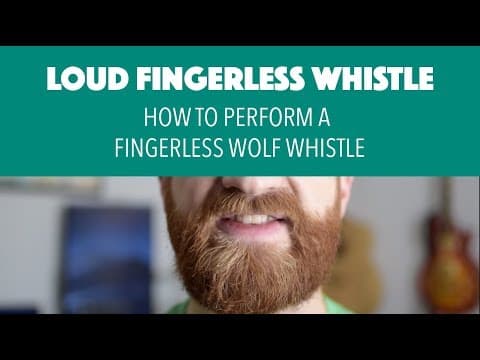
[0:01]What's going on, fellow YouTubers? What I'm going to show you today is a fingerless whistle. You may recognize the whistle from famous TV characters like Dr. Cox, or maybe you know like a PE teacher or someone else that can do it. It's a super useful skill. I use it almost every day, mostly to get my kids' attention. There are several videos out there on YouTube that go through this fingerless whistle. I'd encourage you to go check them out. Each one of them has some good little tidbits on how to do the whistle. And everybody teaches it a little bit differently. You never know. Somebody may say something that just really sticks with you. So go check them out. Um, they may be, may be super helpful. Okay, so the basics are, you're going to pull your bottom lip over your bottom teeth. Um, something I want to point out is you're not, you're not really curling it around your teeth, you're just kind of, kind of tightening it onto the teeth. So this, not this, so just, tighten. The other important part about your lip is when you bring it up to your top teeth, um, some people talk about making like an F sound, But I think if you tried to do an F sound, it's gonna put your bottom lip in the wrong position. You want to tighten your lip across your bottom teeth, and you want to bring it up to your top teeth, and your your bottom teeth, and your bottom lip are actually going to be like in front of your top teeth.
[1:46]Like that. And you're trying to kind of use your lip to like channel the air out the center of your bottom lip. For your tongue, don't worry so much about the shape of your tongue, worry more about pressing it up against your top teeth, like that. And kind of give like a little blow, and you want to try to let the air out only at the front of your teeth.
[2:30]If you hear air escaping like on the sides or um, like if you have gaps in your teeth, like I do, air might get out there, that's okay, don't sweat that. You're just trying to let most of the air go out the front of your tongue. So you'll seal your tongue up against your teeth, and then pull the tip of your tongue back a little bit.
[3:02]As you're practicing this and getting your tongue stronger, you may feel like it kind of flutters a little bit because it's just, it's not quite strong enough. That's okay.
[3:16]That's expected. That's what you're going for. So seal the tongue up against your top teeth and let a little bit of air out the front. That's where the, that's where you want most of the air to be leaving your mouth. You get those two things and you put them together, and you should start hearing that kind of a higher pitched like, If you're starting to hear that, you're very, very close to getting this whistle. You'll want to bring your, when you start hearing, you'll want to get everything just a little bit closer and a little bit tighter. So you'll want to bring your, um, your bottom lip and bottom, your bottom lip and your teeth up a little closer, get them really close to the bottom of your top teeth, and your tongue. Like every, everything's kind of like your top teeth, your bottom lip, and then your tongue. It all comes together really close to each other.
[5:38]Keep your mouth wet when you're practicing. So if you're going to be practicing that whistle for a while, have water nearby or something. I remember when I was practicing in the car a lot, I had my coffee with me on the way to work or whatever. So I would just, you know, take a sip of the coffee and, just practice the whistle till my mouth got dry, take another sip of coffee. As you're practicing the whistle, you'll, you'll probably will feel like fatigue up here. That's okay. Keep practicing it. The fatigue is totally normal. Don't worry about that, just keep practicing, take a break when you need to though. Grab a drink of water, relax, you know, relax your muscles for a little bit, squish your face. Just relax and then go back into it. The most important part though is to keep practicing. You're probably not going to get this whistle by the end of the YouTube video. Probably not by the end of the week. It just takes a lot of practice. And and it takes a little bit of like strengthening the muscles in your cheeks and your tongue to be able to hold the right positions. You may get really frustrated trying to learn this and feel like you're not making any progress, but keep practicing. It's totally worth it because the thing is, even if it takes, you know, six months of practice for this to happen, well, the six months is going to pass anyway. You may as well make the best use of that time. So just keep practicing it. It's worth the hassle. It's worth the frustration. Even when you don't really feel like you're making any progress, practice anyway. Do it anyway. You're going to be strengthening your cheeks and your lips and your tongue. Everything's going to be getting stronger, so it's all going to be positive. I know it's frustrating. I know you can't do it right now. Um, I know that practice is frustrating, but do it anyway. Keep practicing, keep trying.


