[0:00]China is, without a doubt, one of the Olympic heavyweights. Usually coming close second in the ranking after the US, but it didn't always used to be like that. In the summer Olympics in 1988, China ended up 11th with just five gold medals. In a result that was humiliating for a government eager to show the world that China was getting back on its feet. And then something changed. Just 20 years later at the Olympic Games in Beijing, China absolutely dominated, winning nine times as many gold medals as in 1988. And ranking first, ahead of the United States. But this was not in any way an accident. Instead, after its humiliation in the 1980s, China came up with a unique plan to dominate the Olympics in the same way it set out to dominate the global economy. And it required building a giant metaphorical factory in which hundreds of thousands of carefully selected children were trained for carefully selected sports with the highest probability of winning. In a perfectly methodical and calculated system of breathtaking proportions. But this brutally efficient machine that brought China to where it is, is actually running into a growing number of issues. As China today looks very different than 20 years ago. And what used to work fine doesn't seem to work anymore. So how did China build its gold winning Olympic factory? What is the cost for the athletes that end up going through it? And why do its future successes seem very uncertain? So, when China decided to level up its Olympic performance, from the beginning, it had one major advantage: its enormous population that was even back then the biggest in the world. More people means more potential talent. But that talent is often hard to recognize and it's distributed all across the country. Often in kids who might never develop it into fruition. And so China started by developing a system of finding, selecting and filtering that talent among the giant pool of 1.3 billion people. What that looked like in practice was that in a typical city, a local government was tasked with testing and assessing local children between 8 and 13 years old. And selecting candidates with the most potential that would be suitable for special sports education. And that went way beyond just looking at which kids are the fastest and strongest. But instead, the focus was on the genetic potential that they had for performance in the future if they were given the right training. And so, as part of the selection, doctors would measure height, armspan, flexibility, and other aspects that could predict what the hidden talents of a particular child may be. And using X-rays and tests determining bone density and structure to predict future growth and get an idea of what a child would look like in the future. The tests decided not just whether a child is suitable for a future career in sports, but more importantly, what sport they would focus on. Children who demonstrate exceptional flexibility and balance would be sent to gymnastics and diving camps. While tall children would go to basketball ones. Those with quick reflexes are guided into ping pong, kids with long arms are pushed into swimming, those with short arms and heavy builds make ideal weightlifters, and strong shoulders, good vision, and steady nerves would put you on a path towards archery. Those kids that were selected would be then sent to one of the 3,000 government run sports schools spread across the country that were based on data from 2005, training around 400,000 full-time student athletes. There, all the kids would live full-time on campus so that they can fully focus on their training. And usually they would only get to see their parents a couple times a year if they were lucky. In theory, they should focus both on academics and sports, but no one is there to become smart. And so all the focus is really on athletics, and the grind is brutal. Although the specific methods and intensity do differ from school to school, in general, the students would go through six hours of training or more a day. And while some schools do recognize that the rest is important as well, in others, the students would devote so much time to training that they couldn't really read beyond a fifth grade level. And the training in these schools is also quite unique. Because the students start training earlier, and generally, they would dedicate more time to training than they would have outside of China. The coaches have more time to focus on drilling the basics to perfection. And so the first years of training often revolved around doing simple drills over and over again and involve very little of doing the actual sport. Prospective archers, for example, spend the first year working on the release of the bow string by repeatedly bending the bow as far back as they can and holding the position to strengthen their muscles. And they need it, because the competition is brutal. Only about one in eight of sports school students make it to a provincial team. Of these, a third eventually make it to the national team. And about a fifth of the national team members become Olympians in training. But only about one in eight of these actually make the cut to the Olympics. That means that for every 900 kids who join the sports school system with the singular goal of making it to the Olympics, 899 never make it there. Which is a brutal statistic, considering that the athletes often spent their entire childhood and early adulthood training for a very specific sport, only to fail to turn it into a career. And so, after, about 80% of them struggle with unemployment, poverty, and chronic health issues, at least according to the China's physical education and support committee. But the selection and training are only one part of China's strategy. Because even more important than who you train and how you train them, is what are you training them for? And because what counts is the number of medals and not from which sport you get them, China decided very early on to focus on a smaller number of disciplines, where it can absolutely dominate. Rather than trying to win at everything, and to focus especially on those sports that are often quite niche, where the competition is lower and that are well suited for China's training methods. Which is why China is absolutely dominating sports like weightlifting or badminton. But the thing is that this development system that China actually largely copied from the Soviet Union and that worked so well until relatively recently, is becoming more and more difficult to run. As the country itself is rapidly changing. Although the government can push the kids with the most potential to enter the sports schools, it also depends on the consent of their parents. And they can't just force everyone completely. And convincing the parents is becoming harder and harder. When the system started in the 1980s, the promise of a warm meal three times a day and a chance for potentially making it big was enough for most families to happily accept. And refusals to do so would be in a country that still had high levels of poverty, extremely rare. But as the country developed and people got richer, this became harder and harder, as this career became less and less popular. And most parents wanted their kids to get into a great school and have a university degree, rather than sacrifice all of that in exchange for a minuscule chance to make it to the Olympics. Especially as stories of former athletes that ended up broke and hopeless became more well known. And now that China is increasingly dealing with the consequences of its one child policy. Extremely low birth rates, falling population, and decreasing number of kids, this is only becoming harder. Parents with just one child will be less willing to give up their kid, and even more importantly, give up their education. And so, the Chinese traditionally extremely strict system is actually adapting to those changes, and it's changing as well. Since 2010, an increasing number of Chinese sports schools have been slowly letting go of the boarding school system, which until recently was a necessary requirement and a fundamental part of squeezing as much as possible out of the student athlete. And more students now live with their parents and go to a regular school and attend the sports training after class, which is basically how student athletes train everywhere else in the world as well. And whether that will actually improve or bury Chinese performance, well, we'll have to see.
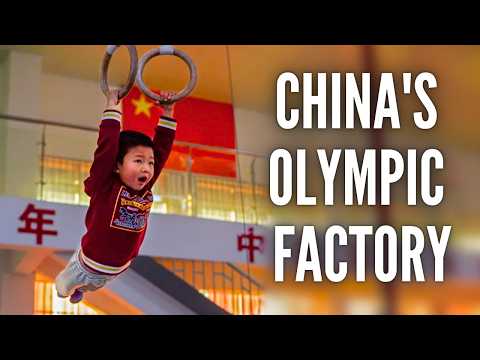
Inside China's Secretive Olympic Training Program
Explained with Dom
8m 43s1,470 words~8 min read
YouTube auto captions
Transcript source
YouTube auto captions
This transcript was extracted from YouTube's auto-generated caption track. The transcript below is server-rendered so it can be read, searched, cited, and shared without opening the original YouTube player.
Pull quotes
[0:00]Usually coming close second in the ranking after the US, but it didn't always used to be like that.
[0:00]In a result that was humiliating for a government eager to show the world that China was getting back on its feet.
[0:00]Just 20 years later at the Olympic Games in Beijing, China absolutely dominated, winning nine times as many gold medals as in 1988.
[0:00]Instead, after its humiliation in the 1980s, China came up with a unique plan to dominate the Olympics in the same way it set out to dominate the global economy.
Use this transcript
Related transcript hubs
Watch on YouTube
Share
MORE TRANSCRIPTS


